
Opinion
Government should stop funding sports

By Ehi Braimah,

Nigeria should stop pretending that pouring public money into sports is the same thing as developing sports. It is not. For decades, government has funded football through grants, interventions, bonuses, camps, competitions, travel and assorted forms of financial assistance.
Also read:NIJ Alumni Association Gets New Leadership, Akintunde President
Yet, the more government spends, the more dysfunctional the system appears to become. At what point do we admit that the model itself is broken?
The latest evidence is staring us in the face. The Super Eagles did not participate at the 2026 FIFA World Cup in the United States, Canada and Mexico.
Nigeria also missed Qatar 2022 which means the Super Eagles have now missed two consecutive World Cups.
This is particularly painful and a bitter pill to swallow because Africa had ten places at the expanded 48-team tournament. Nigeria still could not make it. The Eagles finished second in their qualifying group and subsequently lost to DR Congo on penalties in the African play-off.
Football is Nigeria’s drumbeat. It is one of the few things capable of bringing together Nigerians across ethnic, religious, political and social divides.
When the Super Eagles play, the country stops, and when they win, Nigeria celebrates together. That is why this failure hurts so much.
But the crisis is deeper than the Super Eagles. The Super Falcons, once the undisputed queens of African women’s football, have suffered an even more devastating setback. Nigeria lost 1-0 to Cameroon in the WAFCON quarter-final and subsequently lost 2-1 to South Africa in the play-off for a place in the 2027 Women’s World Cup in Brazil.
Consequently, Nigeria will miss the Women’s World Cup for the first time since the competition began in 1991. This is not an ordinary footballing disappointment – it is an egregious warning signal.
And the response cannot simply be another change of personnel. I have seen this movie before. Whenever Nigerian football enters crisis mode, the familiar chorus begins: sack the NFF president; dissolve the board; bring in new people; start afresh. But where has that taken us?
We do not have a single enduring football structure, or world-class facilities. The lack of a properly functioning grassroots development system and the absence of a sustainable football economy appear to compound our misery. We keep changing the occupants of the house without repairing the house.
That is why I do not subscribe to the clamour by Shehu Dikko and others seeking to take over Nigerian football.
Those who have been part of the system – including Dikko – that produced today’s crisis should not simply return under another arrangement and promise us another “new beginning”.
Nigerians deserve to know what went wrong, who is responsible and, most importantly, what structural reforms will prevent a repetition.
The question is not merely whether Ibrahim Gusau, the Nigerian Football Federation (NFF) President, and the board and should go. The bigger question is: what system replaces them?
There is no escaping the issue of accountability. The House of Representatives has previously moved to investigate allegations concerning about $25 million in FIFA and CAF grants received by the NFF between 2015 and 2025.
More recently, the NFF itself confirmed that documents relating to a ₦12 billion Federal Government intervention fund are with the EFCC and ICPC as part of ongoing investigations.
Importantly, no wrongdoing has been established against any individual merely because an investigation exists, or that stories of alleged corruption are always what we hear.
But the fact that such a substantial public intervention is under investigation makes transparency imperative.
There have also been media investigations raising questions about payments from NFF funds into private accounts.
One investigation reported at least ₦152.6 million in payments to private accounts linked to officials, staff and associates between 2018 and 2026. These allegations require proper investigation, not political spin or the influence of godfathers.
The NFF, on its part, says its accounts are audited and that FIFA and CAF funds are tied to specific purposes and subject to monitoring. Its 2025 Congress approved audited financial statements for 2024 and passed a vote of confidence in the Gusau-led board. That is precisely why Nigerians need independent, verifiable accountability, not competing narratives.
If the books are clean, open them, and if the money was properly spent, show us. If there were failures, identify them, and if officials are culpable, let the law take its course. That is how a serious football economy works.
Government must also accept responsibility for creating a system that encourages dependency.
Why should government be paying the Super Eagles’ win bonuses? Why should a national football federation continually return to government for money to perform its core responsibilities? Why should taxpayers repeatedly finance a professional sport that possesses enormous commercial potential? Questions that need answers.
This is definitely not an argument for abandoning sports – it is a business case for changing the role of government.
My view is that government should provide infrastructure, establish the regulatory framework, protect the integrity of competitions and create an enabling environment for private investment.
Government should not be the perpetual financier of professional football. This Father Christmas mentality must end. Look at the state of our sporting infrastructure and see the shame we have brought upon ourselves because of poor visionary leadership at the helm.
CAF’s rejection of several traditional home grounds for Nigerian clubs in the 2026/27 continental competitions is a humiliating reminder that Nigeria still lacks enough facilities that meet international standards.
Rangers, Rivers United and Shooting Stars were among the clubs whose traditional venues were not approved, leaving them to adopt alternative grounds.
The Federal Government itself has acknowledged the problem, approving major rehabilitation work at the Moshood Abiola National Stadium in Abuja because its condition has limited its use by national teams.
If we didn’t have the Godswill Akpabio International Stadium, the Nest of Champions owned by the Akwa Ibom State government in Uyo, where would the Super Eagles have been playing their FIFA-graded home matches?
This is the absurdity of Nigerian sports: we can spend billions managing crises but cannot consistently maintain the infrastructure that would prevent them.
Morocco offers one of the best examples in Africa of what a country’s sports infrastructure should look like. Perhaps that explains why the country has a “strong hold” on CAF.
Secondary-school sports have virtually disappeared as a serious talent-development pipeline. Adults sometimes compete in sporting events designed for children; grassroots competitions are sporadic; facilities are in a permanent state of decay, and leagues struggle.
When an athlete or team produces an accidental success, we celebrate it as if it were the product of a functioning system. That is clearly not the case – it is usually an outlier.
The reality is that we are trying to climb the tree from the top and then wonder why we keep falling. The National Sports Commission under Chairman Shehu Dikko must therefore act – and act now.
The Commission has a historic opportunity to redefine the relationship between government and Nigerian sports. Its stated ambition of creating a sustainable sports economy cannot remain another slogan – it must become a measurable programme of reform.
The first step should be to distinguish clearly between government’s responsibility and the sports industry’s responsibility.
Government should fund infrastructure; support grassroots and school sports, and provide a carefully structured seed funding to revive dead or dying leagues.
Government should also use the National Lottery Trust Fund more strategically. Nigeria already has a mechanism specifically designed to support good causes, including sports.
The Lottery Trust Fund states that 20 percent of lottery proceeds is allocated to the Trust Fund and that sports will receive 20 percent of the Fund’s sectoral allocation.
Why are we not using this mechanism more aggressively and transparently to rebuild grassroots sports? Why are we not creating sustainable facilities instead of endlessly funding short-term participation? Why are we not demanding measurable outcomes from every naira invested?
The United Kingdom provides an instructive lesson – not because the British government simply “funded the Premier League”, as is sometimes suggested, but because football evolved into a powerful commercial ecosystem supported by regulation, investment, broadcasting, infrastructure and private capital.
The Premier League’s revenues grew dramatically from about £170 million in 1991/92 to £5.15 billion in 2018/19, and close to £7 billion in 2024/25.
That is the direction Nigeria should be heading because it is possible for sports to become big business.
Let the NFF president who wants to lead Nigerian football tell the Congress how he intends to raise money to run football without perpetual government spoon-feeding.
In addition, let every candidate publish a five-year commercialisation plan and explain how they will attract sponsors.
How will they grow broadcast revenue? How will they improve match-day revenue? How will they develop licensing and merchandising? Do they even understand the business case of turning sports into a profitable enterprise?
How much revenue can the domestic league generate? Can we make Nigerian football attractive to investors? Can football administrators guarantee transparency? And, above all, how will they spend other people’s money? More questions without answers.
Corporate Nigeria will invest in sports when it sees stability, accountability, transparency and commercial opportunity.
No serious investor wants to enter a dysfunctional system where rules change arbitrarily, accountability is weak and political influence determines outcomes.
Corporate sponsors want to sit at a table with people who understand sports business and how to scale opportunities.
A football model without processes, predictable regulations, audited accounts and measurable returns will not be supported by sponsors as we see in other parts of the world.
Potential corporate sponsors want institutions with safe guards, not personalities. Government must take the back seat always.
This is where the National Sports Commission must demonstrate leadership. Dikko should resist the temptation to become another political centre of gravity in Nigerian sports.
The Commission must not simply replace one form of interference with another. Instead, it should strengthen federations while holding them accountable without government control.
Chairman Dikko, the answer to our challenges in sports is good governance, transparency and accountability, which we can also describe as “responsible stewardship”.
All the contending forces and political factions aiming for the nation’s football Glass House in order to take over the NFF should show us their plans for institutional reforms.
Meanwhile, let me repeat myself: government should only provide the seed money, infrastructure and enabling environment for sports to develop and thrive in Nigeria, and then back off.
If the environment is right, private capital will come. If the rules are clear, sponsors will come, and if accounts are transparent, investors will come.
It is also evident that if the leagues are properly organised, broadcasters will show interest, just as fans will return when the competitions are credible.
This is because our passion for sports, especially football, has turned into a huge movement of friends and fans.
Then, of course, the money will follow. It is not rocket science. Nigeria does not lack talent – what we lack are systems and the institutional confidence to unlock commercial opportunities.
The current football crisis is therefore bigger than Gusau and Dikko. It is also bigger than the NFF. It is a crisis of a model that has failed and that is the reform Nigeria needs.
Also read:NIJ Alumni Association Gets New Leadership, Akintunde President
Anything else is simply another change of faces. And Nigerians have had enough of changing faces while the house continues to collapse.

By Seun Oloketuyi,
The appointment of Zacch Adedeji as Deputy Director of Fundraising in the All Progressives Congress’ 2027 Presidential Campaign Council has raised eyebrows, particularly because he currently heads the Nigeria Revenue Service.
Also read: MOWCA Champions Sustainable Blue Economy Growth in Niger Delta
Former Senator Dino Melaye has already announced plans to challenge the appointment in court, arguing that Adedeji’s role as head of the country’s revenue agency could create a conflict of interest.
It is a question worth asking.
But there is another question that seems to be missing from the conversation:
Why can’t Zacch Adedeji do it?
Why should his appointment automatically be viewed through the lens of suspicion simply because he heads the country’s revenue service?
The concern about the separation between public office and partisan politics is understandable. But so is the need to look at the individual involved, his professional background and the record he has built over the years.
This is not a new political relationship
Adedeji did not suddenly become associated with the Tinubu administration because his name appeared on the campaign council list.
Before becoming Chairman of the Nigeria Revenue Service, he served as President Bola Ahmed Tinubu’s Special Adviser on Revenue.
Before his move to Abuja, he was Commissioner for Finance in Oyo State under the administration of the late Governor Abiola Ajimobi. He also served as Executive Secretary and Chief Executive Officer of the National Sugar Development Council.
His career has largely revolved around finance, revenue and public administration.
So, when the APC needed people for different parts of its campaign structure, including fundraising, choosing someone with a long background in finance and revenue administration was hardly an unusual decision.
The political affiliation is not a secret either.
Adedeji has worked closely with the current administration for years. His appointment to the campaign council is therefore not a sudden transformation from technocrat to politician. It is another political role for someone who has already been closely associated with the administration.
But what about his record?
This is where the conversation should go beyond the title he currently holds.
Adedeji is a first-class graduate of Management and Accounting from Obafemi Awolowo University. He went on to obtain further qualifications, including a master’s degree and a doctorate, and also had a career in the private sector before moving into public service.
His record includes work at Procter & Gamble, where he rose to a senior finance position, his time as Oyo State Commissioner for Finance, his leadership of the National Sugar Development Council and, later, his appointment as Special Adviser on Revenue to the President.
When he was appointed to head the Federal Inland Revenue Service in 2023, the Presidency described him as having had “meritorious service” as Oyo State Commissioner for Finance and as head of the National Sugar Development Council.
President Tinubu also publicly praised his leadership of the revenue agency in January 2026, citing reforms, automation, staff development and his role in meeting revenue targets.
These things do not make anyone beyond scrutiny.
But they are part of the picture.
And if the conversation is going to be about whether Zacch Adedeji should be trusted with responsibility, then his record should count too.
Integrity cannot be replaced with assumption
The easiest thing in politics is to assume the worst.
A public official joins a campaign structure and immediately the question becomes: What is he going to do with his office?
That question is fair.
But there is a difference between asking whether there could be a conflict of interest and concluding that a person will abuse his office.
Those are not the same thing.
So far, the controversy surrounding Adedeji’s appointment has centred on the possibility of a conflict between his public position and his campaign responsibility. Melaye has said he wants the courts to test that question.
That is his right.
But the existence of a question does not automatically amount to evidence of wrongdoing.
Adedeji should be held accountable if he crosses the line. If public resources are used for partisan purposes, if his official position is abused or if the law is breached, those actions should be dealt with.
But until then, there is also room to judge him on what he has actually done.
Why fundraising?
There is another part of the argument that deserves attention.
Fundraising requires financial knowledge, relationships, organisation and an understanding of how money is mobilised and accounted for.
Adedeji’s entire professional background is built around those areas.
He has worked in corporate finance. He has managed public finances. He has been involved in revenue administration at both state and federal levels.
That experience may be precisely why he was considered suitable for the position.
The fact that the role is political does not erase the skills he has acquired throughout his career.
Public office and political participation
Of course, the bigger question remains whether a serving head of a federal revenue agency should participate formally in a presidential campaign.
That is a legitimate debate.
But it should be a debate about rules and principles, not an assumption that Adedeji himself lacks integrity.
If existing public service rules prohibit the role, then those rules should be applied.
If they do not, then the argument should not be built around the assumption that a public officer will inevitably misuse his position.
There is also a difference between being politically involved and using government resources for political purposes.
The latter would be a serious breach.
The former, depending on the applicable rules, is a question of political participation.
Those distinctions matter.
So, what is the real issue?
Perhaps the real issue is not Zacch Adedeji’s competence.
It is not his experience either.
And it certainly should not be an assumption about his character.
The real issue is whether the law and public service rules permit someone in his current position to take up the role he has been given.
That is a question that can be answered with facts, regulations and, if necessary, a court ruling.
But while that question is being debated, it is worth remembering who Zacch Adedeji is.
He is an accountant who has spent much of his career dealing with finance and revenue. He has worked in the private sector, served as a state commissioner, headed a federal government agency and advised the President on revenue before becoming head of the country’s tax administration.
His supporters see a professional with the experience and discipline required for the job.
His critics see a public official whose political role needs closer scrutiny.
Both views can exist at the same time.
But criticism should not become condemnation before there is evidence of wrongdoing.
If Zacch Adedeji has the experience, the professional record and the confidence of his party to take on a fundraising role, then perhaps the better question is not “Why Zacch Adedeji?”
Perhaps it is simply:
Why can’t he do it?
Who Is Zacch Adedeji?
Dr. Zacch Adelabu Adedeji is a Nigerian accountant, tax administrator and public officer who currently serves as Executive Chairman of the Nigeria Revenue Service.
Born on January 8, 1978, in Oyo State, Adedeji began his academic journey with a National Diploma in Accountancy from the Federal Polytechnic, Ede.
He proceeded to Obafemi Awolowo University, where he earned a first-class degree in Management and Accounting. He later obtained a master’s degree and a PhD in Accounting from the same university. He also attended the Harvard Kennedy School of Government for an executive course in economic development.
His professional career began in the private sector with Procter & Gamble, where he held senior finance positions, including Corporate Finance Manager for West Africa.
At 33, he was appointed Commissioner for Finance in Oyo State by the late Governor Abiola Ajimobi, a position he held from 2011 to 2015. He later became Executive Secretary and Chief Executive Officer of the National Sugar Development Council.
Adedeji subsequently served as Special Adviser to President Bola Ahmed Tinubu on Revenue before his appointment in September 2023 as Chairman of the Federal Inland Revenue Service.
With the transition from FIRS to the Nigeria Revenue Service, he now heads the country’s central tax administration agency.
His career has largely been built around accounting, corporate finance, taxation, public revenue and fiscal policy — experience that is central to the argument over why he was selected for a fundraising role in the APC campaign council.
APC 2027 Presidential Campaign Council
The APC’s 2027 Presidential Campaign Council brings together senior party figures, serving governors, lawmakers, ministers, technocrats and other political stakeholders.
At the top of the structure is President Bola Ahmed Tinubu, who serves as Chairman.
Vice President Kashim Shettima and APC National Chairman Nentawe Yilwatda serve as Vice Chairmen.
Senator Abdulaziz Yari is the Director-General, while Governor Hope Uzodimma is Secretary. Senator Surajudeen Ajibola Basiru serves as Deputy Secretary, with Hadiza Bala Usman as Assistant Secretary.
The campaign structure also includes the following:
Finance and Fundraising
– Governor Dapo Abiodun — Director, Fundraising
– Zacch Adedeji — Deputy Director, Fundraising
– Farouk Gumel — Deputy Director II, Fundraising
– Dr Jamila Bio Ibrahim — Secretary, Fundraising
– APC National Treasurer — Secretary II, Fundraising
– Governor Sheriff Oborevwori — Director, Finance/Treasurer
– Ahmed Usman Ododo — Deputy Director, Finance/Treasurer
– Abubakar Kabir Bichi — Deputy Director II, Finance/Treasurer
– Tanimu Yakubu — Secretary, Finance/Treasurer
Zonal Campaign Coordinators
– Senator Bassey Otu — South-South
– Ndubuisi Mbah — South-East
– Governor Babajide Sanwo-Olu — South-West
– Governor Umar Bago — North-Central
– Senator Modu Sheriff — North-East
– Governor Uba Sani — North-West
The wider campaign structure also features prominent figures across election planning, mobilisation, legal affairs, media, strategic communication, creative-sector mobilisation, youth and women mobilisation, health, sports, diaspora affairs and other areas.
Among the notable names are Senate President Godswill Akpabio, Speaker Tajudeen Abbas, Governor Mai Mala Buni, Senator Adams Oshiomhole, James Abiodun Faleke, Shehu Dikko, Joseph Yobo, Ali Nuhu, Zack Orji, Betta Edu, Ayodele Olawande, Abike Dabiri-Erewa, Ali Pate and Hannatu Musawa, among others.
The campaign’s legal team includes Muiz Banire, SAN, as Director, with Lateef Fagbemi, SAN, Ibrahim Shema, Worgu Boms and Kingsley Tochukwu Udeh, SAN, among others, also listed within the legal structure.
The size and range of the campaign council underline the scale of the APC’s 2027 political operation.
And within that structure, Zacch Adedeji has been given a role that sits directly within one of the campaign’s most financially sensitive directorates.
That is why his appointment has attracted attention.
But it is also why his professional background matters.
The debate may continue over whether a serving revenue chief should participate in a political campaign. That question deserves an answer.
Also read: MOWCA Champions Sustainable Blue Economy Growth in Niger Delta
But so does the other question that has received far less attention:
If Zacch Adedeji’s experience is in finance, revenue and public administration, and there is no established evidence that he has abused his office, why should his participation automatically be treated as suspicious?
That, perhaps, is the real issue
By Max Amuchie | The Sunday Stew
It began, unexpectedly, with a telephone call one evening in May.
I was at my desk in Abuja when my phone rang. On the other end was Kemi Yusufu, Publicity Secretary of the Guild of Corporate Online Publishers (GOCOP). She had an unusual message. A friend had contacted her to say that the Chinese Embassy in Abuja was looking for a way to reach me.
Kemi had done what friends sometimes do when opportunity comes knocking in an unfamiliar voice: she passed on my contact.
Also read: The Sundiata Post Model (7): A Philosophical Triad and the Language of 21st-Century Journalism
The following morning, a message arrived from the Chinese Embassy. I was invited to an event scheduled for 2 p.m. that day. There was only one problem. I was in the middle of the week-long District Conference of Rotary International District 9127, and the timing simply would not work.
I explained.
Another appointment was fixed for noon the following day.
That meeting at the Chinese Embassy in Abuja would prove to be the beginning of a journey that, two months later, would take me from Nigeria’s federal capital to Hangzhou, one of China’s most celebrated cities and one of the places where the country’s extraordinary experiment with technology, commerce and development can be observed at close quarters.
At the embassy, I was warmly received by Mr Sun, who introduced me to his colleague, Miss Chen. There was nothing dramatic about the meeting.
No grand announcement. No fanfare. Just a conversation, a handshake and an invitation whose full significance was yet to unfold.
At that point, China was still an idea. A vast country encountered largely through books, news reports, economic statistics and the growing evidence of its presence across Africa.
Within weeks, however, that idea would acquire faces, voices, roads, cities, lakes, factories, classrooms and conversations.
On July 21, we left Nigeria aboard Ethiopian Airlines for a three-week programme, making the customary layover at Bole International Airport in Addis Ababa. From there, we continued to Guangzhou Baiyun International Airport, known by its airport code, CAN.
China had begun to feel real.
At Guangzhou, we boarded a local flight to Hangzhou Xiaoshan International Airport, HGH, Zhejiang Province. Waiting for us on arrival was a local organising team made up of Mr Kai, Ms Ally Tang and others.
There were smiles, handshakes, photographs and the unmistakable excitement that accompanies the beginning of a new experience.
After the long journey eastwards, we arrived at the Haiwaihai International Hotel in Hangzhou on the night of July 22.
Registration formalities completed, everyone finally settled in for what was, after hours in airports and aircraft, a well-deserved rest.
The programme began in earnest at 9 a.m. the following morning.
We converged in one of the halls of the hotel for a lecture by Zhang Gangfeng, an Associate Professor at Zhejiang University. He provided an overview of China’s national conditions.
It was an appropriate starting point.
Before one can understand China’s development model—or attempt to draw lessons from it—one must first understand China itself: its history, geography, population, political system, development trajectory and the particular conditions that have shaped its remarkable transformation.
China’s development story is often compressed into impressive statistics: spectacular economic growth, world-class infrastructure, technological innovation, the expansion of cities and the lifting of hundreds of millions of people out of poverty.
But statistics, useful as they are, can conceal the historical and political processes behind them.
Zhang’s lecture was, therefore, an invitation to look behind the headlines and examine the country whose experience we had travelled thousands of kilometres to study.
Later that afternoon, the programme was formally declared open, with Mr Fan Yijun, Deputy Director of the Free Trade Development Board of Zhejiang Province, presiding.
We were in China for the ‘Seminar on Digital Villages and Economic Development for Nigeria’, organised under the auspices of China’s Foreign Aid Cooperation Programme on Human Resources Development and implemented by the Free Trade Development Board of Zhejiang Province, which also serves as the Secretariat of the China Centre for Cooperation on Special Economic Zones in BRICS Countries.
Nigeria was not alone.
Representatives had also arrived from countries including South Africa and Solomon Islands.
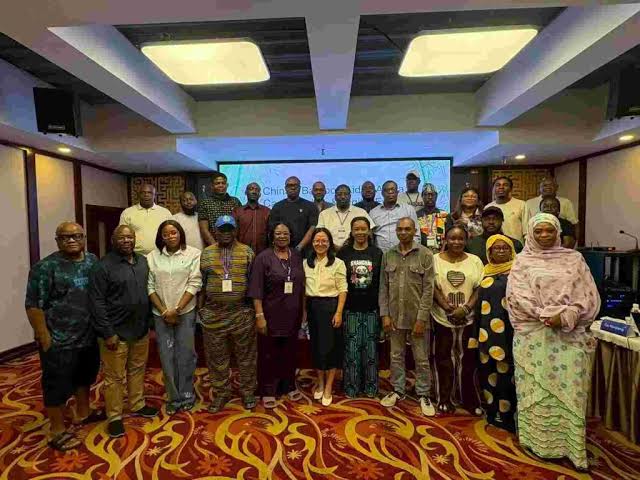
But with 31 participants, Nigeria had the largest delegation—a striking indication of the scale of the engagement and, perhaps, of the possibilities China saw in a country whose enormous population, entrepreneurial energy and developmental challenges increasingly make digital transformation a matter of national urgency.
For Nigeria, the subject of digital villages could hardly have been more relevant. The question of development is not merely how to build prosperous cities or attract investment into already thriving commercial centres.
It is also how to ensure that communities beyond the major urban centres are connected to the opportunities created by technology—through broadband, digital commerce, financial inclusion, agricultural innovation, skills and access to markets.
Each delegation had an opportunity to speak at the opening ceremony. For Nigeria, Mr Benjamin Ogugua Ogugua, Special Adviser to the Deputy Speaker of the House of Representatives, spoke on behalf of the team.
The opening ceremony formally set the programme in motion, but the intellectual journey had begun hours earlier with the effort to understand the China behind the development story—the country whose experience we had travelled thousands of kilometres to examine.
That evening, the Nigerian delegation was treated to a welcome dinner.
It was only our first full day in Hangzhou.
Yet, from that unexpected telephone call in Abuja in May to a room filled with delegates and hosts thousands of kilometres away, one thought was already becoming clear: sometimes, international engagement begins not with a carefully laid plan, but with a phone call, a handshake—and an invitation to see another country with your own eyes.
And this was only the beginning.
The Lake, the Legend and the Lesson
The following day, July 24, offered our first opportunity to encounter Hangzhou beyond the walls of the conference hall.
We were driven around the West Lake Scenic Area, with Tang Qingqing, Programme Manager at the Free Trade Development Board of Zhejiang Province, serving as our guide.
West Lake is not merely a body of water. It is one of the great cultural landscapes of China, celebrated as a UNESCO World Cultural Heritage Site and a major national tourist attraction.
It is often described as a “Paradise on Earth”—a phrase that captures the way natural beauty, history, poetry, architecture and legend have combined over centuries to give the place an identity that is larger than geography.
We did not step out for a leisurely exploration of the lake. Much of what we saw was from the vehicle.
But Tang Qingqing more than compensated for the brevity of the encounter with her copious explanations of the lake’s history, its cultural influence and, especially, the romantic legends associated with it.
It was one of the first reminders that China’s development story cannot be understood only through skyscrapers, factories, e-commerce platforms and high-speed infrastructure.
There is also the China of memory.
The China of legend.
The China that has preserved and continually reinterpreted cultural inheritance while simultaneously racing into the digital age.
That coexistence—between ancient civilisational memory and contemporary technological ambition—would become one of the recurring impressions of the journey.
From Poverty Alleviation to Common Prosperity
The second lecture took us directly into one of the most important ideas in contemporary Chinese development policy.
Its title was: “From Poverty Alleviation to Common Prosperity: China’s Practice and Experience (Course on Xi Jinping Thought).”
The lecturer was Professor Shi Xinjie of Zhejiang University.
The subject was significant not only because of the centrality of poverty reduction to China’s modern development narrative, but also because the name behind the course was one that would recur repeatedly throughout our stay.
Xi Jinping, China’s current leader, is a former governor of Zhejiang Province. His connection with the province was frequently referenced during our field visits.
In different places, our hosts and lecturers spoke warmly about him, recalled statements he had made, and pointed to policies or actions associated with his years in Zhejiang.
That made the lecture more than an abstract discussion of national policy. We were studying ideas associated with China’s present leadership while standing in one of the provinces that had played an important part in the political and administrative career of that leadership.
At the centre of Xi’s thinking on poverty alleviation and common prosperity is a relatively straightforward proposition with far-reaching implications: a country’s development cannot be considered complete if large sections of its population remain poor; but the elimination of extreme poverty is itself only the first stage of a longer journey towards more broadly shared prosperity.
This idea is central to what China describes as Xi Jinping Thought on Socialism with Chinese Characteristics for a New Era.
Poverty Alleviation as Responsibility
The first principle is that poverty alleviation is not treated merely as an economic programme. It is also presented as a political and moral responsibility.
The underlying argument is that development should be people-centred and that the improvement of ordinary people’s lives is one of the fundamental measures of successful governance. In this conception, economic growth is not simply about enlarging national wealth.
It must eventually answer a more basic question: What has development done for the people?
The elimination of poverty, the improvement of well-being and the pursuit of common prosperity are therefore presented as essential objectives of socialist development.
No One Should Be Left Behind
A second defining principle is inclusion.
Economic growth, by itself, is not necessarily sufficient if particular regions, communities or households remain trapped in deprivation. The objective, therefore, is not simply to report an improvement in national averages while pockets of extreme deprivation remain invisible within the larger picture.
This gave prominence to the idea of targeted poverty alleviation: identifying who was poor, understanding why they were poor and applying measures suited to their particular circumstances.
The logic was simple but administratively demanding.
Poverty in one village may arise from poor road access. In another, it may be the absence of markets. Elsewhere, it may be lack of education, health challenges, geographical isolation or limited employment opportunities.
A uniform policy, therefore, may not produce uniform results.
The targeted approach sought to bring policy closer to the specific household, community and locality experiencing deprivation.
Development as the Foundation of Poverty Reduction
Xi’s approach is not primarily framed as the redistribution of existing wealth.
Its central proposition is that poverty cannot be sustainably eliminated without expanding productive capacity and economic opportunity. In other words, before prosperity can be shared, it must also be created.
This is where the emphasis on development becomes critical.
The approach has involved investments in:
Infrastructure;
Employment and income generation;
Local industries;
Education and skills;
Health and housing;
Underdeveloped regions; and
Greater economic connections between poorer and more prosperous areas.
The underlying development philosophy is that inadequate development is itself a fundamental cause of poverty.
This is an important point for countries seeking to learn from the Chinese experience. Poverty policy cannot be divorced from productive policy.
A programme that provides temporary relief may alleviate immediate suffering, but long-term poverty reduction requires communities and households to be connected to the engines of economic opportunity.
Poverty Eradication Is Not the Finish Line
Perhaps the most important connection between poverty alleviation and common prosperity is the insistence that escaping extreme poverty is not the final destination.
After China declared victory over extreme poverty, the focus moved towards preventing people from slipping back into poverty, promoting rural revitalisation and pursuing a wider distribution of the benefits of development.
The conceptual journey can be expressed simply:
Extreme poverty eradication leads to broader prosperity, which in turn engenders common prosperity.
The first task is to remove absolute deprivation. The next is to build a society in which prosperity is more widely accessible and sustainable.
Common prosperity, therefore, represents a longer-term development ambition.
What Does Common Prosperity Mean?
One of the misconceptions about common prosperity is that it means everybody must have exactly the same income.
That is not the idea.
The Chinese approach accepts wealth creation, markets, entrepreneurship and economic growth. The concern is that the benefits of development should not become permanently concentrated in the hands of a narrow segment of society or create severe and enduring regional and social inequalities.
One useful way of understanding the philosophy is through the metaphor of “making the pie” and “sharing the pie.”
First, a society must produce sufficient wealth. Then, the institutions of that society must ensure that the resulting prosperity is shared more broadly and fairly.
The issues that follow from this concern include:
Income distribution;
Wages and employment;
Regional inequality;
Access to public services;
Social security;
Rural development; and
Opportunities for upward mobility.
For a Nigerian visitor, it was difficult not to reflect on these ideas in relation to our own circumstances. Nigeria’s development debate often swings between growth and distribution, between the creation of wealth and the question of who benefits from it.
The Chinese experience, whatever its differences from Nigeria’s political, economic and historical circumstances, raises an important question: Can development be regarded as successful when it produces islands of extraordinary wealth alongside large populations who remain disconnected from its benefits?
The answer to that question may vary from country to country. But the question itself is universal.
The President’s Book
As we moved from lectures to visits and from Hangzhou to other locations in Zhejiang Province, references to President Xi Jinping continued to surface.
Our hosts occasionally recalled something he had said or referred to an initiative or policy associated with his time as governor of Zhejiang Province.
There was a sense of local pride in the relationship between the province and the man who would later become China’s most powerful political leader.
Each participant in the programme received a copy of the third volume of Xi Jinping’s book, The Governance of China.
For me, it was another reminder that we were not simply on a technical programme about digital villages.
We were also being introduced, directly and indirectly, to the ideas, institutions and development philosophy that China considers important in explaining its contemporary trajectory.
Twelve Lectures and a Classroom Beyond the Hotel
In all, the programme featured 12 lectures.
Most of them were held at the Haiwaihai International Hotel, which served not only as our accommodation but also as the principal classroom for much of the seminar.
Three of the lectures, however, took place at Yiwu Industrial & Commercial College.
The change of location was significant. It took the learning environment beyond the hotel and into an educational institution connected to the wider economic environment we had travelled to examine.
One of the lectures at Yiwu was titled “Zhejiang’s Digital Economy: Where We Are, Where We’re Going.”
It was delivered by Xiong Aisha, an Associate Professor.
The title itself captured one of the central questions of the entire visit.
Zhejiang is widely associated with China’s digital transformation, entrepreneurship, e-commerce and innovation. But development is never static.
The question is not only how far a region has travelled. It is also where it believes the next stage of the journey will lead.
Where we are.
Where we’re going.
Those words could, in many ways, have served as the larger theme of our journey.
For China, they pointed to a development story that continues to evolve.
For Nigeria, they raised a different but equally important question: What can we learn, what can we adapt, and—most importantly—where are we going?
The answer would not be found in a single lecture or a single visit.
It would emerge gradually—in classrooms and conference halls, in villages and industrial centres, in conversations with academics and officials, and in the everyday scenes that revealed how deeply technology had become woven into the fabric of Chinese life.
Also read: The Sundiata Post Model (7): A Philosophical Triad and the Language of 21st-Century Journalism
The journey from Abuja to Hangzhou had begun with a handshake.
The real work was now to understand what lay beyond it.
Trust is sacred. Stay seasoned.
Opinion
GO BACK HOME?” NO. LET’S TALK FACTS: WHY DG HAMZAT’S ADVICE ON HOUSING IS PRACTICAL, NOT SURRENDER*

By Sola Fajobi | Lagos Citizen_
I don’t like shouting matches online. I have bills to pay in Lagos like everyone else.
But when I saw the backlash to Lagos State Deputy Governor, Dr. Obafemi Hamzat’s comment advising young workers to “live with parents, relatives, or share accommodation instead of rushing to rent expensive apartments,” I felt we were missing the point.
The headline was weaponized. The context was ignored. The data was buried.
Let’s talk facts.
*1. THE REALITY: LAGOS HAS A LAND PROBLEM, NOT JUST A POLICY PROBLEM*
Lagos is not like other states. We are running out of dry land.
*Lagos State Land & Housing Deficit – Quick Facts:*
– *Total land area*: ∼3,577 sq km. With reclamation it’s now ∼4,050 sq km
– *Lagos Metro land*: 999.6 sq km
– *Population 2025 estimate*: 17.8M in metro. 21M for greater metro area
– *Density*: 6,871/km2. Urban density hits 14,469/km2
That means 21 million people are fighting for space on land smaller than Oyo State. About 22% of Lagos is water. We can’t create more land without spending billions on reclamation like Eko Atlantic, Orange Island, and Banana Island — and those end up expensive by design.
Result: A housing deficit estimated at 2-3 million units. Demand will always outstrip supply until we address land + transportation.
So is telling people to “share accommodation” surrender? No. It’s what every mega city does.
*2. WHAT THE DG SAID IS ALREADY GLOBAL BEST PRACTICE*
London: A 1-bedroom in Zone 1 is £1,500 – £2,500/month. That’s ₦3M – ₦5M/month. So people live in Watford, Luton, Reading and commute 1hr+ by train.
New York: Young professionals have 3-4 “roommates” in a 2-bedroom in Manhattan/Brooklyn.
Toronto, Dubai, Singapore: Shared housing and living with family into your late 20s is normal.
The DG wasn’t saying “don’t be independent.” He was saying: “Be strategic while the system catches up.” That’s not failure. That’s financial intelligence.
Mistaking culture for policy is what critics did. But the truth is: sharing flats, living with family to save, and moving to affordable corridors is _both_ a personal strategy and a stop-gap that governments worldwide encourage.
*3. WHAT LAGOS GOVERNMENT IS ACTUALLY DOING ON HOUSING*
To say “there is no plan” is to ignore what’s on ground. The Sanwo-Olu/Hamzat administration has been the most aggressive on housing in 10 years:
*A. MASS HOUSING DELIVERY*
– *Lagos State Rent-to-Own & Rental Schemes*: Schemes in Igbogbo, Sangotedo, Iponri, Odo-Onosa/Ayandelu to reduce upfront burden.
– *Lagos Home Ownership Mortgage Scheme – LAGSHOM*: Subsidized mortgages for civil servants and private sector workers.
– *Public-Private Partnerships*: Over 20,000 housing units delivered or ongoing across the state.
*B. FIXING THE “YEARLY RENT” PROBLEM*
The Lagos Tenancy Law already caps agency/legals and encourages monthly, quarterly, half-yearly rent. Enforcement is the challenge, and LASRERA is currently clamping down on violators.
*C. THE REAL GAME CHANGER: TRANSPORT*
This is where the DG’s thinking makes sense. You don’t fix housing in Lagos by only building in Lagos Island. You fix it by making Badagry, Epe, Ikorodu, and border towns in Ogun viable.
– *Blue Line Rail*: Operational. Red Line: 80%+ complete.
– *Green & Yellow Lines*: In planning/procurement.
– *Goal*: Live in Badagry, work on Lagos Island, and get to work in <1 hour.
When that happens, land pressure reduces. Rents drop. This is exactly what London, Tokyo, and Paris did.
*4. THE MISSING PIECE: REGIONAL SOLUTION*
Lagos cannot do this alone. We need Ogun and Oyo to play.
Imagine: 100,000 housing units built along the Berger-Magboro-Abeokuta corridor with direct BRT/Rail links to Lagos. Ogun provides land. Lagos provides jobs. People win.
That’s the regional megacity model that works globally. The DG and Governor have been pushing this in the DAWN Commission and with the Ogun State Government.
*5. SO WHAT SHOULD LEADERSHIP SAY?*
Here’s what leadership _is_ saying, and what the DG meant:
“We know rent is high. We are building thousands of housing units. We are enforcing rent laws. We are building rail so you can live affordably outside the core.
While we do that, be smart: share accommodation, live with family to save, and don’t trap yourself in debt chasing a postcode.”
That is not “go back home.” That is “let’s build the ladder together.”
*CONCLUSION: CRITICIZE WITH SOLUTIONS, NOT SOUNDBITES*
I’m not in government. I’m a Lagosian paying rent too. I know the pain.
But we must separate frustration from facts. The housing crisis in Lagos is a math problem: too many people, too little dry land, too slow transport.
The answer isn’t vibes. It’s: more housing + cheaper rent options + working trains + regional planning.
That’s what this administration is working on. And that’s why I believe DG Hamzat, who has a background in urban planning and finance, is the right person to continue this work as the next Governor.
We don’t need recycled outrage. We need builders.
Let’s build the ladder.
_Sola Fajobi is a Lagos-based entrepreneur and writer. He writes about business, entertainment, media, policy and everyday life in Lagos.
-
Politics2 years ago
13 Ondo Assembly Members Disown Endorsement of Aiyedatiwa
-
Politics2 years ago
APC Group, Ondo Govt, Quarrel Over Money for Endorsement
-

 Trending News5 years ago
Stop unsavoury, inciting statements – DSS warns
-

 Others5 years ago
Adron Homes Celebrates 10 Years Of Housing Excellence
-

 Humanity5 years ago
President Buhari Commiserates With Ambassador Maureen Tamuno Over The Loss Of Her Father
-

 Others7 years ago
EX- CUSTOMS BOSS, IBRAHIM MERA’S DWINDLING FAME
-

 Business2 years ago
Bigi Carbonated Soft Drinks Treats 40 Consumers to an Epic Easter Movie Hangout
-

 Business2 years ago
Wema Bank Shines at Global SME Finance Forum Conference Awards 2024 …Awarded: • SME Financier of the Year (Africa) • Platinum Award for Best Financier for Women Entrepreneurs (Africa)