
Opinion
Ikúbọlájẹ: Rising Fears of Political Marginalisation in Ijebuland


Ogun East political marginalisation concerns grow as fears mount over losing ranking influence ahead of the 2027 elections

There comes a time in the life of a people when silence becomes dangerous; when indifference becomes betrayal; when watching events unfold quietly becomes an unforgivable act against generations yet unborn.
Also read: Power, Memory and Ambition: Inside Abiodun’s Senate Gamble
That moment may have arrived for Ijebuland and indeed the entirety of Ogun East Senatorial District.
In Yoruba cosmology, there is a haunting expression –“Ikú bọlá jẹ́”– death that comes to consume honour, dignity, prestige and relevance.
Today, many in Ogun East fear that what looms before them politically is not merely exclusion, but a slow, calculated erosion of political influence; an Ikúbọlájẹ! of historic proportions.
The question before the people is simple: Can Ogun East afford to lose a Ranking Senator in 2027?
This is not about sentiment.
It is not about vanity. It is about political arithmetic, influence, federal presence, and equitable development.
The reality of Nigeria’s legislative politics is harsh but undeniable: ranking matters.
Seniority matters.
Committee leadership matters. Institutional influence matters.
The rules of the National Assembly are not governed by emotions or sympathy; they are governed by hierarchy, legislative standing, networks, and accumulated influence.
A Ranking Senator does not merely occupy a seat in Abuja; he occupies strategic tables where national priorities are negotiated, projects are influenced, interventions are secured, and development opportunities are shaped.
This is beyond the powers of even the President to arbitrarily guarantee. No presidential goodwill can permanently replace institutional leverage.
In Nigeria’s political reality, regions that command ranking legislators often enjoy stronger access to critical infrastructure, federal appointments, interventions, and policy attention.
As Ogun State gradually moves toward the political future of 2027, an uncomfortable imbalance appears to be emerging.
Ogun West, many argue, is already politically secured, with the strong possibility of gubernatorial leadership under Senator Solomon Olamilekan Adeola (Yayi) emerging in power.
Ogun Central, on the other hand, would also enjoy the advantage of a Ranking Senator with institutional visibility and legislative influence irrespective of whoever eventually emerges between incumbent Senator Shuaib Afolabi Salisu and formal governor, Sen. IbikunleAmosun.
But what then becomes of Ogun East?
Should Ijebuland and Ogun East willingly surrender the strategic advantage of returning a Ranking Senator to the National Assembly?
Would that not amount to voluntarily weakening their bargaining power at the federal level?
Would that not create an uneven political structure in which two senatorial districts possess significant institutional leverage while one is left to hope for goodwill?
And in politics, goodwill without power is often a costly illusion.
What is fair is fair.
Equity demands that no senatorial district should be politically diminished for the comfort or ambition of others.
Ogun East deserves not pity, not tokenism, but fair political representation capable of competing at the highest levels of legislative influence.
Many elders and political observers quietly worry that denying Ogun East the opportunity to return a Ranking Senator may unintentionally place the district at a developmental disadvantage for years to come.
Whether roads, institutions, educational projects, healthcare interventions, or federal presence, representation matters; and ranking often amplifies representation.
This is why many now ask difficult questions.
If the late and revered Awujale of Ijebuland, His Imperial Majesty, Oba Sikiru Kayode Adetona, had been alive, would the present fears of political marginalisation have gained this much momentum?
Few monarchs in modern Nigerian history commanded such moral authority, courage, and political gravitas.
The Awujale was never known to watch quietly when the dignity, pride, or collective interest of Ijebuland appeared threatened. His voice carried weight beyond palace walls.
His influence travelled beyond partisan lines.
His absence today leaves many wondering whether Ijebuland is entering a vulnerable political season, one where decisions affecting its future may increasingly be taken without sufficient resistance.
Naturally, questions have also emerged around the continued delay in the emergence of a new Awujale.
While there may be institutional and bureaucratic excuses for the delay, public anxiety continues to grow, with some asking whether the timing may inadvertently weaken Ijebuland’s collective political voice at a critical historical moment.
These are uncomfortable questions, yes. But difficult moments demand difficult conversations.
For the people of Ogun East, 2027 may not simply be another election cycle.
It may become a referendum on relevance.
A referendum on influence.
A referendum on whether Ijebuland chooses strategic political preservation or gradual political weakening.
History is often cruel to people who surrender power and later hope to negotiate from weakness.
The time to think is now.
The time to speak is now.
The time to insist on fairness is now.
For if honour is lost in silence, posterity may remember this moment with only one painful expression:
Also read: Protesters march over Awujale throne in Ijebu Ode
Ikúbọlájẹ!


On the 2nd of October, 2026, an XEJet aircraft lifted off from Abuja and touched down at Gusau International Airport. For the people of Zamfara, that moment had been thirty years in the making.
Also read: Governor Dauda Lawal Announces Nationwide Nutrition Emergency, National Intervention Fund at Addis Ababa Summit
This was no ordinary commercial flight launch; for a northwestern state that had never had an airport since its creation in 1996, it was long overdue.
While many still lazily define Zamfara as a den of kidnappers, Governor Dauda Lawal has spent most of three years pouring concrete into a runway that tells a different story.
Before Gusau International Airport existed, anyone in Zamfara needing to fly had to endure hours on the road to Sokoto or Kano.
For Muslims embarking on the Hajj pilgrimage to Saudi Arabia, that overland journey was itself an ordeal.
For a state blessed with agricultural riches and mineral potential, the absence of an air corridor meant investors looked elsewhere, farm produce could not efficiently reach external markets and the movement of talent was shackled by sheer distance.
This isolation was not natural. It was the product of decades of governance failure.
A previous administration had announced the airport’s construction in 2019, claiming a $1 billion public-private partnership would deliver it.
By the time Lawal took office in May 2023, what remained was a graveyard of unfinished concrete and a financial record clouded in opacity.
Governor Lawal inherited not just an abandoned project but a treasury hollowed out by years of mismanagement and lack of foresight.
In June 2024, construction restarted and by March 2026, a Federal Government Bombardier Challenger 605 completed a historic test flight at Gusau International Airport, confirming that the runway, navigation aids and ground handling systems met airworthiness standards which was met with commendation from the aviation industry players.
It was a timeline compressed to its limits. In Nigeria, a state-level airport project typically takes years, sometimes over a decade, from conception to operation.
Lawal’s team did it in under two years of hard work. More significant is the technical validation.
Official records show Gusau International Airport became the only airport in Nigeria to pass all 17 International Civil Aviation Organisation quality assurance steps.
That detail may escape the average traveller but it means this is not a vanity project dressed up for ribbon-cutting photographs. It is infrastructure built to international specifications.
On the 15th of May, 2026, the first Hajj flight departed from Gusau, carrying 415 pilgrims on a Max Air aircraft directly to Saudi Arabia.
At the inaugural ceremony, Lawal said many people doubted whether this could become a reality.
That sentence captured the story of a state that had been underestimated for far too long, finally proving its doubters wrong.
Critics asked, does a state with stubbornly high poverty rates really need an international airport?
That question ignores the most basic causal relationship between infrastructure and economic development. Zamfara’s agricultural potential has been strangled by transport bottlenecks for decades.
The state produces hibiscus, sesame seeds, groundnut seeds, cotton seeds, Sorghum (Guinea Corn) & Millet precisely the commodities in high demand in international markets.
But without air cargo links and efficient logistics, farmers sell raw materials cheaply to middlemen while the bulk of the profit flows elsewhere.
Lawal with an investment banker background understands that what he is building is not just an airport but an ecosystem.
On the 21st of September, 2026, the Zamfara State Government signed an air route development agreement with XEJet, establishing regular commercial flights between Gusau and Abuja, operating Bi-weekly.
On the 2nd of October, 2026, two days after commercial flights began, he flagged off a 95-kilometre road project in Tsafe Local Government Area.
The road, connecting farming communities like Yandoton Daji, Cediya and Doka, includes five bridges. Its purpose is unambiguous; let farm produce out, let security forces in.
“When roads connecting farmlands are motorable, the heavy machinery we procured can reach the fields,” Lawal said at the groundbreaking. “After harvest, agricultural produce can move smoothly to markets.” Governor Lawal Said.
This is not an isolated project; it’s a coherent chain, the airport opens external gateways, the roads open internal circulation and together they transform the deadlock of “farmers can grow but cannot sell” into a living economy where produce moves, markets expand and money stays in local pockets.
On the surface, this is a simple route. Symbolically, it is a rupture. It means Gusau is no longer a dot on the map that requires a gruelling journey to reach. It is a destination accessible from the capital in about an hour.
For investors, the decision cost of travelling to Gusau drops from a full day on the road to a short 40-minute flight from Abuja.
For civil servants, traders, students and patients, this route redraws the boundaries of what is possible in daily life.
The airport terminal offers free internet access. Lawal’s team clearly intends for Gusau to be connected not only physically to the national grid of transportation but digitally to the networks of the knowledge economy.
In a state seeking to nurture IT talent and attract tech-enabled businesses, connectivity is not a luxury; it is the foundation.
What the airport represents is a shift in trajectory a proof that Zamfara can conceive, execute and complete a project of national significance within a single political term.
In years to come, when Zamfara farmers are exporting hibiscus, sesame and other agricultural produce directly to buyers in Europe and the Middle East, when investors are flying in for meetings rather than avoiding the state altogether, when a young person from Gusau can board a flight to Abuja for a job interview and return the same day, the true value of this airport will become apparent.
Starting and finishing a project of that magnitude in under three years is the mark of a government serious about development at every level.
Governor Lawal deserves the accolades. More importantly, the people of Zamfara deserve the future this runway has opened for them.
Also read: Governor Dauda Lawal Announces Nationwide Nutrition Emergency, National Intervention Fund at Addis Ababa Summit
The rescue mission is not complete; the planes are flying, for a state that spent three decades grounded, this development is nothing short of a revolution.
By Folake Adeyemi,
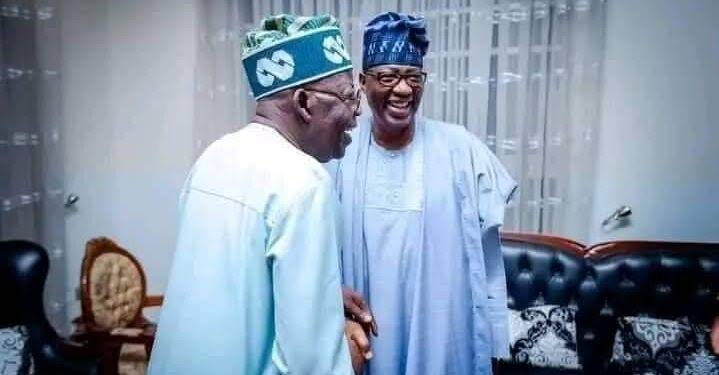
Politics rewards those who show up when it matters. The appointment of Senator Gbenga Daniel as Deputy Zonal Coordinator I (South West) of the Contact and Mobilisation Directorate of the APC Presidential Campaign Council is, in my view, a case of the right man being handed the right assignment.
Also read: GFF@25: OGD Medical Outreach Targets 15,000 Beneficiaries Across Ogun East
Consider the timing. Ogun State politics is currently thick with intrigue, rival camps and loud posturing. In such seasons, a leader’s actions say more than his supporters’ press statements.
President Bola Ahmed Tinubu has, once again, spoken through action: Senator Daniel is his friend and ally, and he is trusted with one of the most sensitive committees in the campaign. Those still trying to read political tea leaves in Ogun would do well to read this one clearly.
The Contact and Mobilisation Directorate is not ceremonial. It is where goodwill is converted into Permanent Voter Cards, and where PVCs are converted into votes.
With Borno State Governor, Prof. Babagana Zulum, leading the committee, the party has signalled that it takes this assignment seriously.
For the South West, the message is plain: the region must deliver for the President, whose lasting impact depends on the votes it brings.
Daniel is well suited to that task. He is a former Governor of Ogun State and the Senator representing Ogun East, but his political weight has never stopped at the boundaries of one senatorial district. It is felt across Ogun and throughout the South West.
He also knows national campaigns from the inside, having served as Campaign Director-General for former Vice President Atiku Abubakar. That is not experience one acquires from the sidelines.
Nor is he a politician who surfaces only at election time. Through the BATOGD Movement, which he founded, he is currently running an unprecedented medical outreach, and he is known for economic empowerment programmes that touch ordinary lives.
Mobilisation works best when it is built on genuine presence in communities, and that is exactly what he brings.
He will not work alone. Niyi Adebayo, Segun Oni and Akinwunmi Ambode share the zonal leadership with him, and each has points to prove.
The South West team is well prepared and well recommended, and the healthy competition among these political veterans may well be the region’s biggest asset.
The challenge now is delivery. Appointments are easy to celebrate; results are what history records.
Also read: GFF@25: OGD Medical Outreach Targets 15,000 Beneficiaries Across Ogun East
If Senator Daniel brings his experience, his grassroots network and his reputation as a mobiliser to bear on this task, the South West will have little reason to fear for the outcome.
For now, one conclusion stands: Gbenga Daniel is a leader to reckon with.

THERE have been low-quality rumours, and preponderous propaganda circulating that Senator Henry Seriake Dickson has been meeting at unholy hours with the All Progressives Congress with the sole intention to sell the Nigeria Democratic Congress, NDC, to Bola Ahmed Tinubu and his flock.
It is not true. Those regurgitating these stale tales sourced from the same origins which have challenged NDC, castigated its candidates, and tested things NDC in court, have refused to understand that NDC is not for sale. No matter the price.
The rumours and blackmail are admissions that the election that Tinubu thinks he has enough “strategies” to win, will be fiercely contested by NDC with the Peter Obi and Dr Rabiu Musa Kwankwaso partnership which thoroughly terrifies Tinubu reducing him to new incoherences.
What those attacking Dickson would fail to disclose is what they have offered, just as they are desperate to have him in the ruling party. He has always said, which he did again when he left the Peoples Democratic Party, PDP, with regrets over the party’s unwillingness to resolve its issues, that joining Tinubu’s party was never an option.
A further lie told about Dickson is that he cannot be bought – he has no price. Again, Dickson has a price which they miss when they parlay their desperation to have him with an eye on the devastation of the common good.
Dickson stands with the people and for the people. He has come too far in this to ruin his politics with promises of positions and elite prosperity.
He would not be allies with those who entrench policies that cast Nigerians into deeper poverty, scramble for Nigeria’s resources as if the country has a few more years before expiring yet broadcast fairy tales of their nationalism and sacrifices.
When Dickson calls himself a federalist and progressive, he is not throwing words about or striving to grab the next headline. His political and personal life has built bridges across Nigeria. Those bridges are useful as he aspires for a Nigeria where no man is oppressed.
Dickson has always stood for service, inclusiveness, the common good, governance that cares for many, and the use of education as a pulley to get millions of our people out of grinding poverty.
As a young lawyer practising in Port Harcourt, he experienced, first-hand, how governments – military or civilian – were not about the welfare of the people. The Ogoni, and Ijaw struggle for their voices to be heard in decisions on the use of the oil and gas resources that wasted their environments, hit him harder with government’s killing of Ken Saro-Wiwa and his kinsmen without waiting for the appeal window in the matter to close.
“I am not one who is scared of standing alone or afraid of saying NO when NO is the right answer. My political life is defined by service, courage of conviction, compassion, patriotism, consensus-building, and steadfastness, while living a simple life,” Dickson said of himself.
Those qualities are the price of Dickson for which he has won prizes. Those who have such convictions and are interested in investing in searches for solutions that would improve the conditions of Nigerians and enhance Nigeria’s global standing are his allies.
Dickson’s presence in politics is primed around the people, service, integrity, prudent use of state resources for greatest good of the people, and accountability.
He is also shameless about bringing up the ruinous mining practices in the Niger Delta which while delivering billions of Dollars to federal coffers have diseased many places in the region and made them uninhabitable.
In August 2025, John Tucker Mugabi Sentamu, now 76, Ugandan, retired Anglican Bishop, and Life Peer, who was Archbishop of York and Primate of England from 2005 to 2020, delivered the summary of the report on the almost irredeemable devastation of the environment in Bayelsa State and the Niger Delta, in a quivering voice that appeared propelled by anger at what human beings can do to other human beings so they could profit from oil and gas exploitation.
Dickson commissioned that investigation when he was Governor of Bayelsa State and required scientific evidence for his duels to draw Nigeria’s attention to how oil and gas exploration was killing the peoples of the Niger Delta. He expected Nigeria to reverse the situation.
Nigeria has not cared even with available weighty evidence like the Sentamu report. Pollution of the Niger Delta remains a marginal issue for the multiple agencies assumed to cater for the region.
Oil was at the centre of a key decision that Dickson made in 2002 when he left the Alliance for Democracy, AD, the legacy party under which Tinubu was Governor of Lagos for eight years. AD transmuted to Action Congress of Nigeria and eventually All Progressives Congress.
In 1998, as pioneer Chairman of AD in Bayelsa State, and its National Legal Adviser, by 2002, Dickson built the party with lean resources to produce a Senator, a Member in the House of Representatives, and three seats in the State House of Assembly in 1999 due to his dedication, commitment, strategy and the people’s belief in him.
He disagreed with the national leadership of the AD after Chief Bola Ige, the Attorney-General of the Federation, an AD member, instituted the onshore/offshore case which was against the agreement made with Dickson and his associates when they chose AD over other parties.
Senator Dickson considered the suit against the interests of Bayelsa, the Ijaw Nation and the Niger Delta, and that his membership of AD was therefore no longer tenable.
The latest version of Dickson that encapsulates his growth over the years was laid bare at the 10 May 2026 inaugural National Convention of NDC, a party he formed with like minds to liberate Nigerians from the vice grip of the All Progressives Congress.
“We have assembled at a defining moment in the life of our nation – a time of worsening insecurity, economic hardship, deepening poverty, growing national division, and declining public trust in government and institutions.
Our duty in the NDC is to reverse these dangerous trends,” Dickson, NDC’s National Leader told delegates at the very successful, inaugural National Convention of NDC in Abuja.
“The NDC was founded as an ideological party determined to do politics differently – politics of service, politics of dialogue, politics of consensus-building, politics of inclusion, politics of respect for all Nigerians, politics of unity rather than division, and politics that restores dignity to our people and pride to our nation.
“All of us gathered here today have a long history of sacrifice and service, particularly within the opposition. We have endured intimidation, propaganda, deprivation, blackmail, harassment, and countless obstacles in our democratic journey. And if those pressures did not break us before, they will not break us now, and they will never break us,” Dickson said, pointing out that NDC was a product of the dogged years of focus, vision, integrity transparency, sacrifices, that are the ingredients of his politics.
Politics for the people, politics of service, not to self, but to the people. Politics that protects those without voices or who when they speak, louder interests drown their concerns, remain his message.
Dickson has nothing to do with the ruling party. His focus is to work with friends and allies to remove the burdens that the ruling party has unapologetically heaped on Nigerians.
The realisation that Tinubu’s days are numbered, is leading him and his supporters to unleash all sorts of distractions on the opposition as “Tinubu must go” appears on apparels and in native songs that echo the agonies of our peoples across regions and religions.
Finally…
TINUBU keeps shifting the goalposts. From crashing transport fares to celebration of the CNG buses, and reduction of fuel prices at the sprinkling of NNPC stations across Nigeria. Nigerians are not fooled. They will vote out Tinubu in 2027.
WATCH the kidding and napping of the Tinubu government over 42 school kids abducted in Askira Uba Local Government Area of Borno State since 15 May 2026, 149 days. Nothing is being done about it, as Amnesty International keeps reminding Nigerians.
PARENTS of 20 NYSC members who were kidnapped on the ever-busy Onitsha-Owerri Road, on their way to Abia State to commence service, claimed they paid at least N5 million each as ransom to secure the release of their wards. Imo State Government insists no ransom was paid. Who then in Owerri organised the collection of the ransom and advised the parents to convert the money to US Dollars to enhance portability?
PLEASE answer this question honestly: How has Tinubu’s government improved your life?
MY condolences to families, friends, and the Nigerian Air Force, NAF, on the death of officers and civilians who were in its craft that crashed in Igbokoda, Ondo State. May the Almighty rest them. The calls for auditing of maintenance records of NAF’s fleet deserve attention.
ISIGUZO is a major commentator on minor issues.
-
Politics3 years ago
13 Ondo Assembly Members Disown Endorsement of Aiyedatiwa
-
Politics3 years ago
APC Group, Ondo Govt, Quarrel Over Money for Endorsement
-

 Trending News5 years ago
Stop unsavoury, inciting statements – DSS warns
-

 Others5 years ago
Adron Homes Celebrates 10 Years Of Housing Excellence
-

 Humanity5 years ago
President Buhari Commiserates With Ambassador Maureen Tamuno Over The Loss Of Her Father
-

 Others7 years ago
EX- CUSTOMS BOSS, IBRAHIM MERA’S DWINDLING FAME
-

 Business2 years ago
Bigi Carbonated Soft Drinks Treats 40 Consumers to an Epic Easter Movie Hangout
-

 Business2 years ago
Wema Bank Shines at Global SME Finance Forum Conference Awards 2024 …Awarded: • SME Financier of the Year (Africa) • Platinum Award for Best Financier for Women Entrepreneurs (Africa)