
Opinion
Power, Memory and Ambition: Inside Abiodun’s Senate Gamble

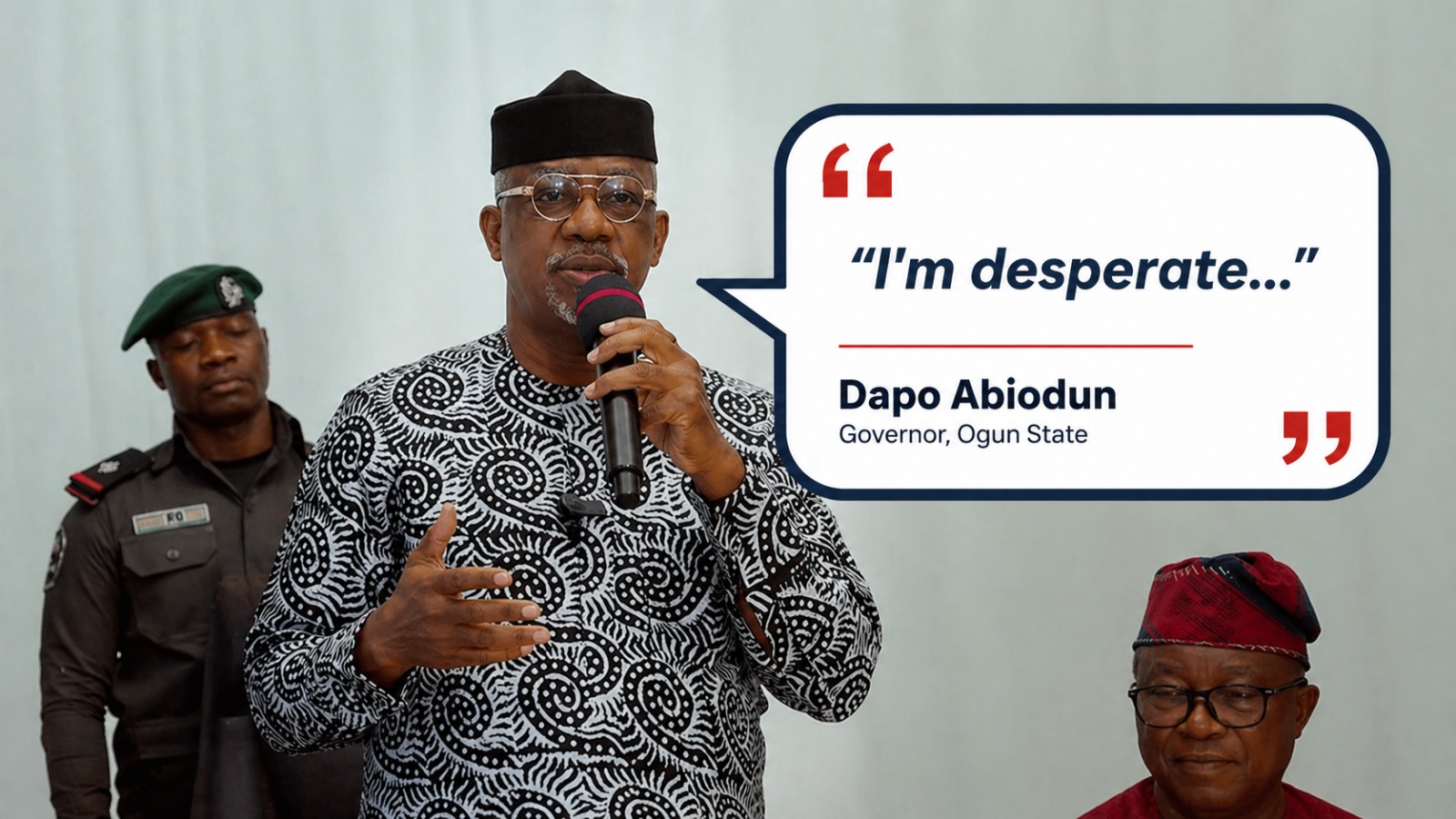
A political dispute emerges in Ogun East over competing accounts of the 2023 Senate election and rising tensions ahead of 2027
By Victor Ojelabi

In Ogun politics, memory is often short and ambition is rarely patient. That is why the recent video of Dapo Abiodun, making an emotional case for his Senate ambition, has stirred more than just sympathy. It has reopened old arguments, revived buried tensions, and forced a closer look at the truth behind the 2023 Ogun East senatorial contest.
Also read: Lagos Lawmakers Back Tinubu Second Term, Appoint Clerk
The governor, nearing the end of his tenure, appears eager to transition smoothly into the National Assembly. In the now-circulating clip, he presents himself as a key architect of the emergence of Gbenga Daniel as senator in 2023. It is a claim that, on the surface, suggests loyalty rewarded and political generosity extended.
But politics in Ogun East is rarely that simple.
For many observers, the tone of the governor’s appeal raises eyebrows. This is a man long perceived as firm, even forceful in the exercise of power.
Seeing him adopt a softer, almost pleading posture has struck some as a sharp contrast to the image he cultivated while in office.
It is this contrast that has fuelled questions about whether the narrative being pushed is one of convenience rather than fact.
At the centre of the debate is a straightforward question: did Dapo Abiodun truly play a decisive role in Gbenga Daniel’s path to the Senate?
The historical record suggests otherwise.
The journey that brought Gbenga Daniel back into frontline politics was neither accidental nor dependent on gubernatorial backing.
After serving two terms as governor between 2003 and 2011, Daniel had stepped back from partisan contests.
His return was gradual, strategic, and anchored on structures he had built over years. By the time he formally joined the All Progressives Congress in 2021, he was not a political novice seeking endorsement but a seasoned actor reactivating an existing network.
Across Ogun East, his influence remained intact. From Remo to Ijebu divisions, his grassroots connections and loyalty base placed him ahead of most aspirants even before the primaries began.
What followed in 2022 was less a coronation and more a contest of influence.
Within the APC, factions had already taken shape. On one side were loyalists of the sitting governor. On the other were remnants of the camp aligned with Ibikunle Amosun.
Daniel, though newly integrated into the party, operated largely outside these traditional blocs, relying instead on his independent political machinery.
Accounts from that period showed that Governor Abiodun was not in support of Daniel’s Senate ambition.
Party structures under his influence were reportedly directed to withhold backing. There were also administrative pressure on individuals seen to be aligning with Daniel’s campaign.
Yet, despite these headwinds, Daniel’s campaign gathered momentum.
The primary election, held in Ijebu Ode, was already tilting in his favour as delegates cast their votes. Early indications showed a clear lead. It was at this critical juncture that a different kind of power entered the equation.
Oba Sikiru Adetona, one of the most influential traditional rulers in the region, stepped in.
His intervention reshaped the outcome in a way that political manoeuvring alone could not have achieved. Through his mediation, the then incumbent senator, Olalekan Mustapha, agreed to step down.
With that decision, the field effectively cleared.
The numbers that followed reflected what had already become evident. Daniel secured an overwhelming majority of delegate votes, leaving little doubt about his dominance in the race.
What could have been a prolonged intra-party struggle was resolved swiftly, not through executive backing, but through a combination of grassroots strength and traditional influence.
By the time the general election arrived in 2023, the momentum was firmly on his side. Victory at the polls only confirmed what the primaries had already demonstrated.
This sequence of events complicates the narrative now being advanced.
If anything, it highlights the limits of gubernatorial control in a political environment where history, loyalty, and cultural institutions still carry weight.
It also underscores the enduring relevance of traditional authorities in the South West, particularly in places like Ijebuland, where their word can recalibrate political equations overnight.
None of this diminishes the reality that alliances in politics are fluid.
Otunba Daniel himself had, at an earlier point, supported Abiodun’s governorship bid, contributing to a narrow electoral victory.
But support in one cycle does not automatically translate into control in another.
Today, as the contest for Ogun East ahead of 2027 begins to take shape, the lines are once again being drawn.
The relationship between the two men has clearly evolved from cooperation to competition.
What the current moment reveals is not just a clash of ambitions, but a contest over narrative. One side seeks to frame history as an extension of its influence.
The other stands on a record built through independent mobilisation and timely alliances.
For voters in Ogun East, the question may ultimately come down to credibility.
Beyond campaign rhetoric and emotional appeals lies a more enduring consideration: who truly understands the dynamics of representation, and whose track record aligns with the expectations of the people?
Is it someone who left Oke Mosan and came back after 12years with overwhelming supports to win the senate seat or someone who is yet to exit Oke Mosan, yet has more than half of Ogun people wishing he was never a governor?
Also read: Lagos Lawmakers Back Tinubu Second Term, Appoint Clerk
In the end, politics may allow for reinvention, but it rarely permits a complete rewriting of events.
So Dapo, stop lying.


Bola Bolawole questions Nigeria’s democratic future, citing poverty, illiteracy, corruption and political rivalry as obstacles to credible elections

The All-Nigeria Rotary Peace Summit will examine how good governance, justice and equity can help Nigeria build lasting peace

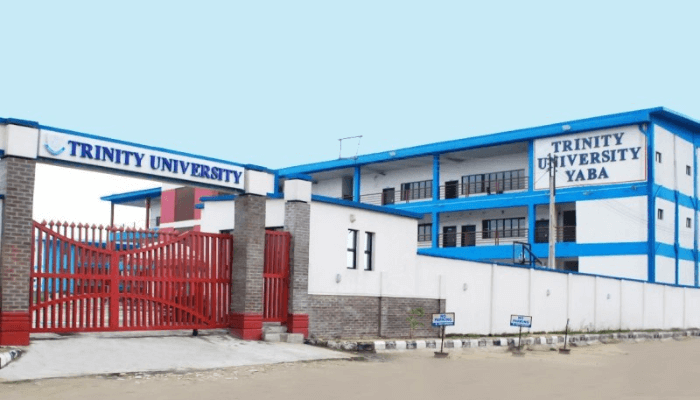
The above title is a combination of the theme of the 5th convocation ceremony of Trinity University, Yaba, Lagos, and the title of its convocation lecture delivered by Professor Bode Ayorinde. The Vice-Chancellor, Professor Clement Olusegun O. Kolawole, had kicked off the convocation activities on Monday, 12 October 2026, with a press conference, followed by other week-long activities which included the presentation of its Nursing Science and Medical Laboratory Science graduates for induction into the Nursing and Midwifery Council of Nigeria and the Medical Laboratory Science Council of Nigeria respectively.
From a private university that started with just nine pioneering students in 2019, Trinity University graduated a total of 323 students across various disciplines penultimate week, with 79 of them achieving First Class honours, two of whom got a perfect 5.0 Cumulative Grade Point Average (CGPA).
I wish every graduating student from Nigerian universities — private as well as public — had the opportunity to listen to Ayorinde’s convocation lecture titled “Navigating the Troubled World: Understanding the World, Confronting Its Troubles, and Equipping the Next Generation for Survival and Significance”, which was delivered on Thursday, 15 October 2026. A one-time member of the House of Representatives, Ayorinde is the Pro-Chancellor and Chairman of Council of Achievers University, Owo, Ondo State.
He started by saying he chose the word “navigating” deliberately because “a navigator does not simply react to events but studies the terrain, knows the direction of travel, spots the dangers, chooses a route, adjusts as conditions change, and keeps the destination in view.” According to him, the navigator must learn to “navigate a world of extraordinary opportunities and formidable challenges. It is a world of great scientific achievements and of persistent human suffering. Information is abundant, yet truth and wisdom are scarce. Communication has become instant but human beings have not necessarily become more understanding.”
To successfully make this journey, Ayorinde counselled that we must learn not to lose faith, integrity and sense of purpose. “The world is not merely a troubled place to be endured. It is a complex human environment to be understood, navigated and, where possible, transformed. Its troubles come from human choices, failing institutions, economic pressure, technological disruption, damage to the environment and spiritual disorientation.
They differ from country to country, from one person to another, and from one state to the next. Here in Nigeria, we face serious problems of security and welfare, and the opportunities for survival, let alone prosperity, are limited.” Hearing these, I sighed!
Our World Is Complex
Ayorinde then admonished that as graduates of a Christian university, their task is threefold. “First, to understand the world as it is. Second, to develop the competence and character to survive in it. Third, to use your education and faith to make it better.” He therefore built his lecture around three questions: What is the world we live in made of? What has made it troubled? How can we navigate this world and still shine?
Ayorinde divided the world into the physical and natural world (made up of land, water, air, forests, minerals, oceans, plants, animals, and the ecosystems which sustain life and which we depend on for food, shelter, energy, medicine, transport and industry); the human world or “the world of people”, as he called it; the political and institutional world (made up of governments, constitutions, courts, legislatures, regulatory authorities, international and business organisations — all of which are the bodies through which society exercises authority); and the economic and financial world (responsible for the production of goods and services, trade, employment and investment, together with banking, insurance, taxation, public finance and the distribution of resources — which all of us take part in, whether as workers, entrepreneurs or consumers).
He then charged the graduates that “understanding the economic world is essential. A degree gives you academic knowledge but financial literacy teaches you how to earn, save and invest.”
The other “worlds” that he listed include the scientific and technological world, and the question for the fresh graduates, he said, “is not whether technology will affect your life. It will. The question is whether you will understand it well enough to benefit from it and to manage its risks”; the cultural and moral world or the “world of values” where the role of education is not only to sharpen the intellect but also to “free the mind and equip the learner to weigh the values of the world around them before making choices”; and the international and interconnected world where, whereas nations are “separated by oceans and man-made barriers… yet nations are bound together by trade, finance, migration, technology, diplomacy, security arrangements and environmental systems. No nation lives in complete isolation.”
In clear reference to the Strait of Hormuz debacle, Ayorinde said “a conflict thousands of kilometres away can change the price of fuel in Nigeria.” While an interconnected world “creates room for cooperation and prosperity, it also lets shocks cross borders quickly”; as a result of which he counselled that we need to “understand the world beyond our immediate surroundings.”
Finally, he spoke of the spiritual world and described human beings as “moral and spiritual beings searching for identity, belonging and purpose in the world we live in… Rightly understood, spirituality does not pull us away from the problems of society. It strengthens our resolve to face them.”
Ayorinde then described the world in which we live as troubled, but added that this is nothing new. “Every generation has faced wars, whether local, national, regional or global, as well as disease, economic hardship, social tension and uncertainty. What sets our time apart is the speed, scale and interconnectivity of many of these challenges.”
Wars, geo-political rivalries and insecurity; poverty, unemployment and economic insecurity; inflation, indebtedness and rising cost of living; climate change and environmental degradation; misinformation, social division and the crisis of truth; loneliness, mental pressure and the crisis of meaning; the crisis of values and loss of purpose; and the crisis of drug abuse were some of the other “troubles” of our world that Ayorinde painted in a picture that troubles the soul.
Describing the rate of drug abuse, particularly among our youth, as “sobering”, he said the country’s first national drug use survey carried out in 2018 with the support of the United Nations Office on Drugs and Crime “found that 14.4 per cent of Nigerians aged 15 to 64 had used a psychoactive substance other than alcohol and tobacco in the previous year.” That, I dare to say, must be stale news! The figures must be far higher by now. He then advised that the National Drug Law Enforcement Agency be invited to talk to students on the adverse effects of drug abuse.
Adding Value to Degrees and Certificates
Ayorinde admonished that whereas university degrees remain valuable, they may no longer be enough.
“You must understand the community, the state, the country and the world in which you intend to live and prosper.” So the question for a university graduate is not just “Where can I find a job?” but “What problem can I solve? What value can I create? What can I contribute to national development?” You must also accept this basic fact that despite all the challenges the world faces, honest people still survive, and they go beyond survival to achieve significance.
So today’s graduating students should endeavour to anchor their lives in enduring values, be financially literate, use technology with judgement, look after themselves (health is wealth), expect disappointments and setbacks (tough times never last but tough people do), stay honest under pressure, live for others, and work hard. While Ayorinde stressed survival instincts, he insisted that this should not be seen as the ultimate. “We should aspire to be significant,” he added.
“The future is not shaped only by presidents, governors, chief executives or global institutions. It is also shaped by the decisions of ordinary people who choose to act responsibly. You may not all become famous. You may not all hold public office, build large businesses or become wealthy. But every one of you can become a person of integrity, competence and positive influence, and that is a worthy ambition.”
Yes, it is! You can guess that I thoroughly enjoyed the lecture, the opportunity cost of which was foregoing some other equally important engagements.
Appeal to the FG
The convocation ceremony took place the next day, Friday, 16 October 2026. In attendance were the university’s Chancellor, Dr Samuel Adedoyin, OFR, and his wife; Pro-Chancellor and Chairman of Council, Pastor Samuel O. Olatunji; the Executive Secretary of the National Universities Commission (NUC) was represented; members of the Board of Trustees and of the Governing Council; the Vice-Chancellor and principal officers of the university, Senate members, representatives of sister institutions, staff, students and invited guests.
In his address, the Vice-Chancellor explained why the university was holding two convocation ceremonies within one year. “The Governing Council of the university approved management’s recommendation to bring the convocation ceremony… near the calendar year that the students conclude their programmes of study and, thus, release them for the mandatory national youth service, their admission into foreign universities, which take them far and near, and prevent a situation where only a few of the students concerned show up, particularly after they have participated enthusiastically in their professional induction ceremonies, which usually take place before the convocation ceremony itself.”
Congratulating the graduating students, Kolawole said they had been found worthy of both learning and character, warning that no one who falls short in any of the two would be awarded the university’s honours.
The university has come a long way, he said, reeling out achievements which include increased staffing, additional classrooms, laboratories, offices and hostel facilities. “The Governing Council approved the promotion of Dr Christiana Modupe-Ade Adetunji to the rank of Professor, the first in the history of the university. In addition, five other academic members of staff are currently being processed for elevation to the professorial rank, and we trust that the process will be completed soon.”
Kolawole also disclosed that three academic programmes have been added to the programmes on offer in the university; all courses are accredited by the relevant professional bodies; the Senate of the university also recently approved the establishment of another Faculty to increase the number to four. The university has also taken interest in ensuring that its students have skills that can help them to be gainfully employed when they graduate, thereby making skills acquisition a compulsory part of its curriculum.
Kolawole did not end his speech before appealing to the Federal Government to allow “students in private universities and institutions… to benefit from the innovative financial support that those in public institutions enjoy under NELFUND. Similarly, private institutions and their workforce should also benefit from the support of TETFund because they are Nigerians who should not be discriminated against simply because they are studying or working in private institutions.”
Well said!
-
Politics3 years ago
13 Ondo Assembly Members Disown Endorsement of Aiyedatiwa
-
Politics3 years ago
APC Group, Ondo Govt, Quarrel Over Money for Endorsement
-

 Trending News6 years ago
Stop unsavoury, inciting statements – DSS warns
-

 Others5 years ago
Adron Homes Celebrates 10 Years Of Housing Excellence
-

 Humanity5 years ago
President Buhari Commiserates With Ambassador Maureen Tamuno Over The Loss Of Her Father
-

 Others7 years ago
EX- CUSTOMS BOSS, IBRAHIM MERA’S DWINDLING FAME
-

 Business3 years ago
Bigi Carbonated Soft Drinks Treats 40 Consumers to an Epic Easter Movie Hangout
-

 Business2 years ago
Wema Bank Shines at Global SME Finance Forum Conference Awards 2024 …Awarded: • SME Financier of the Year (Africa) • Platinum Award for Best Financier for Women Entrepreneurs (Africa)