News
Oil Exploration: Daniel Congratulates Gov. Abiodun, Ogun people

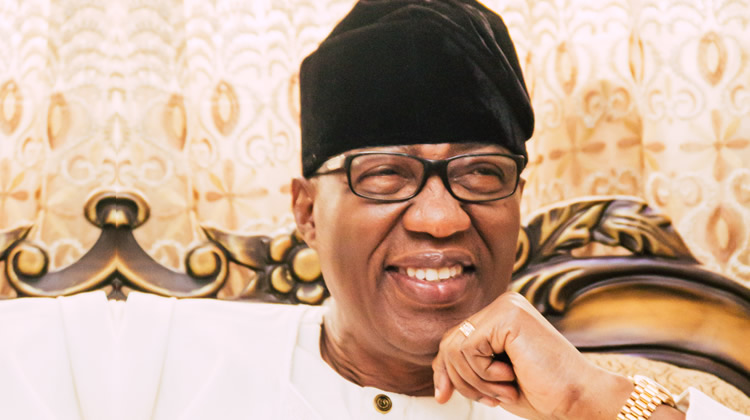

The media office of His Excellency, The Senator, Otunba Engr. Gbenga Daniel, celebrates with His Excellency, Governor Dapo Abiodun, and indeed all Ogun State citizens over the declaration of the state as a frontier state for oil exploration by Nigerian National Petroleum Corporation Limited (NNPCL).
The recognition of Ogun State oil production status by NNPCL is especially heart-warming as it signposts the fulfilment of the vision kickstarted by the establishment of the Gateway Oil and Gas Development Limited in 2003 by the Daniel Administration, with immense support from former President Olusegun Obasanjo.
In pushing for the recognition of Ogun State as an oil producing state, the Daniel Administration undertook three-dimensional seismic study of oil and other minerals deposits in the state. The seismic survey covered a vast stretch of the water body in Ode Omi in Ogun Waterside Local Government, all through the Laogo Island, Imobi, Itasin riverine areas in the Ijebu East Local Government and Tongeji Island in Ipokia Local Government Area. The study then sparked a $50 million investment pledge by PGS Exploration Nigeria Limited in April, 2004. Also, a large deposit of Phosphate was also discovered around Olusosun in Ifo Local Government area which necessitated the siting of the Gateway Fertilizer Company at Olusosun. The Ogun State Agro-Cargo Airport in Iperu/Ilishan and the Kajola FTZ in Ifo were conceived to provide Transport logistics hubs to support all these initiatives.
The arguments of the Ogun State Government then was that it is the only littoral state on the Benin Trough (that is now referred to as Dahomey Basin) that was yet to be recognized as an Oil Producing State. Several strategies were deployed to drawing the attention of the Federal Government to Ogun State with a view to establishing it as an Oil Producing State. Part of the strategies included the hosting of then-NNPC Group Managing Director, Engr. Funsho Kupolokun and other top officials of the oil corporation at a colourful event held at the Valley View Auditorium of the Government House, Oke Igbein, Abeokuta, leveraging the event to get Ogun listed as an oil producing state.
In 2007, a formal Memorandum of Understanding (MoU) on a multibillion-dollar Olokola Liquefied Natural Gas (OK LNG) project between Ogun and Ondo State governments (joint owners of the Olokola Free Trade Zone) and the Nigerian National Petroleum Corporation, as it then was; Chevron, Shell and British Gas (who were the promoters of the project), was signed. The Olokola Free Trade Zone was also billed to host petro-allied establishments such as the Dangote Refinery (now relocated to Lagos). Those in attendance at the signing of the MoU include the Group Managing Director of NNPC, Engr. Funso Kupolokun who also served as the Chairman of the Project’s Steering Committee; the Managing Director of the Nigeria Export Processing Zone Authority (NEPZA), Mr. Shina Agboluaje and a host of others.
Otunba Gbenga Daniel, as the Governor of Ogun State then, at the event, described Ogun State as ” _a veritable factory of skilled manpower that would be readily available for the different players in the FTZ. With ten higher institutions, our state is regularly turning out a considerable number of available manpower that are waiting to be trained further and engaged for productive activities”_ . In order to leverage this skilled manpower base, the administration of Otunba Daniel established the Gateway Industrial & Petro-Gas Institute (GIPI) in 2006, to train technical and professional personnel to support the maintenance of the proposed refinery, petrochemical and allied industries with the aim of creating substantial employment opportunities for the youth and citizens of Ogun State. It is worthy to note that some students of the Gateway Industrial & Petro-Gas Institute then got sponsorship to study in Qatar for the needed skills on Underwater Welding in the oil & gas sector. Furthermore, four ICT Polytechnics (Ijebu Igbo, Igbesa, Saapade and Itori) were also established to create major technical and manpower feed for all three specialised Free Trade Zones (Ogun/Guangdong in Igbesa, Olokola and Kajola) for which Ogun State had obtained licenses to operate. As of 2011 over 60 Chinese companies had started operations at the Ogun/Guangdong Free Trade Zone and in fulfilment of the Agreement duly signed with the Ogun State government, sponsored no fewer than 10 citizens of the state on full scholarships to various technical universities and institutions in China.
We wish to thank Governor Abiodun for seeing through this great vision for which he was first appointed by Governor Daniel in 2009 to succeed Otunba Alex Onabanjo, as Chairman, Gateway Oil and Gas Committee alongside other eminent individuals such as Chief Bode Mustapha (Vice Chairman), Mr. Femi Babalola (Secretary), Mr Idowu Togun, Mr. Wemmy Osude, Mr. Femi Mafe, Late Chief Engr. Femi Tetede.
May we also seek this opportunity to appeal to Governor Abiodun to kindly revisit the situation of GIPI and support its revitalisation in order to take advantage of these underutilized developments.
We also wish to draw the attention of the governor to pending construction of the Makun Omi Bridge via Efire, which was planned by the OGD administration but could not be realised due to the turbulent politics of that time.
We are certain that with the right political will and sincerity of purpose, Ogun State is on its way to economic prosperity as contained in the 25-year development master plan emplaced by the Daniel administration.
God bless Ogun State
God bless Nigeria.




Former journalist recalls the friendships, newsroom battles and defining moments that shaped one of Nigeria’s most influential newspapers
-
Politics2 years ago
13 Ondo Assembly Members Disown Endorsement of Aiyedatiwa
-
Politics2 years ago
APC Group, Ondo Govt, Quarrel Over Money for Endorsement
-

 Trending News5 years ago
Stop unsavoury, inciting statements – DSS warns
-

 Others5 years ago
Adron Homes Celebrates 10 Years Of Housing Excellence
-

 Humanity5 years ago
President Buhari Commiserates With Ambassador Maureen Tamuno Over The Loss Of Her Father
-

 Others7 years ago
EX- CUSTOMS BOSS, IBRAHIM MERA’S DWINDLING FAME
-

 Business2 years ago
Bigi Carbonated Soft Drinks Treats 40 Consumers to an Epic Easter Movie Hangout
-

 Business2 years ago
Wema Bank Shines at Global SME Finance Forum Conference Awards 2024 …Awarded: • SME Financier of the Year (Africa) • Platinum Award for Best Financier for Women Entrepreneurs (Africa)