
Politics
The IBADAN DECLARATION by Nigeria’s leading opposition politicians…

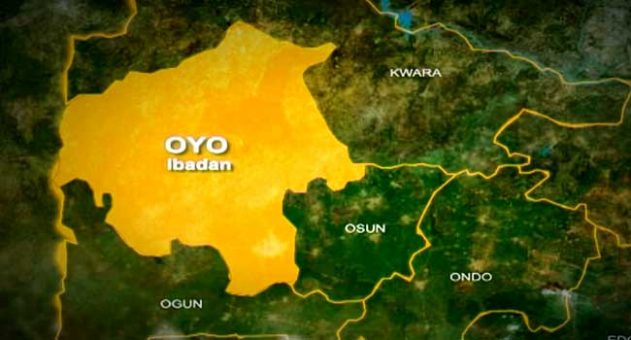
Opposition leaders Ibadan meeting raises concerns over democracy, unity and 2027 elections amid tensions with ruling APC

The country’s leading opposition political parties descended, last week Saturday, on the historic city of Ibadan, the capital of Oyo state, sounding frantic – and they were right! The existential threat they said confronts them is more real than imagined.
Also read: Adron Homes Deepens Cultural Footprint at Ibadan Festival
Our people have a saying: when you see an elder running in broad daylight, if he is not pursuing something, something is pursuing him! In the case of the opposition party elders in question, not only are they pursuing something, something is also pursuing them!
At the last count, up to five of them are said to be desperately pursuing the presidential ticket of the opposition in next year’s presidential election.
The incumbent, Asiwaju Bola Ahmed Tinubu of the ruling All Progressives Congress, would have none of that! Armed with all manners of political cudgels and legal subterfuge, Asiwaju is pursuing and scattering the opposition in different directions – and he makes no secret of it! Ibadan – what an apt place for such a conglomerate of endangered opposition politicians to seek refuge!
John Pepper Clark’s laconic poem of the same name, Ibadan (1965), goes thus: “Ibadan/Running splash of rust and gold/Flung and scattered among seven hills/Like broken china in the sun.”
Let’s try and “appreciate” this poem like we were wont to do in our secondary school Literature class.
In the present circumstances, the opposition politicians are RUNNING helter-skelter; both the elderly among them and the young (SPLASH OF RUST AND GOLD ),
FLUNG AND SCATTERED in many directions (some of them are cooling their heels in custodial detention; others in “open custody” with EFCC and INEC’s sword of Damocles swirling over their head), far beyond SEVEN HILLS , home and abroad, with no respite in sight, like BROKEN CHINA (PDP is broken, Labour Party is broken, ADC is broken, NNPP is broken, which one again?), all in broad daylight (IN THE SUN), and under our very nose; nothing is hidden, in a dare-devilry manner, challenging us to dare the opposite if we can! Ibadan, the political capital of the south-west!
What a historic venue for a gathering of politicians desperate to break what they now see as weaponized defections, the danger of one-party rule, and creeping fascism!
It was here in Ibadan, in January 1952, that the country’s first historic defections took place in the Western Region House of Assembly; the cross-carpeting that ended the ambition of Dr. Nnamdi Azikiwe, after conquering his native Eastern Nigeria, to also add Western Nigeria to it as icing on the cake! Pluralism is the soul of democracy.
Thus did Chief Obafemi Awolowo become the Leader of Government Business/Premier of the Western Region, making possible the many “firsts” that his government later achieved: Free education, first television station in Africa and some parts of Europe; Liberty Stadium; Cocoa House, the tallest building in West Africa; the Government Reservation Areas, the Business Districts and Industrial Development Areas; the farm settlements, the University of Ife, among others.
Three years ago, a group of journalists on tour of Oyo state were shown relics of the Independent Power Project started by the Awolowo government still standing within the precincts of the Government Secretariat in Ibadan.
If only democracy had been allowed to survive much longer during the First Republic! Ibadan – Home to some of Yorubas most iconic and controversial politicians – Adegoke Adelabu aka Penkelemesi; Adisa Akinloye of the AMA Champagne fame; Richard Osuolale Akinjide aka Mr. Twelve two-thirds; “eccentric” Dr. Omololu Olunloyo; strongman of Ibadan politics, Busari Adelakun aka Eruobodo; and the Oga pata-pata of them all – Lamidi Adedibu – the “Generalissimo and Garrison Commander of Ibadan politics”, so crowned by sitting President Olusegun Obasanjo! Is Engr. Seyi Makinde, the Oyo state governor, cast in the mould of any of these his forebears?
Appearance says no, but his tenacity, the single-mindedness of purpose with which he has pursued the project of standing against Tinubu/APC’s conquest of the opposition, says otherwise.
He is the last man standing of all PDP governors, just as Tinubu was the last man standing of all the south-west’s Alliance for Democracy governors under the hammer of Obasanjo at the beginning of the current Fourth Republic.
Makinde does not speak in his closets. He thunders in the open. He was the host of the gathering of opposition politicians that sent a clear and unmistaken signal of “prepare for war” to Tinubu and APC last Saturday.
Depending on which side of the divide you pitch your tent, his allusion to “Operation Wetie” has both been vilified and applauded.
For those against, it is incitement to violence, reckless and unworthy of someone holding the high office of a state governor. But for those supporting, it is a timely reminder of where and how the rain started beating us, to use David Mark’s exact words at the Ibadan meeting. It may be that we would heed and pull back from the edge of the precipice! Ibadan
Where the almighty Bola Ige, our own Cicero, fell to the simple but superior strategy of the political minnows he had underrated! OMO WA NI , E JE O SE! was the simple refrain that sent Bola Ige out of the Agodi Government House, paving the way for Olunloyo to become the first Ibadan SHON OF THE SHOIL to govern Oyo state. Don’t underrate Ibadan! You do so only at your peril!
When the opposition politicians gathered in Ibadan, their only consideration could not have been to feel comfortable in a friendly territory or environment – for there must have been many of such all over the country – they probably were sending a coded message to the Jagaban (the head of warriors), that they were ready – and able – to confront and beard the lion right in its lair, the south-west being Tinubu’s home base, as it were! Battle royal! Ibadan,
epicentre of OPERATION WETIE and the WILD, WILD WEST (1962 – 1966) events that later spread to the nooks and crannies of the south-west, leading to a chain of actions that eventually led to the collapse of the First Republic.
Gov. Makinde’s allusion to the events leading to that catastrophe, no doubt, sent shivers down the spine of many, causing trepidation and raising an alarm.
Is the sky truly ominous? Are we on familiar terrains? Have we learnt nothing from history? Or is this mere scare-mongering? Is Makinde crying wolf where there is none?
But better to err on the side of caution! It will be too costly to repeat the mistakes of the past.
But what exactly does the opposition want? What aileth them? The communique issued at the end of their one-day meeting says it all.
It reads: “That we shall resist all machinations by the APC to foist a one-party State on Nigeria and fight for the survival of multi-party democracy in our country.
“That despite the onslaughts and manoeuvrings of the ruling party, the APC, to impose President Bola Tinubu as the sole presidential candidate in 2027; we shall field candidates and contest the 2027 presidential and other elections.
“That we shall work towards fielding one presidential candidate for the 2027 elections, which shall be agreed (upon) and supported by all participating opposition parties to rescue our nation and her long-suffering masses.
“That the INEC Chairman, Prof. Joash Ojo Amupitan, having shown bias and partisanship in favour of the ruling APC, should not conduct the 2027 general elections as Nigerians across board have lost confidence in him and his capacity to guarantee the required neutrality to deliver free, fair, transparent and credible elections.
His continuous stay in office is vexatious and capable of triggering widespread crises in our nation.
“That the National Assembly should immediately review the Electoral Act, 2026 to remove all sections that threaten the sanctity and integrity of the elections and (which also) run counter to constitutional provisions.
“That all leading politicians that are being detained or harassed on bailable offences be released with immediate effect and (be) allowed to exercise their fundamental rights of participation and inclusivity as Nigerians.
“That we consider the recent guidelines released by the INEC as obstacles deliberately engineered to impose conditions and deadlines on opposition parties. We therefore demand that INEC extend the deadline for primaries till the end of July 2026.”
Knowing as we do that talk is cheap but performance is Herculean, the question must be asked whether the opposition politicians can walk their talk at Ibadan, especially on the vexed issue of agreeing on a sole presidential candidate among its numerous contenders, to face the incumbent in the 2027 presidential election.
Or will personal ambition and self-interest continue to trump the need to work together, which was orchestrated at their Ibadan meeting?
While it can be argued that many of the opposition politicians are the architects of their own present difficulties, will it not also be self-destructive to throw the baby away with the dirty bath-water?
The Ibadan meeting – and its declaration – raised the hope of many, especially those who tremble that the country totters on the road to one-party rule.
Political parties may all have become nothing more than mere Special Purpose Vehicles for the sake of contesting election; in the absence of ideological departmentalization, political parties are nothing more than different fingers of the same leprous hand; meaning that real choice, in the absolute sense of the word, may not exist for the electorate who are constrained and constricted to choose from political parties of the same decadent ideological persuasion.
But bad as that is, matters are made worse, indeed insufferable, if making a choice within this limited space is again denied the electorate.
It is in this regard that I think opposition political parties, for whatever they are worth, should be allowed to breathe.
I close with the famous slogan from one of my heroes, the Chinese revolutionary leader, Mao Zedong’s 1956-57 Hundred Flowers Campaign, which says: “Let a hundred flowers bloom, let a hundred schools of thought contend.”
Also read: Olubadan of Ibadan, Oba Adetunji Is Dead
And the Igbo proverb made popular by Chinua Achebe in Things Fall Apart (1958): “Let the kite perch and let the eagle perch too. If one should say no to the other, let his wing break.”


Delta APC condemns election violence and pledges an issue-based campaign ahead of the 2027 elections, urging restraint and lawful conduct

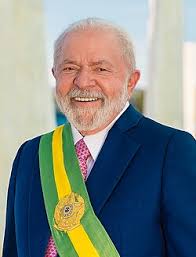
Lula Wins Historic Fourth T Lula wins Brazil election with 51.79% of valid votes as Flávio Bolsonaro challenges the result, setting the stage for a tense political transition
Brazilian President Luiz Inácio Lula da Silva secured re-election in Brasília on Sunday, 25 October 2026, defeating far-right challenger Flávio Bolsonaro in a closely fought presidential run-off, while the defeated senator rejected the outcome and vowed to seek annulment of the vote.
Also read: Ebola: NCDC Offers ₦100,000 Weekly Support to Contacts in Isolation
Official results gave Lula 51.79 per cent of valid votes against Bolsonaro’s 48.21 per cent, a margin of 4.43 million votes that secures the 80-year-old leader an unprecedented fourth, non-consecutive presidential term.
The result, confirmed by Brazil’s Superior Electoral Court, marks a remarkable turnaround for Lula, who finished behind Bolsonaro in the first round earlier this month.
It also preserves left-wing leadership in Latin America’s largest economy at a time when several countries across the region have shifted towards conservative governments.
Bolsonaro, the eldest son of former Brazilian president Jair Bolsonaro, refused to concede defeat following a tense election night marked by disputes over polling arrangements.
The senator described the decision to extend voting hours as unacceptable and said he would pursue legal action to overturn the result.
“It is impossible to recognise the results. I am going to request the annulment of these elections,” Bolsonaro said in Brasília.
His announcement has raised the prospect of a fresh legal and political confrontation, although a demand for annulment does not itself invalidate the result.
The electoral authorities have declared Lula the winner, and the president of the electoral court has said the extension of voting hours did not affect the outcome.
Lula’s victory was celebrated by thousands of supporters in São Paulo and Rio de Janeiro.
Dressed predominantly in red, the colour associated with Lula’s Workers’ Party, crowds filled streets with fireworks, flags and vuvuzelas as the final figures confirmed his return to office.
The celebrations offered a vivid contrast with the uncertainty surrounding Bolsonaro’s response.
For Lula’s supporters, the result represented a defence of democratic institutions and a rejection of the political direction championed by the Bolsonaro family. For many conservative voters, however, the narrow margin reflected continuing dissatisfaction with the government and a desire for a change in leadership.
Lula addressed supporters after the result was confirmed, emphasising the importance of democratic participation and national independence.
“People went to vote because we managed to convince them that voting was very important for ensuring democracy in the country,” he said.
He also renewed his appeal for Brazilian sovereignty, declaring that the country would not accept being treated as another nation’s subordinate.
The message has particular significance amid tensions with the United States under President Donald Trump, whose administration has pursued a more assertive approach towards the region.
The electoral dispute centres partly on a last-minute decision by Supreme Court Justice Cristiano Zanin to extend voting by two hours.
The ruling followed complaints about difficulties with public transport in several cities, which Lula’s campaign said had prevented some voters from reaching polling stations. Bolsonaro’s campaign also sought an extension in certain regions because of heavy rain.
The decision generated confusion because some polling stations had already closed before the change was communicated.
Bolsonaro subsequently questioned the legitimacy of the arrangement, pointing to Zanin’s previous work as Lula’s lawyer.
However, both campaigns had requested additional voting time in different circumstances.
Electoral authorities have maintained that the extension did not change the result, and legal experts cited by the Associated Press said Bolsonaro would need to demonstrate a substantive effect on voters’ ability to express their will to establish grounds for annulment.
The legal challenge therefore remains a claim by the defeated candidate, rather than evidence that the election was invalid. Any formal petition will have to be assessed through Brazil’s established legal procedures.
Lula’s return to office follows a campaign that initially appeared to be moving in Bolsonaro’s favour.
The senator led the first round and sought to present himself as a more approachable alternative to his father, whose political movement remains influential among conservative voters.
After the initial setback, Lula’s campaign intensified its efforts through public rallies, digital outreach and appeals to younger voters.
The abstention rate fell from 21.08 per cent in the first round to approximately 19.2 per cent in the run-off, according to Brazilian electoral figures.
The increased participation helped Lula recover ground, particularly in regions where his political support has traditionally been strong.
His campaign also sought to revive memories of his earlier administrations, when social welfare programmes and efforts to combat hunger helped establish his reputation among lower-income Brazilians.
Lula first became president in 2003 and won re-election in 2006. His political career suffered a major setback when he was convicted in corruption cases and spent more than 18 months in prison.
Brazil’s Supreme Court later annulled the convictions on procedural grounds, allowing him to return to electoral politics.
In 2022, Lula defeated Jair Bolsonaro in a narrow run-off victory. Jair Bolsonaro was subsequently convicted of attempting a coup following that election and is serving a 27-year prison sentence, a development that has reshaped the leadership and future direction of Brazil’s conservative movement.
Flávio Bolsonaro entered the 2026 contest seeking to capitalise on his family’s political following while appealing to voters concerned about crime, household expenses and the performance of the current administration.
His campaign argued that Brazil needed a fresh approach to economic management and public security.
Those concerns remain significant despite Lula’s victory. His government has pointed to improvements in employment and social welfare, but the cost of living and persistent insecurity have continued to influence public opinion.
The result suggests that many voters were willing to retain Lula while a substantial proportion remained unconvinced by his record.
The election also carried implications beyond Brazil’s borders. Lula has repeatedly defended national sovereignty in response to commercial and diplomatic pressure from Washington.
His victory means that Latin America’s largest economy is likely to continue pursuing an independent foreign policy, even as relations with the Trump administration remain a source of uncertainty.
The outcome also interrupts a broader regional trend towards conservative leadership, although the political circumstances vary considerably between countries.
Lula’s win does not signal the disappearance of the right in Brazil, where Bolsonaro’s movement retains a substantial electoral base and conservative forces remain influential in Congress.
International reactions began to emerge as the results became clear. Mexico’s President Claudia Sheinbaum welcomed the outcome, writing on social media that democracy and the Brazilian people had prevailed.
Leaders elsewhere in the region also acknowledged Lula’s victory, reflecting the diplomatic importance of Brazil’s political direction.
For Lula, the immediate task will be to turn an electoral victory into a workable governing mandate.
His fourth term is due to begin on 5 January 2027, but the narrow result means that almost half of voters who backed one of the two leading candidates chose Bolsonaro.
The president will need to address economic pressures, public security and persistent political mistrust while working with a Congress in which conservative forces remain strong.
His ability to build broader support could prove as important as the campaign victory itself.
Bolsonaro’s decision to challenge the result, meanwhile, leaves Brazil facing a period of heightened political tension.
The coming legal proceedings will determine whether his allegations develop into a formal case with sufficient evidence to warrant further action.
Also read: Ebola: NCDC Offers ₦100,000 Weekly Support to Contacts in Isolation
For now, the official result stands. Lula has secured a historic return to the presidency, but the close contest and the immediate refusal to concede underline the scale of the divisions he will face as he prepares to govern Brazil for another term.
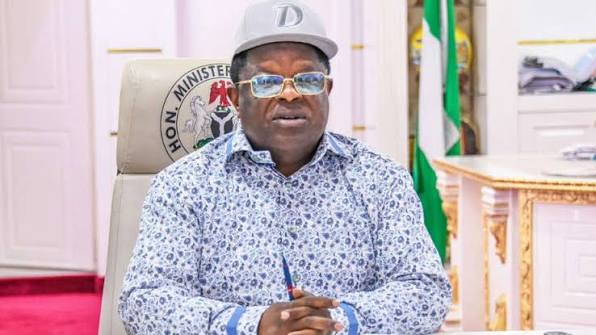
David Umahi predicts a South-East voting shift in 2027, citing Tinubu’s infrastructure projects and appointments across the region
Minister of Works David Umahi has predicted that voters in the South-East will support President Bola Tinubu differently in the 2027 presidential election, arguing that federal infrastructure projects and political appointments have changed the region’s relationship with the administration.
Also read: FG to immortalise Nigerian soldiers killed in Liberia, Sierra Leone
Umahi made the prediction in an interview with ARISE News published on Friday, describing the region’s overwhelming support for Labour Party candidate Peter Obi in the 2023 election as an “accident of history”.
He attributed the voting pattern to anger over what he described as the region’s marginalisation under the previous administration.
“In 2023, it was an accident of history. It was a demonstration of the anger of the people of South East on how they were treated,” he said.
The former Ebonyi State governor added that he believed the situation had changed under Tinubu.
“We’ve been marginalised in the past, but it’s no longer so,” Umahi said.
“If in 2023 they demonstrated their anger, in 2027 they are going to demonstrate their joy on how the President has treated them,” he added.
The minister said federal road projects and other investments in the South-East were reasons voters might reconsider their political choices in 2027.
He also claimed that serving and former governors, traditional rulers and other influential figures in the region were increasingly aligning with Tinubu.
Umahi argued that voters would be reluctant to abandon what he described as infrastructure gains for another political “gamble”.
However, his prediction reflects his own assessment of the region’s political mood.
The interview did not establish how voters currently intend to vote in 2027.
Umahi rejected suggestions that South-East political leaders supporting Tinubu were betraying the region or Obi, arguing that the region’s political interests should not be permanently tied to one candidate.
He also criticised social media supporters who insult regional leaders for backing the President, saying such attacks would not advance Obi’s political interests or those of the South-East.
The minister maintained that the region needed to negotiate and build alliances with other parts of Nigeria if it hoped to produce a president in the future.
Asked whether he believed Tinubu would defeat Obi in the South-East in 2027, Umahi responded confidently: “Why do you say I believe? That is what is going to happen!”
Also read: FG to immortalise Nigerian soldiers killed in Liberia, Sierra Leone
His comments come as political alignments and debates over regional representation begin to shape discussions ahead of the 2027 general election.
-
Politics3 years ago
13 Ondo Assembly Members Disown Endorsement of Aiyedatiwa
-
Politics3 years ago
APC Group, Ondo Govt, Quarrel Over Money for Endorsement
-

 Trending News5 years ago
Stop unsavoury, inciting statements – DSS warns
-

 Others5 years ago
Adron Homes Celebrates 10 Years Of Housing Excellence
-

 Humanity5 years ago
President Buhari Commiserates With Ambassador Maureen Tamuno Over The Loss Of Her Father
-

 Others7 years ago
EX- CUSTOMS BOSS, IBRAHIM MERA’S DWINDLING FAME
-

 Business3 years ago
Bigi Carbonated Soft Drinks Treats 40 Consumers to an Epic Easter Movie Hangout
-

 Business2 years ago
Wema Bank Shines at Global SME Finance Forum Conference Awards 2024 …Awarded: • SME Financier of the Year (Africa) • Platinum Award for Best Financier for Women Entrepreneurs (Africa)