
Opinion
Energy Tycoon Wale Tinubu Praises Otedola and Elumelu for Landmark Deals


Wale Tinubu praises Femi Otedola and Tony Elumelu for landmark 2025-2026 energy deals shaping Nigeria’s sector and investment landscape

Billionaire energy tycoon, Jubril Adewle Tinubu has hailed two of Nigeria’s influential investors Femi Otedola and Tony Elumelu for wrapping up the year 2025 and ringed in 2026 with two landmark deals.
Also read: Wale Tinubu Leads Oando’s global energy expansion
In a post Thursday on his various social handles, Tinubu spotlights Otedola’s ‘investor foresightedness’ and Elumelu’s deliberate ‘bet on African capability’ as inspiring moves in the energy sector that will spur others into a roaring start.
The Oando Plc Group Chief Executive wrote: “Reflecting on the first week of work in 2026, Femi Otedola and Tony O. Elumelu have given us a roaring start already. With the Geregu exit, Femi turned an investment in power into a landmark deal, while simultaneously deepening his position in banking. This speaks to deft positioning.“Femi, you backed investor foresight with conviction and knew exactly when to act decisively.
The mark of an exceptional investor is not simply in making an investment.
The mastery lies in knowing when to exit. This, I must admit, was executed in spectacular fashion.
“For Tony, stepping into Seplat as a major shareholder is a long, deliberate bet on African capability; on ownership; on governance and on the belief that our energy future should increasingly be shaped by those who live and build at home. These are exceptional deals that set the tone not just for the year ahead, but for how value is truly created,” Tinubu concluded.
Industry stakeholders have equally described the two billionaires’ late 2025 megadeals as a fast changing pecking order in the volatile energy sector.
Otedola had reportedly cashed out when he ceded control of his high-yielding Geregu Power Plc through a change at the holding company level.
The billionaire businessman has divested his 77 per cent controlling stake in the company in a landmark $750m transaction.
In a notice filed with the Nigerian Exchange, NGX, Otedola exited Geregu as majority shareholder with MA’AM Energy Ltd acquired 95% of his Amperion Power Distribution Co., changing the ultimate beneficial ownership of 77% of Geregu’s issued share capital.
Geregu is among the NGX’s most watched electricity stocks, helped by steady earnings in a market hit by gas constraints and payment shortfalls.
Otedola, it is learnt, intends to redeploy the capital into financial sector investments.
The Epe-born investor is the Chairman of First HoldCo Plc, a financial holding company he owns more than 18 percent of its stake.
Elumelu, the banking tycoon, also through his Heirs Group, created a sensation at the twilight of 2025 when he bought Maurel & Prom entire 20.07% stake about 120.4 million shares in Seplat Plc, in a deal valued at roughly $500 million.
Seplat’s rise has been fueled by a $1.28 billion purchase of ExxonMobil’s onshore business, completed last year, which added oil blocks, fields and export infrastructure.
On his part, Tinubu has also emerged one of the few titans who command a great deal of reverence in Nigeria’s vast and ever-evolving energy landscape.
Also read: Oando CEO Wale Tinubu praises Oramah as he exits Afreximbank
He has led his Oando Plc into a status of one of Nigeria’s best known indigenous energy names, listed in Lagos and Johannesburg, with upstream interests and trading and logistics operations


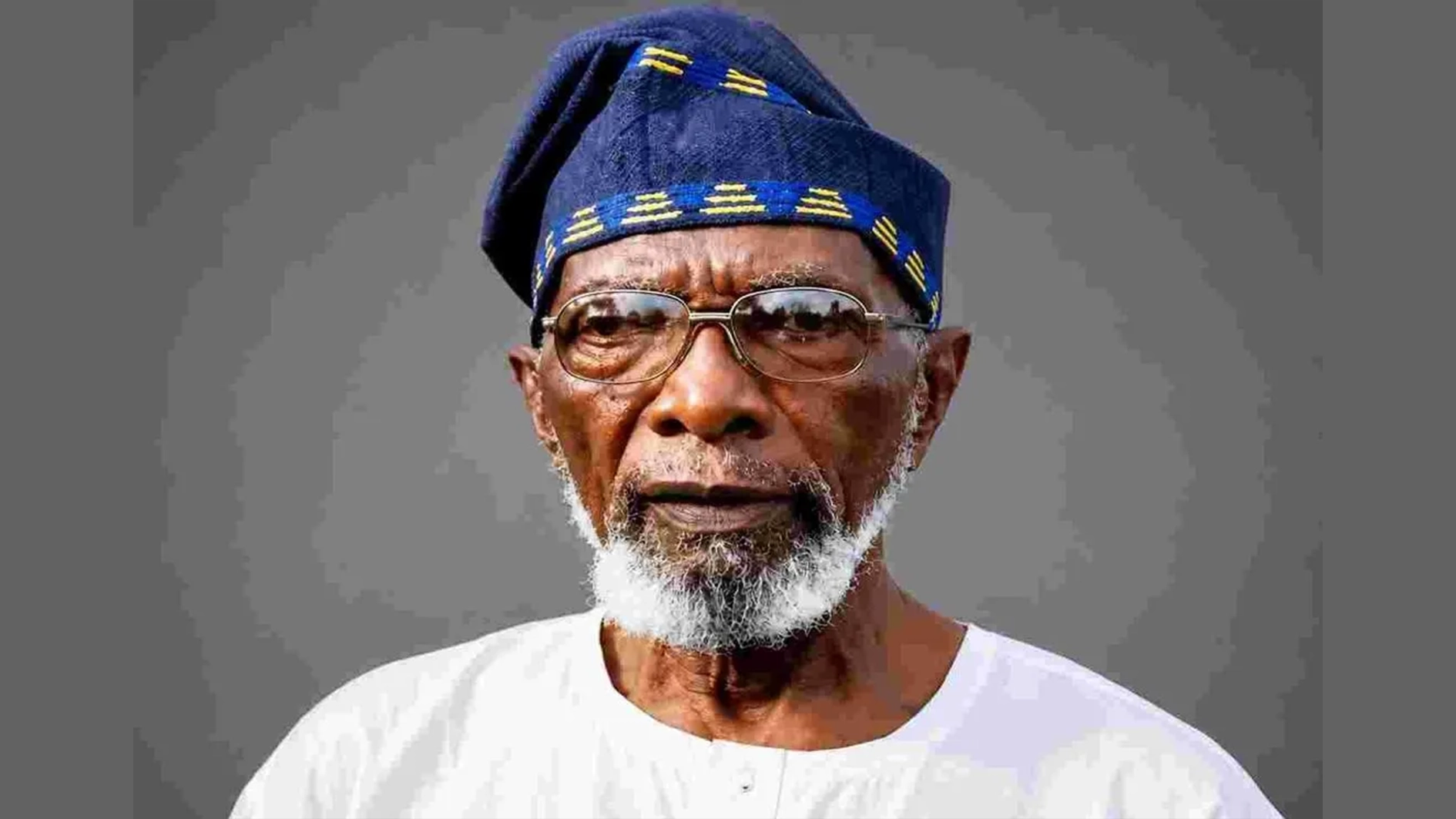
By Bola BOLAWOLE,
Dr. Segun Osoba, Marxist scholar and historian, was one of my mentors and role models. Our paths crossed long before I came face-to-face with the enigma at the then University of Ife, now Obafemi Awolowo University, Ile-Ife, where he not only taught me courses in the History department, but was also our staff adviser and comrade.
Also read: When Port Harcourt hosted Wole Soyinka
Cerebral and unflinchingly principled, Osoba snubbed the usual hussle, if I may call it that, of many academics to attain to the professoral status, preferring to remain “Dr.” even though everyone knew he was not the mate of many a professor!
For me, Osoba’s fame travelled far ahead of him. Appointed by the Murtala Muhammed regime into the Constitution Drafting Committee in October 1975, Osoba, together with his ideological soulmate, Dr. Bala Usman of the History department of the Ahmadu Bello University (ABU), Zaria, broke ranks with the other members of the CDC to author a people-oriented draft Constitution that made the Nigerian people’s interests, aspirations and well-being its focal point. It was termed the Minority Report.
Expectedly, the conservative Olusegun Obasanjo regime that succeeded Murtala Muhammed rejected the Osoba/Bala Usman report while accepting the report of the majority members of the CDC on September 14, 1976. The CDC was chaired by Chief FRA Williams.
The majority/minority report divide apart, the CDC was not without its controversies: The sage, Chief Obafemi Awolowo, had declined to serve on the committee, thereby reducing its members from 50 to 49. There was also the debate as to what would have been the choice of a much more radical Murtala Muhammed had he not been assassinated on February 13, 1976.
Specifically because of Osoba and Bala Usman, I chose to study History in the university! And I was fortunate to drink from the fountain of knowledge at the feet of Dr. Osoba on and off the classroom. As comrades, our relationship did not end at Ife; usually, comradeship is a life-long endeavour.
In late December 2023, after a spell of ‘long-time-no-see’, four of us old students/comrades of Comrade Osoba decided to visit him at his Ijebu-Ode residence – Femi Falana, SAN; Ambassador Ayo Olukanni; Kayode Komolafe (K.K.) and my humble self.
Comrade was still his very sharp and humorous self. Despite his health challenges, he still “recognised” each and everyone of us by our voice. We discussed for hours and it was amazing that ill-health spared his intellect. He was his familiar self – analytical, even if caustic, going down memory lane and recalling facts and figures as if he was reading them from a book spread out before him.
We promised to return. Unfortunately, we procrastinated, despite Olukanni’s repeated prodding. But as individuals, we attended his 90th birthday celebration held at Ijebu-Ode on 9th January, 2025. His book, “Critical and Contentious Issues in the Modern and Contemporary History of Nigeria: Collected Writings of Samuel Olusegun Osoba”, which was unveiled at the occasion, adorns my Library. See also my “Tributes to Comrade (Dr.) Segun Osoba at 90”, published in this column in the Wednesday, 15 January, 2025 edition of the New Telegraph newspaper.
Dr. Osoba passed away peacefully at home in Ijebu-Ode on 14 May, 2026. A flurry of activities by comrades from all the nooks and crannies of this country as well as abroad celebrated his life, extolled his virtues, pledged to continue the struggle from where he stopped, and bid him farewell from this earthly plane. In this were the words of Che Guevara fulfilled: “Wherever death may surprise us, let it be welcome, provided that this, our battle cry, may have reached some receptive ear and another hand may be extended to wield our weapons (Message to the Tricontinental, 1967).”
I was unable to participate fully in some of the activities because of the tragedy that fell at my doorsteps at about the same time.
First, my elder sister’s husband, Gabriel Alani Olusola Omiyale, died on June 11, 2026 at the age of 89 years. He was a mentor. Then came the bombshell: His daughter – and my sister’s second child, Abosede Oluwayemisi – died the same month on June 29th at the age of 54!
That was massive! To say we were devastated is an understatement. If the pains that attended Bose’s death remain indescribable, the ways and manners of her husband and his family immediately before and after her death remain a puzzle. They rubbed insults on our injury.
They desecrated our Yoruba customs and traditions. Bose had heroically battled the scourge of breast cancer; after undergoing an operation, we were all optimistic she was on the path to full recovery until tests showed she needed more medical attention.
Naturally, she was devastated but, gradually, she built up the confidence and strength required to see her through. No stone was left unturned by her extended family who did not leave the load for the husband and his family to carry. All hands were on deck.
The extended family had always been there for Bose. Her siblings had been wonderful; never allowing her husband’s unstable job situation to show or affect Bose’s treatment and other needs, including her children’s education and welfare. I also played my part. I am grateful to everyone who responded to our clarion call in many ways.
We were hopeful we would all pull through it and that Bose’s case would be another testimony that cancer can be beaten. All she needed – as much as medicare – were words of encouragement and support. That, however, became the weakest link!
Act one: Against the best advice of her mother, my niece was made to consume a concoction that turned the tide. According to her husband, the concoction was procured by his own brother in Akure, Ondo state, taken to a church for prayers after which it was dispatched through a motorpark! Bose drank this concoction and started vomiting. In his own testimonies, Bose’s husband took her to a hospital where she was given drips, which gave her some strength, but because the doctor was late in coming, he took her back home despite the fact that the test they ran indicated that she had a blood infection! That night at home, she started vomiting again and, according to the husband’s testimony, he took her again to the hospital by 1.30am. She was left unattended until late afternoon when she fell into a coma! Bose’s blood infection was never treated until she passed away!
Act Two: Our standard practice had been to always double-check whatever a doctor said or prescribed, but on this fatal day, Bose’s husband kept all of us in the dark. We were not told of the blood infection. We were not alerted when she started vomiting again in the night. We were not informed when he took her again to the hospital. According to him, Bose walked with her own legs into the hospital, climbing the row of stairs all by herself.
Act Three: At the hospital, the husband took Bose’s phone and locked it in the car parked downstairs. So she had no access to her phone – to call out or receive in-coming calls. She was held incommunicado. And there was no one else there with the husband and wife. He called noone; he also snubbed repeated incoming calls into his own phone, including from my elder sister, who is Bose’s mother.
Act four: Later that afternoon, the husband called me to say Bose was not responding to treatment and that I should start interceding for her. I was aghast! I had been waiting all day for them to link up with me for a scheduled appointment. Later, a female voice using the husband’s phone called me to quickly come to the hospital. I was on my way there when Bose’s second child, a girl writing exams at the Obafemi Awolowo University, called me, sobbing! “Daddy, what is happening to my Mom? My Daddy called me and said my Mummy is in coma” Coma! “Yes, sir”, the girl replied, “and my Daddy said my Mummy is dead!” I almost lost control of the wheel because I was driving.
Act Five: On getting to the hospital, they had already started embalming Bose! I screamed at the husband, but the hospital staff restrained me. Why the haste? Without any of her family members present! A thousand thoughts ran riot in my head. At 6.28 pm, Bose’s mortal remains were deposited in the morgue and we left.
Act Six: While we were agonizing about how to break the sad news to Bose’s mother, her husband and his family had posted Bose’s death on every conceivable social media platform, breaking the news to her young children, the oldest of whom is just a little over 20 years while the youngest is 14!
Act seven: We the siblings of Bose’s mother wanted a decent burial for her. We wanted her dreams and visions for her children respected. Bose’s husband and his family spurned all of that! They weaponized Bose’s young children against us. They threw their so-called customs and traditions in our face at every turn – as if the Yoruba have no customs and traditions. They employed deceit and subterfuge and hurriedly committed Bose to mother earth without any of her family members present! We warned! They ignored and played games!
Google says Edema is a name answered by both the Urhobo and Itsekiri people of Delta state. Does their culture permit the trumping of Yoruba customs and traditions? Should a husband boast to his children – while their mother was still battling cancer – that, if she dies, he will remarry? So, expect his wedding invitation!
Also read: When Port Harcourt hosted Wole Soyinka
Had Bose died of cancer, our pains would have been less insufferable; but she did not! Were they tired of the stress and wanted closure so they could move on with their own life? Hastened to her death! Hurried to the grave! This is to put the records straight. Our immediate attention, however, is the good health of Bose’s mother – and Daddy Omiyale’s burial slated for 29th and 30th of October this year.
Let Dr. Segun Osoba rest in power! And eternal rest grant Abosede Oluwayemisi Edema (nee Omiyale), O Lord!
(Published in the TREASURES column on the back page of the Wednesday, 5 August, 2026 edition of the New Telegraph newspaper).
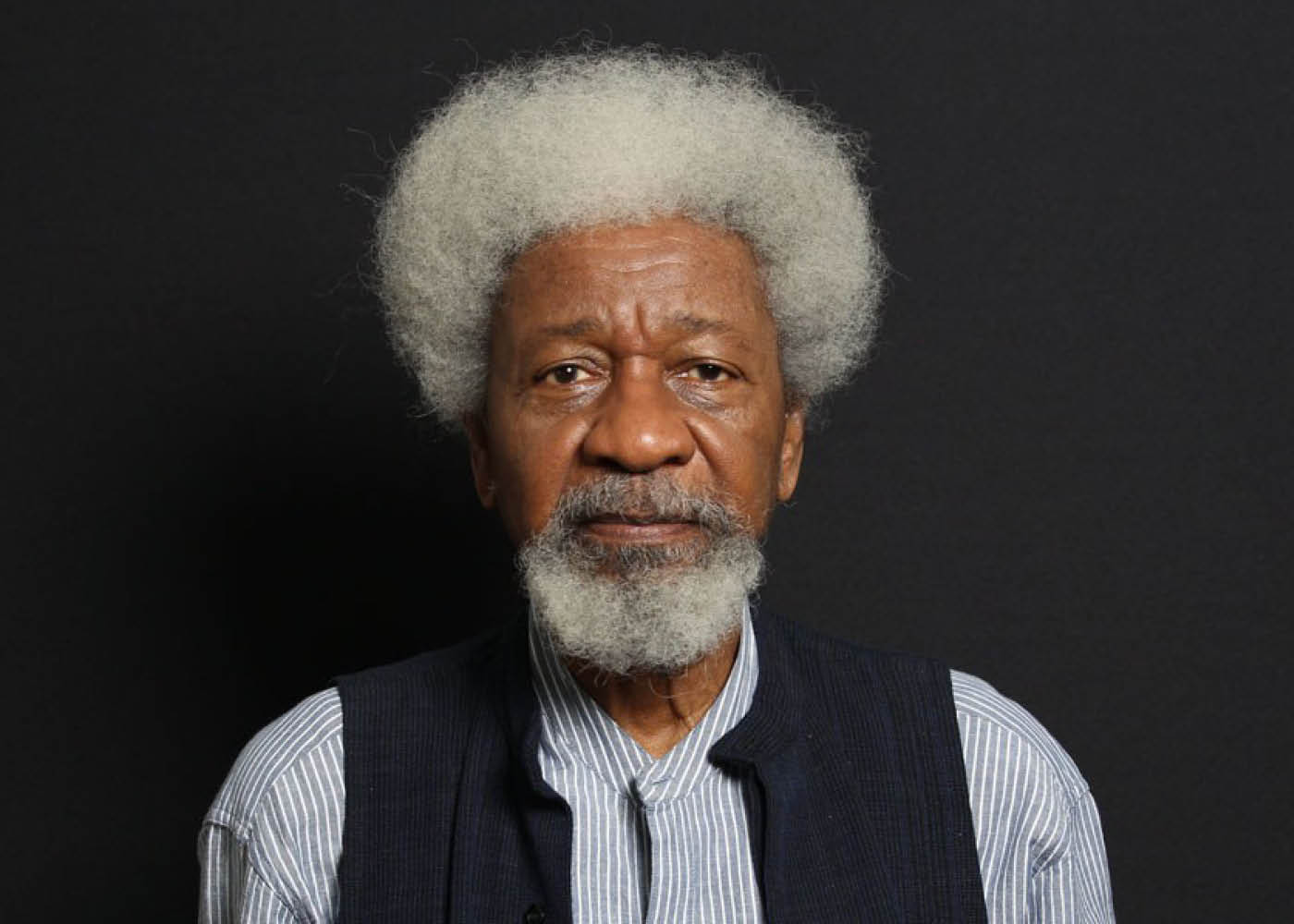
By Dr. Sam Akpe,
The hall wore a robe of expectations as minutes ticked towards the hour. The city was wrapped in the mood of impending festivity. Something was in the air. Road safety personnel and armed policemen were on duty—directing traffic and maintaining orderliness along Woji Road.
Also read: Team Nigeria’s Historic Commonwealth Games Campaign: How DG Olopade executed hitch free competition
A walk into the event hall felt like an excursion into a carnival. From the urbane music equipment emitting jazzy tunes, to the symmetrically-arranged seats, the arty wall decorations, and the storybook backdrop, poetry was on display.
Outside, directly opposite the car park, a massive poster announcing the event in the making—the Annual Wole Soyinka Lecture with a life-size portrait of the literary legend—exhibited what was about to unfold.
The imposing poster also indicated two other persons—the technocrat extraordinaire, Chief Ndutimi Alaibe, as chairman of the day, while the former Aviation and Aerospace Development Minister, Chief Osita Chidoka—was the guest speaker.
Indeed, almost the entire Port Harcourt—a city of political frenzy, soaked in oily wealth but surrounded by shantytowns—was in colourful feel of expectancy, as it awaited the arrival of Akinwande Oluwole Babatunde Soyinka, Africa’s first Nobel Laureate in Literature.
Then almost surreptitiously, the literary idol walked into the hall unannounced. Except for his traditional white hair, the big smile, and the hawk-like penetrating eyes, the hall almost missed his entry. Eventually, everyone rose in honour of the reverential figure—the father of modern political literature.
The 92-years old, with a deep voice, was in the city not just to attend a lecture in his honour, but to participate in a highbrow yearly ritual of the National Association of Seadogs, also called Pyrates Confraternity—a body of intellectual militants founded by him several decades ago.
It turned out to be quite an explosive event. Chairman of the summit, Chief Ndutimi Alaibe, known simply as ‘Timi, paid extensive tributes Wole Soyinka before setting the tone for the lecture that triggered off wide-ranging discussions.
‘Timi told the audience that Nigeria is immeasurably better today because of people like Soyinka who, throughout his remarkable journey, has consistently chosen the harder path—the path of conscience, courage, and truth—when silence could have been safer, easier, and far more rewarding to him.
Labelling the scholarly sage as a man with generosity of spirit and loyalty to friends, he applauded Soyinka’s readiness to encourage worthy causes, and the extraordinary willingness to show up whenever principle, rather than prominence was needed.
He declared, “Today, we honour you not merely with words, but with our presence and our shared commitment to engage the very questions your life has posed to our nation for more than six decades—questions of justice, accountability, freedom, and the moral courage required to build a truly democratic society.”
Besides, the lecture, the event was also a celebration of those described as the National Association of Seadogs Martyrs—a group comprising members of the confraternity arrested on February 17, 1997, imprisoned and tortured by the military in Rivers State on accusation of undue radicalism.
Their ordeal, which lasted 72 days, stated Dr Joseph Oteri, the confraternity leader, was an unplanned journey into the darkest hell of the late General Sani Abacha’s regime, “for daring to believe that Nigeria deserved better than the boot of a dictator,” until they were freed by a court of law.
‘Timi noted that the arrest and prosecution of the Pyrates was basically “for refusing to be silent in the face of oppression” describing the victims as “enduring symbols of resilience and civil courage in the struggle for the restoration of democracy and the rule of law.”
He said the anniversary of the event reminded everyone that democracy not freely bestowed; but was won through the sacrifices of countless Nigerians –many celebrated, many unsung—who endured intimidation, persecution and personal loss in defence of freedom, justice and accountable governance.
Going down memory lane, he mentioned other martyrs of democracy to include “Dele Giwa, whose fearless journalism challenged military authoritarianism until it claimed his life, Ken Saro-Wiwa and the Ogoni Nine, whose martyrdom awakened the world’s conscience to environmental justice and human rights, Kudirat Abiola, whose courage sustained the struggle to reclaim a stolen democratic mandate.
“We remember Chief Alfred Rewane, whose unwavering commitment to democracy cost him his life. And we remember Chief Bola Ige, Nigeria’s former Attorney-General and Minister of Justice, whose assassination remains, to our enduring national shame, unresolved.”
Then he added: “Whether through imprisonment or assassination, torture or intimidation, these men and women bore heavy personal burdens so that future generations might live under the rule of law rather than the rule of fear.
“Their stories remind us that civil courage is not an abstract ideal. It is rather the willingness to stand for what is right, even when the consequences are severe and deadly.
“As we honour their memories today, may we also recommit ourselves to completing the work for which they sacrificed so much—building a Nigeria founded on justice, accountability, constitutional governance and respect for the dignity of every citizen.”
The hall sat in silence, except for intermittent applauses and fulfilled smiles from Soyinka as ‘Timi recalled rare moments of encounter with the erudite professor several years ago—a part of four decades of relationship that has profoundly shaped his understanding of what Soyinka means to Nigeria.
He mentioned an instance of close interaction in 2006 when, under the auspices of the Commission of Nobel Laureates, Soyinka was part of an international mission that visited the Niger Delta to promote peaceful dialogue and undertake a fact-finding exercise in the region—including a visit to the Niger Delta Development Commission, where ‘Timi served.
He recalled that after listening to their presentation, Soyinka remarked that the NDDC had taken on an enormous burden on behalf of a beleaguered region and deserved to be remembered as one of the positive initiatives of the Obasanjo administration, adding with characteristic generosity, “I will remember to commend him when next I see him.”
Two years later, ‘Timi’s late wife, Alaere, extended an invitation to the revered literary czar who was then in the United States, immersed in an exceptionally demanding schedule, to visit ‘Timi’s village of Igbainwari in Opokuma, Bayelsa State, to inaugurate the Wole Soyinka Library—an initiative of Alaere’s organisation, Family Reorientation, Education and Empowerment (FREE).
He revealed that what made that visit even more remarkable was that Soyinka “did not merely fly in to perform a ceremonial duty and depart. He chose to spend the night in our modest country home in that remote riverine community.
“For a man of such global stature—a Nobel Laureate whose voice commanded respect across continents—it was an extraordinary act of humility. Let me add that he also tried Izon local brew.
“By his presence, he honoured not only our family but also an entire community that had long felt disregarded, affirming that no place is too small, and no people too insignificant, to deserve dignity, learning, and hope.
“He spoke with genuine admiration of my late wife’s vision, courage, and steadfast determination, recognising in her work a powerful testament to what conviction and selfless service can accomplish. He said ‘I am not often impressed with people, but she has succeeded in impressing me with her drive, her vision and her total commitment.’”
‘Timi noted that Soyinka created more impact during that visit when he spoke to the youth of the Niger Delta whose militancy at that time had emerged as one of the defining challenges confronting the Niger Delta.
Soyinka offered a wise counsel urging them to choose dialogue over violence and a future built on peace, not conflict.
With characteristic moral clarity, he challenged them to embrace “intellectual militancy in pursuit of the region’s development—a powerful call to exchange the force of weapons for the power of ideas, knowledge, and constructive engagement.”
By his confession, ‘Timi’s reminiscences were not merely out of nostalgia, but because they spoke directly to the event of the day, or as he put it, long before “reclaiming the state” became a familiar phrase, Soyinka was already living it’s meaning.
Or how would you describe a man of Soyinka’s standing journeying to a remote community which many considered too insignificant to matter, just to inaugurate a library and spend a night among strangers without ceremony or pretence, in an environment of budding militancy—with violence on parade.
Soyinka’s act simply affirmed that the true measure of leadership is not the distance one travels, but the willingness to stand with people wherever they are. ‘Timi described this as principled leadership and accountability exercised with wisdom and humility.
On the of the theme: “Reclaiming the Nigerian State through Accountability, Justice and Civil Courage” the former managing director of NDDC said it speaks directly to the realities of the Nigeria—a country we inhabit and the nation we aspire to build.
His words: “Nigeria is blessed with extraordinary human talent, abundant natural resources and remarkable resilience. Yet we continue to fall short of our collective potential. Our national challenge has never been a lack of diagnosis; it has been a failure to act consistently on what we already know.”
It was his view that too often, the institutions designed to hold power accountable have been weakened, thus making justice, for many Nigerians, a privilege rather than their inalienable right.
Restating the virtues of the confraternity, he said: “This gathering cannot, in good conscience, speak of reclaiming the Nigerian state without confronting one of the cardinal evils that the National Association of Seadogs was founded to repudiate.”
That evil, called tribalism, has birthed partisanship, clannishness, ethnic chauvinism and statism, while the enduring values of nationalism, absolute honesty, absolute selflessness, and love for all have been neglected, said ‘Timi.
He asserted that, tribalism has become less an individual prejudice than a systemic condition, coursing through Nigeria’s national bloodstream and eating away at the very fabric of our society.
He noted that reclaiming the Nigerian state must therefore begin with reclaiming ourselves—by ensuring that the principles we so proudly profess are applied consistently, without fear or favour, irrespective of tribe, political affiliation, or the identity of those who wield power.
Ultimately, he said, “accountability is sustained not by laws alone but by the courage of men and women who insist that those laws apply equally to the powerful and the powerless.”
His position was that reclaiming the Nigerian state would not be achieved by a single dramatic event, but through the steady accumulation of principled choices by citizens who refuse to be indifferent, institutions that remain faithful to their mandates, and leaders who choose integrity over expediency and courage over convenience.
Falling back on his modest experience in public service, ‘Timi said the journey has reinforced one enduring lesson in him, that sustainable development cannot exist without accountability, and that where institutions are weak, hope gives way to cynicism; where accountability is upheld, even limited resources can produce lasting impact.
Also read: Team Nigeria’s Historic Commonwealth Games Campaign: How DG Olopade executed hitch free competition
He urged participants to see beyond the event of the day as they aim to rebuild Nigeria, knowing that “nations are not reclaimed by rhetoric alone,” rather, they are reclaimed “when conscience triumphs over convenience, when institutions are stronger than individuals, and when citizens summon the courage to do what is right, even when it is difficult.”
Opinion
Team Nigeria’s Historic Commonwealth Games Campaign: How DG Olopade executed hitch free competition

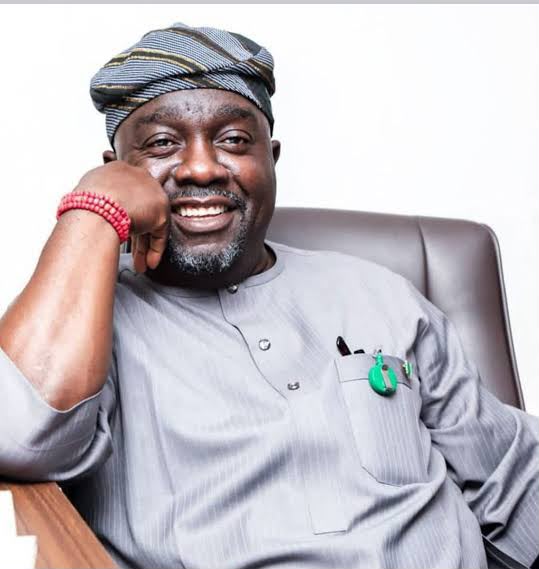
By seun oloketuyi
When the 2026 Commonwealth Games came to an end in Glasgow, Scotland, Team Nigeria had every reason to celebrate.
Also read: Michelle Alozie Says Falcons Learned From Malawi Defeat
The athletes returned home with more than medals; they brought back a renewed sense of pride after producing one of the country’s finest performances at the Games.
Nigeria finished as the highest-ranked African nation, placing seventh overall with 24 medals: 10 gold, seven silver and seven bronze.
It was truly an outstanding campaign, marked by unforgettable performances, record-breaking achievements and moments that will be remembered for years to come.
For years, Nigeria’s participation at major international competitions was often overshadowed by stories of unpaid allowances, poor welfare and administrative challenges. Those issues frequently became part of the conversation before the competition had even begun.
This time, the story was different. Under the leadership of National Sports Commission Chairman Shehu Dikko and Director General Bukola Olopade, athlete welfare took centre stage. Preparations went smoothly and the usual distractions that had affected previous competitions were absent.
As a result, the athletes competed with confidence, knowing they had the support they needed. That confidence was reflected in their performances.
Nigeria’s first gold medal came through Esther Nworgu, who delivered an impressive performance in the women’s lightweight para powerlifting event to give Team Nigeria the perfect start.
One of the defining moments of the Games came from Goodness Nwachukwu, who won gold in the women’s F42 discus throw and, in the process, broke her own world record. It was one of Nigeria’s standout performances in Glasgow.
On the track, Ezekiel Nathaniel made history by becoming the first Nigerian man to win Commonwealth Games gold in the men’s 400m hurdles. His victory further highlighted Nigeria’s growing strength in athletics.
In the field events, Chukwuebuka Enekwechi added another historic achievement by winning Nigeria’s first ever Commonwealth Games gold medal in the men’s shot put, while Idris Riluwan continued the country’s dominance in para powerlifting with another gold medal-winning performance.
Although she was nursing an injury, Tobi Amusan refused to let that stop her from competing.
The world record holder battled through the pain to claim bronze in the women’s 100m hurdles, once again demonstrating the determination and resilience that have made her one of Nigeria’s finest athletes.
Nigeria’s success was not limited to these athletes. Samuel Ogazi won gold in the men’s 400m, Ruth Usoro secured silver in the women’s long jump, while medals in relay events and other disciplines highlighted the depth of talent within the Nigerian team.
By the end of the Games, Nigeria had not only finished as Africa’s top-performing nation but had also shown what is possible when athletes are given the right support.
The success in Glasgow was about more than medals. It demonstrated the importance of proper planning, athlete welfare and effective leadership.
With Shehu Dikko and Bukola Olopade providing an environment free from the administrative challenges that had often overshadowed previous competitions, the athletes were able to focus entirely on representing their country.
The result was a historic Commonwealth Games campaign that saw Team Nigeria break records, make history and reinforce its position as one of Africa’s leading sporting nations.
As the team returns from Scotland, the medals will rightly be celebrated. But Glasgow 2026 will also be remembered for showing what is possible when talented athletes receive the support they deserve.
Also read: Michelle Alozie Says Falcons Learned From Malawi Defeat
Team Nigeria’s performance was not just a victory on the medal table, it was proof that good leadership, proper preparation and unwavering determination can inspire excellence and bring honour to the nation.
-
Politics2 years ago
13 Ondo Assembly Members Disown Endorsement of Aiyedatiwa
-
Politics2 years ago
APC Group, Ondo Govt, Quarrel Over Money for Endorsement
-

 Trending News5 years ago
Stop unsavoury, inciting statements – DSS warns
-

 Others5 years ago
Adron Homes Celebrates 10 Years Of Housing Excellence
-

 Humanity5 years ago
President Buhari Commiserates With Ambassador Maureen Tamuno Over The Loss Of Her Father
-

 Others7 years ago
EX- CUSTOMS BOSS, IBRAHIM MERA’S DWINDLING FAME
-

 Business2 years ago
Bigi Carbonated Soft Drinks Treats 40 Consumers to an Epic Easter Movie Hangout
-

 Business2 years ago
Wema Bank Shines at Global SME Finance Forum Conference Awards 2024 …Awarded: • SME Financier of the Year (Africa) • Platinum Award for Best Financier for Women Entrepreneurs (Africa)