
Uncategorized
Otti Backs Mother-Tongue Education, Cites China, India


Abia State Governor Alex Otti has advocated the use of indigenous languages as the medium of instruction in early education, arguing that Nigeria can learn from countries such as China and India where mother-tongue education has produced strong educational and developmental outcomes.

Otti made the remarks at the 24th Annual Lecture and Symposium of the Fafunwa Educational Foundation and the 19th Annual Post-Doctoral Awards in Education held at the MUSON Centre, Onikan, Lagos.
The governor said research has consistently shown that children learn better when taught in the language they understand during their formative years, adding that the debate should focus on addressing implementation challenges rather than abandoning the policy altogether.
According to him, concerns surrounding the use of indigenous languages in classrooms are genuine but have been overstated.
“If children and professionals in China suffer no disadvantage from learning in Mandarin, just like their counterparts in India or South Korea who started their learning in indigenous languages, then the fears against the use of indigenous languages for early-stage education in this part of the world may be exaggerated at best,” Otti said.
He urged policymakers to identify practical obstacles—including shortages of teachers fluent in indigenous languages and limited instructional materials—instead of rejecting the approach outright.
Otti also praised the legacy of late education icon Prof. Babatunde Fafunwa, describing the foundation’s annual lecture as an important platform for promoting research-backed educational policies. He noted that Fafunwa’s landmark studies demonstrated that children achieve better learning outcomes when taught in their mother tongue during the early years of schooling.
The governor’s comments come against the backdrop of the Federal Government’s 2025 reversal of the 2022 National Language Policy, which had proposed mother tongue or the language of the immediate community as the medium of instruction through Primary Six. The current policy retains English as the principal language of instruction in schools.
Also speaking at the symposium, University of Ibadan linguist Prof. Francis Egbokhare said Nigeria’s major challenge is not the concept of mother-tongue education but its implementation. He stressed the need for better teacher preparation, quality learning materials and effective assessment systems to make the policy successful.



Inspector-General of Police Olatunji Disu has urged Nigerians to exercise restraint when recording police officers, describing the indiscriminate filming of officers as “very, very demoralising” to the force.
Disu made the remarks during a meeting with the leadership of the Nigerian Bar Association in Abuja, where he expressed concern that some Nigerians had begun recording police officers in situations beyond their official duties, including while eating at restaurants.
The IGP, however, acknowledged that citizens have a right to record police officers performing their duties in public. He urged Nigerians not to use such recordings to turn police encounters into social-media skits or entertainment.
The comments followed a March 17, 2026 judgment by the Federal High Court in Warri, Delta State, which affirmed the constitutional right of Nigerians to record police officers carrying out their duties in public spaces.
Justice Hyeladzira Nganjiwa, in the judgment, held that citizens could record police officers during stop-and-search operations and other public interactions for purposes including documenting and reporting their conduct.
The court also held that officers should wear visible identification, including their names and force numbers, while carrying out public duties.
The judgment further restrained police officers from harassing, intimidating or arresting citizens simply for recording their activities in public, or confiscating their devices for that reason.
The court awarded ₦5 million in damages over the violation of the applicant’s fundamental rights and a further ₦2 million in litigation costs.
The case was filed by lawyer Maxwell Nosakhare Uwaifo, who said he attempted to record an encounter with men he believed to be police officers during a stop-and-search operation along the Sapele Roundabout while travelling from Benin to Warri in May 2025.
According to the case, the officers allegedly threatened to arrest him and demanded that he stop recording. Uwaifo argued that citizens have a constitutional right to document the conduct of law enforcement officers performing public duties.
The court’s ruling established a distinction between legitimate documentation of police activity and physical interference with police operations. Citizens can record officers carrying out their duties in public, but the right does not extend to obstructing or interfering with lawful police operations.
Following the IGP’s recent comments, the Nigeria Police Force clarified that Disu was not seeking to ban citizens from recording officers.
Force New Media Officer Aliyu Giwa said the concern was about the misuse of recordings, particularly when police encounters are deliberately turned into entertainment or used to ridicule officers.
Giwa said responsible recording could benefit both citizens and police officers by providing evidence in cases of alleged misconduct while also helping to protect officers against false allegations.
The controversy has therefore centred on how the constitutional right should be exercised, rather than whether citizens possess the right to record police officers in public.

Nigeria’s press freedom environment remains under significant pressure, with journalists and other citizens facing arrests, harassment, intimidation and other restrictions on civic participation.
A 2025 Journalism and Civic Space Status Report by the Wole Soyinka Centre for Investigative Journalism documented 245 verified civic-space violations between January and December 2025, based on systematic monitoring of reports from 54 media organisations.
The report, titled Silenced Voices, Shrinking Space: Civic Freedoms Under Pressure, found that state actors were involved in 219 of the 245 incidents, with the Nigeria Police Force linked to 118 of those cases.
The violations covered more than attacks on journalists alone. They included restrictions affecting citizens, journalists and broader democratic participation, with arrests, detention, harassment and other administrative, legal and institutional measures among the documented forms of infringement.
The report recorded 145 non-violent incidents, representing 59.2 per cent of the total. Arrests accounted for 49 of those cases, while detention accounted for 21 and harassment for 15.
The findings also highlighted difficult working conditions for journalists, with stakeholders raising concerns about threats from state actors, politicians and political party agents.
Participants at a stakeholder dialogue accompanying the report’s presentation also pointed to low pay, insecure employment and economic dependence within parts of the media industry as factors that can weaken journalists’ ability to resist pressure and report independently.
A separate 2025 annual report by Media Rights Agenda documented 86 incidents involving attacks against journalists, media organisations and freedom of expression rights across 27 states and the Federal Capital Territory.
The report recorded arrests and detention as the most common form of violation, with 38 cases. It also documented 21 cases of assault and battery, as well as two killings, one involving a journalist who was killed in the line of duty.
The Nigeria Police Force was identified as the alleged perpetrator in 41 of the 86 cases recorded by Media Rights Agenda, accounting for nearly half of the incidents in its dataset. The organisation also said none of the documented cases resulted in a successful investigation or prosecution of perpetrators.
The wider picture is also reflected in international press freedom assessments. Reporters Without Borders currently describes Nigeria as one of West Africa’s most dangerous and difficult countries for journalists, citing monitoring, attacks and arbitrary arrests. Its 2026 World Press Freedom Index placed Nigeria 112th out of 180 countries, compared with 122nd in 2025.
The Committee to Protect Journalists has similarly documented arrests, attacks and harassment involving journalists in Nigeria. In a 2026 letter to President Bola Tinubu, the organisation said it had documented numerous cases of journalists being detained and mistreated, while also citing data from Nigerian press freedom organisations.
The WSCIJ report warned that the pressure on civic space has implications beyond individual journalists, as restrictions on expression and public participation can weaken accountability and democratic engagement.
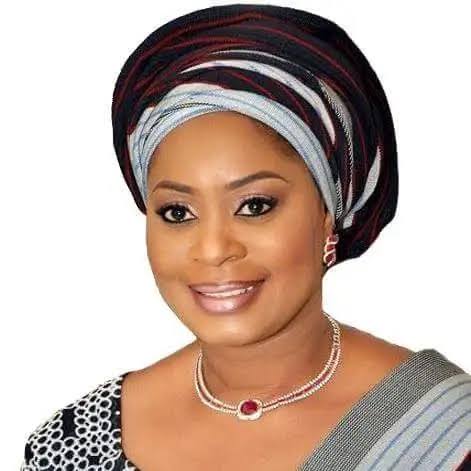
Former Ogun State First Lady, Olufunso Amosun, has urged women not to regard cancer as a death sentence, stressing that early detection and prompt treatment can significantly improve outcomes.
Amosun made the call on Wednesday during the flag-off of the 2026 free breast and cervical cancer screening programme organised by the UPLIFT Development Foundation at the Federal Medical Centre, Abeokuta.
She described the exercise as more than a routine medical check, saying it was aimed at providing women with access to early diagnosis and timely medical intervention.
Amosun, while highlighting the burden of breast cancer in Nigeria, cited Global Cancer Observatory data showing that the country recorded 32,278 new breast cancer cases and 16,332 deaths in 2022. The figures represent one of the highest breast cancer burdens on the African continent.
She stressed that the figures should reinforce the importance of regular screening and prompt medical attention, rather than create fear among women.
According to her, early detection can make a significant difference in treatment outcomes, particularly when patients receive appropriate care before the disease advances.
The World Health Organisation similarly identifies early diagnosis, timely clinical evaluation and access to comprehensive treatment as key measures for reducing breast cancer mortality. Its 2026 global survival estimates also found that survival is substantially higher where breast cancer is diagnosed at earlier stages.
Amosun urged women participating in the screening programme to take advantage of the opportunity, seek professional medical advice and avoid allowing fear to delay medical attention.
She also encouraged beneficiaries to share information about cancer awareness and screening with their families, friends and communities.
Reflecting on the foundation’s 2025 screening exercise, Amosun said more than 600 women benefited from the programme, while 22 women were identified with breast-related concerns requiring further medical attention.
She disclosed that 11 women diagnosed with suspicious breast lumps subsequently underwent free lumpectomy surgeries and received post-operative care funded by the foundation in November 2025.
Amosun said the UPLIFT Development Foundation, established in 2012, had continued to focus on cancer awareness, screening and support for women, widows and other vulnerable groups in Ogun State.
She said the foundation’s interventions were designed to extend beyond screening by helping women who require further medical investigations and treatment.
A Medical Consultant and Surgeon at the Federal Medical Centre, Ebenezer Nkom, also urged women to seek professional medical care whenever they notice changes or abnormalities in their breasts.
Nkom cautioned against relying on unproven remedies for breast cancer and stressed the importance of clinical evaluation and early treatment.
He also urged women not to allow fear of breast surgery to prevent them from seeking appropriate care, noting that reconstructive options can be considered where necessary.
Amosun further called on the women participating in the 2026 exercise to become advocates for cancer awareness in their communities.
She stressed that a cancer diagnosis does not automatically mean death, adding that awareness, early detection, appropriate treatment and follow-up care can improve the prospects of patients.
-
Politics3 years ago
13 Ondo Assembly Members Disown Endorsement of Aiyedatiwa
-
Politics3 years ago
APC Group, Ondo Govt, Quarrel Over Money for Endorsement
-

 Trending News5 years ago
Stop unsavoury, inciting statements – DSS warns
-

 Others5 years ago
Adron Homes Celebrates 10 Years Of Housing Excellence
-

 Humanity5 years ago
President Buhari Commiserates With Ambassador Maureen Tamuno Over The Loss Of Her Father
-

 Others7 years ago
EX- CUSTOMS BOSS, IBRAHIM MERA’S DWINDLING FAME
-

 Business2 years ago
Bigi Carbonated Soft Drinks Treats 40 Consumers to an Epic Easter Movie Hangout
-

 Business2 years ago
Wema Bank Shines at Global SME Finance Forum Conference Awards 2024 …Awarded: • SME Financier of the Year (Africa) • Platinum Award for Best Financier for Women Entrepreneurs (Africa)