
News
Owo Memorial Park Demolition Clarified by Governor Aiyedatiwa


Governor Lucky Aiyedatiwa clarifies the Owo memorial park demolition, citing unresolved land ownership issues and cultural objections to its location

Ondo State Governor Lucky Aiyedatiwa has clarified that the recent Owo memorial park demolition was due to unresolved issues surrounding the ownership of the land on which it was situated.
Also read: Aiyedatiwa’s Aide visits Ondo NIS comptroller, seeks support to tackle illegal mining operations
The park was built in honour of victims of the June 2, 2022 terror attack on St. Francis Xavier Catholic Church, Owo.
In a statement released on Thursday by his Chief Press Secretary, Ebenezer Adeniyan, the governor emphasised that the action was not intended as a sign of disrespect to the victims’ memory.
Aiyedatiwa stated the decision followed consultations with the Olowo-in-Council and aimed at preserving the Owo community’s cultural heritage.
He assured that the state government remains committed to honouring the victims and supporting their families, while also working towards finding a more suitable and permanent way to memorialise them.
“Aside from the official complaints from the Palace of the Olowo, there have also been protests by various segments of the people of Owo against the location of the Memorial Park, as it was said to be against the culture of the land to site a cenotaph at the heart of the town and in front of the palace,” Aiyedatiwa explained.
He further detailed the cultural objections: “Although no bodies were buried at the site, it was constructed in the replica image of a cemetery, complete with insignia of the dead and inscriptions of the names of all the victims. This, the Olowo-in-Council and the people of Owo frowned upon and protested against as a taboo.”
Explaining further, the governor stated the land where the memorial park was located legally belongs to AgroMore Limited—a company owned by the Olowo of Owo, Ajibade Gbadegesin Ogunoye, before his ascension to the throne.
He revealed that the land was initially acquired by the government in 2010 but was re-allocated to its original owner in 2021 under the late Governor Rotimi Akeredolu’s administration.
According to him, at the time of constructing the cenotaph, there was no record of official revocation of the land from AgroMore.
He posited that the government later realised procedural errors were made in taking possession of the land for the cenotaph’s construction.
Aside from the official complaints from the Palace of the Olowo, there have also been protests by various segments of the people of Owo against the location of the Memorial Park, as it was said to be against the culture of the land to site a cenotaph at the heart of the town and in front of the palace.
Reacting to the statement released by the Catholic Diocese Bishop of Ondo Diocese, Jude Arogundade, over the demolition, Governor Aiyedatiwa said that the church’s letter negated the cordial relationship and “open channels of communication” established with religious leaders in the state.
He noted that Arogundade’s statement confirmed protests took place in Owo, stressing that the Catholic Diocese never sought engagement with the state government while trying to diffuse tension over the protests.
Aiyedatiwa disclosed that discussions about relocating the Memorial Park had been ongoing between the Palace of the Olowo and the state government even before the unfortunate demise of former Governor Arakunrin Oluwarotimi Odunayo Akeredolu.
He further revealed that “Some former government officials had taken advantage of the then absence of H.E. Akeredolu (due to ill health) to ignore those discussions and rush to complete the cenotaph, which was never commissioned till today.”
He added that engagement between the Olowo-in-Council and the government continued after Governor Aiyedatiwa assumed office.
The Governor then directed officials from the Ministry of Infrastructure, the Ministry of Lands and Housing, and the Owo Local Government to revisit the issue and relocate the Memorial Park.
“After an agreement was reached with the Palace of the Olowo on the relocation of the cenotaph, the state government took the decision to reverse the faulty revocation of the land, returning it to its rightful owner: the Olowo of Owo,” the governor explained.
“It was, therefore, the Olowo of Owo and AgroMore Limited—the rightful owners of the land—that carried out the demolition of the cenotaph, with the approval of the state government.”
Also read: Governor Aiyedatiwa Celebrates Ma’ami Ajulo at Amazon Colloquium, Describes her as a Model of Exemplary Motherhood
Governor Aiyedatiwa has since commissioned a team of government officials to liaise with relevant stakeholders and make arrangements to build a new cenotaph at a location acceptable to the people of Owo.


News
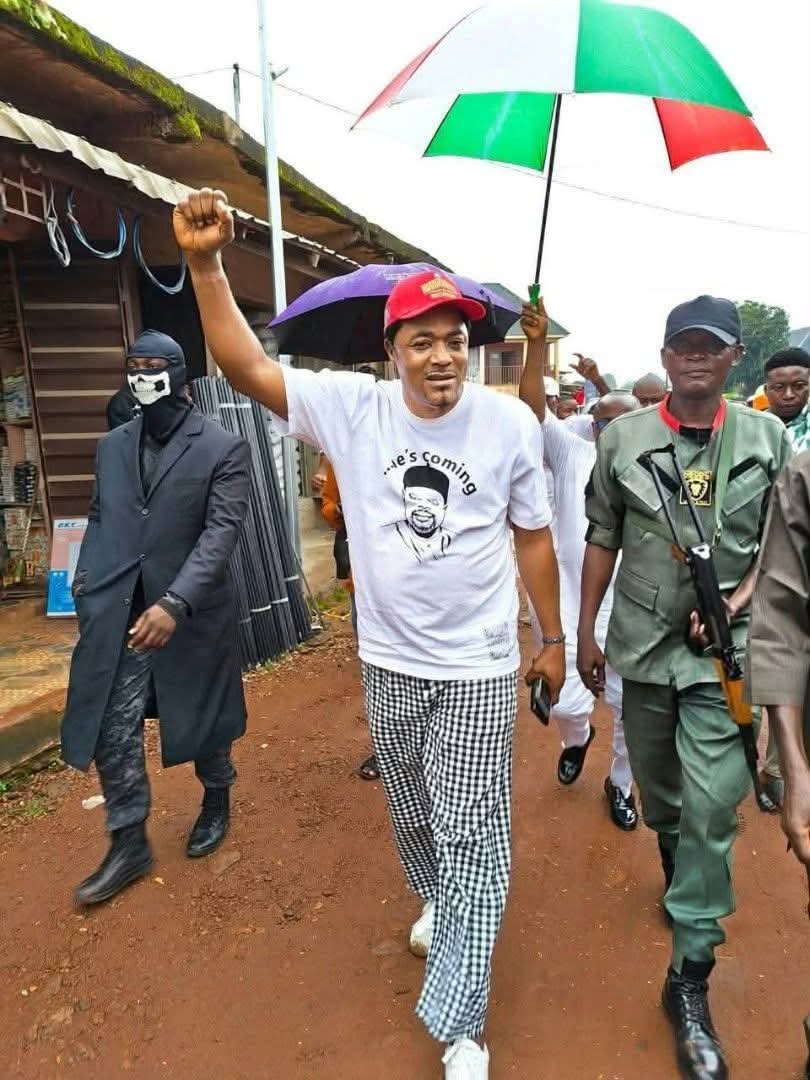
Panic-stricken Enugu APC begins flag-off of already flagged of roads in Nsukka after PDP’s Chijioke Ugwu’s homecoming


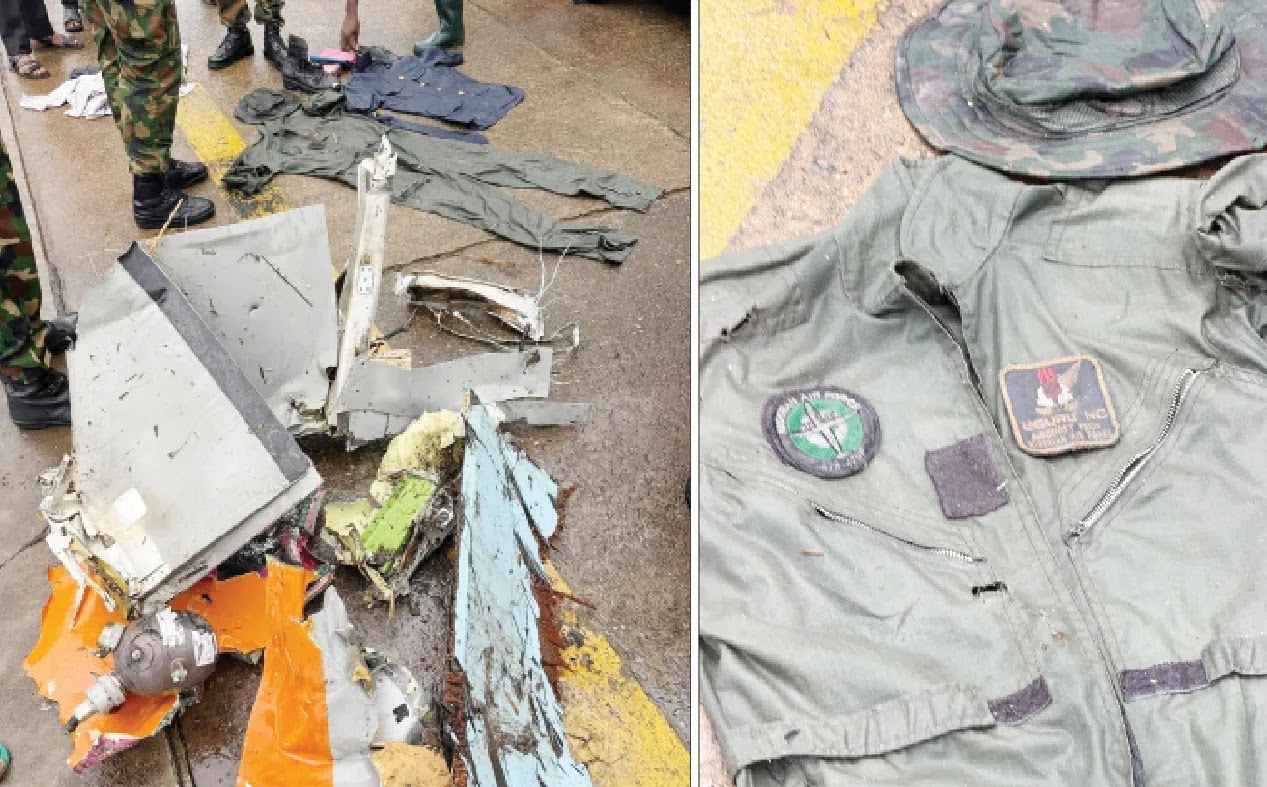
The Nigerian Air Force has confirmed that all 25 people aboard its ATR-42 aircraft, NAF 931, died after the aircraft crashed in the Igbokoda area of Ondo State.
The aircraft, which had five crew members and 20 passengers on board, was on a routine mission from Benin to Lagos when the NAF 931 aircraft crash occurred on Monday, October 5, 2026. Search-and-rescue operations were immediately activated following the accident.
The Chief of the Air Staff, Air Marshal Sunday Kelvin Aneke, described the incident as a deeply painful moment for the Nigerian Air Force and the country, while extending condolences to the families, colleagues and loved ones of those who died.
Aneke assured the bereaved families of the Nigerian Air Force’s full support as they come to terms with the loss.
The Air Force said no survivors had been found and released the names of the five crew members and 20 passengers on board the aircraft.
The crew members were identified as Squadron Leader M.I. Aburime, Flight Captain; Squadron Leader A.P. Man-Ugwueje, Co-pilot; Flight Lieutenant I.S. Bako, Co-pilot; Warrant Officer A. Abubakar, Aircraft Technician; and Corporal H.C. Uguru, Aircraft Technician.
The 20 passengers were Flight Lieutenant T.L. Lazarus; Flight Lieutenant M. Akinloye; Flying Officer I.M. Adeshina; Master Warrant Officer F. Onwuka; Master Warrant Officer B.A. Matini; Warrant Officer F.S. Nuhu; Flight Sergeant R.B. James; Flight Sergeant A.I. Mohammed; Sergeant A.E. Ani; Sergeant S.I. Izibenikien; Sergeant C. Alafuka; Sergeant A.N. Mbadugha; Lance Corporal F.C. Ugwuba; Lance Corporal G.E. Eledan; Mrs Ezeh Nneka; Godstmine Tarabina; Joy Micheal; Sunday Micheal; Ukeme David; and Gideon Omotola.
The latest figure released by the Air Force differs from the initial information provided after the crash. Aviation Minister Festus Keyamo had initially said 32 people, comprising 25 passengers and seven crew members, were aboard the aircraft. The Nigerian Air Force subsequently clarified that the manifest contained 25 people, made up of five crew members and 20 passengers.
The aircraft crashed in a swampy area around Igbokoda, close to a naval base, after air traffic controllers lost contact with it at about 9:13am while it was travelling from Benin to Lagos. The wreckage was later located and rescue teams were deployed to the area.
The cause of the crash has not been established. The Chief of the Air Staff has directed a comprehensive investigation to determine the circumstances surrounding the accident.
President Bola Tinubu had also directed the Nigerian Air Force to conduct a thorough investigation into the crash and declared three days of national mourning for the personnel who died. He ordered that national flags be flown at half-mast throughout the country in honour of the victims.
The Air Force said it would continue to provide timely and verified information as the investigation progresses. It also urged members of the public to avoid speculation and the circulation of unverified information, while respecting the privacy and dignity of the affected families.
A condolence register has been opened at the Headquarters of the Nigerian Air Force in Abuja for senior government officials, members of the diplomatic corps, heads of security agencies and other well-wishers who wish to pay their respects and convey messages of sympathy to the families of the deceased and the Nigerian Air Force.
-
Politics3 years ago
13 Ondo Assembly Members Disown Endorsement of Aiyedatiwa
-
Politics3 years ago
APC Group, Ondo Govt, Quarrel Over Money for Endorsement
-

 Trending News5 years ago
Stop unsavoury, inciting statements – DSS warns
-

 Others5 years ago
Adron Homes Celebrates 10 Years Of Housing Excellence
-

 Humanity5 years ago
President Buhari Commiserates With Ambassador Maureen Tamuno Over The Loss Of Her Father
-

 Others7 years ago
EX- CUSTOMS BOSS, IBRAHIM MERA’S DWINDLING FAME
-

 Business2 years ago
Bigi Carbonated Soft Drinks Treats 40 Consumers to an Epic Easter Movie Hangout
-

 Business2 years ago
Wema Bank Shines at Global SME Finance Forum Conference Awards 2024 …Awarded: • SME Financier of the Year (Africa) • Platinum Award for Best Financier for Women Entrepreneurs (Africa)