
News
Africa Needs Its Own AI Roadmap, MRA Tells Governments


Media Rights Agenda calls for a Pan-African AI framework to promote digital rights, accountability, inclusion and African technological sovereignty
Media Rights Agenda (MRA) has called for the development and adoption of a comprehensive Pan-African AI framework rooted in human rights, democratic accountability, inclusion and African digital sovereignty, warning that no single African country possesses the leverage or resources to address the challenges posed by artificial intelligence alone.
Also read: Mayor of Brampton Applauds Olajumoke Abegunde’s Community Initiatives

The organisation made the call in a statement issued in Lagos on Monday to commemorate Africa Day 2026, as discussions around the governance and deployment of artificial intelligence continue to gain momentum across the continent.
MRA said the rapid expansion of AI technologies presents Africa with significant opportunities for development but also exposes the continent to serious risks if governments fail to act collectively.
According to the organisation, African countries risk becoming passive consumers of technologies designed elsewhere without sufficient consideration for African cultures, languages, realities and development priorities.
MRA Programme Officer, Ms Ayomide Eweje, noted that Africa Day marks the founding of the Organisation of African Unity in 1963 and symbolises the vision of a united, prosperous and independent Africa.
She said that vision must now extend into the digital age as artificial intelligence increasingly influences journalism, governance, education, elections, healthcare, business, security and public communication.
Eweje stressed that the African Union’s ongoing efforts to advance a continental AI strategy should be guided by the principles of Pan-Africanism to ensure Africa plays a leading role in shaping how emerging technologies are developed and governed.
While acknowledging the potential of AI to drive innovation, improve public services, expand access to knowledge and strengthen efforts against misinformation, she warned that the technology could also facilitate mass surveillance, spread deepfakes, manipulate public opinion, reinforce discrimination and undermine democratic institutions.
She therefore urged governments, regional organisations, civil society groups, media professionals, academic institutions, technology experts and citizens to collaborate in building a people-centred and rights-respecting governance structure for artificial intelligence across Africa.
Eweje proposed that any continental framework should prioritise the protection of freedom of expression, media independence, privacy and personal data, alongside transparency and accountability in algorithmic systems.
She also advocated stronger safeguards against algorithmic bias and discrimination, greater inclusion of African languages and knowledge systems, ethical innovation, open access to public-interest data, digital inclusion and enhanced protection of electoral integrity.
The MRA official further warned against what she described as “data colonialism”, where African populations provide valuable data to global technology companies without meaningful ownership, control or economic benefit.
She called on the African Union to begin an inclusive process towards adopting an African Charter or Convention on Artificial Intelligence and Digital Rights that reflects the continent’s democratic aspirations and development goals.
Eweje also emphasised the need for broad stakeholder participation in the formulation of AI policies and regulations, including contributions from civil society organisations, journalists, women’s groups, youth organisations, persons with disabilities, researchers and technology communities.
According to her, media and information literacy must become a cornerstone of Africa’s digital future, equipping citizens with the skills needed to identify misinformation, understand algorithmic systems and recognise synthetic media and deepfakes.
She described Africa Day as an opportunity to reimagine the continent’s technological future in ways that promote democratic resilience, social inclusion, human dignity and self-determination.
Also read: Mayor of Brampton Applauds Olajumoke Abegunde’s Community Initiatives
Eweje reaffirmed MRA’s commitment to working with partners across Africa and beyond to advance digital rights, access to information, media freedom, democratic accountability and ethical approaches to emerging technologies.


Police arrest seven suspected kidnappers in Abuja and Kaduna, recover Oluwadamilola Adedayo’s body and seize AK-47 rifles and ammunition
The Nigeria Police Force has arrested seven suspected members of a kidnapping syndicate operating in the Federal Capital Territory and Kaduna State, recovering the remains of a woman allegedly abducted and killed by the gang.
Also read:FG Vows Action Against Lagos Firms Over Power Theft
The police said the decomposing body of Oluwadamilola Adedayo was recovered from the suspects’ camp in Tukuba Forest, Kuje, Abuja, on October 19, 2026, following an intelligence-led investigation.
The victim was abducted alongside her mother, Nancy Adedayo, her 12-year-old brother, David Adedayo, and their housemaid, Jennifer David, during a gunpoint raid on their residence on Adedayo Adeosun Street, Kuchiyako, Kuje, on August 23.
According to the police, the kidnappers released the victim’s mother about an hour after the abduction to arrange ransom payment, while the housemaid and the boy were assaulted and abandoned unconscious in a forest.
They later regained consciousness and found their way home.
Addressing journalists in Abuja on Friday, the Commander of the Force Intelligence Department’s Special Tactical Squad, ACP Godfrey Victor, said the operation followed a petition referred by the Inspector-General of Police’s Secretariat on October 15.
He said intelligence gathering led to the arrest of two suspects in Rijana community, Kaduna State, while five others were subsequently apprehended in Sagbon Lugbe, Abuja, through a joint operation involving police officers, vigilante operatives and other security agencies.
“On 19th October 2026, operatives led by ACP Victor Ogbiede Godfrey proceeded to the gang’s camp at Tukuba Forest, Kuje, FCT, where the decomposing body of Miss Oluwadamilola Adedayo was recovered,” he said.
Victor said the family paid N16.2m for the release of the abducted children, but the suspects allegedly demanded an additional N50m before releasing Oluwadamilola.
The police identified the seven suspects as Ishaka Abdullahi, 27, also known as Langalanga; Abdullahi Dabo, 42; Abubakar Jibrin, 20, also known as Mai-Laya; Barahu Ibrahim, 24, also known as Black; Sani Mohammed, 24; Alidu Lawal, 18, also known as De Jaguar; and Yakubu Abubakar, 28, also known as Soldier.
The suspects remain allegations under investigation and have not been convicted by a court.
The operation also resulted in the recovery of weapons and other items allegedly linked to the syndicate.
According to Victor, the exhibits included four AK-47 rifles, a locally made revolver pistol, 63 rounds of live ammunition, a mobile phone allegedly used for ransom negotiations, N400,000 and a motorcycle.
He added that investigators had linked the group to the abduction of a businessman, John Ali, in Kuje on September 24.
The police said investigations were continuing as they worked to establish the full extent of the syndicate’s activities and gather evidence for prosecution.
Oluwadamilola’s father expressed gratitude to the Inspector-General of Police and the officers involved in the investigation, but said the family remained devastated by her death.
“The kidnapping and murder of our beloved daughter, Oluwadamilola, at this time has left our family in deep pain. However, the support and assurance from the leadership of the police force has given us strength and hope that justice will prevail,” he said.
He urged the police to pursue the investigation to its conclusion and ensure that everyone found responsible was brought to justice.
“We continue to appeal to the police, with the help of Almighty God, to get to the root of this matter and ensure that all those responsible for this wicked act are brought to book,” he added.
Also read:FG Vows Action Against Lagos Firms Over Power Theft
The arrests mark a significant development in the investigation into the family’s abduction, although the police have yet to announce the outcome of the prosecution process.


The FG vows action against Lagos companies over alleged illegal power connections, as it moves to recover unpaid charges and reduce grid losses
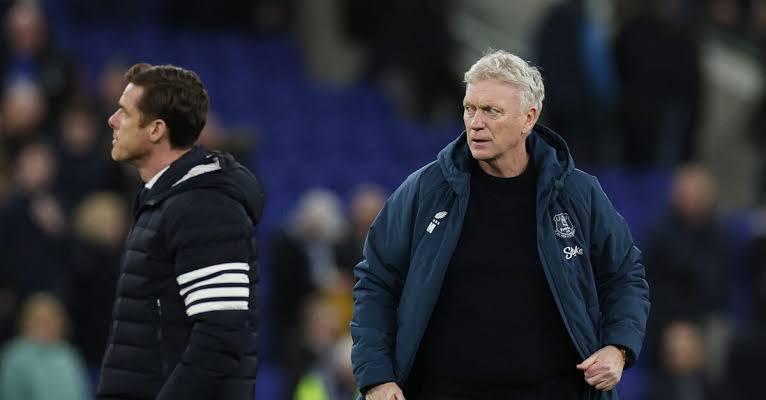
Arteta praises Moyes ahead of Arsenal’s Premier League clash with Everton, warning that David Moyes’ organised side poses a serious threat
Arsenal manager Mikel Arteta has praised Everton boss David Moyes as a respected figure in English football while warning that his team must prepare for a difficult Premier League encounter at the Emirates Stadium on Saturday.
Also read: Arokodare Eyes Permanent Ajax Move After Strong Start
Speaking ahead of the match on October 24, 2026, Arteta highlighted Moyes’ longevity, contribution to English football and qualities as both a coach and a person.
Asked whether Moyes could be considered the king of the Premier League, Arteta expressed admiration for his Everton counterpart.
“100%; I don’t know if it’s the king or what it is, but he’s certainly someone that I think we all look up to,” he said.
Arteta praised Moyes not only for his long career but also for what he represents within the game.
“Not only for his longevity, but I think what he represents for the game, what he represents for the Premier League, and his trajectory,” he said.
The Arsenal manager added that his personal relationship with Moyes had strengthened his respect for him.
“For me especially, because I know the man behind the coach, which is the most important thing, and then I really know as well the coach, and he’s a superb coach,” Arteta said.
Arteta spent six years at Everton as a player, giving him first-hand knowledge of the club and its expectations.
Despite Arsenal’s home advantage, Arteta cautioned against underestimating Everton, pointing to their tactical organisation and individual talent under Moyes.
“There are a lot, because I know David so well and how he sets the team, the quality they have in their organisation and individually,” he said.
Arteta also noted that Everton had avoided defeat before their most recent match, describing them as a well-balanced side capable of making life difficult for Arsenal.
“It’s no coincidence they didn’t lose before their last game.
They have a really good team, which we know because in recent clashes, it’s always been a really difficult game for us,” he added.
The warning underlines Arsenal’s need for concentration against an Everton side Arteta expects to provide a stern test.
Arteta also discussed the tactical approaches Arsenal could face, acknowledging that opposing teams would decide how best to challenge his side.
He said managers prepare their teams according to what they believe gives them the best chance of winning, meaning Arsenal must be ready for different styles of play.
“Every team is going to prepare in the best way with how they think they can beat us, like we do with the opponent,” Arteta said.
He explained that an early opportunity or goal could dramatically alter the course of a match, influencing how both teams approach the remaining minutes.
“You could have an open chance in the first 10 minutes that changes the game and then the next 80 minutes are different because of the context of the game, results have a huge impact on how teams behave,” he said.
Arteta stressed that Arsenal must be capable of finding solutions regardless of how the contest develops.
“We need to be able to win and enjoy as much as possible in every context,” he added.
The Spaniard also responded to discussions about Arsenal’s style of play, saying the team must focus on its own performance while respecting the opposition.
Arteta acknowledged that football naturally generates strong reactions and that assessments of a team can change depending on what happens during a match.
“I think you have to respect every opponent – it would be good to be a bit consistent, but it’s understandable,” he said.
He added that Arsenal’s responsibility was to deliver performances that keep supporters engaged, even when opponents adopt defensive or cautious tactics.
“But that’s normal, that’s the expectation, and our job is to create constant excitement. The opponent has a lot to do with how they want to play, it’s inevitable, but it’s on us,” Arteta said.
Arsenal’s meeting with Everton comes as the Gunners continue to balance their domestic campaign with European commitments.
Also read: Arokodare Eyes Permanent Ajax Move After Strong Start
Arteta’s comments make clear that he expects his players to adapt to the tactical demands of the contest and deliver a performance capable of securing a positive result.
-
Politics3 years ago
13 Ondo Assembly Members Disown Endorsement of Aiyedatiwa
-
Politics3 years ago
APC Group, Ondo Govt, Quarrel Over Money for Endorsement
-

 Trending News5 years ago
Stop unsavoury, inciting statements – DSS warns
-

 Others5 years ago
Adron Homes Celebrates 10 Years Of Housing Excellence
-

 Humanity5 years ago
President Buhari Commiserates With Ambassador Maureen Tamuno Over The Loss Of Her Father
-

 Others7 years ago
EX- CUSTOMS BOSS, IBRAHIM MERA’S DWINDLING FAME
-

 Business2 years ago
Bigi Carbonated Soft Drinks Treats 40 Consumers to an Epic Easter Movie Hangout
-

 Business2 years ago
Wema Bank Shines at Global SME Finance Forum Conference Awards 2024 …Awarded: • SME Financier of the Year (Africa) • Platinum Award for Best Financier for Women Entrepreneurs (Africa)