
Judiciary
Police Give Ultimatum To Conclude Investigations On Abba Kyari

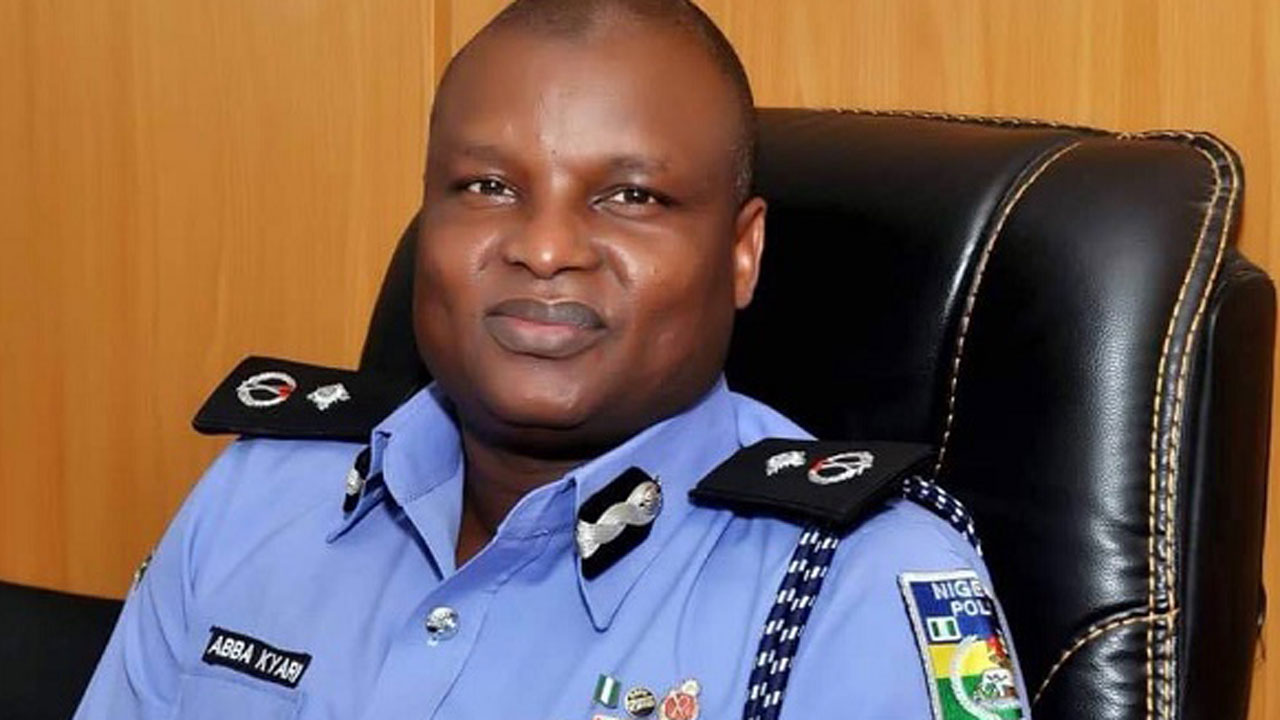
The Police Service Commission has issued two weeks ultimatum to the Nigeria Police to conclude investigations on the case involving the suspended Deputy Commissioner of Police, Abba Kyari.

The development was contained in a statement issued on Friday by the Head, Press and Public Relations of the Commission, Ikechukwu Ani.
The Commission also directed the police to ensure that the investigation is carried out by a different panel.
The directive is sequel to the Commission’s 14th plenary meeting in Abuja, chaired by retired Inspector-General of Police and Chairman of the Commission, Musiliu Smith.
Recall that Mr Kyari was suspended on August 1, 2021, following recommendations by Inspector General of Police, Usma Baba over his alleged ties with fraudster, Ramon Abbas, popularly called Hushpuppi.
The suspension followed a report by the Federal Bureau of Investigation of the United States of America which indicted Kyari in the case of fraud involving the Instagram celebrity, Hushpuppi.
Kyari, until his suspension by the commission, was the officer-in-charge of the Inspector-General of Police Intelligence Response Team


Judiciary
COURT HANDS UBA MAJOR VICTORY IN LANDMARK N156BN DEBT RECOVERY JUDGEMENT AGAINST THE VASWANI BROTHERS AND STALLION GROUP
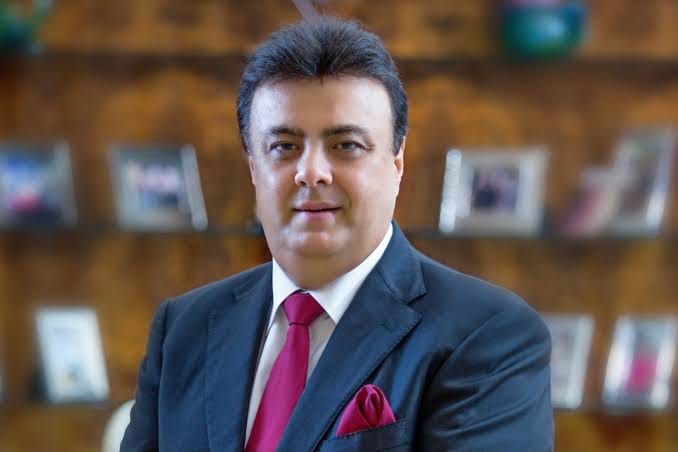
United Bank for Africa (UBA) Plc has won a court ruling in its three-year effort to recover money it says Stallion Group owes. The Federal High Court upheld the bank’s receiver, its mortgage security and the liability of the guarantors.
Justice Daniel Osiagor of the Federal High Court in Ikoyi, Lagos, resolved every issue in UBA’s favour and granted all the reliefs sought, MoneyCentral’s reports according to the judgement heard in Court.
The court confirmed Romeo Ese Michael as receiver-manager, with the right to take possession of the mortgaged property and seek protective orders.
It also barred the defendants from diverting payments owed to them by government agencies, thereby reinforcing the Bank’s ability to protect its recovery interests.
The court held that the defendants did not dispute owing money, only the amount, and that a reconciliation of accounts did not cancel the debt.
The Court also dismissed objections raised by the 12th Defendant (Barbedos Ventures Limited), holding that it had failed to establish any proprietary rights over the mortgaged property. Consequently, its consent was not required for the creation of the mortgage, and its objections were rejected.
When UBA filed the suit in October 2023, it claimed N156.03 billion, as being owed. Stallion has called the claim “entirely false,” however, the court’s written judgment and Stallion’s response to the ruling were not immediately available.
The case began when Justice Akintayo Aluko granted UBA orders to take over assets of Stallion Nigeria Ltd. and its affiliates in Lagos, Port Harcourt and Kano, and to freeze their funds across Nigerian banks. Stallion’s attempts to lift those orders failed in December 2023. The defendants include Von Automobile Nigeria, Stallion Motors, The Honda Place and director Sunil Vaswani.
The ruling strengthens a principle Nigerian lenders rely on: arguing over how much is owed does not by itself stop a creditor from enforcing its security. UBA is using the same receiver to pursue N61.45 billion linked to Western Metal Products Co.
The decision represents a comprehensive victory for UBA, with the Court resolving all issues in the Bank’s favour and granting all the reliefs sought.
The ruling is particularly significant for the enforcement of creditors’ rights in Nigeria, underscoring the legal validity of properly constituted security arrangements and the authority of duly appointed receivers to enforce creditors’ interests.
The judgment marks a major milestone in UBA’s efforts to recover its exposure to Stallion Group and safeguard the interests of the Bank and its stakeholders.
The key highlights of the judgment are as follows:
The Federal High Court Ikoyi affirmed its jurisdiction to hear the case.
The Judgement was delivered by Justice Daniel Osiagor of Court 6 of Federal High Court, Ikoyi, Lagos
The Defendants did not dispute their indebtedness, only the amount owed.
The guarantors were held liable.
The appointment of the Receiver/Manager was upheld as valid.
The Receiver/Manager’s right to take possession of the mortgaged property was affirmed.
The Receiver/Manager was held to be entitled to seek protective orders.
The Court held that the reconciliation exercise did not negate the indebtedness.
The objection of the 12th Defendant was dismissed, as it failed to establish any proprietary rights over the mortgaged property. Its consent was therefore not required for the mortgage.
The Defendants were restrained from diverting receivables due to them from government agencies.
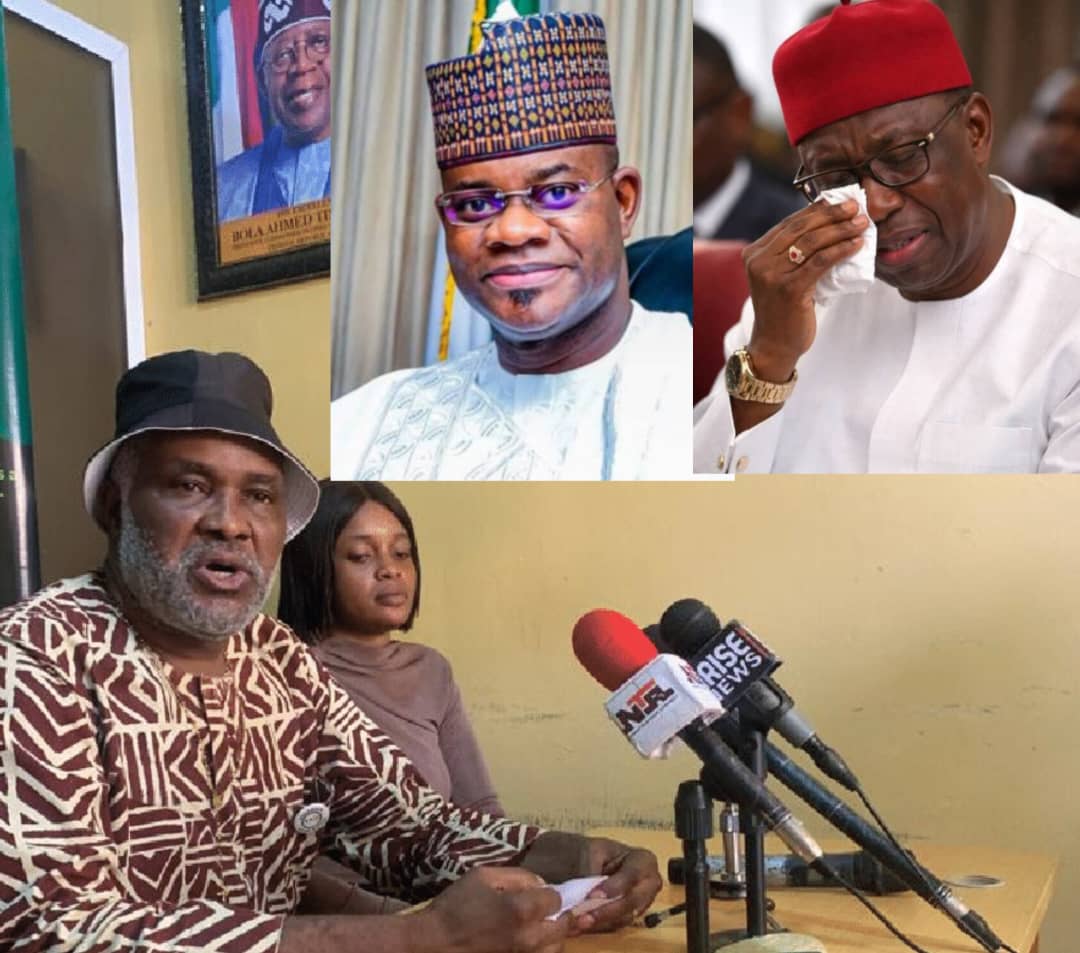
The Human Rights Writers Association of Nigeria, (HURIWA), has called on the Economic and Financial Crimes Commission, (EFCC), to bring its investigations involving former Delta State Governor Ifeanyi Okowa and former Kogi State Governor Yahaya Bello to a clear and lawful conclusion, warning political parties against fielding candidates whose unresolved corruption cases raise serious questions about public
The call was contained in a press statement signed by Comrade Emmanuel Nnadozie Onwubiko, National Coordinator of HURIWA, on the 9th of September, 2026.
According to the association, an opinion poll it conducted across Nigeria involving more than 6,000 respondents indicated overwhelming public disapproval of parties fielding politicians with unresolved corruption allegations.
HURIWA said 99 per cent of respondents condemned the practice, with particular criticism directed at the ruling All Progressives Congress, (APC), over its reported decision to field Okowa for a senatorial contest in Delta North.
The association said respondents in Delta North questioned why the party would reportedly choose the former governor instead of the incumbent senator, Prince Ned Nwoko, and demanded that EFCC clarify status of its investigation into Okowa.
HURIWA said the EFCC must explain status of its investigation into Okowa, who was arrested and detained in November 2024 over allegations concerning management of funds received during his eight-year tenure as Delta State governor.
The group recalled that reports at the time quoted EFCC saying:
“Okowa was at our Port Harcourt office following an invitation from the investigators probing the allegations against him. He was then arrested.”
HURIWA noted that the Punch also reported the source as saying:
“The commission is investigating him regarding the N1.3 trillion 13% derivation fund from the federation account between 2015 and 2023.”
The organisation said allegations reported at the time also included questions about funds allegedly used to acquire shares in a floating liquefied natural gas project and other investments.
HURIWA stressed that these were allegations under investigation and not proof of guilt. It noted that Okowa subsequently denied wrongdoing, with his aide maintaining that EFCC had not established a case against him.
The association added that the former governor should be entitled to due process, just as Nigerians deserved transparency about the investigation and a clear explanation of whether evidence warranted prosecution.
“Where investigators have sufficient evidence to prosecute, the EFCC should proceed without undue delay. Where the evidence is insufficient, the commission should equally clarify the position rather than leave the matter indefinitely unresolved,” HURIWA said.
Bello Case Raises Similar Questions On Accountability
The association said respondents in Kogi State expressed similar concerns about unresolved allegations involving former Governor Yahaya Bello, who has faced EFCC allegations concerning alleged diversion of public funds during his tenure.
HURIWA said reported scale of allegations made it imperative for anti-graft agency to pursue matter transparently and through courts. It emphasised that neither accusation nor investigation should be treated as conviction, however political office should not become shield against lawful investigation or prosecution.
APC, INEC And EFCC Must Address Public Concerns — HURIWA
HURIWA said its reported poll reflected public frustration with what respondents perceived as gap between anti-corruption rhetoric and political choices made by parties seeking public office.
It urged APC to explain rationale behind its reported senatorial choice in Delta North and called on all political parties to adopt transparent candidate-selection standards.
The association also urged the Independent National Electoral Commission, INEC, to apply electoral law impartially, noting that eligibility questions must be determined by relevant constitutional and statutory provisions rather than public allegations alone.
HURIWA called on EFCC to provide update on status of Okowa investigation and pursue any prosecution justified by evidence, and to ensure Bello case also proceeds in accordance with law.
“Nigerians should not have to choose between respect for the presumption of innocence and the demand for accountability from public officials,” HURIWA said.
It maintained that both principles must be upheld: no individual should be declared guilty without due process, and no politically influential person should be insulated from investigation because of party affiliation or electoral ambition.
Judiciary
Absence of Regina Daniel’s Friend, Izuegbu Stalls arraignment Over ‘Illegal Substances, Criminal Defamation

The absence of Ms Anthonet Izuegbu, friend of estranged wife of Senator Ned Nwoko, Regina Daniels has stalled her arraignment over a case of Defamation and allegedly routinely sourced, handled, and administered controlled and illegal substances to Regina and associated individuals preferred against her.
When the matter which is before Justice Ekerete Akpan of the Federal High Court Abuja, came up for arraignment on Thursday, July 16 2026, the defendant who collapsed during last arraignment was absent in court and the case was consequently adjourned to September 15, 2026.
Recall that Ms Izuegbu also known as “Ann” was arrested for criminal defamation against Senator Nwoko.
The Ned Nwoko media team, in a statement made available to the News Agency of Nigeria (NAN) stated that contrary to the misleading and inflammatory narratives being circulated across social media platforms, Izuegbu was arrested in connection with criminal defamation against the lawmaker.
The team explained that Izuegbu was arrested in connection with criminally defamatory statements she publicly made, alleging that the lawmaker physically assaulted his wife, Mrs Laila Nwoko, which resulted in a miscarriage.
“These claims are entirely false as no such incident occurred, and no miscarriage resulted from any alleged violence.
“The statements were made without evidence and form part of a coordinated attempt to reinforce previously circulated and unsubstantiated domestic violence allegations,” the team said.
The team also said that Izuegbu was implicated in the procurement of an illegal abortion for Regina Daniels, during her lawful marriage to the Nwoko.
According to the team, the incident occurred after the marriage, notwithstanding subsequent attempts to reframe the timeline.
“The legality of the act does not change based on narrative adjustments. The matter is on record and has previously been publicly referenced by Regina herself,” the statement said.
The team added that a formal witness statement dated Oct. 29, 2025 submitted to the Area Commander, Maitama Police Station, detailed repeated ongoing activities involving Izuegbua and others.
According to the team, the statement noted that Izuegbu allegedly routinely sourced, handled, and administered controlled and illegal substances to Regina and associated individuals.
The team further said that Izuegbu’s arrest was directly preceded by a public social media post in which she allegedly issued threats, made derogatory remarks, and repeated defamatory accusations against Mrs Laila Nwoko and the lawmaker.
“This post constituted provocation, intimidation, and criminal defamation under application law.
“It is important to emphasise that this matter is not a social media dispute but a law-enforcement issue grounded in evidence, witness testimonies, and due process.
“Any attempt to mischaracterize the arrest as suppression or victimisation is false and misleading,’’ the team added.
-
Politics3 years ago
13 Ondo Assembly Members Disown Endorsement of Aiyedatiwa
-
Politics3 years ago
APC Group, Ondo Govt, Quarrel Over Money for Endorsement
-

 Trending News5 years ago
Stop unsavoury, inciting statements – DSS warns
-

 Others5 years ago
Adron Homes Celebrates 10 Years Of Housing Excellence
-

 Humanity5 years ago
President Buhari Commiserates With Ambassador Maureen Tamuno Over The Loss Of Her Father
-

 Others7 years ago
EX- CUSTOMS BOSS, IBRAHIM MERA’S DWINDLING FAME
-

 Business2 years ago
Bigi Carbonated Soft Drinks Treats 40 Consumers to an Epic Easter Movie Hangout
-

 Business2 years ago
Wema Bank Shines at Global SME Finance Forum Conference Awards 2024 …Awarded: • SME Financier of the Year (Africa) • Platinum Award for Best Financier for Women Entrepreneurs (Africa)