
News
Irene: University of Ibadan 1983/84 M. Sc. Political Science class


Professor Irene Pogoson is remembered with deep admiration as colleagues and classmates recall her brilliance, warmth and academic legacy at Ibadan

When I first ran into the news on 28 October, 2025 on the platform of the University of Ibadan Political Science alumni association, of the transition of one Professor Irene Pogoson, I immediately fired the question: “Is this not the same Irene that was in the U. I.
Also read: Untreated Vaginal Infection Can Lead to Infertility, Experts Warn
1983/84 Political Science M. Sc. Class? Tall, light-skinned, workaholic and cerebral? Looks very much like her” Yes, age apart, the photograph looked very much like the gangling Irene that I shared a class with. Jovial and always with a smile for everyone.
Thirteen minutes after when no answer had surfaced, I screamed again: “I say, is this Irene the same as Irene Oboite?” By this time I had gone into my Library to fish out one of her term papers, which excerpts I publish here today.
I was shell-shocked when the answer came about an hour later and it was in the affirmative: “You are right, Oboite was the maiden (family) name” And the response came from no less a personality than our own dear Emeritus Professor and former Head of Department, Professor Bayo Adekanye aka Adekson.
Why did my mind go to her when I saw the name “Irene”? She was cerebral. I knew she was cut out for the academia, but our paths never crossed again after we parted ways in 1984.
Had I known she was at Ibadan, I would have stopped over many times to say “hi“, drink tea and eat biscuits in her office and watch her smile again and again! So sad! Irene was always in company with Alli-Balogun,
I think from Lagos (what’s her first name and where is she now?). When another of our classmates, John Azuta-Mbata, was elected as the President-General of Ohanaeze in January this year, I went into my Library and got hold of his own term paper, from which I published a piece tiled “Wike, Azuta-Mbata: Are Ikwerres Igbo?“
Many names – and faces – in our class I can no longer fix: Bolaji P. O. ; Francis Onome Otobo; Onu, M. Godwin (Is he not the one who later became the vice-chancellor of a university in the south-east?); Folorunso Farotimi; Nwosu, N. I.; Agwatu B. F. Hanson; Bukunola Bello (Yes, I remember her as another “Efiko”); Nwanne V. A.; Nwosu N. I. ; O. A. Lawal; Segun N. Odesola; A. A. Adeogun; James Ngozi Obiegbu; T. A. Awojuola (Yes, we were pals then, but where is he now?); Lawal B. A. J.; Allan E. Antia; among many others!
What you are about to read are excerpts from one of Irene’s term papers delivered to our University of Ibadan M.Sc. Class of 1983/84 titled “Nigeria’s decision to recognize the MPLA and support it in the Angolan civil war”. Enjoy it!
“Portuguese and Angolan interactions dated back to the 19th century. In 1951, Angola was declared an integral part of Portugal and the subsequent result of this was the nationalist liberation struggle, which started two years after.
At the peak of the independence crisis, three nationalist liberation movements that championed the country’s liberation existed in Angola The Popular Movement for the Liberation of Angola (MPLA), the Nationalist Front for the Liberation of Angola (FNLA), and the Nationalist Union for the Total Independence of Angola (UNITA).
These liberation movements were firmly rooted in each of the country’s three ethnic-linguistic regions: the MPLA among the 1.5 million Mbundu of north-central Angola (Luanda to Malanje areas) and the major urban centres as well; the FNLA among the 700,000 Bakongo of the north; and the UNITA among the two million Ovimbundu of the south.
“On January 15, 1975, the Portuguese Government signed an independence agreement with the three liberation movements…
The accord however failed right from the onset, in spite of OAU’s persistent efforts to unify the three factions. After the Portuguese flag was finally lowered on November 5, 1975, no legal government existed in Angola – only two rival claimants.
The issue of ‘legality’ was still to be fought over – with weapons and through each other’s ability to attract international diplomatic recognition.
“On the eve of independence, the three liberation movements rejected OAU’s proposal for a provisional government of national unity and intensified their fight, as a result of which independence on 11 November, 1975 saw Angola engulfed in civil war with the proclamation of two rival republics – the MPLA’s People’s Republic of Angola based in Luanda with Agostinho Neto as president and the jointly-proclaimed FNLA and UNITA’s Social Democratic Republic of Angola, with Holden Roberto as its president and based in Huambo.
“Angola was thus plunged into more serious wars; this time not against Portugal as was the case before Independence but between the MPLA and its supporters on one hand and the FNLA and UNITA and their supporters on the other.
Angola’s civil war involved a number of African states, the OAU in particular, and some foreign governments as well.
The Organization of African Unity (OAU)
“In OAU, there was deadlock between states as to who to support. In spite of this, the organization in late October 1975 was able to maintain a broad consensus in some aspects of its policy towards Angola.
These were: Support for the idea of a Government of National Unity; acceptance of the three liberation movements as the genuine national movements entitled to a place in such a government; the need to maintain the country’s geographical integrity, including Cabinda (sandwiched between Zaire and Angola, with separatist movements within it wanting to take advantage of the internal strife within Angola to make her an independent state); and opposition to any type of external intervention in Angola’s internal affairs.
“With prolonged diplomatic moves at settling the Angolan crisis, and the subsequent intervention in Angolan affairs by other countries, OAU’s unity began to crack when Algeria, Congo, Guinea, Somalia, Mozambique, Sao Tome and Principe, Cape Verde and Guinea-Bissau chose to recognize the MPLA government.
By the time an extraordinary OAU summit took place in January 1976, 21 out of the organization’s 46 member-states had recognized the MPLA; thus did OAU virtually split into two. Only Uganda and Ethiopia abstained from voting.
“The summit ended in complete deadlock not only because half of its members called for the immediate recognition of the MPLA as the legal government while the other half insisted on the need for a Government of National Unity, but also because FNLA and UNITA supporters refused to formalize the decision to condemn South Africa’s entry into the civil war unless OAU also condemned the presence of Russian and Cuban personnel in Angola, which MPLA supporters refused to accept.
“However, the issues polarizing OAU were soon decided on the battlefield in MPLA’s favour; on 11 February, 1976, OAU’s Council of Ministers, accepting the MPLA’s military superiority, decided to recognize it as the legal government in Angola.
Foreign intervention
“The Soviet Union, Cuba, the United States of America, and China (to a lesser extent) disregarded OAU’s position on foreign intervention in Angola’s internal affairs.”
Irene then discussed at length the reasons for, the duration as well as the quality of intervention of the foreign countries mentioned above, including apartheid South Africa, in the Angola civil war.
On Nigeria’s involvement in particular, she said: “Nigeria’s policy towards Africa was based on four principles: respect for sovereign equality of all states, regardless of size; respect for independent sovereignty and territorial integrity of all African states; non-interference in the domestic affairs of other states; and commitment to cooperation as a tool for the promotion of African unity.
It was also based on the total eradication of colonialism and racism from Africa. This, the Murtala Muhammed regime believed should take precedence over all other foreign policy interests.
”The principle that Africa is the centrepiece of Nigeria’s foreign policy was put to test in 1975 when Nigeria intervened in the Angolan civil war on the side of the MPLA. Initially, Nigeria had been strongly in support of a Provisional National Government in Angola…
“But the then Nigerian Head of State, Gen. Murtala Muhammed, completely reversed this position in his address at OAU’s extraordinary summit held in Addis Ababa, Ethiopia (when) he said the problem was no longer one of calling for a simple solution in the African tradition.
Rather, (it had become) a much deeper danger of extra-African powers in collusion with the inhuman and obnoxious apartheid regime in Pretoria (South Africa) trying to frustrate the will of a people who, having sustained a heroic struggle against a most brutal colonial repression, were at the threshold of a glorious dawn of national self-determination.
If the neo-colonialists succeed in Angola, then, our hopes (for the total liberation of southern Africa) would have been dashed…
“By the 25th of November, 1975, Nigeria had given recognition to the MPLA and had also committed a substantial amount of financial assistance to help Dr. Neto’s government win the war…”
A tree without roots…
I have published excerpts from Irene’s piece here to immortalize her in my own little corner! And to also ask after our other colleagues. Maybe this piece will cause a few of them to pop up their head from their cocoons!
Irene’s well researched piece also serves to refresh our memory about the sacrifice Nigeria made to liberate the Continent from the vice-like grip of colonialists.
With Gen Z and Alpha generations that know next-to-nothing about the history of their own people, it is important to remind ourselves of the saying of Marcus Garvey, the Africanist/Jamaican political activist and writer that, “A people without the knowledge of their past history, origin and culture is like a tree without roots.”
Also read: Illegitimate Mandate: Time Ticks for Dapo Abiodun
Rest well, Irene!


Danielle Adewusi is crowned Miss Universe Nigeria 2026 after defeating 19 delegates in Lagos, earning the chance to represent Nigeria in Mexico (more…)
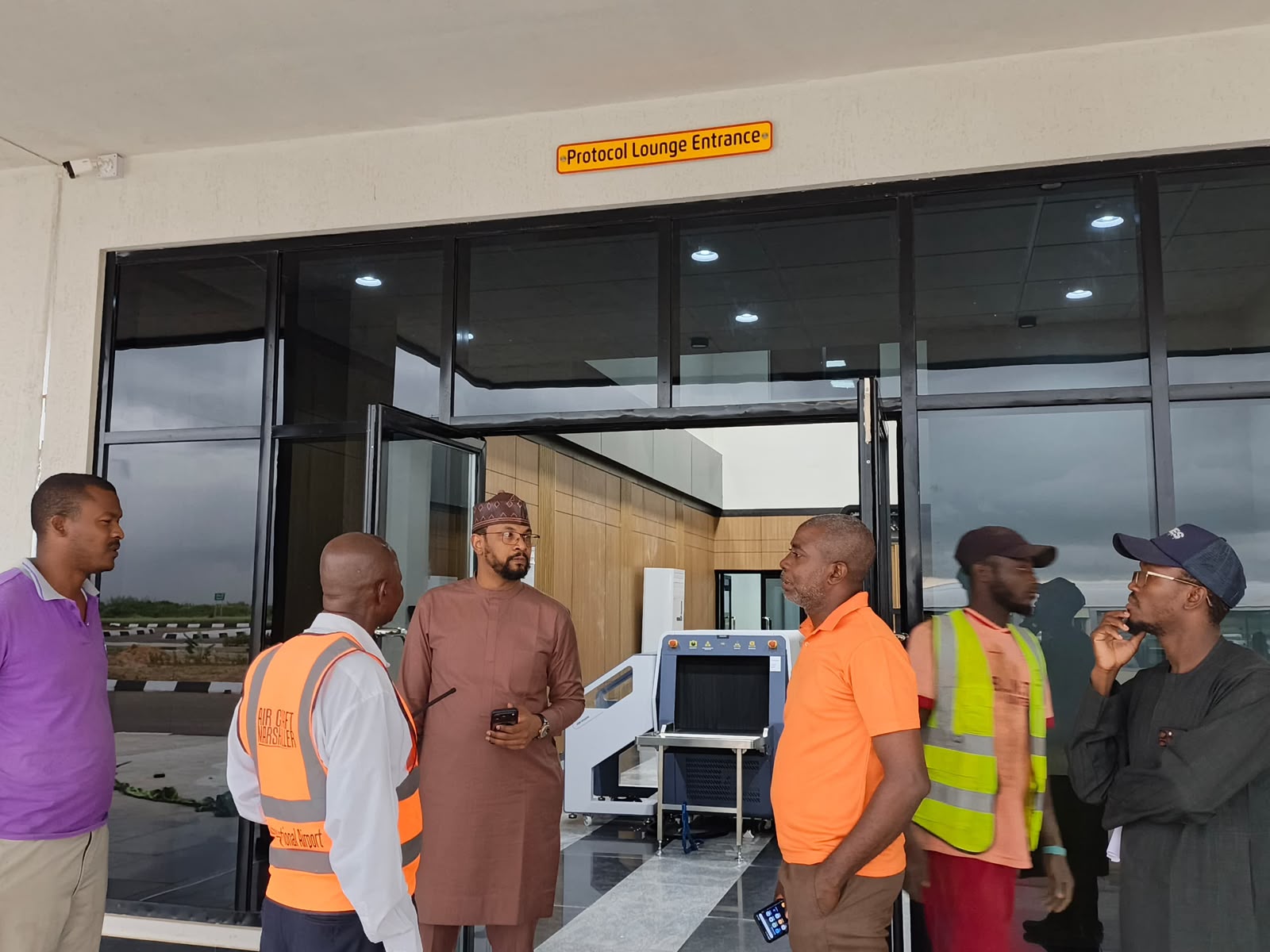
Gusau International Airport internet deployment begins ahead of October 1 commercial operations, with free connectivity planned for passengers and staff
-
Politics3 years ago
13 Ondo Assembly Members Disown Endorsement of Aiyedatiwa
-
Politics3 years ago
APC Group, Ondo Govt, Quarrel Over Money for Endorsement
-

 Trending News5 years ago
Stop unsavoury, inciting statements – DSS warns
-

 Others5 years ago
Adron Homes Celebrates 10 Years Of Housing Excellence
-

 Humanity5 years ago
President Buhari Commiserates With Ambassador Maureen Tamuno Over The Loss Of Her Father
-

 Others7 years ago
EX- CUSTOMS BOSS, IBRAHIM MERA’S DWINDLING FAME
-

 Business2 years ago
Bigi Carbonated Soft Drinks Treats 40 Consumers to an Epic Easter Movie Hangout
-

 Business2 years ago
Wema Bank Shines at Global SME Finance Forum Conference Awards 2024 …Awarded: • SME Financier of the Year (Africa) • Platinum Award for Best Financier for Women Entrepreneurs (Africa)