Opinion
Sanwo-Olu’s Tough Actions, Soft Power


Governor Babajide Sanwo-Olu is praised for daring projects in Lagos, including Alausa Secretariat, Oko Baba market, and Pelewura Market redevelopment

If there has ever been one man, one governor in Lagos State, who has done greater things with immeasurable boldness despite his simple nature, that person is the current governor, Mr. Babajide Olusola Sanwo-Olu.
Also read: Sanwo-Olu Celebrates Wife Dr Ibijoke on 59th Birthday
When it comes to daring projects, this gentleman stands taller. Let me break it down.
1: Last Friday, I drove by Alausa and l saw the State Secretariat Extension building opposite the Bureau of Land and the Ministry of Environment and Water Resources.
That building was meant to house the State MDA offices that are spread across the state in rented buildings.
The building project has passed through God knows the number of administrations in the State, and l always wondered what was responsible for the delay in completing that single project.
Against whatever odds, the administration of Sanwo-Olu has took up the project and almost completed it.
lt is hope that, that building, on completion, will be put into use and afford the State huge savings from annual rents it has been expended yearly.
2: The Oko Baba log market by the Ebute Meta waterfront.
This is a community that has existed for over a century.
The log market has been a stain on the beauty the waterfront would have been to complement the view from the Third Mainland Bridge.
No administration military or civilian in the past was bold enough to tackle the menace.
When l first heard Governor Sanwo-Olu of his administration’s intention to evacuate the market to Agbowa-Ikosi in his speech at the inauguration of the Epe Film Village, where l sat in the hall near my friend and colleague, Tade Ogidan, l remembered whispering to him that, the Governor’s pronouncement was a political statement and doubt how he can achieve that.
Behold, the day l saw the location from the Third Mainland Bridge, sometime mid-last year or thereabout, l had to park and took a proper view of the site with the sawmillers already evacuated to a brand new purpose-built Timberville in Agbowa-Ikosi.
That took some guts that the previous administrations military or civilian could not attempt.
The major credit of that assignment was how it was done quietly.
3: The Pelewura Market: This market, l remember, was built on a site that used to be a dumpsite by the Lagoon on Adeniji Adele ever before the Third Mainland was built.
The place used to be another ‘Owode Onirin’ where scraps were traded, particularly by the ljebu traders who were the original motor spare parts traders before the advent of the Eastern traders after the war.
I cannot remember the administration that later acquired the site and constructed lock-up shops on it that were sold to individuals.
However, rather than the shops being used for trading, many were converted to accommodation that were let out to many undocumented characters that flung the State within and without the country.
Thus Pelewura Market gradually became unkept and a den to criminals.
Many administrations had watched this site unattended before now.
It was the same day l saw the Oko Baba evacuation that l saw the demolition of Pelewura Market by this administration.
It is the same daring approach being witnessed now at Makoko –Nigeria’s largest informal waterfront community.
Previous administrations saw the need to remove the illegal residents and traders on the Makoko corridor, who built their homes on make-shift stilts with the attendant danger and serious environmental degradation of the location and unsuitable view of the waterfront but were frightened by the threat of those NGO Groups, who had turned the community into a money spinning activities for sustenance.
l can see Governor Sanwo-Olu going head long to achieve that which other administrations, in the past, have not being able to do.
I have seen many praised the courage exhibited by former Lagos Military Governor, General Raji Rasaki concerning the overnight demolition of Maroko and the evacuation of the people residing there.
I would say there is nothing spectacular about the daring posture of Gen. Raji Rasaki.
It was a military regime that could have done the same to a community that were covered by adequate titles to their homes, and nothing could have happened.
The aforementioned Sanwo-Olu administration stands taller concerning bold policy to achieve difficult assignments that benefit the State.
The icing is the fact, that, the governor applied his quiet and simple nature in achieving all of these without unnecessarily talking down on victims, like a certain former governor and now Minister that we all know.
However, the Sanwo-Olu administration need to improve on its supervision of the public infrastructure they build or meet.
This is one weakness l have observed.
Oshodi was cleaned up by (Babatunde Raji) Fashola administration, and discipline was introduced in the running of the place by the National Union of Road Transport Workers, NURTW.
Akinwunmi Ambode administration also gave the corridor a facelift, with the construction of the high taste terminal.
But today, Oshodi appears to be going to the previous times.
The terminal is underutilised and not in a good state.
A close example is the activities of the itinerants street boys, called Bolar Boys.
My last check on Lateef Jakande Road, in Agidingbi area of Lagos revealed how these boys have gradually removed the strong iron protection railings at the Bus Stop from the one by the Lagos Television, LTV opposite Coca Cola Plants.
Ditto the one at Agidingbi Primary School Bus Stop and the same goes for the one at Agidingbi Grammar School and the one by Mega Chicken.
To think that these are location close to the government offices, and some guys are employed as Business District Police but chose to engage in vehicular assignment.
This needs to be looked into.
Lastly, the Governor, as part of his unique endeavours in breaking the ice that others were not able to dare, he should add to his schedules Oba Akran Road and its adjacent roads that are holding industries, a total reconstruction as done in Apapa, Surulere (Eric Moore), and other industrial locations in the State.
Of course, I am aware of the two major impediments on that road; the overhead mini high tension electric cables and the underground gas pipe laid.
These, l believe, are surmountable going by the daring nature of the governor in infrastructural engagement.
The unique achievement this will be is the first transformation of the first main road that held the very first industrial estate in Nigeria by the colonial administration and developed by the sage, Chief Obafemi Awolowo administration in the first republic.
Also read: Sanwo-Olu Mini Stadium launched in Lagos with TECNO support
More so, Baba Awo will be glad in heaven.


By Victor Ojelabi
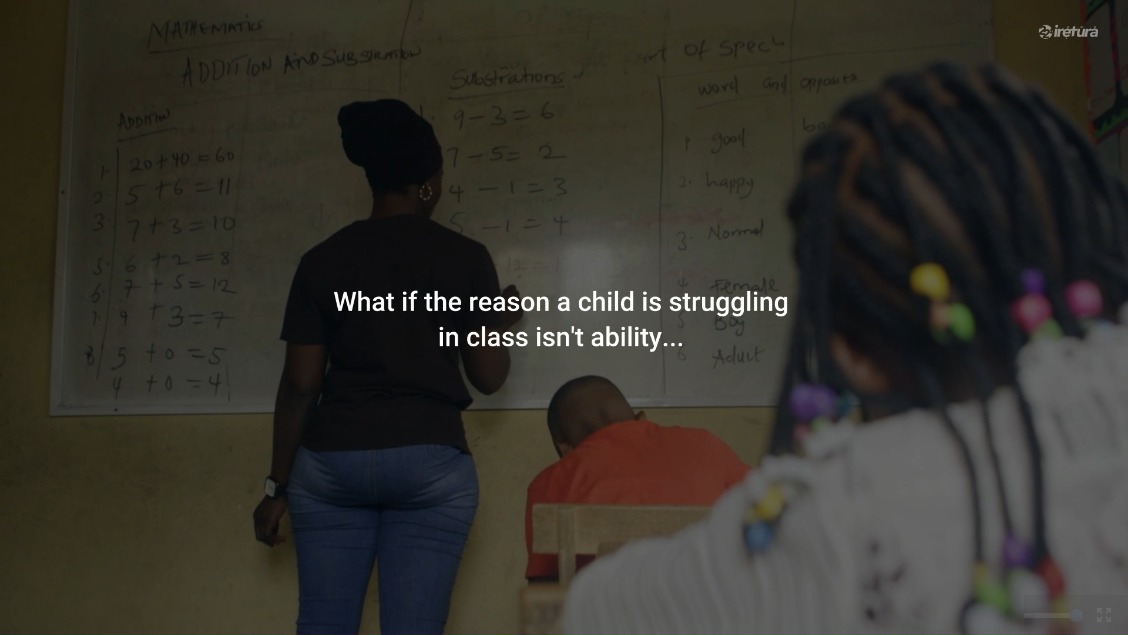
The Rotary Club of Ikoyi Metro, led by President Rotarian Emeka Nwosu, will begin a four-day vision and hearing screening for Primary One pupils across 10 public primary schools in Lagos Island, Lagos State, on Tuesday, September 22, 2026, under a Rotary International Global Grant project chaired by Rotarian Oladimeji Olatunji-Audu for the club.
Also read: From Lagos to Germany: How Rotary Youth Exchange Transformed Arnold Faranpojo
The Rotary Ikoyi Metro screening, which runs until Friday, September 25, will commence at 9 a.m. daily, with Holy Cross Cathedral Primary School, Campus, serving as the venue.
The Lagos State Universal Basic Education Board has formally approved the exercise for pupils in the 10 selected schools within the Lagos Island Local Government Education Authority.
In its September 9 approval, LASUBEB described the intervention as a “noble gesture” complementing the Lagos State Government’s efforts to improve basic education.
The participating schools are Holy Cross Cathedral Primary School, Ade Oshodi Primary School, Anglican Girls Primary School, Christ Cathedral Primary School, and Ebute Elefun Primary School.
Others include Edward Blyden Memorial School, St. David Primary School, St. Mary Convent School, St. Peter Primary School and Tinubu Methodist Primary School.
Nwosu said the intervention was built around a simple concern: children experiencing difficulties in the classroom should not be written off before possible health-related causes are investigated.
“Sometimes, what looks like a learning problem may simply be a child struggling to see the board clearly or hear what the teacher is saying. Through this project, we want to identify those challenges early and give affected children the opportunity to learn and thrive alongside their peers,” Nwosu said.
The project is being implemented in partnership with other Rotary clubs through the Rotary International Global Grant mechanism, combining resources and expertise to address preventable vision and hearing difficulties among schoolchildren.
The cub’s project chairman said the initiative was designed to go beyond simply identifying pupils with difficulties.
“Screening is only meaningful when it leads to action. Our objective is to identify children who require attention early enough and ensure that those who need further intervention are appropriately supported. A child’s ability to see and hear properly can make a remarkable difference to the child’s confidence and performance in school,” Olatunji-Audu said.
The Lagos Island exercise follows an earlier phase of the wider Global Grant project launched in July 2026, when hundreds of pupils from public primary schools in the Ikoyi-Obalende area underwent vision and hearing screening.
The broader intervention has brought together Rotary clubs and partners in Nigeria and overseas.
The World Health Organization has also identified vision and hearing as important to children’s development and education, noting that unaddressed sensory impairments can have significant consequences for school-age children.
Also read: From Lagos to Germany: How Rotary Youth Exchange Transformed Arnold Faranpojo
For Ikoyi Metro, the four-day intervention therefore carries a powerful message beyond the medical screenings: before concluding that a young pupil is struggling to learn, it may be necessary to establish whether that child can clearly see the lesson and hear the teacher.
By Victor Ojelabi,
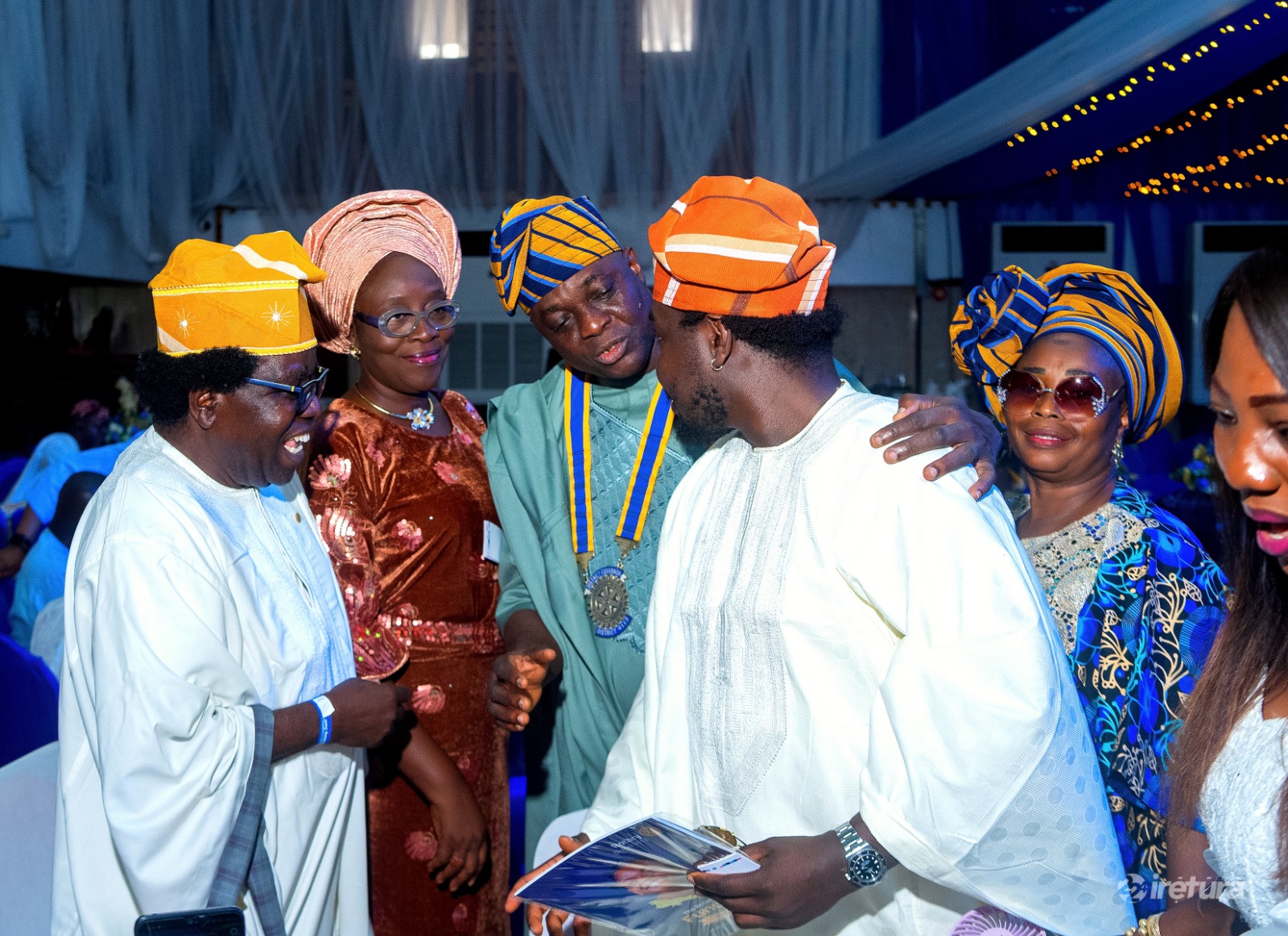
The Rotary Foundation has recognised the polio eradication efforts of Rotary International District 9112 under Immediate Past District Governor Lanre Adedoyin, following the District’s transfer of District Designated Funds to the PolioPlus Fund during the 2025 to 2026 Rotary year, a contribution acknowledged recently, as part of the global funding effort to protect children from the disease.
Also read: Rotary Club Ikeja Trains 60 Interactors in Leadership
The recognition brings a fitting international dimension to a Rotary year in which Adedoyin, a lawyer and member of the Rotary Club of Surulere South, repeatedly placed polio eradication among District 9112’s major humanitarian priorities across Lagos and Ogun states.
In a message addressed to District 9112, The Rotary Foundation thanked the District for committing its District Designated Funds to the campaign, saying the collective support from Rotary districts helped the organisation reach its fundraising target and secure matching funds that translate into US$150 million for polio eradication.
“Your support helped Rotary reach our goal and secure the matching funds that translate into US$150 million toward eradicating polio,” the Foundation said.
The money has consequences far beyond the balance sheet.
According to the Foundation, polio funding supports frontline workers taking vaccines into remote communities, environmental surveillance capable of detecting the virus in wastewater and programmes designed to interrupt transmission in affected areas.

IPDG Lanre Adedoyin with wife at a Rotary event recently
The Foundation said the continuing effort was particularly important in Afghanistan and Pakistan, the only two countries where wild poliovirus remains endemic.
That assessment is consistent with Rotary International’s latest account of the global campaign.
Rotary says its partnership with the Gates Foundation generates up to US$150 million annually for polio eradication, with Rotary raising US$50 million and the Foundation providing a two-to-one match.
The money supports vaccine procurement, social mobilisation, outbreak response, surveillance and other operational requirements.
Rotary’s involvement stretches back decades. Its first polio vaccination project began in the Philippines in 1979, and the organisation became a founding partner of the Global Polio Eradication Initiative in 1988. Since then, global polio cases have fallen by 99.9 per cent.
For Nigeria, the story carries particular resonance.
The country recorded its last case of wild poliovirus in Borno State in August 2016.
Four years later, the World Health Organisation African Region was formally certified free of wild poliovirus, leaving Afghanistan and Pakistan as the remaining countries with endemic transmission.
That historic achievement, however, did not mean the end of the polio challenge in Nigeria.
Circulating vaccine-derived poliovirus can still emerge in communities with low immunisation coverage, making vaccination and surveillance essential even in countries that have eliminated wild poliovirus.
It was against that backdrop that the IPDG’s polio drive developed during the 2025 to 2026 Rotary year.
Adedoyin, who became the second District Governor of District 9112 following the division of the former District 9110, had signalled early in his tenure that healthcare would remain a central part of the District’s service programme.
His installation in Lagos in July 2025 marked the beginning of a year that subsequently combined fundraising with grassroots advocacy and support for health workers.
By September 2025, the District had held a PolioPlus seminar at which Adedoyin warned against complacency simply because wild poliovirus had disappeared from Nigeria. District records show that the campaign remained prominent in its programme in the months that followed.
In October, Districts 9111 and 9112 took the End Polio Now message beyond conventional conference halls with a joint train journey from Lagos to Abeokuta.
Led by Adedoyin and then District 9111 Governor Henry Akinyele, alongside Nigeria National PolioPlus Committee Chairman Joshua Hassan and other Rotary leaders, the initiative turned the train journey into a public awareness campaign for polio eradication.
District 9112 also took the message to communities in Ogun State, including a roughly 10-kilometre Keep Polio @ Zero awareness walk in Sagamu aimed particularly at encouraging parents and guardians to ensure that children receive their vaccinations.
In Lagos, the campaign moved from advocacy to practical support.
District 9112 donated 100 pairs of rain boots and 200 raincoats to the Lagos State Primary Health Care Board in October 2025 to assist health personnel working on polio eradication during the rainy season. The intervention was valued at about ₦1.6 million.
Adedoyin made the District’s position clear at the presentation.
“Our commitment to ending polio is absolute,” Adedoyin said. “We will continue working with the Lagos State Government and our partners until polio is completely wiped out.”
Another significant moment came towards the end of his tenure.
In June 2026, District 9112 announced that it had raised US$13,000 through the World’s Greatest Meal initiative for The Rotary Foundation’s PolioPlus Fund.
The contribution was described by World’s Greatest Meal Committee Chairman Tokunbo Opanubi as one of the highest recorded by the District through the initiative.
The US$13,000 contribution is separate from the District Designated Funds now acknowledged by The Rotary Foundation.
Together, however, the initiatives illustrate the different channels through which District 9112 supported the global eradication campaign during Adedoyin’s tenure.
District Designated Funds form part of The Rotary Foundation’s funding system and allow Rotary districts to direct portions of available Foundation resources towards eligible programmes.
PolioPlus is one of the avenues through which districts can deploy such resources in support of Rotary’s eradication objective.
The Foundation’s latest acknowledgement therefore adds another layer to District 9112’s polio record for the 2025 to 2026 year.
It also demonstrates the multiplier effect behind Rotary’s funding model.
A contribution originating from clubs and districts can ultimately support a much larger global pool used for vaccines, surveillance, community mobilisation and the difficult task of reaching children in areas affected by conflict, insecurity or geographical isolation.
The stakes remain considerable.
Polio is a potentially fatal infectious disease that primarily affects young children and can invade the nervous system, causing irreversible paralysis.
Although its global footprint has been reduced dramatically, Rotary cautions that eradication requires sustained vaccination and surveillance until transmission has been stopped everywhere.
The Foundation’s message to District 9112 captured that unfinished mission.
It thanked the District for supporting the PolioPlus Fund and helping move the world closer to the point where “no child is threatened by this disease ever again”.
For Adedoyin, who handed over the governorship of District 9112 at the end of the 2025 to 2026 Rotary year, the recognition offers a powerful postscript to a year in which the District’s contribution was measured not only in fundraising figures, but also in public advocacy, community mobilisation and support for those working closest to vulnerable children.
Also read: Rotary Club Ikeja Trains 60 Interactors in Leadership
And for District 9112, the acknowledgement connects a local Rotary story from Lagos and Ogun states to a much larger global ambition: ensuring that the final cases of polio become part of history rather than the beginning of another outbreak.

By Ehi Braimah,
When I wrote in April about “Beyond oil: Niger Delta attracts investments for economic growth and development,” the central argument was straightforward: Niger Delta must begin to look beyond crude oil and deliberately position itself as a diversified investment destination.
Also read: Otu Urges FAAN to Upgrade Calabar Airport Ahead of AfSNET
At the time, the Niger Delta Economic and Investment Summit (NDEIS) was scheduled for May. The summit, with the theme, “Driving investment, innovation, and industrial growth in the Niger Delta,” was subsequently postponed, but the additional preparation time has arguably made the event even more significant.
From September 15 – 17, 2026, Port Harcourt, Rivers State, will host what promises to be a defining conversation about the economic future of Nigeria’s Niger Delta region comprising nine states: Abia, Akwa Ibom, Bayelsa, Cross River, Delta, Edo, Imo, Ondo, and Rivers.
The venue is the Obi Wali International Conference Centre, an appropriate setting for a summit that seeks to bring together government, business, investors, development institutions, financial institutions, professionals, entrepreneurs and other stakeholders around one overriding objective: transforming the enormous economic potential of the Niger Delta into sustainable investment and jobs.
This is not intended to be another talk shop. The organisers of the summit, the Niger Delta Chamber of Commerce, Industry, Trade, Mines and Agriculture (NDCCITMA), have positioned NDEIS as a structured investment marketplace designed to connect global capital with bankable projects and supportive public policy.
The summit’s stated ambition is substantial: more than 1,000 delegates, over 100 exhibitors, at least 30 bankable projects in the Deal Room and a target of up to $50 billion in investment commitments.
Those are ambitious numbers, but ambition is precisely what a region as strategically important as the Niger Delta requires.
Ambassador Idaere Gogo-Ogan, NDCCITMA chairman and convener of the summit, framed the ambition plainly during a pre-summit media briefing held earlier in March. “The region is ready to deliver 500,000 new jobs, inclusive of investment drive and wealth creation,” he said, describing the summit as a platform to deliberate on “investment mobilisation, enterprise growth, industrial expansion, and regional coordination.”
A gathering of influential Nigerians and global investors
The summit is expected to attract a formidable gathering of political leaders, captains of industry, investors, development partners, regulators, financial institutions, academics, professionals and entrepreneurs.
President Bola Ahmed Tinubu is expected to declare the summit open, adding a significant federal dimension to an event whose focus is regional economic transformation.
The Rivers State Governor, Siminalayi Fubara, is expected to serve as Chief Host, while the Niger Delta Development Commission (NDDC) is a key institutional partner.
The participation of the governors of the Niger Delta states is particularly important. The region’s economic future cannot be addressed successfully by any single state acting alone.
The governors therefore have an opportunity to use the summit to demonstrate that the Niger Delta can move from competition among states to strategic economic collaboration.
For investors, the message should be clear: the region is open for business.
The Niger Delta has traditionally been identified overwhelmingly with oil and gas. Yet, its economic possibilities extend much further.
The summit has identified seven strategic sectors: agro-industrial development and food security; blue economy and marine industries; oil, gas and energy transition; manufacturing, industrialisation and special economic zones; tourism, culture and the creative economy; digital economy, innovation and human capital; and access to finance and investment capital.
These sectors represent the bridge between the Niger Delta of yesterday and the Niger Delta of tomorrow.
A keynote speech with a powerful message
One of the major attractions of the summit will be the keynote address by Aigboje Aig-Imoukhuede, CFR, Chairman of Access Holdings Plc. Mr. Aig-Imoukhuede’s profile is particularly relevant to the investment conversation.
He is an investor, banker and philanthropist whose career has spanned banking, finance, investment, insurance, technology, real estate and energy.
As former Group Managing Director of Access Bank, he played a major role in transforming the institution into one of Nigeria’s leading banks.
His keynote will therefore go beyond rhetoric. The Niger Delta region and other summit participants will be hearing directly from an expert who understands capital, risk, entrepreneurship, corporate governance and the difficult process of turning opportunities into investment propositions.
The central question should be: how does the Niger Delta move from possessing resources to creating investable assets?
That distinction is critical. Investors do not invest merely because a region has resources; they invest where there are bankable projects, credible institutions, predictable policies, infrastructure, security, competent human capital and reasonable prospects of return on investment.
From conference hall to Deal Room
Perhaps the most important feature of NDEIS is its Deal Room. This is where the summit can distinguish itself from conventional conferences with opportunities for access to markets, technology and capital.
A successful summit should not be measured only by the quality of speeches delivered or the number of dignitaries who attend. Its ultimate test should be what happens after the speeches.
Did investors meet project promoters? Were projects subjected to serious investment scrutiny? How were financing conversations initiated? Were memoranda of understanding signed? Did companies commit capital? Did governments provide investment incentives?
The planned Deal Room has witnessed increased interest from participants and investors with over 30 investment-ready projects received to date, and it clearly provides an opportunity to answer those questions. If properly managed, it could become the engine room of the summit.
Exhibitions that tell the Niger Delta story
The exhibition component is equally important. With more than 100 exhibitors expected, the summit provides an opportunity for companies, states, government agencies, SMEs and entrepreneurs to showcase what the Niger Delta can produce.
The exhibition floor in an air-conditioned marquee will tell a compelling story: that beyond crude oil, there are agricultural products, manufacturing enterprises, technology companies, tourism assets, creative industries, maritime businesses, energy opportunities and innovative young entrepreneurs.
This is where the summit’s investment narrative becomes tangible. An investor should be able to walk through the exhibition arena and see opportunities rather than merely hear about them from a podium.
The intellectual architecture
The quality of the summit will also depend on its panelists, moderators and rapporteurs.
The organisers have assembled speakers from government, business, finance, academia, energy, maritime industries, technology, law, investment promotion and other sectors.
The published speaker list includes senior figures such as NDDC Chairman Chiedu Ebie, NDDC Managing Director/CEO Dr. Samuel Ogbuku, SEC Director-General Emomotimi Agama, and Renaissance Africa Energy Company CEO Tony Attah.
Others include Rivers State Investment Promotion Agency Director-General Chamberlain Peterside, former NDDC Managing Director Timi Alaibe, former University of Port Harcourt Vice Chancellor Professor Joseph Ajienka, Starzs Marine & Engineering Limited Chairman Greg Ogbeifun, and several other experts.
The moderators have an equally important responsibility. A good moderator must move a panel beyond prepared speeches and polite exchanges.
The hard questions must be asked: what exactly are the investment opportunities? Who will finance them? What are the risks? What incentives are available? What reforms are required? How will investors repatriate profits? What happens to host communities? How will environmental sustainability be guaranteed?
The rapporteurs, meanwhile, have the responsibility of capturing the substance of the conversations and translating them into actionable recommendations. That is how a summit becomes a roadmap.
The media must tell the story
A summit of this magnitude also deserves substantial media coverage. The media should not merely report who attended and who spoke; it should tell the larger story of an economically strategic region attempting to redefine itself.
There would be sustained coverage before, during and after the summit across television, radio, newspapers, digital platforms and social media.
Interviews, special reports, investment stories, business features, photographs, short videos, social-media content and post-event analysis are also planned to ensure that the conversation does not disappear when delegates leave Port Harcourt.
Indeed, the summit presents an opportunity to change the narrative about the Niger Delta – from a region predominantly associated with oil, environmental degradation and conflict to a region increasingly associated with enterprise, investment, innovation and economic opportunity. That narrative shift is itself an investment asset.
The importance of end-to-end event management
For a summit of this scale, content and execution matter. A world-class summit requires an end-to-end event management experience: delegate registration and accreditation, protocol, airport arrivals and departures, transportation, accommodation, venue management, stage production, branding, exhibition management, audiovisual production, security, hospitality, media operations, digital engagement, networking, VIP management and post-event reporting.
Every touchpoint is crucial. The experience of a foreign investor arriving at the airport, being received, transported to the hotel, accredited at the venue, guided through the exhibition, introduced to relevant project promoters and followed up after the summit can influence his or her perception of the region.
World-class events are therefore not defined only by beautiful stages and impressive speeches, but also by a seamless execution. Official summit consultants are: Dr. Tony Epelle, CEO of Samuelson Advisory Partners & coordinating consultant; Ono Akpe, CEO of Red Sapphire; Donald Okudu, CEO of Mesh Ads, and Ehi Braimah, CEO of Neo Media & Marketing
A summit that must produce results
The Convener and organisers deserve commendation for placing investment at the centre of the conversation, but expectations must remain high.
The Niger Delta has hosted numerous conferences and stakeholder meetings over the years. What the region needs now is not another declaration of intent – it needs implementation.
NDEIS provides an opportunity to create a pipeline of projects, facilitate investment partnerships, strengthen public-private collaboration and establish measurable commitments.
The summit’s ambition of attracting up to $50 billion in investment commitments is bold.
But the real measure of success will be the quality of investments eventually deployed, the jobs created, businesses established, infrastructure delivered and value retained within the region.
The Niger Delta is too important to Nigeria’s economy to remain defined by its oil wealth alone.
It is home to a large population, an extensive coastline and waterways, vast agricultural possibilities, significant energy resources, a vibrant culture and enormous human capital. The region’s transformation therefore has implications far beyond the nine states.
Dr. Solomon Edebiri, NDCCITMA secretary and local organising committee chairman, says the summit is a “strategic initiative designed to reposition the Niger Delta as a competitive hub for investment, enterprise development, and sustainable industrialisation.” While the world knows the Delta for oil and gas, its real legacy, he argued, rests on a “wealth of diverse and largely untapped opportunities” that the gathering aims to unlock.
As Port Harcourt prepares to welcome delegates, development partners and experts from Nigeria and beyond, the Niger Delta Economic and Investment Summit represents an opportunity to begin a new chapter.
The challenge is to convert conversations into commitments, enhancing access to markets and technology, deployment of capital and achieving productive economic activities.
Also read: Otu Urges FAAN to Upgrade Calabar Airport Ahead of AfSNET
That is the real meaning of Beyond Oil. And it explains why the Niger Delta Economic and Investment Summit in Port Harcourt could become a historic moment – not simply because of the VIPs who attend, but because of the investment decisions and economic partnerships that emerge from it.
The Niger Delta region is ready to tell a new story.
-
Politics3 years ago
13 Ondo Assembly Members Disown Endorsement of Aiyedatiwa
-
Politics3 years ago
APC Group, Ondo Govt, Quarrel Over Money for Endorsement
-

 Trending News5 years ago
Stop unsavoury, inciting statements – DSS warns
-

 Others5 years ago
Adron Homes Celebrates 10 Years Of Housing Excellence
-

 Humanity5 years ago
President Buhari Commiserates With Ambassador Maureen Tamuno Over The Loss Of Her Father
-

 Others7 years ago
EX- CUSTOMS BOSS, IBRAHIM MERA’S DWINDLING FAME
-

 Business2 years ago
Bigi Carbonated Soft Drinks Treats 40 Consumers to an Epic Easter Movie Hangout
-

 Business2 years ago
Wema Bank Shines at Global SME Finance Forum Conference Awards 2024 …Awarded: • SME Financier of the Year (Africa) • Platinum Award for Best Financier for Women Entrepreneurs (Africa)