
News
If State police are not to suffer stillbirth…


Senior figures including Ondo Attorney-General Dr Olukayode Ajulo and retired military officers have intensified calls for State police Nigeria to address the country’s worsening insecurity challenges

Last week, the Ondo State Attorney-General and Commissioner for Justice, Dr. Olukayode Ajulo, OON, SAN, made a very powerful case for state policing, insisting it is the panacea for the insecurity fast enveloping the entire country.
Also read: Police Rescue Pregnant 15-Year-Old in Anambra
One of my highly-esteemed readers aptly summarised Dr. Ajulo’s submission thus:
“Can Nigeria defeat insecurity with only one central police force? Senior lawyer and Ondo State Attorney-General, Dr. Olukayode Ajulo, has strongly advocated for the creation of State police, arguing that Nigeria’s current security challenges demand a more decentralized policing system.
“According to him, countries like the United States, Canada and India operate multiple layers of policing that better serve their federal structures.
“He believes Nigeria should adopt a similar model, allowing states to establish their own police services while the Federal Government focuses on national security, terrorism, border protection and inter-state crimes.
“Ajulo stressed that State police is not about dividing Nigeria but about strengthening federalism and bringing security closer to the people.
He also acknowledged concerns about abuse by state governments, insisting that strong constitutional safeguards can prevent misuse of power….”
These and similar views have attracted informed commentaries, two of which I bring to our attention here today.
The first came from Gen. Mohamed Buba Marwa, one-time military governor of old Borno and Lagos states.
Marwa also served as the Defence Adviser at the Nigerian Permanent Mission to the United Nations in New York, USA.
A one-time presidential aspirant, he is now the high-flying Executive Chairman of the National Drug Law Enforcement Agency (NDLEA). Listen to what he has to say:
“Good morning, Bola. Thank you for this piece (on State police). Let me put things in greater perspective by sharing my experience of earlier challenges with State police.
The NPF (Nigeria Police Force) was in existence when I created Operation Zaki in Borno state and Operation Sweep was retained in Lagos state.
Both were equivalent to State police. Otherwise, what were they? It was because I found the federal police, NPF, inadequate in both states that I established/retained those other organs, under direct State control, to support, bolster and achieve the protection of ‘life and property’.
“I could not just sit back and allow citizens to be at the mercy of rampaging criminals because it was beyond me, as governor, to secure citizens, since the primary institution responsible for this was a Federal institution – the NPF – and was outside my control.
“I had a long-standing quarrel on Operation Sweep with the then IG of police who resisted Operation Sweep and actually let it be known that I was after his office, that I wanted to be appointed IG of police, (and that) that was why I was using Operation Sweep to discredit NPF.
Imagine that! This was told to me by my CP (Commissioner of Police), Abubakar Tsav, as told to him by his IG.
“When the American Ambassador, (Walter Charles) Carrington, went to attend the birthday party of a NADECO chieftain (I forget who), the IG specifically directed CP Tsav, without my knowledge or authorization, to send police to disrupt the party and chase all the guests away.
“He was specifically ordered to do so using police vehicles marked OPERATION SWEEP. This was to portray the successful Operation Sweep in bad light to the public.
“I had to deliver a state-wide address on that occasion, to restore public confidence and trust on Operation Sweep by explaining that Operation Sweep vehicles were used without my authorization.
“After this incident, CP Tsav was transferred from Lagos state for revealing who instructed him to disrupt the party using Operation Sweep vehicles.
“I stood my ground, received the support of Abacha and Operation Sweep continued to flourish as the primary instrument of State crime control.
“Feel free to quote from the above, Bola.”
The NADECO leader referred to here was Otunba Solanke Onasanya, a key-figure in the pan-Yoruba socio-cultural-cum-political group, AFENIFERE, and a founding leader of the pro-democracy National Democratic Coalition (NADECO). And the IGP at the time was Ibrahim Coomasie.
I recall that stormy petrel, Chief Gani Fawehinmi, SAN, had to stand in the way of the rampaging police and challenge them to shoot him on that occasion!
Continued Marwa: “This was not the only headache I had with Operation Sweep. Even my own superior military officers went to Abacha to tell him that my real intention on Operation Sweep was to use it as my coup-making instrument to topple him. Imagine the absurdity!”
I still remember those incidents vividly. I also remember the sniper incident, when snipers were reportedly stationed on top of the erstwhile NET high-rise building, Marina, overlooking the Lagos State Government House, Marina, to gun Marwa down as he steps out to go to work. One of Marwa’s superiors was fingered as being behind the assassination plot.
Fortunately, someone leaked the plot to Marwa. I remember PUNCH’s screaming headline on the incident was “They want to kill me – Marwa.”
What do we make of the above? That the inability of the NPF to cope with the country’s security challenges is not new; so also the imperative of State police.
The opposition to State policing by the NPF’s top hierarchy did not start with the administration of the immediate past IGP, Kayode Egbetokun.
If and when, eventually, we have State police, we should expect a lot of conspiracy theories to swirl around it.
Strident opposition may also dog its footsteps. Strong-willed, purposeful, and focused governors will be needed to drive State police and make a success of it.
Finally, just like Marwa channelled attention and resources into OPERATION ZAKI and OPERATION SWEEP in old Borno and Lagos states respectively, nothing short of that will be required to make a success of State police in this dispensation.
The second comment was attributed to a former deputy director-general of the State Security Service (SSS, now Department of State Services, DSS), Brig.-Gen. Kunle Togun (retd.), and erstwhile chairman of the Amotekun Corps in Oyo state; a state which, as we speak, is in the eye of the storm as far as insecurity is concerned.
The Saki-born Togun was quoted as saying:
“I gave them (the government of Oyo state) all the places they (Amotekun) needed to patrol, all the places they needed 12-hour guards, and all the places they were supposed to station 24-hour guards. I gave them everything.”
“You catch the terrorists by surprise. Surprise is a principle of war. I told (them) the areas (they are) supposed to patrol. They have to use modern technology to identify the location of these people (terrorists).
It will assist the military operating in the state to know where to strike. While travelling to Lagos, you must have seen Amotekun vehicles parked by the roadside. Is that patrol?”
“The governors of the Southwest are not overwhelmed but (are) busy with politics… The only Yoruba governor that was interested in security was the late Oluwarotimi Akeredolu of Ondo state.
Others are not interested in security.
They are just spending security funds.
The only governor who was truly concerned about security was Rotimi Akeredolu, and he is gone. Yoruba governors are only pursuing politics.
“I was Chairman of Amotekun. I didn’t apply for it. Gov. Seyi Makinde said it would be difficult for me not to be invited on matters of security in Oyo State. Did he listen to me?
“There was a retired military officer, Colonel Adeleye Agbede. He called me one day and said we should meet at the retired Army, Navy and Air Force Officers’ Mess, not far from Agodi Gate and very close to the deputy governor’s residence. So we met there that day — himself, myself, General Oladayo Popoola and Colonel Yakubu Anifowose.
The question was, ‘Are we just going to sit down and watch insecurity flourish in Yoruba land?’ I said four people could not do it alone. We invited others.
“When we were about 15 retired military officers — Army, Air Force and Navy personnel of Yoruba extraction — we carried out an analysis.
Three others and I were asked to prepare the security threat analysis for Yoruba land. We did it. Colonel Agbede said he had contacted Akeredolu and that Akeredolu was interested.
“When we finished, Colonel Agbede said he was travelling to the UK for a medical check-up. He later called and said he had met Akeredolu in London and (that, he, Akeredolu) requested that we send him two copies of the analysis. It was General Popoola who sent it to him.
He (Akeredolu) went through it and said he was interested. At that time, he was chairman of the South-West Governors’ Forum. The man later returned and suffered a serious illness until he died.
“General Popoola gave a copy to Seyi Makinde and told him, ‘My friend, the Army, Navy and Air Force Officers’ Mess is very close to your house, try to branch there occasionally for security discussions.’
“When we talk about security, they are all interested in politics. About two years ago, the Development Agenda for Western Nigeria conducted an analysis, wrote a report and handed it over to Gov. Babajide Sanwo-Olu, who is the current chairman of the South-West Governors’ Forum. Till today, no action!
“They are collecting security votes. They are the number one security officers in their states. How can they be overwhelmed? They receive security votes, yet they are not paying attention to security.”
Also read: Police Rescue Pregnant 15-Year-Old in Anambra
Damning! Names were named! Few words say it all: For State police not to arrive a stillbirth, the political will to make it succeed must be there!



Uba Sani denies rift with Nasir El-Rufai, reaffirming his respect for the former Kaduna governor amid detention and political tensions
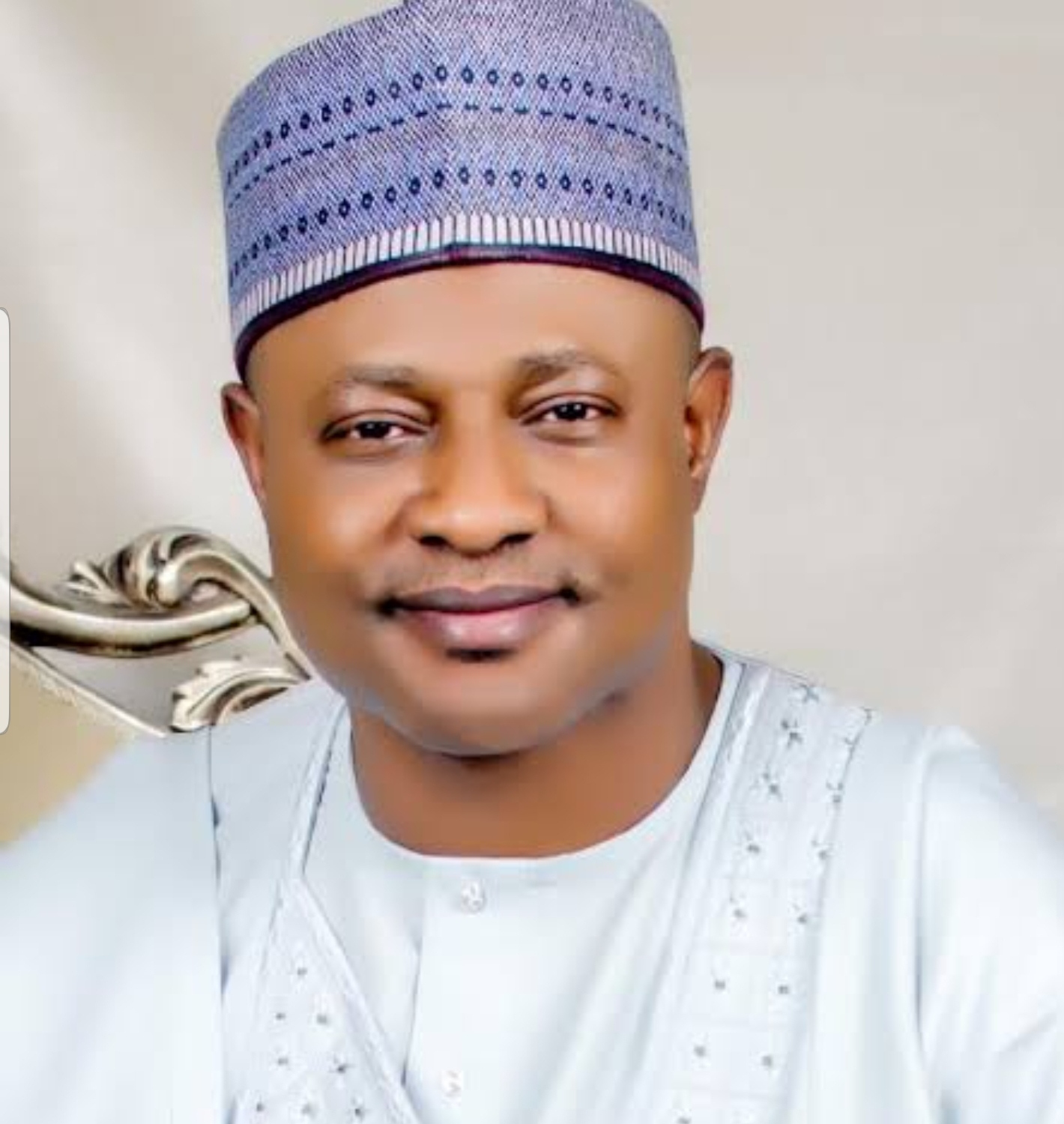
Kaduna State Governor Uba Sani on Tuesday, 27 October 2026, told Trust TV’s Daily Politics programme that he had never spoken ill of his predecessor, Nasir Ahmad El-Rufai, as questions over their relationship continued to attract attention in Kaduna State and Nigeria’s political circles.
Also read: FG Approves ₦70,000 Monthly Transport Allowance for Workers
The governor’s remarks came as El-Rufai remained in the custody of the Independent Corrupt Practices and Other Related Offences Commission (ICPC), following his detention in February and amid ongoing court proceedings over allegations of financial misconduct.
Sani insisted that his respect for the former governor remained intact, while distancing himself from a supporter’s reported call for El-Rufai to remain detained until after the next election.
“Honestly speaking, I have no problem with him (El-Rufai). If you listen to me carefully, I have never spoken anything bad about him, and I will never speak anything bad about him,” Sani said during the interview.
The governor also rejected any suggestion that a statement made by a political supporter represented his own position.
“The person that made that statement was speaking for himself. He was not speaking for me,” he said.
Sani declined to disclose details of any private efforts he might have made regarding El-Rufai’s situation, explaining that respect did not always require public declarations. He maintained that his approach to the former governor had been consistent since he assumed office in May 2023.
“As a matter of respect, many things I’ve done to show my respect for him, my regard for him, I don’t think I should come out and say it,” Sani said.
The comments offer a measured response to a relationship that has become a recurring subject of political debate since the two men, once close allies, began to drift apart.
El-Rufai governed Kaduna State from 2015 to 2023 and supported Sani’s bid to succeed him. Before becoming governor, Sani served as a senator representing Kaduna Central and held advisory roles during El-Rufai’s political career.
Their alliance was therefore rooted in years of shared political work, making subsequent disagreements particularly significant for the state’s political landscape.
Tensions became more visible after Sani took office, particularly over the financial legacy of the previous administration.
In 2024, the Kaduna State House of Assembly initiated a probe into allegations involving the former administration’s finances, while Sani’s government raised concerns about the state’s debt and liabilities.
El-Rufai and his associates subsequently criticised aspects of the new administration, deepening public speculation about the relationship between the two camps.
El-Rufai publicly questioned the closeness of the relationship in August 2025, saying that Sani had never been his friend, even as he acknowledged the political history between them. The remarks added to perceptions of a widening divide between the former governor and his successor.
Sani’s latest comments, however, focused on his stated preference for respect and consultation rather than public exchanges.
He cited his continued engagement with former Kaduna governors, including Ahmed Makarfi, whom he said he consulted on road construction projects.
The governor referred specifically to the road linking Soba and Zaria, explaining that discussions with Makarfi had helped inform his approach to the project.
Sani also said he had consulted former Vice-President Namadi Sambo on a project design, including the design of the Government House.
“When you are sitting as a governor, you don’t have a monopoly of wisdom. The way to succeed is to be humble and listen to people who advise you,” he said.
The remarks provided a glimpse into how Sani says he approaches governance, presenting consultation with former officeholders as a source of practical guidance rather than a sign of political weakness.
They also shifted attention towards the responsibilities of public office at a time when political disagreements have frequently overshadowed policy discussions in Kaduna.
El-Rufai’s legal situation remains a separate but closely watched dimension of the controversy. On 13 October 2026, Channels Television reported that the former governor appeared before the Kaduna State High Court for the continuation of his trial over alleged financial misconduct.
The appearance followed a Court of Appeal decision dismissing his challenge to the refusal of bail. The allegations remain subject to judicial determination, and El-Rufai has denied wrongdoing.
The legal proceedings have intensified public debate about the relationship between political accountability and the rights of individuals facing criminal allegations.
They have also provided a backdrop for competing political claims about responsibility for El-Rufai’s predicament, including accusations from opposition figures that Sani bears responsibility.
Such claims remain allegations and should not be treated as established facts.
Sani did not directly address the merits of the legal proceedings during the reported interview. Instead, he emphasised that he had not publicly disowned his previous statements about El-Rufai and insisted that his position had remained consistent.
For Kaduna residents, the distinction between personal relationships and the business of government remains important.
The state continues to face development needs that require sustained attention, while disagreements among its political leaders can influence public confidence and the wider political climate ahead of the 2027 elections.
Sani’s latest intervention may help clarify his public position, but it does not resolve the underlying questions surrounding his relationship with El-Rufai.
Whether the two men can move beyond their differences remains uncertain.
Also read: FG Approves ₦70,000 Monthly Transport Allowance for Workers
For now, the governor has made his message clear: he says he has never spoken ill of his predecessor and does not intend to do so, even as the political and legal circumstances surrounding El-Rufai continue to evolve.
-
Politics3 years ago
13 Ondo Assembly Members Disown Endorsement of Aiyedatiwa
-
Politics3 years ago
APC Group, Ondo Govt, Quarrel Over Money for Endorsement
-

 Trending News5 years ago
Stop unsavoury, inciting statements – DSS warns
-

 Others5 years ago
Adron Homes Celebrates 10 Years Of Housing Excellence
-

 Humanity5 years ago
President Buhari Commiserates With Ambassador Maureen Tamuno Over The Loss Of Her Father
-

 Others7 years ago
EX- CUSTOMS BOSS, IBRAHIM MERA’S DWINDLING FAME
-

 Business3 years ago
Bigi Carbonated Soft Drinks Treats 40 Consumers to an Epic Easter Movie Hangout
-

 Business2 years ago
Wema Bank Shines at Global SME Finance Forum Conference Awards 2024 …Awarded: • SME Financier of the Year (Africa) • Platinum Award for Best Financier for Women Entrepreneurs (Africa)