Connect with us

Opinion

IRONY OF LIFE: The same PwC that once nurtured his rise would today reject HND holders for employment

Published

on

PwC

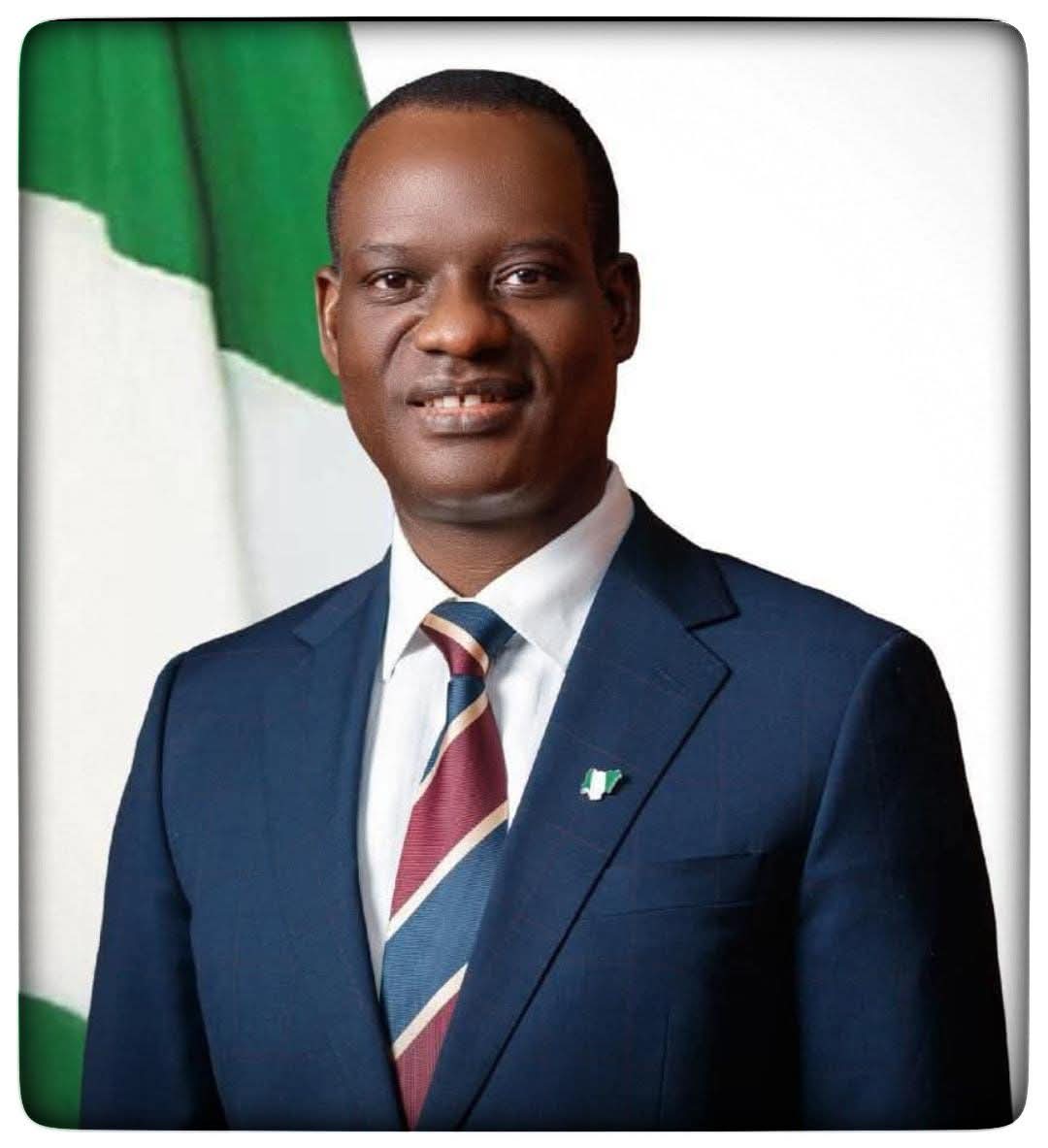
Taiwo Oyedele inspiring rise story from rural Ondo poverty to PwC partner and Finance Minister highlights resilience, ambition and success


From humble beginnings to global influence: The inspiring story of Taiwo Oyedele
He was born in a rural community in Ondo State in the mid-1970s.

Also read: LG Poll: Party leaders urge Obasa to support son’s aspiration for Agege Chairmanship

adron lemon friday

At age five, he nearly missed out on starting primary school because he was considered too small he couldn’t reach his right ear with his left hand.

He was eventually admitted because his twin sister could meet the requirement. Since they were born on the same day, it wouldn’t make sense to admit one and reject the other.

Throughout both primary and secondary school, he consistently ranked as the top student in his class.

Paying school fees was a constant struggle ₦50 was often difficult to raise. He supported himself by working on farms during weekends, earning between ₦5 and ₦10.

The challenge intensified when it was time to register for WAEC, which cost ₦495. He needed months of farm work to afford it, and dropping out became a real possibility.

Fortunately, a community association of his village indigenes working in Ajaokuta Steel offered a scholarship to the best student in his school he earned it, which enabled him to sit for WAEC and continue his education.

He passed the exam with excellent results.

Like many children from rural backgrounds, he was uncertain about his next steps.

An uncle suggested he pursue social sciences and register for ICAN his first time hearing about the professional body.

He wrote the university entrance exam and scored around 220, applying to study Accounting at Ife and Unilag.

However, he was offered different courses like Estate Management and Economics Education, which he declined.

He was determined to study Accounting.

He eventually enrolled at a polytechnic in Ado Ekiti, where he secured admission to study Accounting.

That decision marked the beginning of a career that would later bring him recognition and financial success.

While pursuing his ND, he simultaneously registered for ICAN funding it by selling his allocated hostel bed space.

After completing his ND, he moved to Lagos for industrial training and extended his stay to gather more funds for his ICAN exams.

He later gained admission into Yabatech for his HND, excelled in his ICAN exams, and even earned a scholarship from his tuition centre for the final stage.

He became a chartered accountant in 1999 and completed his HND in 2000.

Next came his entry into PwC.

While living in Surulere, a friend informed him about a recruitment test being organized by PwC.

Not fully aware of what PwC was, he followed his friend to the test centre and participated.

He passed the test his friend did not.

Since he hadn’t completed his national service, he was offered the opportunity to serve with the firm instead of immediate employment.

He joined PwC as a corps member in 2001.

In less than eight years, by 2009, he rose from a corps member to becoming a partner equivalent to an executive director role in many multinational firms.

He has since spent over a decade as a partner, eventually becoming the Tax Leader for PwC across Africa.

From working on farms to fund his education, he evolved into a highly respected and articulate executive widely recognized as a leading voice in tax and fiscal policy in Nigeria.

He was later appointed Chairman of the Presidential Tax Reform Committee, tasked with overhauling Nigeria’s tax system and positioning the country among leading global economies.

Today, he serves as Minister of State for Finance.

Also read: Shettima, Sanwo-Olu, Aare Babalola, others to attend NACC 20th presidential inauguration gala in Lagos

Despite all these achievements, he is known for his humility, integrity, and willingness to help others a true patriot.

69 / 100 SEO Score

Opinion

Tinubu’s Biggest Opponent Is Not Obi or Atiku… It’s Tinubu

Published

on

Tinubu

By Moses Braimah

“A government that spends more time explaining the opposition than explaining its achievements may already know where its real problem lies.” (more…)

adron lemon friday

64 / 100 SEO Score
Continue Reading

Opinion

Seven prime ministers in a decade: What Nigeria can learn from Britain’s chaos

Published

on

Prime Minister

By Dr Toju Ogbe,

adron lemon friday

The resignation of British Prime Minister Keir Starmer, less than two years after leading the Labour Party to  a landslide electoral victory, was dramatic, yet reflected a pattern we have become familiar with in recent British politics.

Also read: Church Leader Who Ushers: Low-Key Lifestyle of A Loud Prophet, Elijah Ayodele

Starmer now joins a procession of fallen prime ministers stretching back to 2016 – from David Cameron to Theresa May, Boris Johnson, Liz Truss, and Rishi Sunak.

None of these prime ministers was ousted through military intervention, popular insurrection, or a court order. Rather, each was ultimately brought down by the same political system that elevated them to electoral glory.

To the casual observer, the rapid turnover of British Prime Ministers in the last decade may appear chaotic, or even a symptom of political instability. Some argue that the British electorate has become ungovernable.

However, beneath the apparent chaos at Westminster lies an uncomfortable truth that African democracies would do well to examine, particularly Nigerians who wonder why our democracy has delivered so little despite almost three decades of uninterrupted civilian rule.

The turbulence of British politics over the last decade, presents an important lesson on democratic accountability beyond successful elections.

Once the prime minister is deemed a liability by their own political party, the mechanics of accountability are activated. The daggers are quietly drawn and the ruthless pressure to resign begins.

Every poll and survey on public opinion is closely monitored, local election results are taken as a referendum on leadership. Cabinet resignations begin to gain momentum and backbenchers get restless.

Once the news media smells an internal uprising, they amplify scrutiny of the prime minister, subjecting every move – speech, public appearance, political misstep etc to relentless examination.

Pressure gradually mounts until the prospect of bitter internal leadership challenge becomes impossible to resist. The Prime Minister falls.

For every British Prime Minister, winning an election is merely the beginning of examination, not the end. Political survival lasts only for as long as the prime minister maintains the confidence of his party and the parliament.

This is the muscle of British democratic accountability; a political culture that prioritises institutional survival over individual ambition. Starmer recognised this reality in his resignation speech:

“The question my party is asking now is whether I am best placed to lead us into the next general election. I have heard the answer of my parliamentary party to that question, and I accept that answer with good grace.”

That closing sentence alone is a masterclass in British institutional democracy. The party spoke. The leader listened. The correction comes from within.


Nigeria presents a strikingly different political logic.

Nigeria on the other hand, presents an interesting contrast with a different political logic and culture.

The notion that a governing party would overtly interrogate the performance of its own leader and engineer a transition to someone better equipped to maintain public confidence, is in most cases politically unthinkable in Nigeria.

Political parties in Nigeria do not coalesce  around ideological principles; rather, they operate more as electoral instruments organised around powerful individuals.

Internal dissent is often dealt with as betrayals rather than as part of healthy democratic engagement. Godfatherism and transactional loyalties shape political succession and leadership retention.

Once elected in Nigeria, there is an inherent assumption that a governor or president has a fixed two-term lease on power.

While 10 Downing Street is preparing to welcome its seventh Prime Minister in a decade, Nigeria, in contrast, has had only two democratically elected presidents during the same period – one of whom is still serving.

Social and economic conditions may deteriorate. Insecurity may worsen. Campaign promises may be ignored.

Public frustrations may become unbearable. Yet, incumbent governors and presidents often remain insulated from meaningful internal scrutiny and are even routinely anointed as ‘consensus’ candidate for second terms provided loyalties to godfathers, rather than the electorates are maintained.

The consequence is that loyalty, instead of performance is often rewarded at the expense of accountability.

This is not an argument for a revolving door at Aso Rock, as frequent leadership changes, by themselves, do not guarantee good governance.

Rather it is a case for making accountability an integral aspect of party politics in Nigeria.

Although the Nigerian presidential system provides for a fixed four-year term regardless of party confidence, political parties should however, be more than instruments for election campaigns, activated to simply retain or take over power every four years.

Electoral victory, should not be the ultimate goal, but the starting point of public service where democratic legitimacy must be continuously earned.

Equally important, political parties must develop the institutional maturity to honestly evaluate their own leaders. They must prioritise public interest and institutional credibility over loyalty to ‘Godfathers’.

The ultimate lesson from Westminster’s revolving door is clear: the true strength of a democratic system, lies not in the ability to produce leaders, but the capacity to effectively replace them, when they no longer command confidence.

Protecting failing leaders from accountability weakens democracy and political parties must ensure that no leader is more powerful than the institution.

Also read: Zamfara Governor, Dauda Lawal Shakes Up Cabinet, Moves Budget Commissioner to Education

As political parties gear up for the 2027 general elections, the political class must decide what matters more: we can continue to reward blind loyalty and endure predictable decline, or discover the courage to demand accountability from those who seek to lead us.

64 / 100 SEO Score
Continue Reading

Opinion

Chief Obafemi Awolowo and the fabric of Nigeria’s history and society

Published

on

Awolowo

By Sabella Ogbobode Abidde,

adron lemon friday

As a scholar, I have always wanted to edit or co-edit a book on the Big Ten of Nigerian nationalists, focusing on their lives, times, and generational impact from the nineteenth to the twenty-first century.

Also read: Abolish state of origin: A prerequisite for true national integration

An august list would include greats such as Aminu Kano, Herbert Macaulay, Nnamdi Azikiwe, Alvan Ikoku, Anthony Enahoro, Ahmadu Bello, Egbert Udo Udoma, Tafawa Balewa, Obafemi Awolowo, Eyo Ita, and Nnamdi Azikiwe. Two or more scholarly volumes would be ready before I bid farewell to my academic career.

But for now, this column briefly sheds light on a philosopher and mystic, who was also a political and economic giant: Chief Obafemi Awolowo.

His impact is multigenerational and wondrously woven into the fabric of Nigeria’s history, culture, and society.

Publicly available records indicate that the Nigerian nationalist movement began in the 1920s (Awolowo was born in 1909), so he had forebearers in the movement.

He later became one of the movement’s central figures, and by independence in October 1960, he had perhaps become the dominant personality shaping Nigeria’s political development and economic growth.

Awolowo was also a federalist. The first Premier of the Western region of Nigeria. The founder of the Yoruba nationalist group Egbe Omo Oduduwa.

He was the leader of the Action Group (AG), a political party and an opposition leader in the federal parliament, from 1959 to 1963.

A noted lawyer, author, journalist, and the founder and publisher of the Nigerian Tribune newspaper.

And in later years, under the first military regime, he served as the federal commissioner for finance and as vice chairman of the Federal Executive Council during the Nigerian-Biafran Civil War, 1967-1970.

Much later, Awolowo founded the Unity Party of Nigeria (UPN) and became the party’s presidential candidate in 1979 and 1983.

The consensus was that, on both occasions – especially in 1979 – the electoral body, acting at the behest of the then military regime, put its foot and thumb on the ballot-counting machines to the detriment of Awolowo.

In other words, those who voted didn’t count; the military counted and secured the votes for their preferred candidate.

Those officially sanctioned electoral irregularities, many Nigerians have asserted, partially account for why Nigeria has remained politically and economically miserable and socially chaotic in the years since.

And in the years since his passing, many of the so-called Awoists — men and women who claimed to be adherents and practitioners of his precepts — have fallen by the wayside.

They failed! By 1997, one rarely finds a school of politicians parading themselves as students of or members of the Awolowo Cathedral.

In the second decade of the twenty-first century, many politicians lack the impudence to call themselves Awoists.

The irony is that in the northern part of Nigeria, one can rarely find a pool of politicians who, today, adhere to the teachings and practices of Mallam Aminu Kano. And in the east, there are no more followers of Dr. Nnamdi Azikiwe.

Many politicians, from the east to the west, from the north to the south, and from the middle belt to the south-south, have done away with ethics, morality, ideology, or remaining faithful to their political parties.

Most no longer care about party manifestos or going to the State House, National Assembly, or the Presidency with the people’s burden on their hearts or shoulders.

In public or in private, participants in the Nigerian political and economic space think nothing about integrity, posterity, nation-building, or national interest. It is mostly about self-interest now.

That is what Nigeria has become! Many of the good, effective, efficient, visionary, and purposeful Nigerians are in hiding, while the audaciously corrupt are masters of the game, leaders at various levels of governance.

And we expect to change for the better? Heck no! It is a painful three-ring circus at all three levels.

I do not for once contend that the Federal Republic of Nigeria is a lost cause, a lost experiment, a lost entity, or a forsaken project. No! It can be saved; it can be brought back from the edge of the cliff.

And I also do not for once think that Nigeria should be partitioned into three or four separate countries.

Oh, no! I believe that sustained, first-rate, courageous, and visionary leadership can turn the Nigerian ship around. It is doable. This is not a hopeless country. It is not!

Many of the institutions Awolowo built are still going strong. Many of his policies have been proven right and correct. Many of his teachings have been found to be the appropriate panaceas for Nigeria.

And many of the physical infrastructure projects he built lasted for more than four decades.

And so, imagine where Nigeria would be today on the development scale – on the same level as Taiwan, South Korea, New Zealand, China, and Australia? Or the oil-rich Middle East countries.

Not having Chief Obafemi Awolowo as the president of this federation set her back three to four decades.

Examined dispassionately, his economic and political achievements have yet to be rivaled for several decades after his premiership of the western region, and neither has his commissionership (now minister) of the finance portfolio.

He was good, he was great, and he was miles above his contemporaries in the development of their various regions and in their generational legacies.

Without Awolowo’s policies, much of southern Nigeria – especially the western region — would perhaps be one of the least developed in today’s Nigeria.

Directly and indirectly, Awolowo was the man who made it possible for millions of Nigerians and their offspring to dream of and have a better life.

He promised, he delivered; he built and encouraged others, such as Michael Adekunle Ajasin (Ondo State), Lateef Kayode Jakande (Lagos State), Bola Ige (Oyo State), and Olabisi Onabanjo (Ogun State), to be builders.

If General Yakubu Dan-Yumma Gowon was the most consequential military leader Nigeria has ever had, Chief Obafemi Jeremiah Oyeniyi Awolowo, was the single most consequential leader and public figure beginning with his premiership in 1954.

Above all else, he was a family man, a good man, a good Nigerian, and a Pan-Africanist. He was better than most and far better than we thought. That’s Awo for you, a man who’s woven into our consciousness.

Also read: Abolish state of origin: A prerequisite for true national integration

Chief Obafemi Awolowo would have been 117 this year, but he died at 78 in 1987 at his home in Ikenne, Ogun State. Chief Hannah Idowu Dideolu Awolowo, affectionally called HID, was Awolowo’s “jewel of inestimable value.” He had said of her: “I do not hesitate to confess that I owe my success in life to three factors: the Grace of God, a Spartan self-discipline, and a good wife. Our home is to all of us, a true haven; a place of happiness, and of imperturbable seclusion from the buffetings of life.” HID was born in Ikenne, in1915 and passed in 2015 in the same locality. She was 99. It was a union and a marriage that lasted for five glorious decades.

62 / 100 SEO Score
Continue Reading

Trending News