
Politics
The Untold Story Of Degeneration Of Osun APC Crisis By Aladelola Adisa

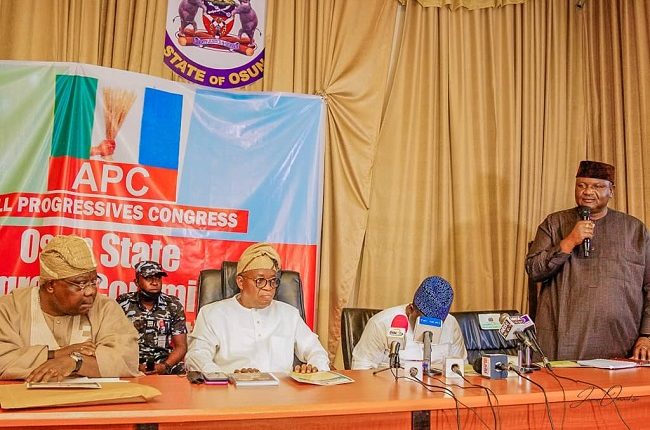
The crisis rocking the All Progressives Congress (APC) in the State of Osun might not have festered to date if fairness, unity and collective purpose wasn’t jettisoned by the current administration in the State, investigations have revealed.

Due to controversies surrounding the emergence and eventual assumption of office of Governor Oyetola, efforts were not spared to unite members of the APC political family in Osun.
Findings revealed that rather than the Governor and his loyalists strengthening and rejuvenating the party for the consolidation of progressive legacies in the state, it began an unprecedented politics of segregation and exclusivity against members of the party that brought him to power in 2018.
A source who is close to the two camps told journalists that party members who wanted to ensure that the crisis did not degenerate, at its earlier stage, formed The Osun Progressives (TOP), a caucus of the party in a bid to right the wrongs of the factional party chairman, Gboyega Famodun and by extension, the Governor’s camp.
A top party chieftain in the state who prayed not to be named because of the height of the crisis said Governor Oyetola’s strong position not to associate with anyone who believed in his predecessor, Ogbeni Rauf Aregbesola’s administration was the first in the series of strokes he used to further divide the party.
The party leader explained further: “Since the creation of Osun in August 27, 1991, Osun has been democratically governed with Osun West Senatorial District taking the first shot but ruling for just less than 24 months; Osun East Senatorial District ruling for eight years; Osun Central Senatorial District where Governor Oyetola hails from would have ruled for 15 and half years by the end of his tenure.
With three Governors: Chief Bisi Akande, four years; Prince Olagunsoye Oyinlola, seven and half years; and Alhaji Gboyega Oyetola who would have spent four years at the end of his first term by 2022 being from the same Ifelodun/Boripe/Odo-Otin Federal Constituency as Oyinlola.
“In 2018, the agitation for the Osun West Senatorial District to produce the next Governor was fierce and huge. It was so fierce that all party leaders, starting from the elders, Agba Osun caucus of APC, majority of the State Executive Council, and virtually all organs of the party were hell-bent on “WEST LOKAN AGENDA.
“In spite of this clamour, the then Chief of Staff, Alhaji Gboyega Oyetola, was produced as the APC candidate for the State Gubernatorial Election.
“That decision alone fragmented the party such that a section of the party decamped to the ADP, costing APC at least 49,000 votes in the 2018 election. Eventually, the election was declared Inconclusive and a Rerun was ordered, with Alhaji Oyetola eventually winning with a slim margin.
“Although, many factors were responsible for the declaration of the election being Inconclusive, among which was the decamping of aggrieved section of APC members to the ADP – costing APC over 49,000 votes, the unpopularity of the APC candidate as well as the general clamour for OSUN WEST DISTRICT to field the next Governor were the driving factors for APC’s unusually slim victory in the 2018 guber elections”.
Speaking further, and digging deeper into the unpopularity of the candidate, the source posited, “If we compare the results of Alhaji Isiaka Gboyega Oyetola in his home local governments and that of his closest rival, the PDP candidate in his home local governments, we will discover the huge difference of 21,525 votes in favour of the PDP candidate. This is significant, considering the fact that, PDP could only lead APC after the first ballot by only 353 votes.
“Instead of considering the above factors as the main factors responsible for the declaration of the election Inconclusive, Governor Oyetola, from the inception of his administration embarked on a campaign of calumny and politics of division within the party. Under the Oyetola administration, whoever is perceived to be associated with or harbour any interest in the legacy of immediate past administration or commitment to his predecessor is alienated from the party and government regardless of their contribution to the success of the party.”
Another albatross, the APC chieftain remarked hanging on the neck of Oyetola and his IleriOluwa camp, was the reversal of the major policies of the Aregbesola administration spitefully. They noted that since the start of his administration, the Governor had publicly shown his disdain for the Minister which Ogbeni was aware of but kept mum in the spirit of party cohesion and political maturity.
“For example, when the Muslim Community in Osun was planning to honour Ogbeni with the title of WAZIRI’L MUMINEEN of the State of Osun, the Governor and his team bluntly showed disdain for the event. Despite the fact that Governor Oyetola was the one that picked the date for the programme, he directed that major functionaries of his government should not attend the programme, while also travelling out of the country himself. The only Local Government Chairman who took active role in the programme, Hon Akeem Olaoye, then Chairman of Osogbo South LCDA was suspended from office for six months. Till today, the unbridled castigation of APC Party stalwarts by members of Oyetola’s administration is the order the day.”
He said while all these were going on, some concerned members of the party approached the Governor to have a rethink about his actions and inactions against APC stalwarts including the former Governor, but the Governor did not yield.
The APC leader noted, “The issues were brought to the attention of Baba Bisi Akande, the former Governor of Osun, for resolutions, though this effort did not produce a decisive resolution. Thereafter, in December 2020, Asiwaju intervened at a meeting held at the Ila Orangun residence of Baba Bisi Akande, with Baba Akande, Governor Oyetola and Ogbeni in attendance where resolutions were agreed. However, the resolutions taken at that meeting were jettisoned and the leaders have not since then raised a finger.
“When there was no solution in sight, genuine party leaders who love the party and majority of people who suffered before we could restore the progressive party back to power in Osun 12 years ago, came together to form The Osun Progressives (TOP), in order to reorganize the party for future elections.
“Immediately The Osun Progressives (TOP) was formed, the Government started castigating leaders of the group and its members. Though this attack has continued unabated, however on a daily basis, members of TOP have kept increasing.
“Immediately the timetable for Ward Congress was released by the National Secretariat of the APC, the leadership of TOP announced to the whole world that they were ready for the Congress but the Governor’s group, said they were not ready for a Congress rather they settled for Consensus. While TOP went for real Congress, the Governor’s group went for a dubious ‘CONSENSUS’.
“The Governor used his position as a member of the Caretaker Extraordinary and Convention Planning Committee (CECPC) of the APC with the support of Senator Iyiola Omisore, to influence the Chairman of the Osun Convention Planning Committee, Hon. Elegbeleye to declare the Governor’s group consensus list as duly elected ward Executives; TOP then petitioned the National Secretariat in the form of an Appeal and eventually the Appeal Committee came, they were equally compromised by the Governor, using his influence as a member of CECPC. But one significant thing about the Appeal was during its sitting, known thugs from the Governor’s group came to disrupt the proceedings.
“However, seven leaders of TOP were arraigned before the Magistrate Court instead of arresting and prosecuting thugs. The case was eventually dismissed.
As the crisis continued, especially in relation to the party Congress, numerous party leaders have intervened without any clear resolution in sight.
“On January 8, 2022, the APC National Reconciliation Committee arrives Osun, met with Governor Oyetola’s APC factions, who urged the National Reconciliation Committee to disregard the petitions forwarded to it by TOP.”
While expressing optimism for an end in sight to the crisis, the party chieftain called for a genuine, equitable and fair reconciliation as the chieftain posited, “if with a united party in 2018, the current Governor barely won the election, how will the party perform with a divided house as we approach the coming Guber election”.


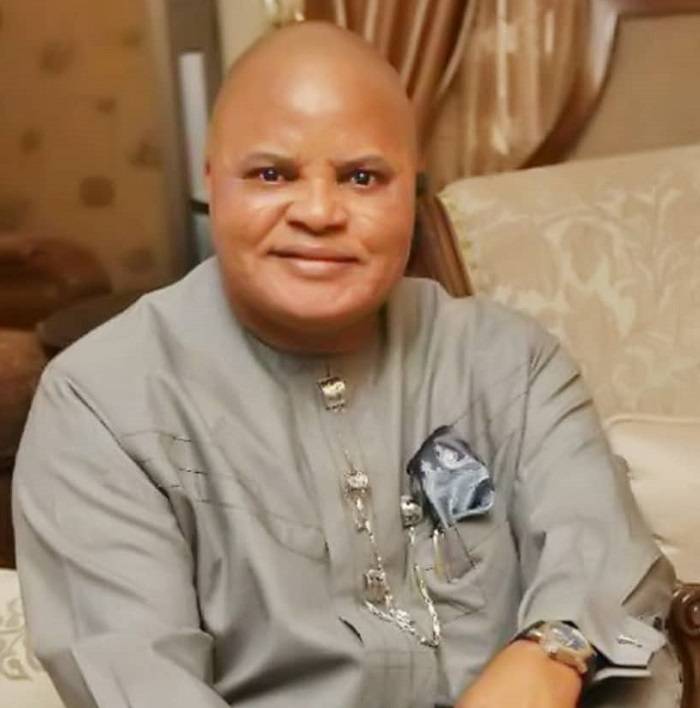
A group, the Imo First Group (IFG) has described the purported Magistrate court order to arrest Senator Ifeanyi Araraume and the former governor of Imo State, Rochas Okorocha, over alleged criminal conspiracy and forgery, as a ruse and fake news
The group stated this in a statement issued on Saturday in Abuja.
IFG challenged those peddling the fake news to make the court order public.
The statement reads ” The fabricated and concocted story was first posted on social media by Hon. Ambrose Nwaogwugwu, a media aide to Governor Hope Uzodimma, before it was picked up by other media outfits, including Arise TV.
According to the statement, those behind the report claimed that a Senior Magistrate Court sitting in Abuja issued a Bench Warrant dated September 9, 2026, following a petition written by the Resident Electoral Commissioner (REC) in Imo State, Barr. Chukwuemeka Ibejiako, to the Police and DSS on October 8, 2026, over alleged presentation of fake APC primary results.
The Group debunked the existence of any such order.
“We want to state categorically and unequivocally that no jSenior Magistrate ordered or issued any bench warrant for the arrest of Araraume”
IFG however challenged anyone in possession of the purported court order to publish it.
“If you claim to have a court order present same for the public to see,
“This fabricated bench warrant contain in the report is filled with inconsistencies, the bench warrant was dated September 9, 2026, while the REC’s petition that supposedly triggered it was dated October 8, 2026, with case number CR/M/084/2026.
The statement further stated that the purveyors and harbinger of the fake news tried to trick the magistrate via exparte order but was rebuked
“The magistrate bluntly refused to grant their exparte and threatened to arrest them, yet they carried their falsehood about. What’s the problem of occupants of office that never won free and fair elections and tried to destroy reputable Imo sons that have won elections. We challenge anyone in this macabre surugede dance to show the court order or warrant of arrest. It’s preposterous to blackmail decent Imo sons on the altar of dirty politics.”

-
Politics3 years ago
13 Ondo Assembly Members Disown Endorsement of Aiyedatiwa
-
Politics3 years ago
APC Group, Ondo Govt, Quarrel Over Money for Endorsement
-

 Trending News5 years ago
Stop unsavoury, inciting statements – DSS warns
-

 Others5 years ago
Adron Homes Celebrates 10 Years Of Housing Excellence
-

 Humanity5 years ago
President Buhari Commiserates With Ambassador Maureen Tamuno Over The Loss Of Her Father
-

 Others7 years ago
EX- CUSTOMS BOSS, IBRAHIM MERA’S DWINDLING FAME
-

 Business2 years ago
Bigi Carbonated Soft Drinks Treats 40 Consumers to an Epic Easter Movie Hangout
-

 Business2 years ago
Wema Bank Shines at Global SME Finance Forum Conference Awards 2024 …Awarded: • SME Financier of the Year (Africa) • Platinum Award for Best Financier for Women Entrepreneurs (Africa)