
Politics
Fake agencies and ghost workers saga

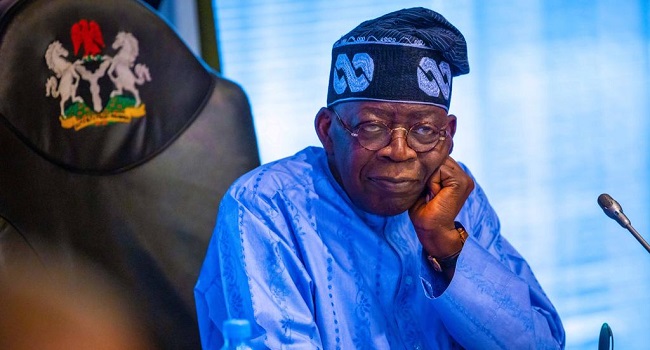
Tinubu audit targets ghost workers and fake agencies as Nigeria confronts costly gaps in payroll, budgets and public-sector governance

The latest scandal involving fake government agencies and ghost workers should not be dismissed as another corruption story in Nigeria’s seemingly endless catalogue of public-sector abuses.
Also read: Tinubu – Time To Resign Or Be Impeached
It is better to treat it as a critical inquiry into the quality of governance.
President Bola Ahmed Tinubu’s decision to order a comprehensive forensic audit of the Integrated Personnel and Payroll Information System (IPPIS), federal agencies and related government systems is therefore timely.
The audit, to be coordinated by Finance Minister and Coordinating Minister of the Economy, Taiwo Oyedele, is expected to examine payroll records, personnel and pension systems, bank accounts, government agencies and the connections between IPPIS, GIFMIS (Government Integrated Financial and Management Information System), Remita and the Treasury Single Account.
But an uncomfortable question must be asked: why did government need another scandal before it looked seriously at the architecture of government? That is the bigger issue.
The discovery of the fictitious Presidential Foreign Intervention Promotion Council (PFIPC) and other allegedly fake agencies is astonishing.
More disturbing is that PFIPC, one of the phantom entities, reportedly secured a N1.3 billion allocation in the 2026 federal budget.
The scandal raises a fundamental question: if an agency that does not legally exist can find its way into the budget, what else is hiding in the system?
The Independent Corrupt Practices and Other Related Offences Commission (ICPC) subsequently uncovered another alleged fake agency and reported that the promoter created additional fictitious entities, complete with forged legislative documents and bank accounts.
This is no longer simply about one clever fraudster; it is about a system that is broken and apparently had enough gaps for the fraud to flourish.
That brings us to the Stephen Oronsaye Report – a low-hanging fruit – which has been gathering dust since the report was submitted in 2012 after a presidential committee chaired by former Head of the Civil Service, Stephen Oronsaye, examined the structure of federal government agencies and the cost of governance.
The report identified duplication, overlapping mandates and unnecessary agencies.
Among its major recommendations was reducing 263 statutory agencies to 161, abolishing 38 agencies, merging 52 and reverting 14 to departments within ministries.
In February 2024, President Tinubu’s Federal Executive Council approved implementation of the report, with agencies to be scrapped, merged, subsumed or relocated. An implementation committee was subsequently inaugurated with a 12-week deadline.
So, what happened?
That is precisely the question Nigerians should be asking. More than two years after the presidential approval, the evidence suggests that implementation has been selective and incomplete.
In fact, government has continued to create or entertain proposals for new agencies whose mandates overlap with existing institutions.
The International Centre for Investigative Reporting (ICIR) recently documented this contradiction, noting that the executive and legislative pipelines continue to produce new agencies despite the stated commitment to rationalisation.
This is where the government’s credibility is tested as it cannot approbate and reprobate at the same time. If the cost of governance is too high, then why are we creating more ministries, departments, agencies and boards?
Instead of the promise a leaner government, the political system continues to treat the creation of agencies as a convenient way of rewarding interests, creating positions and distributing patronage.
I have a strong feeling that President Tinubu is now ready to step on toes and wield the big stick because of the embarrassing ICPC revelations.
But why is the Oronsaye so difficult to implement?
The uncomfortable answer is that reform threatens vested interests. Every agency has a director-general, chairman, board members, directors, special assistants, administrative structures, procurement opportunities, contracts and budgetary allocations.
Merging two agencies may make economic sense to the taxpayer, but it also means that somebody’s office disappears.
On the other hand, scrapping an agency means eliminating positions and reducing the number of political appointments. Politicians and civil servants know that rationalising government has political consequences.
That is why the Oronsaye Report has survived three administrations. Jonathan did not fully implement it. Buhari ignored it. Tinubu announced implementation in 2024, but the process remains far from complete.
The ICIR’s recent assessment is particularly revealing: despite the 2024 approval, implementation has been selective, while new establishment bills continue to emerge. But there is another problem: legislation.
Some agencies cannot simply disappear because they were created by Acts of the National Assembly. Some mergers therefore require legislative amendments.
For example, the proposed subsuming of the National Salaries, Incomes and Wages Commission into the Revenue Mobilisation Allocation and Fiscal Commission requires constitutional amendment because the latter is constitutionally established.
But that cannot become an excuse for doing nothing. The federal government knows which agencies require legislation and those that can be administratively merged.
What of redundant agencies and the those that can be returned to ministries? We should not pretend that government does not know them. In fact, the reform could have been done in phases with specific deliverables.
This naturally leads us to the ghost-worker scandal which is equally revealing.
Nigeria has invested heavily in payroll technology which explains why the IPPIS was supposed to eliminate precisely the kind of fraud now being exposed.
If fictitious names, ineligible personnel or fraudulent bank accounts can still penetrate the payroll system, then the issue is no longer simply whether IPPIS exists, it is whether the controls around IPPIS work.
And if the allegation that some workers who live and work abroad are drawing salaries from the civil service is true, then the allegation, in my view, would be a much bigger scandal.
The ICPC has reported recovering more than N24 billion linked to ghost workers’ pensions and obtaining forfeiture orders involving more than 900 suspected ghost workers. That is a staggering indictment of institutional controls.
The President’s forensic audit is therefore welcome, but it must not become another committee exercise that produces a report which eventually gathers dust.
What we are suffering from is poor implementation of rules and regulations; enforcement of existing laws and ignoring committee recommendations, not a shortage of reports
Whatever happened to previous white papers and audit reports? We have reform programmes and anti-corruption agencies, but we often lack the political will to follow recommendations to their logical conclusion. That is a governance failure spanning several seasons since 1999.
The most important lesson from the fake-agency scandal is that corruption does not always require sophisticated technology; sometimes, it only requires institutional negligence.
How could an agency without a proper legal foundation obtain recognition, open accounts, have access to government offices, and be accommodated within the national budget? That is a huge scandal arising from poor stewardship.
How could several layers of bureaucracy fail to ask the most basic question: where is the enabling law? These questions should form part of the forensic investigation by Tunde Oyedele and his committee.
The President’s directive appropriately says the audit should go beyond individual cases and examine the architecture of government.
That is exactly what is required, but the architecture must lead to restructuring for far-reaching decisions.
If the forensic audit, for example, discovers 50 weaknesses and government merely fixes the individual cases, we will be back here again.
The objective should be to create a government where it is structurally difficult – not merely illegal – for a fake agency or ghost worker to enter the system.
The Oronsaye Report should be the starting point to clean up an opaque system. The government should resist the temptation to establish yet another committee to review the report.
The report is old which means some recommendations may require updating because Nigeria’s institutional landscape has changed, but the central diagnosis remains relevant: too many institutions have overlapping responsibilities at too great a cost.
Indeed, a recent analysis cited concerns that Nigeria now has more than 900 MDAs (it could be more), with estimates of significant annual losses associated with the proliferation of agencies.
The answer is not another report. While the Tunde Oyedele Committee is diligently carrying out President Tinubu’s directive, the government should publish the Oronsaye Implementation Matrix showing which agency has been scrapped, merged, subsumed, or require legislation. If implementation was stalled at some point, who is now responsible for completing each action? There should also be a deadline for feedback.
And, importantly, no new federal agency should be created without demonstrating that its functions cannot be performed by an existing institution. That should become a rule of governance going forward.
President Tinubu deserves credit for ordering the forensic audit, but Nigerians should not judge the exercise by the number of ghost workers discovered or fake agencies exposed – they should judge it by what happens after the discovery.
Will the government recover the money and will those responsible face prosecution? Those who failed in their supervisory responsibilities should be held accountable.
We also want to know whether duplicated agencies were actually merged and if redundant agencies were made to disappear like the morning dew.
Without prejudice to Tunde Oyedele’s Committee Report, the number of government entities must be reduced and payroll verification should become continuous rather than episodic. Government should also stop creating the institutional conditions that make these scandals possible.
Meanwhile, how many weaknesses in government remain undiscovered because nobody is looking?
Who are the promoters of fake agencies and ghost workers? If they truly exist, why can’t we find them? That is why this scandal should not be treated merely as another anti-corruption event, but a governance story.
The Oronsaye Report provides a tested framework for rationalising government, eliminating duplication and reducing the cost of governance.
The Tinubu administration should pick it. If government is serious about fighting ghost workers and fake agencies, it must do more than clean up the symptoms by redesigning the system that produced them.
Also read: Tinubu Pays Tribute as Eagle Online Publisher Oladipo Dies at 56
Nigerians are entitled to ask: if the government approved the Oronsaye reforms in 2024, why are we still debating the same problem in 2026?


Adebayo Adeoye
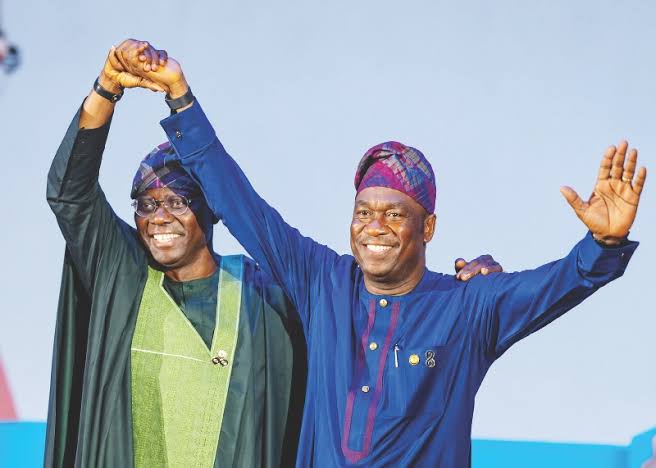
On October 30, at the unveiling of his governorship manifesto, Dr Kadri Obafemi Hamzat received the endorsement every political aspirant in Lagos covets. Governor Babajide Sanwo-Olu, standing before party leaders and supporters, declared that he had come not to offer goodwill messages but “to testify.”
The declaration was more than a show of solidarity. For Hamzat, who has occupied the second position in Lagos State since 2019, it represented a public affirmation of his long-awaited political ambition and a symbolic passing of the baton from his principal.
With the endorsement, Hamzat’s emergence as the All Progressives Congress ,APC candidate for the 2027 governorship election appears to have consolidated a carefully managed succession. If elected, he would become the first deputy governor in Lagos State’s history to succeed his principal directly as governor.
A long wait, repaid
Hamzat’s journey to the governorship ticket has been marked by ambition, setbacks and strategic patience. In 2015, he contested the APC governorship primary against Akinwunmi Ambode but lost. Three years later, he stepped aside for Sanwo-Olu, who secured the party’s nomination and subsequently won the election.
That decision is now widely regarded by his supporters as evidence of loyalty and political maturity. His reward has come through a succession process that gathered momentum this year.
In April, President Bola Tinubu endorsed Hamzat as the consensus candidate during a meeting with the Lagos Governance Advisory Council, the party’s influential leadership body. The council cited the need for peace, cohesion and continuity.
Hamzat subsequently won the APC primary with 657,917 votes, becoming the first deputy governor in Lagos to secure the party’s governorship ticket. In June, Sanwo-Olu formally unveiled him alongside his running mate,  .
Consensus and its discontents
Yet the smoothness of Hamzat’s emergence has raised questions about the place of internal competition in the party’s democratic process.
Several aspirants had expressed interest in the ticket, including former governor Akinwunmi Ambode and Olajide Adediran, popularly known as Jandor, who joined the APC after contesting the 2023 governorship election on the platform of the Peoples’ Democratic Party.
Some aspirants reportedly purchased nomination forms before party leaders settled on Hamzat, while groups in Badagry Division called for the ticket to be zoned to their area.
The party maintained that its procedures had been respected. Sanwo-Olu also argued that consensus endorsement did not negate democratic processes. Nevertheless, the extent to which the arrangement reflected genuine unity or the influence of party leadership remains a subject of political debate.
Experience as a selling point
Sanwo-Olu’s argument for his deputy rests largely on experience and continuity. Lagos, he maintains, is too complex to be entrusted to a political novice.
The governor has pointed to major infrastructure projects, including rail expansion and the proposed Fourth Mainland Bridge, as initiatives requiring consistent leadership and long-term planning.
Hamzat’s manifesto, organised around seven pillars and a 100-point plan, promises improvements in transportation, healthcare, housing and public services. He has pledged an inclusive and economically vibrant Lagos, promising that traders, artisans, transport workers, young people, professionals and investors will have a place in his administration.
The campaign, led by Senator Musiliu Obanikoro, has adopted the slogan “Lagos Forward Together.”
Lagos remains the political home of President Tinubu, and APC leaders have linked the 2027 governorship contest to the party’s broader electoral ambitions.
Ultimately, Hamzat enters the race with formidable institutional backing. But the real test will extend beyond party structures and political endorsements.
For Lagosians, the question is whether continuity under a familiar leadership can translate into tangible improvements in their lives. Hamzat has secured the baton. Convincing voters that he can carry it forward is the challenge that lies ahead.


The Speaker of the Lagos State House of Assembly, Rt. Hon. Mudashiru Ajayi Obasa, has expressed confidence in Dr Kadri Obafemi Hamzat, the All Progressives Congress (APC) candidate for the 2027 Lagos State governorship election, to deliver on the commitments in his manifesto, themed The Lagos P.R.O.M.I.S.E (Ileri Eko).
Obasa spoke on the sidelines of the formal manifesto presentation held at the Wole Soyinka Centre for Culture and Creative Arts (formerly the National Arts Theatre, Iganmu), Lagos, on Friday, October 30.
The Lagos P.R.O.M.I.S.E (People First, Renewal, Opportunity, Machinery of Government, Inclusion, Security and Resilience, and Everyday Dignity) prioritises continuity and accountability. It outlines Hamzat’s priorities across key sectors, including transportation, environmental resilience, housing, security, healthcare, education and economic opportunity, while emphasising measurable outcomes and people-centred governance.
Describing the manifesto as a thoughtful and practical blueprint that reflects a robust understanding of Lagos State’s opportunities and challenges, Obasa commended the intellectual rigour and clear vision that went into its formulation.
He referenced Hamzat’s educational background, wealth of experience in private and public offices, and broad exposure as factors that equip him to deliver on the promises.
“For someone with his rare accretion of insight, experience, education, and exposure, I do not doubt that Dr Hamzat will sustain and build upon the developmental trajectory of Lagos State.
“He has the competence, character, and most importantly, the determination to rewrite the Lagos State socio-economic narrative,” Obasa said.
The Speaker added that Lagosians are in for a new kind of experience in governance, as Hamzat has presented a document with timelines against which his administration can be held accountable.


Kenneth Okonkwo expresses frustration over Tinubu’s presidency, questioning what Nigerians did to deserve the country’s current situation
-
Politics3 years ago
13 Ondo Assembly Members Disown Endorsement of Aiyedatiwa
-
Politics3 years ago
APC Group, Ondo Govt, Quarrel Over Money for Endorsement
-

 Trending News6 years ago
Stop unsavoury, inciting statements – DSS warns
-

 Others5 years ago
Adron Homes Celebrates 10 Years Of Housing Excellence
-

 Humanity5 years ago
President Buhari Commiserates With Ambassador Maureen Tamuno Over The Loss Of Her Father
-

 Others7 years ago
EX- CUSTOMS BOSS, IBRAHIM MERA’S DWINDLING FAME
-

 Business3 years ago
Bigi Carbonated Soft Drinks Treats 40 Consumers to an Epic Easter Movie Hangout
-

 Business2 years ago
Wema Bank Shines at Global SME Finance Forum Conference Awards 2024 …Awarded: • SME Financier of the Year (Africa) • Platinum Award for Best Financier for Women Entrepreneurs (Africa)