
Opinion
Even Tinubu is not sure if Wale Edun resigned or was sacked

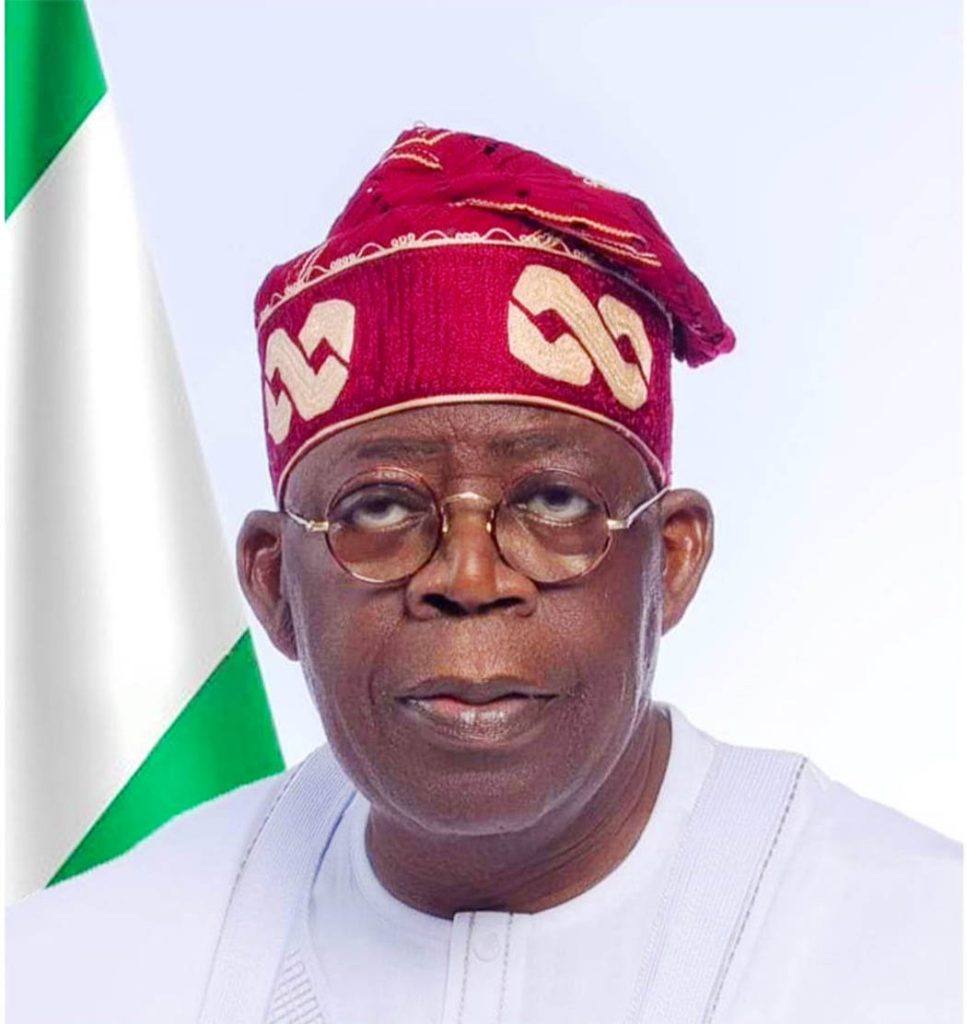
Tinubu faces criticism amid confusion over Wale Edun’s exit as questions grow over whether the former finance minister resigned or was sacked

Yet we have been left guessing how the former Minister of Finance and Coordinating Minister of the Economy left office.
It is another proof that the only important thing to Tinubu is his re-election which is getting tougher.
“It has been a pleasure and privilege to serve your administration and the Renewed Hope Agenda,” a press statement by Bayo Onanuga, President Tinubu’s Media Adviser claimed Edun wrote in his letter of resignation.
“Under your leadership, Nigeria has emerged stronger, more resilient, and more internationally respected.
“I wish you and the administration every success in the future”.
Onanuga’s press release of 22 April was meant to refute the absurdity of Tinubu not knowing how to present the departure of Edun, who had resigned as Commissioner of Finance from Tinubu’s cabinet in 2004 when Tinubu was in his second term as Governor of Lagos State.
Edun’s ill-health had also been cited then as the reason for his resignation.
In the light of the flagging performance of Tinubu, if Edun a close associate, an astute economist and investment banker resigned, it could be seen as a verdict on the government.
The story would be worse if Edun were sacked after Tinubu had leveraged his expertise in praising the administration’s economic reforms.
Was Tinubu caught unawares by Edun’s resignation? Could anyone be allowed to walk out of Tinubu, who appears more stranded by the day?
Onanuga, in his statement, doubled down on Edun’s illustrious private sector career, “Before then, he worked from 1980 to 1986 at Chase Merchant Bank (later Continental) in Lagos. He joined the World Bank in September 1986 through the elite Young Professionals Programme, where he worked on economic and financial packages for several countries in Latin America and the Caribbean.
“In 1989, he co-founded Investment Banking & Trust Company Limited (now Stanbic IBTC) and served as executive director.
In 1994, he founded Denham Management Limited, which has since become the Chapelhill Denham Group. He served as chairman from 2008 to 2021.
Onanuga was 24 hours behind schedule with his curated rebuttal of how other Tinubu worshippers saw Edun. They wanted him out and got Tinubu’s buy-in.
Their dilemma was having no explanation for how suddenly the high-performing economy had conflicting figures of where things stood. They blamed Edun for that.
Edun had been public with poor performance of the budget, low funding of capital projects, rising debts, more borrowing.
These contradicted Tinubu’s claims about how removal of petroleum subsidy had saved the economy, led to a new prosperity.
In trying to defend Tinubu, he took the blame for low releases for capital projects. We are to believe that there were tonnes of money for the projects and Edun refused to release them.
An admission from the Office of Secretary to Government of the Federation – Edun was removed “to strengthen cohesion and synergy in governance.
In other words, he was sacked.
Edun had just stepped off the plane from representing Nigeria at the World Bank meetings in Washington. The urgency of removing was obvious.
Nigerians are not buying the stories that “ill-health” saw Edun out of the cabinet. Onanuga said Edun wanted to be excused so that he could focus on “his private business”.
Almost sounds like an allegation of Edun prioritising personal business over the public’s.
Tinubu cannot sack anyone over such a tribial matter.
Edun, whether he resigned or was sacked, raises more questions about accountability, insecurity, and the “primary purpose of Tinubu’s administration”.
Finally…
KENYAN President William Ruto, possibly irked by President Tinubu’s comment in Yenagoa that Kenyans were suffering more than Nigerians, mauled Nigeria with responses that supervened the matter.
“Our education is good. If you listen to a Nigerian speak English, you’ll need a translator. We’ve the best human capital anywhere in the world,” Ruto said in a video that has gone viral.
Some communication experts suggest that the response was directly targetted at Tinubu, and not other Nigerians.
FRIDAY morning started for me with the depressing story of Lisa Stephen who bandits left for dead after amputating her.
Her story on Channel 4 is still on Arise TV YouTube platform.
She lives in Widows Village, near Jos, a place that earned its name from its population of widows who bandits have brutally killed their husbands.
On the night she lost an arm, she lost more.
The bandits grabbed a 10-month-old baby she was breastfeeding and slashed it into two, forced her to watch her husband shot beside her and her second child killed by breaking the skull.
The villagers dread the next attack which they say will come, and there would be no security agents to defend them.
Didn’t the President deploy 5,000 drones “immediately” against bandits, when he visited Jos Airport? Tinubu is hardly working.
THE appointment of Fatima Zuntu as Director-General of the National Biosafety Management Agency, NBMA, has hit an iceberg.
The NBMA Act requires 15 years post-qualification experience.
Mrs. Zuntu left school 10 years ago.
The horde of people around President Tinubu can’t even screen a proposed appointee. We can only imagine what else they are not doing.
SOME communities in Kwara State have fallen under the control of bandits.
What is the benefit of being in the President’s party?
Governors of 31 States are firmly for the President but none of them is spared the attacks of bandits and terrorists.
What does the President do for those States?
Also read: Lagos Speaker Obasa Leads Prayers for Tinubu at 74
What does the President do for Nigeria?


By Seun Oloketuyi
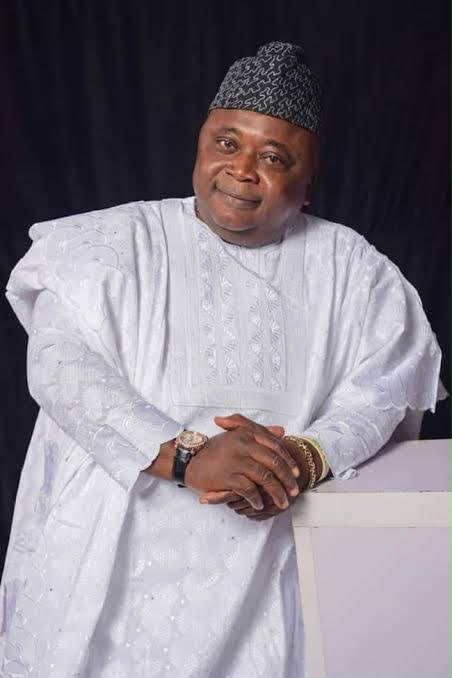
The omission of Ladi Adebutu and his running mate, Yemi Sowunmi-Kolapo, from the Independent National Electoral Commission’s (INEC) list for the 2027 Ogun State governorship election may have raised concerns within the Peoples Democratic Party (PDP), but there are reasons the party remains confident that its candidate can still make the list.
At the centre of the dispute is Adebutu’s membership registration. His camp maintains that he completed the PDP’s digital registration, had his membership card printed and verified, and fulfilled the necessary requirements within the stipulated period. The Ogun PDP has also insisted that his name was included in the membership register submitted to INEC.
If the party can back these claims with verifiable records, it will have a strong basis to challenge the omission and ask the commission to reconsider its decision.
Another point in Adebutu’s favour is that INEC officials monitored the PDP governorship primary held on September 27, 2026, where he emerged as the party’s candidate. While monitoring the primary does not automatically settle the separate membership register issue, it forms part of the process that produced the PDP ticket.
INEC has explained that the omission of affected candidates is linked to compliance with membership register requirements under the Electoral Act 2026. The Supreme Court upheld the relevant provisions in its September 24 judgment. The law must be respected, but the facts surrounding each disputed case must also be properly examined.
The PDP has an opportunity to notify INEC of the omission and present supporting documents before the October 24, 2026 deadline. This gives the party a chance to demonstrate that it complied with the requirements and that Adebutu’s exclusion should be reviewed.
For Adebutu, the key is proving that his registration and the party’s submission of its membership register met the law. If the documents support the PDP’s position, INEC would have grounds to reconsider the omission in accordance with the law.
The issue also matters to Ogun voters, who deserve a fair opportunity to choose among candidates who meet the electoral requirements. Adebutu’s supporters believe he should have the opportunity to contest if he has fulfilled the conditions set by law.
Ultimately, political reactions will not decide this matter; the evidence will. The PDP must present its records, and INEC must assess them fairly.
Adebutu’s return to the list is not yet confirmed, but the case is far from over. If the PDP can prove that the requirements were met and his omission was unjustified, there is a strong basis for his name to be restored to INEC’s list.
Seun oloketuyi Author of How to Win Elections in Nigeria writes from Lagos.

On the 2nd of October, 2026, an XEJet aircraft lifted off from Abuja and touched down at Gusau International Airport. For the people of Zamfara, that moment had been thirty years in the making.
Also read: Governor Dauda Lawal Announces Nationwide Nutrition Emergency, National Intervention Fund at Addis Ababa Summit
This was no ordinary commercial flight launch; for a northwestern state that had never had an airport since its creation in 1996, it was long overdue.
While many still lazily define Zamfara as a den of kidnappers, Governor Dauda Lawal has spent most of three years pouring concrete into a runway that tells a different story.
Before Gusau International Airport existed, anyone in Zamfara needing to fly had to endure hours on the road to Sokoto or Kano.
For Muslims embarking on the Hajj pilgrimage to Saudi Arabia, that overland journey was itself an ordeal.
For a state blessed with agricultural riches and mineral potential, the absence of an air corridor meant investors looked elsewhere, farm produce could not efficiently reach external markets and the movement of talent was shackled by sheer distance.
This isolation was not natural. It was the product of decades of governance failure.
A previous administration had announced the airport’s construction in 2019, claiming a $1 billion public-private partnership would deliver it.
By the time Lawal took office in May 2023, what remained was a graveyard of unfinished concrete and a financial record clouded in opacity.
Governor Lawal inherited not just an abandoned project but a treasury hollowed out by years of mismanagement and lack of foresight.
In June 2024, construction restarted and by March 2026, a Federal Government Bombardier Challenger 605 completed a historic test flight at Gusau International Airport, confirming that the runway, navigation aids and ground handling systems met airworthiness standards which was met with commendation from the aviation industry players.
It was a timeline compressed to its limits. In Nigeria, a state-level airport project typically takes years, sometimes over a decade, from conception to operation.
Lawal’s team did it in under two years of hard work. More significant is the technical validation.
Official records show Gusau International Airport became the only airport in Nigeria to pass all 17 International Civil Aviation Organisation quality assurance steps.
That detail may escape the average traveller but it means this is not a vanity project dressed up for ribbon-cutting photographs. It is infrastructure built to international specifications.
On the 15th of May, 2026, the first Hajj flight departed from Gusau, carrying 415 pilgrims on a Max Air aircraft directly to Saudi Arabia.
At the inaugural ceremony, Lawal said many people doubted whether this could become a reality.
That sentence captured the story of a state that had been underestimated for far too long, finally proving its doubters wrong.
Critics asked, does a state with stubbornly high poverty rates really need an international airport?
That question ignores the most basic causal relationship between infrastructure and economic development. Zamfara’s agricultural potential has been strangled by transport bottlenecks for decades.
The state produces hibiscus, sesame seeds, groundnut seeds, cotton seeds, Sorghum (Guinea Corn) & Millet precisely the commodities in high demand in international markets.
But without air cargo links and efficient logistics, farmers sell raw materials cheaply to middlemen while the bulk of the profit flows elsewhere.
Lawal with an investment banker background understands that what he is building is not just an airport but an ecosystem.
On the 21st of September, 2026, the Zamfara State Government signed an air route development agreement with XEJet, establishing regular commercial flights between Gusau and Abuja, operating Bi-weekly.
On the 2nd of October, 2026, two days after commercial flights began, he flagged off a 95-kilometre road project in Tsafe Local Government Area.
The road, connecting farming communities like Yandoton Daji, Cediya and Doka, includes five bridges. Its purpose is unambiguous; let farm produce out, let security forces in.
“When roads connecting farmlands are motorable, the heavy machinery we procured can reach the fields,” Lawal said at the groundbreaking. “After harvest, agricultural produce can move smoothly to markets.” Governor Lawal Said.
This is not an isolated project; it’s a coherent chain, the airport opens external gateways, the roads open internal circulation and together they transform the deadlock of “farmers can grow but cannot sell” into a living economy where produce moves, markets expand and money stays in local pockets.
On the surface, this is a simple route. Symbolically, it is a rupture. It means Gusau is no longer a dot on the map that requires a gruelling journey to reach. It is a destination accessible from the capital in about an hour.
For investors, the decision cost of travelling to Gusau drops from a full day on the road to a short 40-minute flight from Abuja.
For civil servants, traders, students and patients, this route redraws the boundaries of what is possible in daily life.
The airport terminal offers free internet access. Lawal’s team clearly intends for Gusau to be connected not only physically to the national grid of transportation but digitally to the networks of the knowledge economy.
In a state seeking to nurture IT talent and attract tech-enabled businesses, connectivity is not a luxury; it is the foundation.
What the airport represents is a shift in trajectory a proof that Zamfara can conceive, execute and complete a project of national significance within a single political term.
In years to come, when Zamfara farmers are exporting hibiscus, sesame and other agricultural produce directly to buyers in Europe and the Middle East, when investors are flying in for meetings rather than avoiding the state altogether, when a young person from Gusau can board a flight to Abuja for a job interview and return the same day, the true value of this airport will become apparent.
Starting and finishing a project of that magnitude in under three years is the mark of a government serious about development at every level.
Governor Lawal deserves the accolades. More importantly, the people of Zamfara deserve the future this runway has opened for them.
Also read: Governor Dauda Lawal Announces Nationwide Nutrition Emergency, National Intervention Fund at Addis Ababa Summit
The rescue mission is not complete; the planes are flying, for a state that spent three decades grounded, this development is nothing short of a revolution.
By Folake Adeyemi,
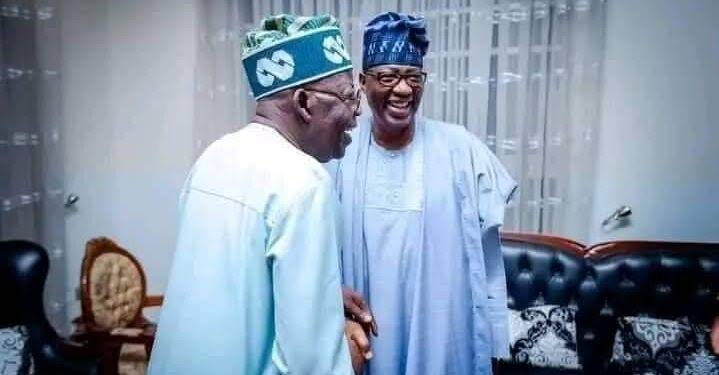
Politics rewards those who show up when it matters. The appointment of Senator Gbenga Daniel as Deputy Zonal Coordinator I (South West) of the Contact and Mobilisation Directorate of the APC Presidential Campaign Council is, in my view, a case of the right man being handed the right assignment.
Also read: GFF@25: OGD Medical Outreach Targets 15,000 Beneficiaries Across Ogun East
Consider the timing. Ogun State politics is currently thick with intrigue, rival camps and loud posturing. In such seasons, a leader’s actions say more than his supporters’ press statements.
President Bola Ahmed Tinubu has, once again, spoken through action: Senator Daniel is his friend and ally, and he is trusted with one of the most sensitive committees in the campaign. Those still trying to read political tea leaves in Ogun would do well to read this one clearly.
The Contact and Mobilisation Directorate is not ceremonial. It is where goodwill is converted into Permanent Voter Cards, and where PVCs are converted into votes.
With Borno State Governor, Prof. Babagana Zulum, leading the committee, the party has signalled that it takes this assignment seriously.
For the South West, the message is plain: the region must deliver for the President, whose lasting impact depends on the votes it brings.
Daniel is well suited to that task. He is a former Governor of Ogun State and the Senator representing Ogun East, but his political weight has never stopped at the boundaries of one senatorial district. It is felt across Ogun and throughout the South West.
He also knows national campaigns from the inside, having served as Campaign Director-General for former Vice President Atiku Abubakar. That is not experience one acquires from the sidelines.
Nor is he a politician who surfaces only at election time. Through the BATOGD Movement, which he founded, he is currently running an unprecedented medical outreach, and he is known for economic empowerment programmes that touch ordinary lives.
Mobilisation works best when it is built on genuine presence in communities, and that is exactly what he brings.
He will not work alone. Niyi Adebayo, Segun Oni and Akinwunmi Ambode share the zonal leadership with him, and each has points to prove.
The South West team is well prepared and well recommended, and the healthy competition among these political veterans may well be the region’s biggest asset.
The challenge now is delivery. Appointments are easy to celebrate; results are what history records.
Also read: GFF@25: OGD Medical Outreach Targets 15,000 Beneficiaries Across Ogun East
If Senator Daniel brings his experience, his grassroots network and his reputation as a mobiliser to bear on this task, the South West will have little reason to fear for the outcome.
For now, one conclusion stands: Gbenga Daniel is a leader to reckon with.
-
Politics3 years ago
13 Ondo Assembly Members Disown Endorsement of Aiyedatiwa
-
Politics3 years ago
APC Group, Ondo Govt, Quarrel Over Money for Endorsement
-

 Trending News5 years ago
Stop unsavoury, inciting statements – DSS warns
-

 Others5 years ago
Adron Homes Celebrates 10 Years Of Housing Excellence
-

 Humanity5 years ago
President Buhari Commiserates With Ambassador Maureen Tamuno Over The Loss Of Her Father
-

 Others7 years ago
EX- CUSTOMS BOSS, IBRAHIM MERA’S DWINDLING FAME
-

 Business2 years ago
Bigi Carbonated Soft Drinks Treats 40 Consumers to an Epic Easter Movie Hangout
-

 Business2 years ago
Wema Bank Shines at Global SME Finance Forum Conference Awards 2024 …Awarded: • SME Financier of the Year (Africa) • Platinum Award for Best Financier for Women Entrepreneurs (Africa)