
Empowerment
United Bank for Africa Graduate Management Training Programme


UBA Graduate Management Acceleration Programme empowers over 700 youths, strengthening Africa’s talent pipeline and leadership growth

United Bank for Africa (UBA) Plc has strengthened its youth development agenda with the induction of over 700 young professionals under its Graduate Management Acceleration Programme, a flagship initiative designed to build Africa’s next generation of financial leaders.
Also read: Energia launches graduate trainee programme to develop young professionals
UBA Graduate Leadership Acceleration Programme milestone was marked at a graduation ceremony held at the Landmark Events Centre in Lagos on Thursday, where Cohorts 19 and 20 were formally welcomed into the bank’s workforce following an intensive training and development journey.
Group Chairman, Tony Elumelu, described the programme as a strategic investment in Africa’s future, stressing that the continent’s prosperity is closely tied to the ambition, discipline and performance of its youth.
Elumelu urged the graduates to embrace responsibility and excellence, noting that strong institutions are built through consistent training, values and commitment to long-term vision.
Group Managing Director and Chief Executive Officer, Oliver Alawuba, also addressed the new professionals, sharing insights from his personal career journey and encouraging them to view their entry-level positions as stepping stones to leadership.
He anchored his message on UBA’s core values of excellence, enterprise and execution, alongside its cultural framework of simplicity, responsiveness and goal orientation, challenging the graduates to reflect these principles in their daily work.
According to the bank, 720 trainees were inducted in the latest cohorts, with 435 women making up more than 60 percent of participants, a development it described as evidence of its commitment to gender inclusion and women’s empowerment.
UBA said the Graduate Management Acceleration Programme has now empowered more than 5,000 young professionals since inception, equipping them with practical experience, leadership training and industry exposure across Africa’s financial services sector.
Also read: NNPC Foundation trains 6,000 farmers nationwide, launches climate-smart agriculture programme in Enugu
The bank, which operates in 20 African countries as well as in the United Kingdom, United States, France and the United Arab Emirates, said the initiative remains central to its mission of reducing youth unemployment and strengthening financial inclusion across the continent.

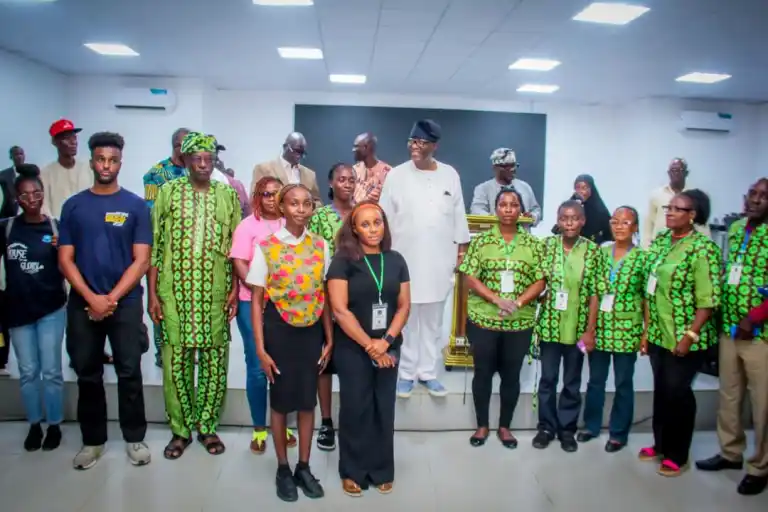
Oliver Alawuba, (5th Left) and Group Head, Human Resources, Modupe Akindele, flanked by some of the graduands of the 2026 Graduate Management Accelerated Programme(GMAP) class of UBA Academy, during the graduation ceremony held for over 700 trainees cut across Africa, in Lagos on Thursday.

Executive Director, Personal and Business Banking, United Bank for Africa, Chidi Okpala; Group Executive, Treasury and Financial Institution, Samuel Ocheo; Executive Director, Finance and Risk Management, Ugo Nwaghodoh; Executive Director, Corporate Banking, Tosin Adewuyi; Group Managing Director, UBA, Oliver Alawuba, Executive Director; Deputy Managing Director, Chukwuma Nweke; Company Secretary, Bili Odum and Executive Director, Digital Banking, Emmanuel Lamptey flanked by prize winners of the 2026 Graduate Management Accelerated Programme(GMAP) during the graduation ceremony held for over 700 trainees cut across Africa, in Lagos on Thursday.



In line with Economic and Community Development being the theme of the month of October for Rotary International, foremost Rotary club in Rotary International District 9111, Rotary Club of Ikeja has teamed up with Field of Skills and Dreams Academy to empower four youths.
The beneficiaries who will be undergoing a three-month training are, Olumide Akingbohungbe, Yemisi Olubode, Ayodeji Olanrewaju and Daniel Oyebami.
They will be trained in different skills, namely, Fashion Designing, Solar panel installation, Hospitality and Catering as well as Heating, Ventilation, Air-conditioning and Refrigeration.
Speaking during the free vocational, training and empowerment presentation of the beneficiaries which took place during the meeting of the club at Lagos Airport Hotel, Ikeja, the Chair, Service Projects, Rotarian Gbenga Fetuga said the club was very meticulous in the selection of the vocational skills.
Rotarian Fetuga added that: ‘’Being the foremost club in the District, we are expected to live up to it in all areas and we are always detailed in the selection of both the beneficiaries as well as the vocational skills.
‘’The skills we chose are very strong skills for our trainees. Nearly every home, office, hotel and shop in Lagos runs ACs and fridges. So, qualified technicians are always in demand, and graduates can start their own repair businesses.’’
The club’s President, Rotarian Kayode Osokomaiya stressed that the club was committed to making a difference in the lives of the beneficiaries of the empowerment exercise.

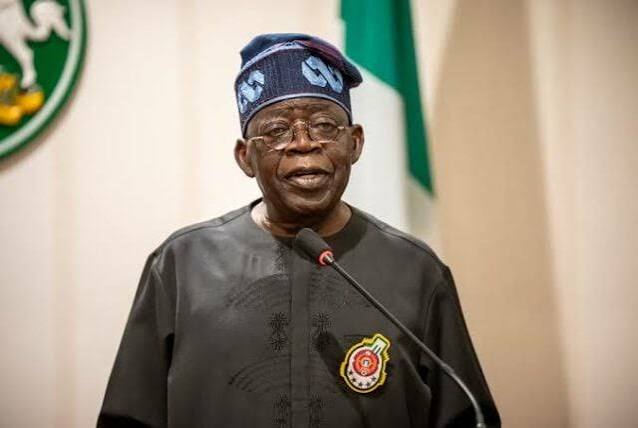
Nigeria investment in youth and local industries is vital to job creation, says FG, urging public-private partnerships and regional industrialisation
The Federal Government has called for increased investment in youth development, small and medium-sized enterprises, technology and local industries to create jobs and strengthen Nigeria’s economic competitiveness.
Also read: Osun amotekun dismisses officer over gross misconduct
The Minister of State for Foreign Affairs, Ambassador Sola Enikanolaiye, made the call during a panel discussion titled “From Trade to Value Chains: Building Regional Industries to Compete Globally” at the 32nd Nigerian Economic Summit, held under the sub-theme, “Invest Nigeria”.
In a statement issued on Tuesday and signed by his Special Assistant on Digital Media and Public Diplomacy, Raphael Oni, Enikanolaiye said Nigeria needed stronger partnerships between the public and private sectors to mobilise the capital required for sustainable economic growth.
He argued that the country must move beyond trading raw materials towards building industries that process local resources into finished products for domestic consumption and export.
According to the minister, investment from both domestic businesses and foreign sources would be necessary to expand industrial capacity, create employment opportunities and improve living standards.
“In advancing our country, we don’t talk enough to one another in terms of constructive conversation and dialogue. We believe that partnership which allows government to engage deeper and stronger with the private sector is critical. Government alone cannot alone raise the resources needed for shared prosperity,” he said.
Enikanolaiye added that domestic capital mobilisation was as important as attracting foreign investment.
He identified Nigeria’s youthful population as a major asset that could accelerate industrialisation if supported by investments in education, skills development, innovation and entrepreneurship.
“Our youth population is very critical – a vibrant population. We need to invest more in human capital, focusing on Small and Medium Scale Enterprises, technology, innovation and creativity. By so doing, we will be able to generate more employment for the youth and also raise more wealth and income,” he said.
On foreign policy, the minister said the administration had reordered its four-point 4D doctrine to place the welfare and prosperity of Nigerians at the centre of the country’s international engagements.
The framework focuses on Demography, Development, Democracy and Diaspora.
Enikanolaiye said democratic governance should produce tangible economic benefits for citizens rather than remain an end in itself.
“Democracy is good, but it is a means to an end, not an end in itself. Democracy must deliver on core priorities of economic development and economic prosperity to our people,” he said.
The minister also emphasised the importance of macroeconomic stability and reliable economic data in helping businesses assess investment opportunities and make long-term plans.
He said Nigeria had recorded improvements in macroeconomic stability and that inflation was coming down, although he did not provide supporting figures in the statement.
Enikanolaiye further called for reforms to make the Ministry of Foreign Affairs more responsive to Nigerians and strengthen its engagement with businesses.
He said cooperation between the government and private sector, alongside partnerships with neighbouring countries and other international markets, could help Nigeria expand its industrial base and improve its access to regional and global markets.
Also speaking at the summit, the President of the Economic Community of West African States Commission, General Birame Diop, called for greater emphasis on industrialisation to create jobs and strengthen regional trade.
His remarks were delivered by the ECOWAS Commissioner for Economic Affairs and Agriculture, Dehpue Yenpea Zuo.
Diop argued that trade agreements alone could not deliver widespread employment and economic growth without industries capable of processing raw materials and producing goods.
“Trade agreements do not create jobs; industries do,” he said.
He noted that intra-African trade accounted for about 15 per cent of the continent’s total trade, compared with more than 60 per cent in Europe and Asia.
He attributed the gap partly to the limited scale of regional industries.
According to Diop, the regional market, with more than 300 million consumers, provides an opportunity for West African manufacturers to expand production before competing across the continent under the African Continental Free Trade Area.
He outlined four priorities for advancing regional industrialisation: implementing existing trade agreements, including commitments on border management; developing value chains in sectors where West Africa has a competitive advantage; improving access to finance for businesses and producers; and measuring progress through jobs created and goods processed within the region.
Also read: Osun amotekun dismisses officer over gross misconduct
Diop said converting trade commitments into productive industries would be essential to expanding employment, increasing regional economic activity and strengthening West Africa’s competitiveness in global markets.
-
Politics3 years ago
13 Ondo Assembly Members Disown Endorsement of Aiyedatiwa
-
Politics3 years ago
APC Group, Ondo Govt, Quarrel Over Money for Endorsement
-

 Trending News6 years ago
Stop unsavoury, inciting statements – DSS warns
-

 Others5 years ago
Adron Homes Celebrates 10 Years Of Housing Excellence
-

 Humanity5 years ago
President Buhari Commiserates With Ambassador Maureen Tamuno Over The Loss Of Her Father
-

 Others7 years ago
EX- CUSTOMS BOSS, IBRAHIM MERA’S DWINDLING FAME
-

 Business3 years ago
Bigi Carbonated Soft Drinks Treats 40 Consumers to an Epic Easter Movie Hangout
-

 Business2 years ago
Wema Bank Shines at Global SME Finance Forum Conference Awards 2024 …Awarded: • SME Financier of the Year (Africa) • Platinum Award for Best Financier for Women Entrepreneurs (Africa)