
Entertainment
VDM Hits Back at Lawyers, Questions Law’s ‘Noble’ Status

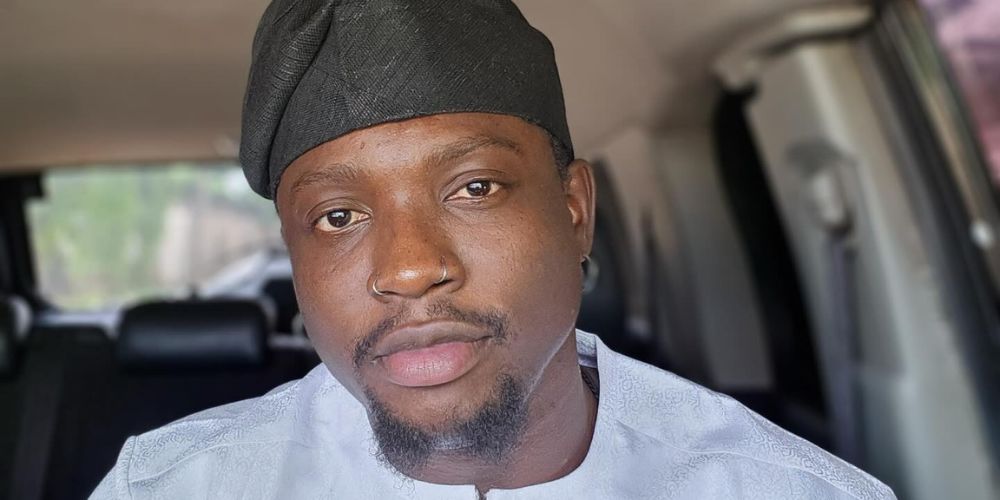
VDM lawyers criticism intensifies as VeryDarkMan defends his NBA appearance and questions employment prospects in Nigeria’s legal profession
Social media activist Martins Vincent Otse, popularly known as VeryDarkMan, has hit back at critics in Port Harcourt, Rivers State, on Friday, August 28, 2026, after his appearance at the Nigerian Bar Association’s 66th Annual General Conference sparked debate among lawyers and other commentators.
Also read: Marwa Urges Drug Barons to Lose Wealth to Defeat Cartels

Otse was invited to participate in a panel session on insecurity at the NBA conference, where he discussed his experiences covering violence and visiting communities affected by killings and attacks.
The invitation quickly became controversial, with some lawyers questioning why a social media activist had been selected to participate in a major professional gathering of legal practitioners.
Human rights lawyer and Senior Advocate of Nigeria, Femi Falana, was among those who questioned the decision.
Falana argued that a discussion on national security at an NBA conference should involve people with established professional experience or demonstrable contributions to Nigeria’s security architecture.
Otse, however, has maintained that he was not invited to teach lawyers about legal practice.
“There has been a lot of debate about why I was invited to this NBA conference. I’m not here to teach you people law; I’m here to share experience,” Otse said during the conference on Tuesday.
The activist argued that his experience documenting insecurity and interacting with affected communities gave him a perspective relevant to the panel’s subject.
The session, titled “Known Gunmen or Unknown Gunmen”, focused on Nigeria’s security challenges and the experiences of people affected by violence.
Otse also drew attention to the vulnerability of members of the legal profession, pointing to reports of judges and other legal practitioners becoming victims of insecurity.
The controversy intensified after his participation was followed by a recognition award from the NBA, according to reports.
His appearance and recognition further divided opinion, with some commentators defending the association’s decision to give a platform to a prominent voice from outside the traditional legal establishment.
In responding to the latest criticism, Otse shifted the conversation towards the condition of Nigeria’s legal profession.
“I spoke on behalf of the poor people. I spoke on behalf of the people that don’t have a voice,” he said.
He also suggested that some critics were uncomfortable with his presence because of his background.
“Because a son of nobody was seen in your midst,” Otse said.
Otse then challenged the long-standing description of law as a noble profession, arguing that professional status does not necessarily translate into employment or financial security.
“This bunch of clowns are telling me that law is a noble profession,” he said.
“Well, lately law has not been a noble profession. I’m sorry to say. I’m not even sorry to say. It is what it is.”
He went further, describing law as one of Nigeria’s “poorest professions” and questioning how many qualified lawyers have stable employment or actively practise in court.
“How many lawyers are there? How many lawyers have jobs? How many lawyers actually go to court? Ask yourself that,” he said.
Otse also criticised what he described as the gap between the number of people entering the legal profession and the opportunities available to them.
“And every year, they say they have people graduating from law school. Four thousand have graduated from law school, only to end up selling bedsheets,” he added.
The claim about thousands of graduates and the broader assertion that law is one of Nigeria’s poorest professions were not independently established in the reports reviewed.
Otse presented the figures and assessment as part of his argument about unemployment and underemployment.
The remarks have generated mixed reactions online, with some Nigerians agreeing that qualified professionals can struggle to find meaningful employment, while others have criticised Otse’s broad characterisation of the legal profession.
The dispute also reflects a wider conversation about the changing relationship between established professional institutions and influential social media personalities.
Otse has built a significant public profile by using social media to comment on governance, insecurity, corruption and issues affecting ordinary Nigerians.
His approach is often confrontational, but his growing reach has also made him a prominent voice in public debates.
His NBA appearance brought that influence into one of Nigeria’s most established professional institutions.
Some lawyers and commentators saw his inclusion as inappropriate, particularly because of the technical nature of discussions around security and law.
Others argued that conversations about insecurity should include people who have experienced or documented its impact outside formal institutions.
The Nigerian Bar Association conference itself has focused on broader questions surrounding legal practice, justice and national development, making the disagreement over Otse’s participation part of a larger debate about who should be included in national conversations.
The controversy has also produced a more constructive question: whether professional expertise and lived experience should be viewed as competing forms of knowledge or used together when discussing complex national problems.
For Otse, the answer appears clear. His defence is that he brought experiences from Nigerians whose security concerns are often discussed by institutions but lived by ordinary people.
For his critics, the concern is less about whether Otse has the right to speak and more about whether the NBA’s platform should confer professional legitimacy on voices without formal expertise in the subject under discussion.
The argument over his invitation may therefore outlast the conference itself.
Also read: Marwa Urges Drug Barons to Lose Wealth to Defeat Cartels
At its heart, the dispute has become a clash between professional tradition and the influence of new media, with Otse’s comments about lawyers adding another provocative layer to an already heated debate.


Danielle Adewusi is crowned Miss Universe Nigeria 2026 after defeating 19 delegates in Lagos, earning the chance to represent Nigeria in Mexico (more…)
Entertainment
A Few Good Men Hub Begins Exciting Test-Run Nights Ahead Of Grand Opening Gala On 30th September 2026

Governor Babajide Sanwo-Olu mourns Olu Jacobs as a father of Nollywood and sends condolences to Joke Silva and the industry.
-
Politics3 years ago
13 Ondo Assembly Members Disown Endorsement of Aiyedatiwa
-
Politics3 years ago
APC Group, Ondo Govt, Quarrel Over Money for Endorsement
-

 Trending News5 years ago
Stop unsavoury, inciting statements – DSS warns
-

 Others5 years ago
Adron Homes Celebrates 10 Years Of Housing Excellence
-

 Humanity5 years ago
President Buhari Commiserates With Ambassador Maureen Tamuno Over The Loss Of Her Father
-

 Others7 years ago
EX- CUSTOMS BOSS, IBRAHIM MERA’S DWINDLING FAME
-

 Business2 years ago
Bigi Carbonated Soft Drinks Treats 40 Consumers to an Epic Easter Movie Hangout
-

 Business2 years ago
Wema Bank Shines at Global SME Finance Forum Conference Awards 2024 …Awarded: • SME Financier of the Year (Africa) • Platinum Award for Best Financier for Women Entrepreneurs (Africa)