
Politics
Ogun State: Eight Years of Eventful Service – A Retrospect


Visionary leadership drives Ogun through inclusive governance, local capacity, and bold reforms that redefined infrastructure, economy, and public service

Looking back, I would say my 2,922 days as the Governor and sitting on top of the political administration of Ogun State is one of the most eventful of my political and professional career.
Also read: Otunba Gbenga Daniel named protocol officer for Pa Ayo Adebanjo’s funeral committee
It couldn’t have been less challenging especially because managing people of diverse culture and temperaments cutting across the various professions and idiosyncrasies, and balancing the various interests of the political class and men and women of the civil service can be quite tasking.
We had to invent ingenious ways to keep the ship afloat and deliver on most of the promises that we made to our people during the electioneering campaigns.
We had our jobs well cut out for us, because from the outset, we were determined to make the difference in the polity and the way things are done.
Before venturing into the politics of Ogun State, we did our Needs Assessment of what we think are the expectations of our and what really people want from their government and what can make our administration stand out when we eventually win the contest.
Together with my team we held several hold out sessions and retreats to design policies, programs and projects that could make this happen.
We introduced strategic retreats and a bonding process to integrate both the civil service and the political appointees for seamless working operations, and synergy.
One of the creative initiatives in our bonding process include a chain exchange of gifts where every one attending the retreat will come with a gift secretly wrapped and enclosed their contact details.
It is such a web of networking such that whoever picks each other’s gifts becomes work environment friends and must call and interact with one another regularly.
This way, we ensured transparency and the free flow of information across the political and administrative spectrum. Almost everyone, anywhere in the System knows what we are doing through strategic information sharing.
We also introduced the Central Administration of Salaries and Pensions (CASP) to streamline and automate the process of payments.
Leveraging the talents and professional competence of the dynamic forces in the Ogun State civil service by creating several new agencies like the Ogun State Road Management Agency (OGROMA), the Ogun State Electricity Project (OGSEP), the Traffic Compliance and Emergency Agency (TRACE), the Ogun State Agriculture and Microcredit Agency (OSAMCA), Gateway Holdings Limited, Bureau of Transportation (BoT) and a host of others.
Several civil and public servants went through various capacity development programs through several local and international trainings.
The 2000-seater Valley View Auditorium was designed by an Architect Vaughn in the Ogun State civil service, supervised by Engineers Adekoya and Onabanjo all within the Ogun State civil service.
We were determined not to award any of our construction works to any foreign contractors and most of the Roads constructed under our administration were done by OGROMA, and by extension staff of the civil service of Ogun State.
One of such roads was the Oke Ilewo Lalubu road in the State capital, Abeokuta. I am not aware that a single repair has been carried out on that road which turned Oke Ilewo into Ogun State’s equivalent of Broad Street or Allen Avenue.
Where local competences were discovered to be lacking or in short fall, we trained. No sooner that we were sworn in on May 29th and I took an inspection tour of some of the Ministries, Agencies and Departments of Government that I noticed antiquated office equipment and typewriters still in use as of 2003.
In some offices of course a few of them have migrated to electric typewriters. We therefore embarked on phased training of our men and women in the Civil service.
We activated a training program at the South West Resource Centre in conjunction with a United States government through its Consulate in Nigeria and also started a phased Computerisation of government offices once the right proficiencies have been acquired.
We set to industrialise Ogun State and we conceived the ideas of economic Drivers, major projects spread across all the four regions of Ogun State.
We started with the dualisation of the Abeokuta-Siun-Sagamu road to connect some of our major towns and then conceptualized the idea of having an Agro-Cargo Airport in the Ilishan/Iperu area of Remoland.
We got all necessary statutory approvals for NiMet, FAAN and the Ministry of Aviation for the airport construction, carried out all the Feasibility Studies, acquired the Land, did the crop enumeration, paid compensation, produced the Architectural Design and even turned the sod for the take off of the project (those in project management agree that these processes constitute 70% of efforts in any projects of such magnitude) before the end of our tenure in 2011.
Also, as part of our Industrialisation Policy, we established the Flower gate Industrial Estate at the Abeokuta Sagamu Interchange with an overflow inwards to Abeokuta and outwards on the Lagos-Ibadan Expressway.
Today, that corridor, I can proudly say is one of the fastest growing industrial corridors in Nigeria. The Agro-Cargo Airport which we conceived and created was actually to service this Industrial corridor with an Aerotropolis (an Airport City) and Agro-Processing industrial corridors.
Leveraging on the unique advantage of the sea in the Ogun Waterside area, we secured the license and established the Olokola Free Trade Zone (OKFTZ) in Ode Omi area. As part of the Free Trade Zone were several other economic projects like the OKLNG, OK Deep Seaports projects.
We equally secured the license and established the Ogun-Guangdong Free Trade Zone in Igbeba as well as the Kajola Free Trade Zone in the Ifo Local Government Council Area of the State.
To support our industrialisation vision, we procured a 7MW Independent Power Project Power to supply energy to critical government infrastructure like waters facilities and government offices and institutions and to take all these institutions off the national power grid.
As part of our local content initiatives and to grow local competences, several engineers from the civil service were sent to China at the point of manufacturing of these Power plants to be trained on how to repair and maintain these equipment and save the state enormous resources instead of bringing foreigners each time they need some fixing.
Our education policy was widely acclaimed as one that was well thought out, because it was during our administration that we established the first University of Education in Nigeria, the Tai Solarin University of Education.
This was the second of such specialized University in the whole of Africa and the eight in the world.
Not only that, we relocated the Olabisi Onabanjo University (OOU) from its temporary site at Ago Iwoye Secondary School to a permanent, purpose-built campus, and then went ahead to create four other specialized ICT institutions, the Gateway ICT Polytechnic, Saapade Remo; the DS Adegbenro Polytechnic in Itori, Abeokuta; the Abraham Adesanya Polytechnic, Ijebu Igbo; the Ayodeji Otegbola Polytechnic, Igbesa.
We equally established the Gateway Industrial Petro-Gas Institute in Oni, Ogun Waterside to train and deliver special skills in the Oil and Gas Industry.
We also established the School of Nursing & Midwifery, Ilaro as well as the Olabisi Onabanjo University College of Agriculture Aiyetoro campus and College of Engineering/Technology in Ibogun.
If there is an area where our administration has been scored highest in our 10,070 hours of service to Ogun State, I believe posterity will credit us fairly in the Welfare and Human Capital Development department.
Our administration for the first time, and perhaps the last instituted a scholarship scheme under the Human and Capital Development Program (HUCAP) where indigent First Class Graduates were sponsored for Post Graduate degrees in Ivy League institutions outside the country.
Several beneficiaries of this initiative are the loudest testimonies of our administration for which we will forever remain proud.
It is also on record that our administration created the office of Principal Generals (equivalent of the Permanent Secretaries) in our education system where teachers in the employment of the State can rise to the Pinnacle of their career like their counterparts in the mainstream civil service.
While we also employed no fewer than 16,000 new teachers into the Ogun State Teaching service through our Voluntary Teachers Scheme (VTS).
We remain proud to say that we changed the work ethics in the Ogun State civil service and revolutionise the Transition into modern Information and Communication Technology into the system.
We started with ICT Training at the South West Resource Centre and gradually introduced Computers as a work instrument and begin the gradual process of paperless office.
To provide a conducive working environment, we built a new Four-Block ultramodern Secretariat Complex with top notch facilities for workers comfort. While we also prioritized the prompt payment of workers salaries and emoluments.
The several new agencies that we created OGEGEP, OGROMA, TRACE, OSAMCA, (Parks and Garages Development Board (PAGADEB) were all part of our deliberate policy towards creating jobs and employment for many young citizens of Ogun State and also reduce workload on the existing overburdened staff already in the service.
It is to the credit of our administration that we built Workers Estate, not only in Laderin Abeokuta, the Ogun State capital, but also in Itanrin Ijebu Ode, Ifo, Ilaro and GRA Sagamu/Simawa to balance the Ogun State’s Zonal configuration and simultaneous growth and development.
The highpoint of our housing policies for workers welfare was such that we ensure that unit cost for each houses for members of our civil service must not be more than One million naira (N1m).
We insisted on this as a principle and many of our civil servants were allocated houses at the Laderin Workers Estate at the cost of Nine Hundred and Ninety Naira.
We emphasized a mortgage System whereby workers only needed to pay just a ten percent (10%) of this cost through their mortgage with the Gateway Savings and Loans Limited.
And to ensure easy access to this mortgage facilities we commissioned a brand new headquarters office complex of the Gateway Savings and Loans Limited in Abeokuta and opened branch offices in Ota, Sagamu and Ijebu Ode.
Senior civil/public officials were allocated official vehicles of different brands, from Commissioners down to the Director’s level.
Our judicial officers were not left out as most judges were given Prado Jeeps (SUVs) while duplexes were built as Judges Quarters befitting their statuses, security and the sensitive nature of their jobs.
In the areas ot Youth and Sports Development, we remodelled the MKO Stadium in Abeokuta fitted with AstroTurf or synthetic grass and an airconditioner State Box, we followed this up with the construction of three new stadia in Sagamu, Ilaro and Ijebu Ode.
The FIFA rated Gateway Stadium in Ijebu Ode has a purpose-built 100 capacity facility as a Games Village for athletes camping attached while right beside the stadium in Sagamu we constructed an ultramodern NYSC Permanent Orientation Camp which years after is still adjusted to be one of the best in the country till date.
We hosted the first and only National Sports Festival (Gateway Games 2006) where an account was rendered at the Closing Ceremony of the competition and the state also declared a profit underscoring the transparency and accountability that we espoused during the administration.
During the Games, the capacities of Ogun State dutiful Civil service was tested to the limit as all Permanent Secretaries and Directors were assigned as Games State Contingent Overseers in charge of each participating State.
Every department of the government was fully and dutifully engaged to achieve success.
We initiated a 25-Year Economic and Development Master plan for Ogun State and put civil servants at the Drivers seat for continuity because they are the arm of government operations that will be around for longer time while the political class holds office temporarily and for brief periods.
The re-engineering of the State with solid road maps has become the template upon which successive administration runs.
And to ensure the economic prosperity of the State and its ability to sustain all the projects envisaged in our development Master plan, we instituted the Gateway Holdings as an investment arm of the State to coordinate and manage the State’s investment holdings, stocks and shares and yo initiate diverse opportunities.
The creation and statutory establishment of Ogun State Parks and Garages Board (PAGADEB), was described as unique and first in the history of the State.
We conceived this idea to ensure the corporate management of all the parks and garages in the state.
The Commission was made up of experienced elder statesmen and women, in allied professions, as members of the Board, led by an Executive Chairman and a member of our civil service as the Director General., supporting with official bureaucracy and protocols.
We also established the State Elders Council, where advocacy and counselling Initiatives of leaders of thought in Ogun State.
The Elders (fomer Governors, former Commissioners, Special Advisers, former Council Chairmen, retired Head of Service/Permanent Secretaries, civil/public and private sectors) across all sectors, but we insisted that qualifications to be a member of this Council must be indigenes/residents from age 60 and above, provide resourceful advisory roles to the Government.
Since the inception of our administration in May 2003, we made it a point of duty to engage the citizens through regular weekly interactions, some at the Governor’s office in Abeokuta, and at other times via direct physical/telephone communication channels.
Citizens were to ask varied questions no matter how unpleasant.
I must say, that it was through this feedback mechanism and initiate that led us to the establishmemt of Ministry of Community Development which was also described as the first in Ogun State and the entire South West of Nigeria.
To make our administration more partipatory, we also built an Oba’s complex at the Ogun State Secretariat in Abeokuta, technically making the traditional rulers the fourth arm of government after the Executive, legislature and the Judiciary.
Also read: Otunba Gbenga Daniel redefines representation in Ogun East Senate
Our traditional rulers were encouraged to hold regular meetings to discuss matters of state and security and offered advice from their timelines wisdom in support of our administration.
His Excellency, The Senator Otunba Gbenga Daniel, FNSE, FAEng, FNIMechEng
Governor of Ogun State (2003-2011)


Delta APC condemns election violence and pledges an issue-based campaign ahead of the 2027 elections, urging restraint and lawful conduct
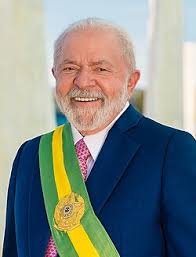
Lula Wins Historic Fourth T Lula wins Brazil election with 51.79% of valid votes as Flávio Bolsonaro challenges the result, setting the stage for a tense political transition
Brazilian President Luiz Inácio Lula da Silva secured re-election in Brasília on Sunday, 25 October 2026, defeating far-right challenger Flávio Bolsonaro in a closely fought presidential run-off, while the defeated senator rejected the outcome and vowed to seek annulment of the vote.
Also read: Ebola: NCDC Offers ₦100,000 Weekly Support to Contacts in Isolation
Official results gave Lula 51.79 per cent of valid votes against Bolsonaro’s 48.21 per cent, a margin of 4.43 million votes that secures the 80-year-old leader an unprecedented fourth, non-consecutive presidential term.
The result, confirmed by Brazil’s Superior Electoral Court, marks a remarkable turnaround for Lula, who finished behind Bolsonaro in the first round earlier this month.
It also preserves left-wing leadership in Latin America’s largest economy at a time when several countries across the region have shifted towards conservative governments.
Bolsonaro, the eldest son of former Brazilian president Jair Bolsonaro, refused to concede defeat following a tense election night marked by disputes over polling arrangements.
The senator described the decision to extend voting hours as unacceptable and said he would pursue legal action to overturn the result.
“It is impossible to recognise the results. I am going to request the annulment of these elections,” Bolsonaro said in Brasília.
His announcement has raised the prospect of a fresh legal and political confrontation, although a demand for annulment does not itself invalidate the result.
The electoral authorities have declared Lula the winner, and the president of the electoral court has said the extension of voting hours did not affect the outcome.
Lula’s victory was celebrated by thousands of supporters in São Paulo and Rio de Janeiro.
Dressed predominantly in red, the colour associated with Lula’s Workers’ Party, crowds filled streets with fireworks, flags and vuvuzelas as the final figures confirmed his return to office.
The celebrations offered a vivid contrast with the uncertainty surrounding Bolsonaro’s response.
For Lula’s supporters, the result represented a defence of democratic institutions and a rejection of the political direction championed by the Bolsonaro family. For many conservative voters, however, the narrow margin reflected continuing dissatisfaction with the government and a desire for a change in leadership.
Lula addressed supporters after the result was confirmed, emphasising the importance of democratic participation and national independence.
“People went to vote because we managed to convince them that voting was very important for ensuring democracy in the country,” he said.
He also renewed his appeal for Brazilian sovereignty, declaring that the country would not accept being treated as another nation’s subordinate.
The message has particular significance amid tensions with the United States under President Donald Trump, whose administration has pursued a more assertive approach towards the region.
The electoral dispute centres partly on a last-minute decision by Supreme Court Justice Cristiano Zanin to extend voting by two hours.
The ruling followed complaints about difficulties with public transport in several cities, which Lula’s campaign said had prevented some voters from reaching polling stations. Bolsonaro’s campaign also sought an extension in certain regions because of heavy rain.
The decision generated confusion because some polling stations had already closed before the change was communicated.
Bolsonaro subsequently questioned the legitimacy of the arrangement, pointing to Zanin’s previous work as Lula’s lawyer.
However, both campaigns had requested additional voting time in different circumstances.
Electoral authorities have maintained that the extension did not change the result, and legal experts cited by the Associated Press said Bolsonaro would need to demonstrate a substantive effect on voters’ ability to express their will to establish grounds for annulment.
The legal challenge therefore remains a claim by the defeated candidate, rather than evidence that the election was invalid. Any formal petition will have to be assessed through Brazil’s established legal procedures.
Lula’s return to office follows a campaign that initially appeared to be moving in Bolsonaro’s favour.
The senator led the first round and sought to present himself as a more approachable alternative to his father, whose political movement remains influential among conservative voters.
After the initial setback, Lula’s campaign intensified its efforts through public rallies, digital outreach and appeals to younger voters.
The abstention rate fell from 21.08 per cent in the first round to approximately 19.2 per cent in the run-off, according to Brazilian electoral figures.
The increased participation helped Lula recover ground, particularly in regions where his political support has traditionally been strong.
His campaign also sought to revive memories of his earlier administrations, when social welfare programmes and efforts to combat hunger helped establish his reputation among lower-income Brazilians.
Lula first became president in 2003 and won re-election in 2006. His political career suffered a major setback when he was convicted in corruption cases and spent more than 18 months in prison.
Brazil’s Supreme Court later annulled the convictions on procedural grounds, allowing him to return to electoral politics.
In 2022, Lula defeated Jair Bolsonaro in a narrow run-off victory. Jair Bolsonaro was subsequently convicted of attempting a coup following that election and is serving a 27-year prison sentence, a development that has reshaped the leadership and future direction of Brazil’s conservative movement.
Flávio Bolsonaro entered the 2026 contest seeking to capitalise on his family’s political following while appealing to voters concerned about crime, household expenses and the performance of the current administration.
His campaign argued that Brazil needed a fresh approach to economic management and public security.
Those concerns remain significant despite Lula’s victory. His government has pointed to improvements in employment and social welfare, but the cost of living and persistent insecurity have continued to influence public opinion.
The result suggests that many voters were willing to retain Lula while a substantial proportion remained unconvinced by his record.
The election also carried implications beyond Brazil’s borders. Lula has repeatedly defended national sovereignty in response to commercial and diplomatic pressure from Washington.
His victory means that Latin America’s largest economy is likely to continue pursuing an independent foreign policy, even as relations with the Trump administration remain a source of uncertainty.
The outcome also interrupts a broader regional trend towards conservative leadership, although the political circumstances vary considerably between countries.
Lula’s win does not signal the disappearance of the right in Brazil, where Bolsonaro’s movement retains a substantial electoral base and conservative forces remain influential in Congress.
International reactions began to emerge as the results became clear. Mexico’s President Claudia Sheinbaum welcomed the outcome, writing on social media that democracy and the Brazilian people had prevailed.
Leaders elsewhere in the region also acknowledged Lula’s victory, reflecting the diplomatic importance of Brazil’s political direction.
For Lula, the immediate task will be to turn an electoral victory into a workable governing mandate.
His fourth term is due to begin on 5 January 2027, but the narrow result means that almost half of voters who backed one of the two leading candidates chose Bolsonaro.
The president will need to address economic pressures, public security and persistent political mistrust while working with a Congress in which conservative forces remain strong.
His ability to build broader support could prove as important as the campaign victory itself.
Bolsonaro’s decision to challenge the result, meanwhile, leaves Brazil facing a period of heightened political tension.
The coming legal proceedings will determine whether his allegations develop into a formal case with sufficient evidence to warrant further action.
Also read: Ebola: NCDC Offers ₦100,000 Weekly Support to Contacts in Isolation
For now, the official result stands. Lula has secured a historic return to the presidency, but the close contest and the immediate refusal to concede underline the scale of the divisions he will face as he prepares to govern Brazil for another term.
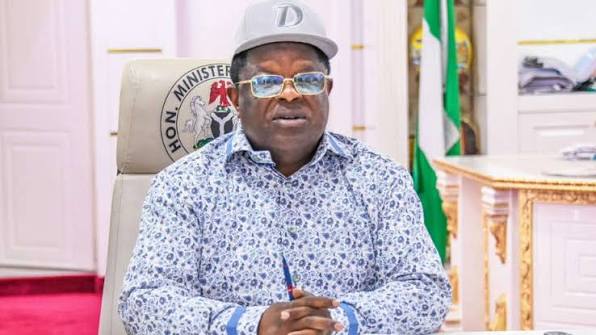
David Umahi predicts a South-East voting shift in 2027, citing Tinubu’s infrastructure projects and appointments across the region
Minister of Works David Umahi has predicted that voters in the South-East will support President Bola Tinubu differently in the 2027 presidential election, arguing that federal infrastructure projects and political appointments have changed the region’s relationship with the administration.
Also read: FG to immortalise Nigerian soldiers killed in Liberia, Sierra Leone
Umahi made the prediction in an interview with ARISE News published on Friday, describing the region’s overwhelming support for Labour Party candidate Peter Obi in the 2023 election as an “accident of history”.
He attributed the voting pattern to anger over what he described as the region’s marginalisation under the previous administration.
“In 2023, it was an accident of history. It was a demonstration of the anger of the people of South East on how they were treated,” he said.
The former Ebonyi State governor added that he believed the situation had changed under Tinubu.
“We’ve been marginalised in the past, but it’s no longer so,” Umahi said.
“If in 2023 they demonstrated their anger, in 2027 they are going to demonstrate their joy on how the President has treated them,” he added.
The minister said federal road projects and other investments in the South-East were reasons voters might reconsider their political choices in 2027.
He also claimed that serving and former governors, traditional rulers and other influential figures in the region were increasingly aligning with Tinubu.
Umahi argued that voters would be reluctant to abandon what he described as infrastructure gains for another political “gamble”.
However, his prediction reflects his own assessment of the region’s political mood.
The interview did not establish how voters currently intend to vote in 2027.
Umahi rejected suggestions that South-East political leaders supporting Tinubu were betraying the region or Obi, arguing that the region’s political interests should not be permanently tied to one candidate.
He also criticised social media supporters who insult regional leaders for backing the President, saying such attacks would not advance Obi’s political interests or those of the South-East.
The minister maintained that the region needed to negotiate and build alliances with other parts of Nigeria if it hoped to produce a president in the future.
Asked whether he believed Tinubu would defeat Obi in the South-East in 2027, Umahi responded confidently: “Why do you say I believe? That is what is going to happen!”
Also read: FG to immortalise Nigerian soldiers killed in Liberia, Sierra Leone
His comments come as political alignments and debates over regional representation begin to shape discussions ahead of the 2027 general election.
-
Politics3 years ago
13 Ondo Assembly Members Disown Endorsement of Aiyedatiwa
-
Politics3 years ago
APC Group, Ondo Govt, Quarrel Over Money for Endorsement
-

 Trending News5 years ago
Stop unsavoury, inciting statements – DSS warns
-

 Others5 years ago
Adron Homes Celebrates 10 Years Of Housing Excellence
-

 Humanity5 years ago
President Buhari Commiserates With Ambassador Maureen Tamuno Over The Loss Of Her Father
-

 Others7 years ago
EX- CUSTOMS BOSS, IBRAHIM MERA’S DWINDLING FAME
-

 Business3 years ago
Bigi Carbonated Soft Drinks Treats 40 Consumers to an Epic Easter Movie Hangout
-

 Business2 years ago
Wema Bank Shines at Global SME Finance Forum Conference Awards 2024 …Awarded: • SME Financier of the Year (Africa) • Platinum Award for Best Financier for Women Entrepreneurs (Africa)