
Politics
Voting bill pulled: House of Rep shifts focus to voluntary turnout, not compulsion


House Speaker Abbas Tajudeen has withdrawn a bill for mandatory voting in Nigeria after public consultation, acknowledging concerns about personal freedom and shifting focus to encouraging voluntary turnout

The Speaker of the House of Representatives, Abbas Tajudeen, has announced the withdrawal of a controversial bill that sought to make voting mandatory for all eligible Nigerians.
Also read: Yiaga Africa statement on the proposed bill for compulsory voting in Nigeria
The decision, revealed in a statement by his media aide, Musa Krishi, on Monday, May 26, 2025, follows extensive consultations with various individuals and groups across the country.
The bill, co-sponsored by Speaker Tajudeen and Daniel Asama Ago, was initially designed to amend the Electoral Act 2022 with the aim of boosting voter turnout and, by extension, strengthening Nigeria’s democracy.
“From the start, the goal was to get more people involved in elections and strengthen democracy by boosting voter turnout,” the statement read.
While the bill had successfully passed its second reading in the House last Thursday, it immediately sparked widespread debate.
Supporters argued it would significantly improve voter participation, drawing parallels to countries like Australia, Belgium, and Brazil, which maintain high turnout rates through compulsory voting.
Lawmaking is about serving the people, and any new law must respect personal freedom.
However, a strong opposing voice emerged, citing concerns that such a law would infringe upon personal freedom and prove challenging to enforce effectively in a diverse nation like Nigeria.
Speaker Abbas acknowledged these varying perspectives, emphasizing that while compulsory voting has worked elsewhere, “Nigeria must find its own way that suits its people.”
He reiterated a core principle of governance, stating, “Lawmaking is about serving the people, and any new law must respect personal freedom.”
Consequently, instead of enforcing compulsory voting, the government will now shift its focus towards exploring alternative strategies to encourage voluntary participation, particularly among young people and first-time voters.
“This withdrawal gives us time to talk more about how to build a culture of voluntary voting that supports our democracy and respects citizens’ rights,” the Speaker added.
Many Nigerians had voiced strong opposition to the bill, urging political leaders to prioritize addressing existing systemic issues that deter voter participation.
These include pervasive election violence, a general lack of trust in the electoral system, and poor planning on election days, all of which significantly contribute to voter apathy.


News
Panic-stricken Enugu APC begins flag-off of already flagged of roads in Nsukka after PDP’s Chijioke Ugwu’s homecoming



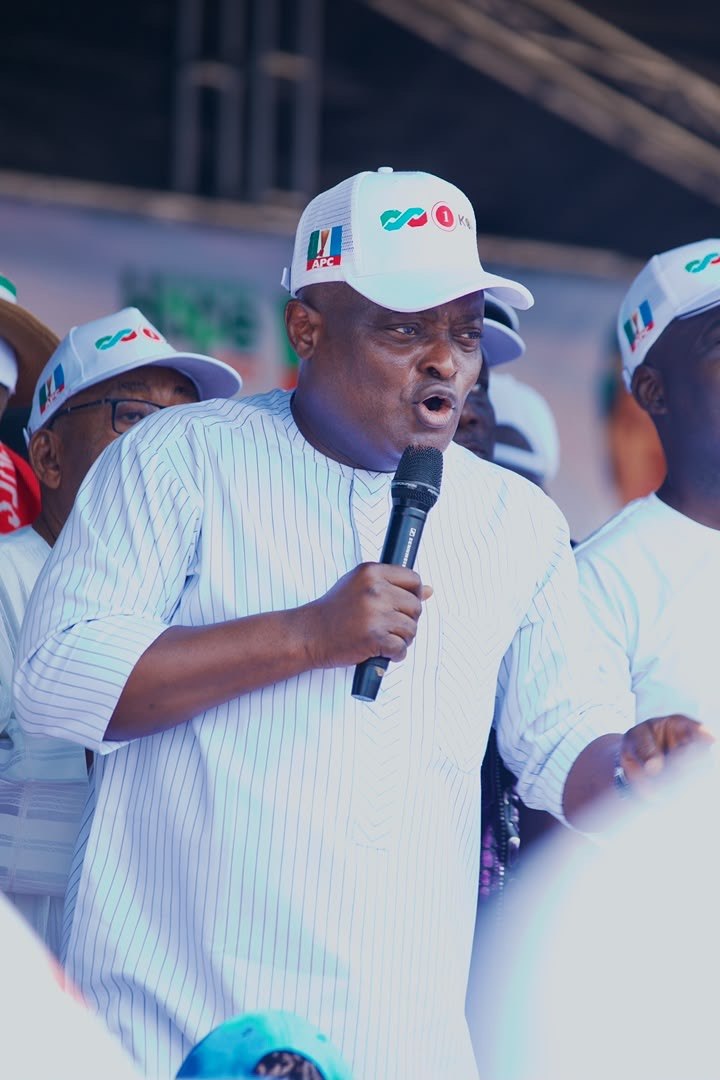
The Speaker of the Lagos State House of Assembly, Mudashiru Ajayi Obasa, has flagged off the All Progressives Congress campaign in Agege Federal Constituency with a mega rally at Amoo Field, Orile Agege.
The rally, held on Wednesday, September 30, brought together APC leaders, party members, traditional and religious leaders, trade associations, artisans and representatives of different communities in the area.
Obasa, who is the APC candidate for the Agege Federal Constituency seat in the House of Representatives, urged supporters to take the party’s campaign to homes, markets, artisan groups, places of worship and community associations ahead of the general election.
Addressing the gathering, he said the party should not be satisfied with a narrow victory but should seek to improve on its previous electoral performance.
“Let us join hands and make sure we deliver. It is not just about victory; we must surpass our previous votes. Sound it loud to everybody, all trade associations, artisans, tribes, religious and traditional leaders. We have the numbers, and we will pour it into the APC,” Obasa said.
He called on supporters to mobilise votes for President Bola Ahmed Tinubu, the APC governorship candidate in Lagos, Dr Kadri Obafemi Hamzat, the Lagos West senatorial candidate, Senator Idiat Oluranti Adebule, and himself in the Agege Federal Constituency.
Obasa said the campaign message should reach different sections of the constituency before election day, with supporters expected to engage residents and encourage them to participate in the electoral process.
He also described the turnout at the rally as an indication of support and cohesion within the party in Agege.
“Agege is always one. And we will continue to be one. There is nothing wrong with our party in Agege,” he said, while dismissing opposition voices and rumours about the party’s structure in the area.
The Speaker also urged party members and supporters to avoid conflict during the campaign, stressing that voters should be allowed to choose their preferred representatives.
“We must try to avoid conflict, because at the end of the day, the people will vote for their representatives, the people they truly want. Nobody can force anyone on the people,” he said.
Obasa’s remarks come as political parties intensify grassroots mobilisation ahead of the general election, with Agege remaining an important constituency in Lagos’s political landscape.
-
Politics3 years ago
13 Ondo Assembly Members Disown Endorsement of Aiyedatiwa
-
Politics3 years ago
APC Group, Ondo Govt, Quarrel Over Money for Endorsement
-

 Trending News5 years ago
Stop unsavoury, inciting statements – DSS warns
-

 Others5 years ago
Adron Homes Celebrates 10 Years Of Housing Excellence
-

 Humanity5 years ago
President Buhari Commiserates With Ambassador Maureen Tamuno Over The Loss Of Her Father
-

 Others7 years ago
EX- CUSTOMS BOSS, IBRAHIM MERA’S DWINDLING FAME
-

 Business2 years ago
Bigi Carbonated Soft Drinks Treats 40 Consumers to an Epic Easter Movie Hangout
-

 Business2 years ago
Wema Bank Shines at Global SME Finance Forum Conference Awards 2024 …Awarded: • SME Financier of the Year (Africa) • Platinum Award for Best Financier for Women Entrepreneurs (Africa)