
Politics
Yiaga Africa statement on the proposed bill for compulsory voting in Nigeria


Yiaga Africa unequivocally rejects the proposed bill under consideration in the National Assembly seeking to introduce compulsory voting in Nigeria and prescribing a six-month jail term on eligible voters who refuse to vote at elections

Yiaga Africa unequivocally rejects the proposed bill under consideration in the National Assembly seeking to introduce compulsory voting in Nigeria and prescribing a six-month jail term on eligible voters who refuse to vote at elections.
Also read: National Assembly to NERC, suspend June electricity tariff hike
The said bill is conceived as a legislative intervention to address the abysmally low voter turnout.
While the rationale for the bill is plausible because it aims to address one of the biggest challenges in Nigeria’s electoral system, the strong-arm approach adopted by the bill is draconian and it constitutes a gross violation of constitutionally guaranteed fundamental rights.
Indeed, the right to abstain from voting is itself a legitimate form of political expression protected under domestic and international human rights law.
Voter turnout in Nigeria has fluctuated significantly over the years, reflecting a complex interplay of political and systemic factors that influence electoral participation.
In 1979, turnout stood at 34.6%, increasing slightly to 38.9% in 1983 and holding at 35% in 1993. A notable surge occurred in 1999 with a turnout of 52.3%, followed by a peak in 2003, when 69.1% of registered voters participated.
However, this upward trend reversed in subsequent elections: 57.5% in 2007, 53.7% in 2011, 43.7% in 2015, 34.7% in 2019, and a historic low of 27.1% in 2023. This sharp decline positions Nigeria as the largest democracy in Africa with the lowest voter turnout.
We therefore urge the National Assembly to reject the proposed bill and channel its legislative efforts towards passing electoral amendment that expand access to voting, guarantee electoral transparency, and protect the political rights of all Nigerians.
Democracy thrives on freedom, which includes the choice to participate or abstain from voting. Compulsory voting undermines this democratic freedom and the punitive sanctions for not voting erodes the foundational principles of voluntary democratic engagement.
bill in its entirely fails to address the drivers of voter apathy such as distrust in the electoral process, election manipulation and poor governance.
Rather than compel voting, the National Assembly should prioritize electoral reforms that rebuild public trust, improve election integrity, and remove structural and systemic barriers to participation.
These include reforms that guarantee mandatory electronic transmission of results, review the mode of appointments into INEC, early voting, diaspora voting and improved transparency in the management of elections.
Yiaga Africa believes voter apathy isn’t addressed with imposing punishment for not voting. It can be addressed through trust, electoral justice, and accountability.
We therefore urge the National Assembly to reject the proposed bill and channel its legislative efforts towards passing electoral amendment that expand access to voting, guarantee electoral transparency, and protect the political rights of all Nigerians.
Signed.
Samson Itodo
Executive Director,
Yiaga Africa
16th May 2025.


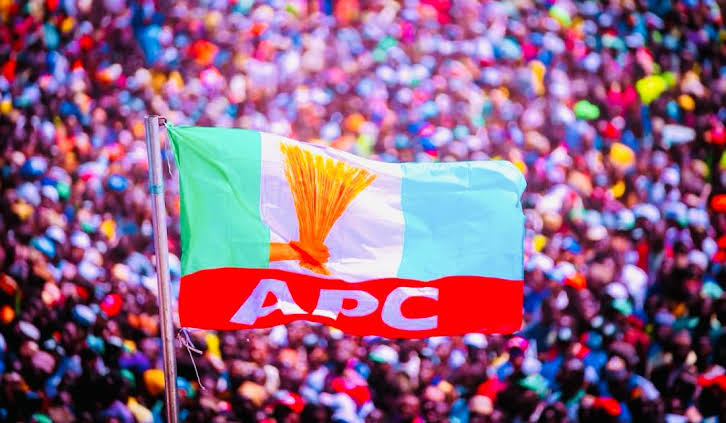


A group, the Imo First Group (IFG) has described the purported Magistrate court order to arrest Senator Ifeanyi Araraume and the former governor of Imo State, Rochas Okorocha, over alleged criminal conspiracy and forgery, as a ruse and fake news
The group stated this in a statement issued on Saturday in Abuja.
IFG challenged those peddling the fake news to make the court order public.
The statement reads ” The fabricated and concocted story was first posted on social media by Hon. Ambrose Nwaogwugwu, a media aide to Governor Hope Uzodimma, before it was picked up by other media outfits, including Arise TV.
According to the statement, those behind the report claimed that a Senior Magistrate Court sitting in Abuja issued a Bench Warrant dated September 9, 2026, following a petition written by the Resident Electoral Commissioner (REC) in Imo State, Barr. Chukwuemeka Ibejiako, to the Police and DSS on October 8, 2026, over alleged presentation of fake APC primary results.
The Group debunked the existence of any such order.
“We want to state categorically and unequivocally that no jSenior Magistrate ordered or issued any bench warrant for the arrest of Araraume”
IFG however challenged anyone in possession of the purported court order to publish it.
“If you claim to have a court order present same for the public to see,
“This fabricated bench warrant contain in the report is filled with inconsistencies, the bench warrant was dated September 9, 2026, while the REC’s petition that supposedly triggered it was dated October 8, 2026, with case number CR/M/084/2026.
The statement further stated that the purveyors and harbinger of the fake news tried to trick the magistrate via exparte order but was rebuked
“The magistrate bluntly refused to grant their exparte and threatened to arrest them, yet they carried their falsehood about. What’s the problem of occupants of office that never won free and fair elections and tried to destroy reputable Imo sons that have won elections. We challenge anyone in this macabre surugede dance to show the court order or warrant of arrest. It’s preposterous to blackmail decent Imo sons on the altar of dirty politics.”

-
Politics3 years ago
13 Ondo Assembly Members Disown Endorsement of Aiyedatiwa
-
Politics3 years ago
APC Group, Ondo Govt, Quarrel Over Money for Endorsement
-

 Trending News5 years ago
Stop unsavoury, inciting statements – DSS warns
-

 Others5 years ago
Adron Homes Celebrates 10 Years Of Housing Excellence
-

 Humanity5 years ago
President Buhari Commiserates With Ambassador Maureen Tamuno Over The Loss Of Her Father
-

 Others7 years ago
EX- CUSTOMS BOSS, IBRAHIM MERA’S DWINDLING FAME
-

 Business2 years ago
Bigi Carbonated Soft Drinks Treats 40 Consumers to an Epic Easter Movie Hangout
-

 Business2 years ago
Wema Bank Shines at Global SME Finance Forum Conference Awards 2024 …Awarded: • SME Financier of the Year (Africa) • Platinum Award for Best Financier for Women Entrepreneurs (Africa)