
Politics
Wike warns against pushing Jonathan’s 2027 presidential bid


FCT Minister Nyesom Wike warns that calls for Goodluck Jonathan’s 2027 presidential run could destabilise Nigeria, accusing proponents of seeking crisis
Nyesom Wike, Minister of the Federal Capital Territory (FCT), has cautioned that those advocating for former President Goodluck Jonathan to contest the 2027 presidential election are conspiring to destabilise the country.
Also read: Senator Daniel Applauds Nigerian Navy Community Outreach in Rivers

Speaking on Channels Television’s “Politics Today” on Thursday night, Wike described such calls as hypocritical, pointing out that many who now support Jonathan’s return had opposed his presidential ambition back in 2015.
“Anybody saying Jonathan should return because he will only do one term is only looking for a crisis. These are the same people who abandoned him in 2015. Why now? Jonathan has made a name for himself globally and they just want to drag him into unnecessary conflict,” Wike stated.
He warned against attempts to unsettle Nigeria’s political balance by promoting Jonathan or any other Southern candidate under the guise of a “one-term presidency,” calling such efforts disingenuous.
Acknowledging the challenges faced under President Bola Tinubu’s administration, Wike nevertheless defended the government’s efforts to improve the economy and implement critical reforms.
“Yes, there is hardship. I agree. But no one can deny that this government is making efforts to improve things. I see the projects in Abuja daily; they are evidence that something is happening,” he stressed.
Wike also dismissed former Vice President Atiku Abubakar’s recent warnings of an impending revolution over hunger and poverty as hypocritical, reminding Nigerians that Atiku served as vice president for eight years without adequately addressing these issues.
“Atiku was vice president for eight years. Why didn’t he lay the foundation to prevent hunger then? Now he keeps talking about hunger and revolution. For me, I don’t even bother reading what he says, because there is no truth in it,” Wike said.
Also read: Wike expresses dissatisfaction with state of emergency in Rivers State, reveals desire for governor’s removal
The FCT Minister urged Nigerians to be patient with the current administration and warned opposition politicians against exploiting economic challenges for political gain.




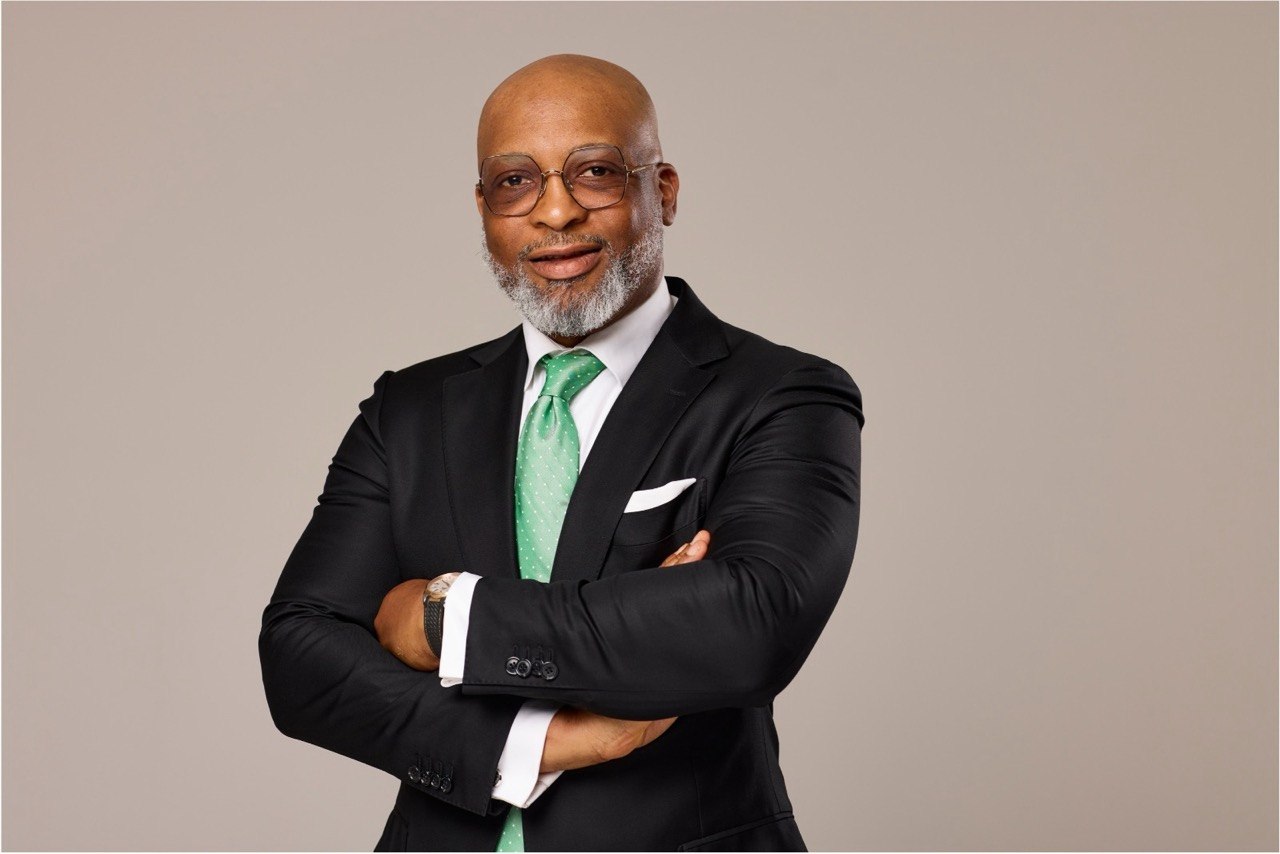
Labour Party governorship candidate in Lagos State, Rotimi Odunaike, has declared that improving the quality of life of residents will be the defining priority of his administration, arguing that governance should ultimately be measured by how people live, work and move around the state.
Odunaike made the remarks while speaking on Daily Digest with Jimi Disu on Nigeria Info, where he said his decision to contest the 2027 governorship election was inspired by his lifelong connection to Lagos and his concern over what he described as the steady decline in residents’ everyday living conditions.
“Lagos raised me,” he said, reflecting on his childhood in the state before spending part of his professional career abroad.
According to him, the Lagos he grew up in was not without challenges, but it offered a better quality of life than many residents experience today.
He said his focus was not on headline economic figures but on the daily realities confronting ordinary Lagosians.
“When I look at the state of things and the quality of life, I’m not talking about numbers and I’m not talking about statistics. I’m talking about the impact to Lagosians on their quality of life,” he said.
Using his journey to the radio station as an example, Odunaike said he left his home in Ikeja before 7 a.m. but still spent about an hour getting to the studio.
“That is not living. That is surviving. It’s not even thriving,” he added.
The Labour Party candidate argued that mobility should be treated as a quality-of-life issue rather than merely a transport challenge, saying efficient movement across Lagos would expand access to jobs, businesses and economic opportunities.
He also linked poor infrastructure and environmental challenges to the struggles of informal-sector workers, particularly traders whose businesses are often disrupted by flooding and other urban problems.
According to Odunaike, Lagos should demonstrate its reputation as the “Centre of Excellence” through the actual delivery of quality governance, improved mobility, affordable housing, a stronger economy and better public services.
Rather than centring his campaign on personalities, he said his ambition is to present a people-focused vision for Lagos built on values, service and leadership.
Reflecting on his upbringing, Odunaike credited the discipline instilled by his mother, a Nigerian Army officer, and his years in military schools for shaping his understanding of public service.
He argued that strong values remain the foundation of effective leadership, adding that although people may face challenges that test their principles, a deeply rooted value system ultimately guides them back to their core.
“At the end of the day, it is about them,” he said, referring to the people of Lagos.
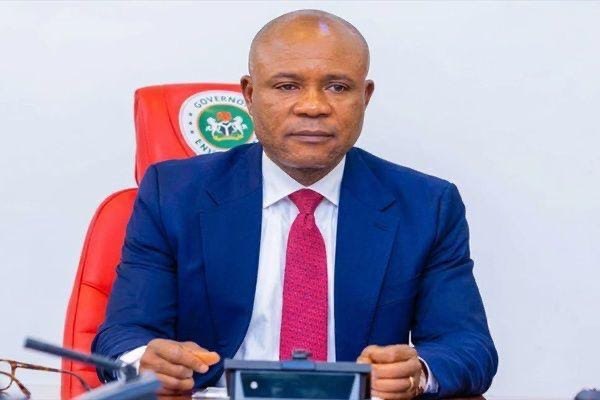
Chief Uche Geoffrey Nnaji, the Peoples Democratic Party governorship candidate in Enugu State, has accused the state government of “lawlessness” following an alleged raid on his campaign office along Abakaliki Road, where he said campaign posters and other materials were removed.
Nnaji alleged that officials of the Enugu State Environmental Protection Agency entered the premises and tore down campaign liveries displayed on the office, fence and surrounding areas.
He described the alleged action as an invasion of his privacy and a troubling escalation of the dispute over political advertising in the state.
“My privacy has been invaded by the Enugu State Government. My personal campaign office was attacked by the Enugu State Environmental Protection Agency and all my posters torn down in contravention of an ongoing court process,” Nnaji said in a statement.
The former Minister of Innovation, Science and Technology said the alleged enforcement action was particularly concerning because of a pending legal challenge over the state’s political signage regulations.
According to him, a Motion on Notice had been served on the relevant parties and the parties were awaiting the hearing of the case when the alleged removal took place.
“A Motion on Notice was served on them and we are waiting for the hearing of the matter when they embarked on their ‘Destroy Enugu First Campaign’,” he said.
Nnaji argued that government agencies should exercise restraint when a disputed policy is before a court, saying political disagreements should not override respect for private property and due process.
“What makes this development particularly disturbing is that the Enugu State Government’s signage policy is currently being challenged before the Federal High Court, Abuja, and a Motion on Notice has already been served on the relevant parties,” he said.
The legal challenge follows the introduction of a mandatory ₦150 million advertising permit by the Enugu State Structures for Signage and Advertisement Agency for political parties and candidates participating in the 2026 and 2027 elections. The agency said the permit covers various forms of outdoor and visual campaign promotion across the state’s 17 local government areas.
ENSSAA General Manager Francis Aninwike said the permit was part of the agency’s statutory responsibility to regulate outdoor advertising, maintain environmental aesthetics and protect public infrastructure.
The agency subsequently reaffirmed its ban on the unauthorised pasting and display of posters across the state, warning political parties, candidates, campaign organisations and supporters that violations could attract financial penalties and other sanctions. The September 9 notice said the restriction was backed by the Enugu State Structures for Signage and Advertisement Agency Law No. 12 of 2016.
ENSSAA had also previously announced a statewide enforcement exercise against unauthorised outdoor advertisements, including political campaign materials, stating that the exercise was not targeted at any individual or political group.
The ₦150 million permit has, however, remained a major point of disagreement between the state authorities and opposition parties.
In June, the PDP and other opposition parties instituted a suit challenging the legality of the permit requirement. Reports on the case said the parties asked the Federal High Court to determine whether ENSSAA and the Enugu State Government had the constitutional authority to impose the fee on political parties and candidates.
Nnaji maintained that the existence of a signage regulation did not remove the obligation of government agencies to respect due process, citizens’ rights and judicial proceedings.
“Why the haste? Why destroy first when the court is already seized of the matter?” he asked.
“The rule of law requires patience, restraint and respect for due process. Where a policy or governmental action is before a competent court, the proper course is to allow the judiciary to determine the legality of the disputed policy rather than resorting to actions that might appear to prejudge the matter.”
The controversy comes as political activities intensify in Enugu following the September 26 local government elections and ahead of the 2027 general election. ENSSAA has maintained that its advertising restrictions apply regardless of political affiliation and has urged political actors to use approved advertising channels and other platforms for campaign communication.
Nnaji, who was recently confirmed as the PDP’s governorship candidate for the 2027 Enugu election, has continued to criticise the state government over issues including campaign regulation and the political environment in the state.
For the PDP candidate, however, the latest dispute is not simply about the cost of political advertising. He said the central issue was the alleged entry into his campaign premises and removal of campaign materials while the legality of the signage regime remains subject to judicial consideration.
-
Politics3 years ago
13 Ondo Assembly Members Disown Endorsement of Aiyedatiwa
-
Politics3 years ago
APC Group, Ondo Govt, Quarrel Over Money for Endorsement
-

 Trending News5 years ago
Stop unsavoury, inciting statements – DSS warns
-

 Others5 years ago
Adron Homes Celebrates 10 Years Of Housing Excellence
-

 Humanity5 years ago
President Buhari Commiserates With Ambassador Maureen Tamuno Over The Loss Of Her Father
-

 Others7 years ago
EX- CUSTOMS BOSS, IBRAHIM MERA’S DWINDLING FAME
-

 Business2 years ago
Bigi Carbonated Soft Drinks Treats 40 Consumers to an Epic Easter Movie Hangout
-

 Business2 years ago
Wema Bank Shines at Global SME Finance Forum Conference Awards 2024 …Awarded: • SME Financier of the Year (Africa) • Platinum Award for Best Financier for Women Entrepreneurs (Africa)