Connect with us

Opinion

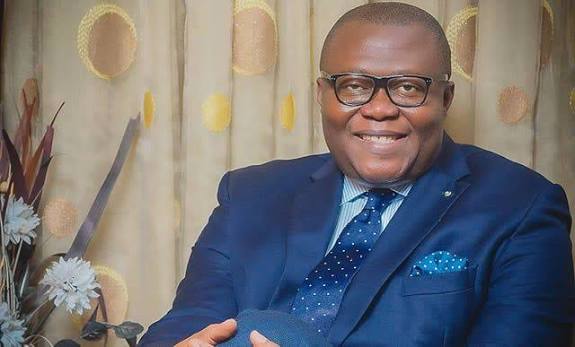
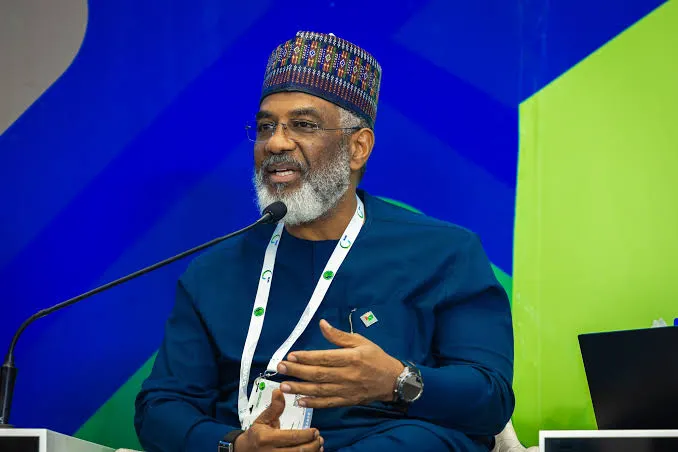
Yusuf Tuggar: The quiet architect of a bolder Nigeria

Published

on

Yusuf Tuggar

Adebayo Adeoye

Nigeria’s Foreign Minister Yusuf Tuggar wins praise for calm, effective diplomacy, global wins, and restoring dignity to Nigerian foreign policy

In an era when diplomacy is too often reduced to soundbites and outrage, Nigeria’s Minister of Foreign Affairs, Ambassador Yusuf Maitama Tuggar, has chosen a different path: calm, factual, and unflinchingly principled.

Also read: Lagos State Assembly Confirms Receipt of 2026 Budget Proposal from Governor Sanwo-Olu

The result is one of the most effective tenures the Ministry has seen in years, capped by his well-deserved recognition as joint winner of The Street Journal’s “Super Ministers of the Year” award alongside distinguished colleagues.

Tuggar did not campaign for applause. He simply delivered.

When the United States designated Nigeria a “Country of Particular Concern” over alleged religious persecution, many expected a defensive outburst.

Instead, Tuggar appeared on Piers Morgan Uncensored and delivered a masterclass in composure. Armed with data and context, he dismantled the one-sided narrative that paints Nigeria’s security crisis as state-sponsored persecution of Christians.

“Cool as a cucumber,” he told Morgan with a smile, correcting the host’s slip about “Chibok boys” and insisting the full interview be aired unedited.

Nigeria’s truth, he said, “must not be distorted to fit external biases.” The exchange went viral, not because of shouting, but because of clarity. In an age of polarisation, Tuggar showed that facts, delivered calmly, can cut through noise more effectively than fury.

That same clarity defines his broader vision.

Tuggar has translated President Bola Tinubu’s 4D foreign policy (Democracy, Development, Demography, and Diaspora) into tangible global wins. Nigeria is now a BRICS partner nation.

Nigerian candidates are frontrunners for top African Union positions.

Economic diplomacy has brought in $14 billion from India, €250 million from the Netherlands, and $2.5 billion from Brazil’s JBS. The West Africa Economic Summit (WAES 2025), hosted brilliantly in Abuja, produced concrete trade pacts and investment commitments that will outlast headlines.

Yet Tuggar never forgets the human element.

His ministry has evacuated stranded citizens from conflict zones, secured scholarships for young Nigerians, and built a Diaspora Database now exceeding 11,000 registrants.

Cultural diplomacy flourishes too. The return of Benin Bronzes, the new MFA Exhibition Atrium, and over 940 million positive global media impressions remind the world of Nigeria’s rich heritage, not just its challenges.

On the tough issues, he stands firm.

He categorically rejected U.S. attempts to deport Venezuelan gang members to Nigeria, insisting that Nigeria will not become a dumping ground for other nations’ criminals.

He has criticised restrictive U.S. visa policies as unfair while pushing for balanced, respectful trade ties instead of one-sided demands.

Security contributions are equally impressive.

The Nigeria-initiated Sealift Agreement with the African Union has strengthened peacekeeping across the continent, reinforcing Nigeria’s role as a stabilising force rather than a problem child.

Perhaps Tuggar’s greatest achievement is restoring dignity to Nigerian diplomacy.

After years of reactive statements and inconsistent messaging, the ministry now speaks with one confident, evidence-based voice. Envoys are energised, missions purposeful, and Nigeria’s interests fiercely but respectfully defended.

In a continent often spoken about rather than listened to, Tuggar has insisted that Africa and Nigeria must be the author of its own story. He does not beg for respect; he commands it through competence.

The Street Journal’s award is welcome recognition, but the real prize is the Nigeria emerging under his stewardship: more invested in, more listened to, and far more confident on the global stage.

It is not hyperbole to say that the extremely brainy minister has assumed the position of the number one public relation officer for Nigeria, transversing around the world polishing the image of the country.

Also read: New Ijebu-Remo State Agitation Intensifies, Stakeholders Demand Governor Dapo Abiodun’s Public Position

Cool, composed, and relentlessly effective, Yusuf Tuggar is proving that the strongest diplomacy is not the loudest, but the truest. Nigeria is fortunate to have him at the helm.

70 / 100 SEO Score

Opinion

K1’s Awujale Ambition: An Impossible Dream, Not a Pathway

Published

on

By

Omoba Abiola Aloba

Let it be said plainly & without hesitation: the possibility of K1 becoming the Awujale is not merely slim, it is nonexistent. No amount of influence, back-channel persuasion, or perceived connection to the powers that be can rewrite the established order of Ijebu kingship.

Ijebu-Ode is not some obscure hamlet tucked away in a forgotten corner of the map. It is a historic kingdom with deep-rooted traditions, guided by an organised royal structure & populated by some of the most educated, enlightened, accomplished, & illustrious people in the country. Ours is a land where pedigree matters, where lineage is verifiable, where ancestry is not a tale woven overnight for convenience.

The rotational system among the ruling houses: Fusengbuwa, Anikinaiya, Gbelegbuwa, and others in their rightful order, has been honoured for generations. It is this rotation that has preserved peace, fostered unity, & ensured fairness. It cannot be discarded simply because one man suddenly fancies a throne that was never his to aspire to.

This is not mere politics. Where an Ondo man, can claim to be from Lagos and hoodwink the people.
You cannot hoodwink Ijebu people. Not here. Not ever.

As for those whispering that his supposed connections to the corridors of power might deliver a miracle in the form of a slamdunk, such thoughts are a profound misreading of the moment. His Excellency, the Governor of Ogun State, Prince Dapo Abiodun, is himself a blue-blooded son of royalty. A proud prince of Iperu. He understands the weight of tradition, the sanctity of process, & the danger of installing a usurper on such a revered throne. No governor would want his tenure stained by such a historical misstep.

The Awujale stool is not a trophy for ambition; it is a sacred trust passed through legitimate bloodlines, anchored by history & protected by the collective conscience of Ijebuland.

No matter the theatrics, no matter the machinations, no matter who is whispered to be “in his corner,” K1 will not:  & cannot, breach an order far older & far stronger than his ambition.

This isn’t a contest for the Fuji music crown. It isn’t a battle of supremacy between K1, Pasuma, Atawewe, Osupa, Shefiu Alao & the likes for the crown of Fuji. It also isn’t about who took over from Alhaji Agba, the late Ayinde Barrister. This is about the revered Awujale crown & throne. The Awujale we deserve & desire isn’t a polarising, highly egotistical fellow. But an accommodating, liberal father of all.

Omoba Abiola Aloba
A proud son through his mom, of the Fetuga family of Ikanigbo
A custodian of a heritage that needs no embellishment
And one who stands firmly for the dignity of Ijebuland.

43 / 100 SEO Score
Continue Reading

Opinion

The UK is losing billions by under-employing skilled Nigerians and other African Migrants — New Analysis from the Insight Vodcast

Published

on

By

The United Kingdom is losing about £4bn annually by failing to fully utilise the skills and qualifications of Nigerians and other African migrants living and working in the country. Beyond African migrants, the UK stands to gain up to £37 billion every year if workplace racial disparities affecting Black and Minority Ethnic workers were addressed.

This was revealed in the latest edition of The Insight Vodcast, a weekly news explainer produced by Adejuwon Soyinka, a UK based two-time Emmy nominated Nigerian investigative journalist.

Drawing on data from the UK’s Office for National Statistics (ONS), Oxford University’s Migration Observatory, the McGregor-Smith Review, Business in the Community (BITC), and a 2025 University College London (UCL) inequalities study, The Insight Vodcast exposes a persistent and costly pattern of underemployment, wage disparities, and systemic barriers facing African professionals in the UK.

The UK 2021 Census counted about 1.5 million Black African people in England and Wales. That’s around 2.5% of the population. Of this figure, around 270,000 were said to be Nigerians living in England and Wales. The figure has since grown with estimates suggesting around 300,000 Nigerians in the UK as at 2023 while another 52,000 migrated to the UK in 2024.

The timely and hard-hitting analysis revealed how based on data from the Office for National Statistics (ONS), Black African, Caribbean and Black British workers consistently earn less than their White peers, even with similar qualifications. The Insight Vodcast report revealed how, according to the Oxford University’s Migration Observatory, highly educated migrants are disproportionately funnelled into lower-skilled jobs.

A 2017 independent review by Baroness McGregor-Smith showed that fully utilising the talents of Black and Minority Ethnic workers could add £24 billion a year to the UK economy. There hasn’t been an improvement since then. A 2025 analysis by Business in the Community (BITC), a business-led charity founded by King Charles III, suggests the UK stands to gain up to £37 billion every year if workplace racial disparities were addressed.

“These are not isolated stories,” The Insight Vodcast reports. “They represent a national economic blind spot, one that quietly drains the UK of productivity, innovation, and tax revenue.”

The Insight Vodcast attributes the ongoing crisis to a combination of entrenched hiring bias and structural barriers. A landmark Oxford study showed that ethnic minority job seekers must submit 60% more applications to receive the same callback rates as White applicants, a trend University College London, UCL researchers confirm remains unchanged as of 2025.

The Insight Vodcast report warns that the real economic cost is likely far higher today than previously estimated, given population growth and rising wages.

This week’s episode of The Insight Vodcast investigates “The Hidden Bill: How the UK Wastes Billions by Under-Employing Skilled African Migrants”, and calls for urgent national attention. The episode argues that unlocking African migrant talent isn’t just a moral imperative, it’s a direct economic gain that could boost public services, strengthen the workforce, and stimulate long-term growth for the UK.

43 / 100 SEO Score
Continue Reading

Opinion

EDITORIAL: Governor Dapo Abiodun’s Politics of Vindictiveness Is Tearing Ogun Apart

Published

on

Governor Dapo Abiodun

Ayo Mojoyin

Governor Dapo Abiodun faces criticism for allegedly using state power to intimidate political opponents and block empowerment programmes in Ogun State

(more…)

68 / 100 SEO Score
Continue Reading

Trending News