Also read: Rotary Urged To Prioritise Lasting Partnerships In West Africa
This provision empowers each chamber of the National Assembly to order investigations into any matter within its legislative competence, as well as the conduct of any person, authority, ministry, or government department entrusted with executing laws or administering public funds.

Furthermore, Section 62 provides the explicit constitutional foundation for establishing specialized committees, most notably the Committee on Public Petitions, to systematically receive, review, and investigate genuine citizen grievances.
To ensure these powers are exercised with order, discipline, and fairness, the legislature operates under clear Standing Orders formulated pursuant to Sections 60 and 101 of the Constitution.
While derived broadly from the investigative powers in Sections 88 and 128, the specific mechanisms, rules, and mandatory steps for receiving, vetting, hearing, and acting upon public petitions are meticulously detailed within these Standing Orders.
Having established this statutory background, it is essential to emphasize a fundamental principle: the constitutional mandate to receive and investigate petitions is an instrument of public accountability, not a weapon for personal vendettas, political witch-hunts, or legislative leverage.
It is within this context that the recent actions of the House of Representatives Committee on Petroleum Resources (Downstream) must be critically examined.
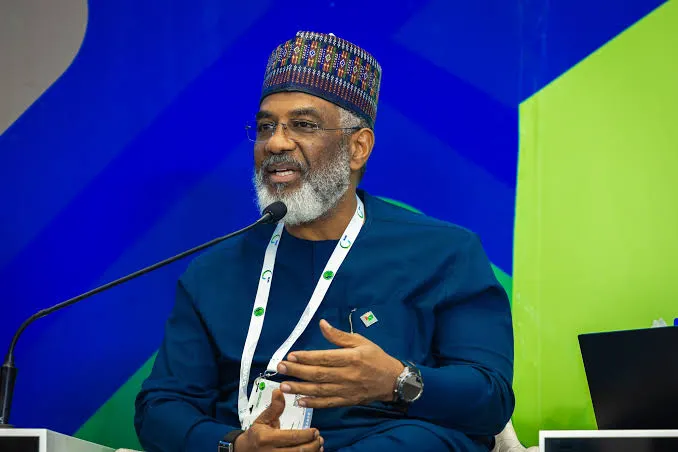
Its Chairman, Hon. Ikenga Ugochinyere Imo, disclosed at the House Committee Downstream Week that his committee had received a petition alleging money laundering and abuse of office against the Executive Vice President of the Nigerian National Petroleum Company Limited, Dr. Mumuni Dagazau.
A rigorous examination of this public disclosure reveals a glaring departure from standard parliamentary practice.
This entire affair bears all the hallmarks of a orchestrated campaign driven by deep-seated malice; a desperate attempt to smear the character of public officers who have steadfastly refused to cow to covert blackmail or compromise their official responsibilities.
If this petition possesses any legitimate substance, why did the Committee Chairman fail to reveal the identity of the petitioner? Going public with an unverified, anonymous document without first conducting a preliminary administrative inquiry, establishing a prima facie case, or according Dr. Dagazau his fundamental constitutional right to a fair hearing is deeply troubling.
By disclosing to the press with unbacked claims, the committee has bypassed established legislative protocol and effectively subjected an officer to a trial by media.
In doing so, the committee risks allowing itself to be used as a proxy for disgruntled elements seeking to undermine ongoing reforms in Nigeria’s downstream petroleum sector.
These interested parties appear unable to accept that the NNPC Limited of today operates under an entirely different paradigm from the NNPC Limited of the past. Under the Petroleum Industry Act (PIA), NNPC Limited is driven by financial prudence, corporate accountability, and strict integrity.
The days when public institutions could be coerced into handing out unearned benefits are over. Those who believe they can resort to character assassination to extract personal gain or force compliance will find that their blackmail falls on deaf ears.
Furthermore, the backdrop against which these remarks were made renders the Chairman’s comment even more disappointing.
At a major legislative gathering such as the “House Committee Downstream Week” a platform designed specifically to evaluate the health, security, and growth of Nigeria’s energy sector; the clear expectation of stakeholders, industry experts, and the general public was a forward-looking, substantive engagement.
National interest demanded that the committee focus its spotlight on critical industry dynamics: tracking progress made in local refining capacity, addressing persistent supply and bottlenecks, tackling crude oil theft, and formulating actionable legislative solutions to lower energy costs for everyday Nigerians.
Instead of seizing this vital platform to offer strategic direction and policy support, Hon. Ugochinyere Ikenga chose to reduce a high-level public gathering to a arena for personal attacks and unverified slurs against an executive officer.
Diverting public focus away from pressingly urgent structural challenges in the downstream sector to launch an unprovoked, uninvestigated attack on Dr. Mumuni Dagazau represents a severe misplacement of priorities.
It undermines the very essence of parliamentary responsibility, substituting constructive legislative leadership with sensationalism and targeted distraction at a time when the nation desperately needs solutions, not political theater.
While Dr. Dagazau reserves all legal rights to protect his hard-earned reputation against defamatory attacks and coordinated character assassination, the leadership of the House of Representatives should be urged to step in.
Also read: Rotary Urged To Prioritise Lasting Partnerships In West Africa
The National Assembly must protect the dignity of the parliament by ensuring that committee oversight remains grounded in fairness, thoroughness, and due process, rather than public spectacles driven by unverified petitions.