
Economy
2026 Appropriation Bill Vital for Lagos to Remain Africa’s Economic Hub – Obasa


Lagos 2026 budget prioritises healthcare, education, and infrastructure to enhance growth and improve residents’ quality of life

The Lagos 2026 Budget has been hailed as a pivotal step in sustaining the city’s status as Africa’s leading economic hub, Speaker of the Lagos State House of Assembly, Rt. Hon. Dr. Mudashiru Ajayi Obasa, stated on Tuesday.
Also read: Speaker Obasa Felicitates GAC Leader Prince Olusi on 89th Birthday, hails his ‘invaluable contributions’ to Lagos
Delivering his remarks during Governor Babajide Sanwo-Olu’s presentation of the Appropriation Bill at the Assembly chamber, Obasa praised the governor for crafting a “comprehensive budget that aligns with Lagos’ aspirations for growth and development.”
The event was attended by state executives, traditional rulers, political and party leaders, captains of industry, and members of the Diplomatic Corps.
“You have maintained a track record of resourceful consistency, steering our state through economic challenges while driving infrastructure development,” Obasa said.
“Not long ago, you brought the E1 Racing Championship to Lagos, making it the first African city to host such a prestigious event.”
The Speaker emphasised the legislature’s role in complementing the executive’s initiatives by enacting laws that enhance socio-economic growth, local government reform, and institutional development.
He cited the approval of a ₦125 billion bond and the Smart Solar All-in-One Streetlight Project as examples of productive collaboration between the Assembly and the executive.
Obasa also commended the Renewed Hope Agenda of President Bola Ahmed Tinubu, highlighting strides in national infrastructure, improved economic confidence, and Nigeria’s recent delisting from the Financial Action Task Force grey list.
He lauded First Lady, Senator Oluremi Tinubu, for her initiatives promoting women’s economic empowerment and education, including the distribution of sanitary pads to schoolgirls nationwide and the Oluremi@65 Education Fund.
Governor Sanwo-Olu, presenting the budget themed “Budget of Shared Prosperity,” revealed a total proposal of ₦4.237 trillion, with internally generated revenue of ₦3.993 trillion and a modest deficit financing of ₦243.332 billion.
Anchored on four pillars—human-centred development, modern infrastructure, a thriving economy, and good governance—the budget is designed to eradicate poverty and expand opportunities for all Lagos residents.
Also read: Speaker Obasa Commends Remi Tinubu at 65, Applauds Positive Impact of ‘Renewed Hope Initiative’
“Our mission remains clear: to eradicate poverty and build a Lagos that works for everyone,” the governor said, underlining the budget’s role as a roadmap for continuity, resilience, and shared prosperity.


By Daniel Oluwatobiloba Popoola
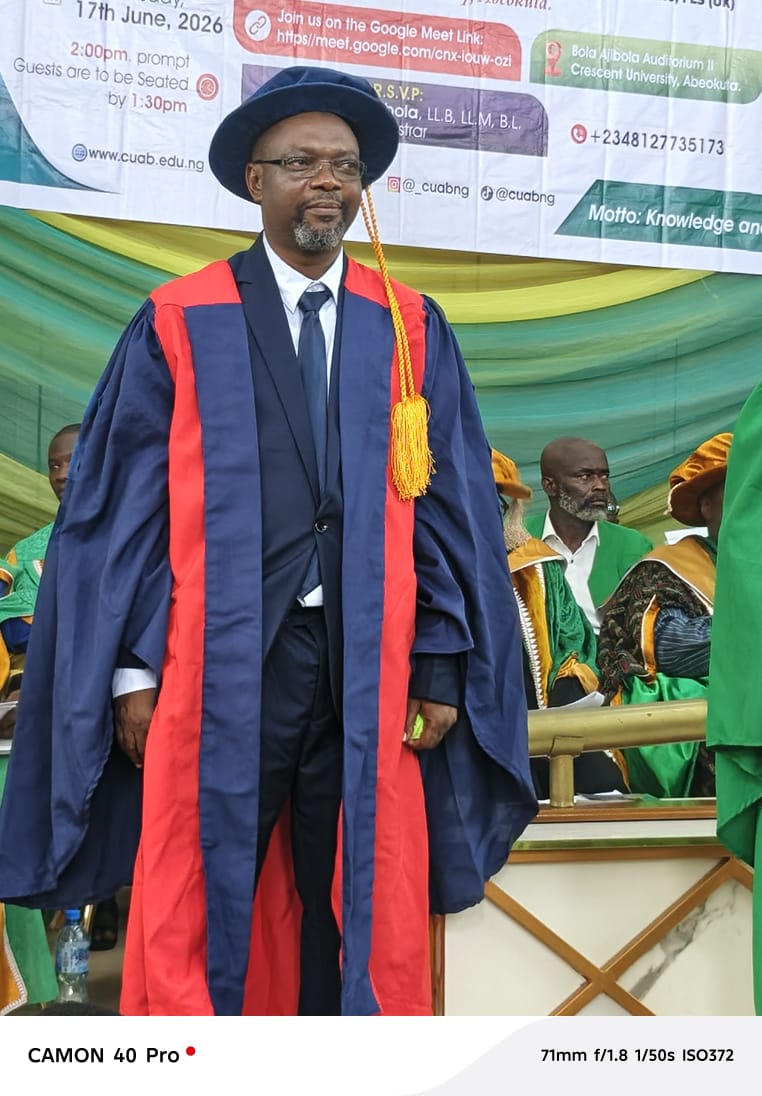
Professor Rasaki Olufemi Kareem has identified efficient management of resources, rather than their abundance, as the key to Nigeria’s economic transformation and sustainable development.
Speaking at the first ever Inaugural Lecture of the Crescent University, Abeokuta, titled, “Resource Efficiency Vs. Economic Development: Whither Nigeria”, the renowned economist argued that although Nigeria is richly endowed with oil, gas, solid minerals, fertile land and a rapidly growing population, millions of citizens still live in poverty because resources have not been effectively managed and deployed.
Professor Kareem, also the Deputy Vice Chancellor of the University, explained that while Resource Economics focuses on the efficient and sustainable use of scarce resources, Development Economics seeks to improve living standards, reduce poverty and promote economic growth.
According to him, resource efficiency enhances productivity, lowers production costs, stimulates innovation, protects the environment and lays the foundation for long-term development.
Professor Kareem also highlighted the phenomenon known as the Dutch Disease or Resource Curse, noting that countries blessed with abundant natural resources often fail to attain corresponding economic progress because of poor governance, corruption, weak institutions and excessive dependence on resource revenues.
“Nigeria’s challenge is not the absence of resources, but the inefficient management and utilisation of those resources,” he said.
The Professor maintained that sustainable development in Nigeria would depend largely on effective resource management, strong institutions, sound governance, investment in infrastructure, technology and human capital, consistent development policies and active community participation.
Drawing from decades of research in fisheries, agriculture, economic growth, poverty, governance, food security and climate change, Professor Kareem demonstrated that efficient resource use has a direct impact on productivity, economic growth and citizens’ welfare.
He stressed that transparency and responsibility remain indispensable to sustainable development.
“Sustainable economic development can only be achieved when resources are utilised efficiently, transparently and responsibly,” he stated.
The scholar added that resource efficiency is critical to poverty reduction, food security, job creation and the attainment of the Sustainable Development Goals.
As part of measures to reposition the economy, he recommended diversification beyond oil, stronger institutions, improved governance and a more robust anti-corruption framework.
He also advocated increased investment in agriculture and food security, greater support for research, innovation and technology, adoption of sustainable resource management practices and enhanced public awareness on the importance of resource efficiency.
Professor Kareem summed up his message with a call for a paradigm shift in the country’s development strategy.
“Nigeria’s future prosperity depends not on the abundance of its resources, but on how effectively and efficiently those resources are managed for the benefit of all citizens,” he declared.
He urged policymakers and stakeholders to embrace resource efficiency as a pathway to inclusive growth, poverty reduction, food security and sustainable national development.

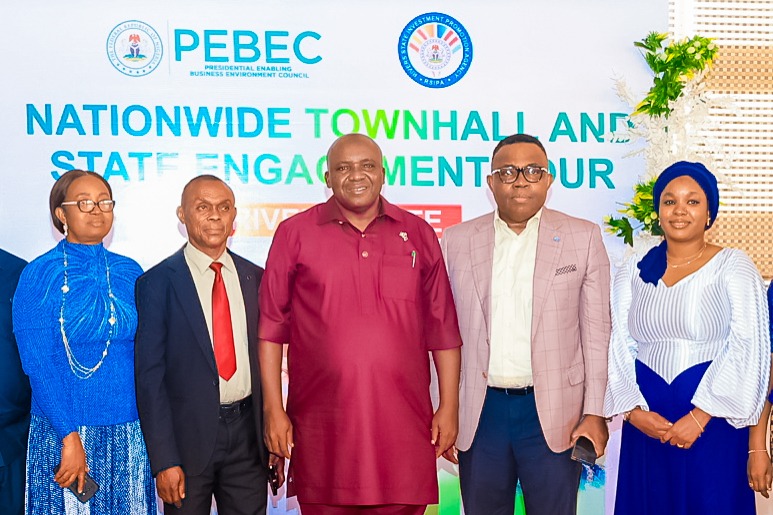
Fubara reaffirms commitment to business-friendly reforms as Rivers State seeks to attract investment, create jobs and boost economic growth

Kano Drainage Crackdown as government halts construction and seals buildings over illegal structures blocking waterways and causing flood risk
-
Politics2 years ago
13 Ondo Assembly Members Disown Endorsement of Aiyedatiwa
-
Politics2 years ago
APC Group, Ondo Govt, Quarrel Over Money for Endorsement
-

 Trending News5 years ago
Stop unsavoury, inciting statements – DSS warns
-

 Others4 years ago
Adron Homes Celebrates 10 Years Of Housing Excellence
-

 Humanity4 years ago
President Buhari Commiserates With Ambassador Maureen Tamuno Over The Loss Of Her Father
-

 Others7 years ago
EX- CUSTOMS BOSS, IBRAHIM MERA’S DWINDLING FAME
-

 Business2 years ago
Bigi Carbonated Soft Drinks Treats 40 Consumers to an Epic Easter Movie Hangout
-

 Business2 years ago
Wema Bank Shines at Global SME Finance Forum Conference Awards 2024 …Awarded: • SME Financier of the Year (Africa) • Platinum Award for Best Financier for Women Entrepreneurs (Africa)