
Politics
2027: INEC’s Coup Against Dapo Abiodun


Dapo Abiodun Senate ambition draws criticism as political commentary questions leadership record and electoral value ahead of 2027 contests

I have never been tired of telling people that the best education I had was acquired during my A’ Level years in the 80s.
Also read: LG autonomy in Ogun state: Will governor Dapo Abiodun finally credit local government allocations directly amid nulge’s ultimatum?
It was my first exposure to maturity and discernment, the age of consciousness when I started living on my own terms and could define why I do certain things.
One of my subject combinations was economics and the subject in which I had a Distinction at my school certificate level was expanded into three complex learnings handled by three different teachers.
This was when I was able to unilaterally and psychologically summarize the whole subject area which we have of then defined as the “social science which deals with human behavior in relation to ends and scarce means with alternative uses”.
Economics is simply about “Choices” or decisions that we make among “alternatives”; where the Opportunity Costs are about what we forego or a decision that we “refused” to make.
In later years, I have had to make practical decisions on my own from a B-Cost factor perspective; in making several choices on the basis “of what Benefit and at what Costs”.
This decision making process has proven to be beneficial at all critical crossroads.
The Independent National Electoral Commission appears to have carried out an administrative coup against so many politicians who have come unprepared, with a rescheduled time table which abridged the grace period and lifespan of some outgoing Governors, including that of Mr. Dapo Abiodun of Ogun State.
Mr. Abiodun is touted among the list of those eyeing a transition from Governor to Senate (though one would have thought a serious and truly hardworking Governor would wish to be allowed to rest on a Leave of absence after the 8 years exertion).
It is therefore important to X-ray this chance in case it is true, using the B-Cost factor lens. What are the “Benefits” that Mr. Abiodun brings to the table, and at what “Costs” to Mr. President, Asiwaju Bola Ahmed Tinubu, to the people of Ogun State; and to the people of Ogun East Senatorial District where he hopes to represent.
In 2019, Asiwaju Bola Ahmed stood firmly on the side of Dapo Abiodun to pick the APC party ticket and was also for him all through the general elections.
The simple narrative was that a lot of heads combined to “assist” Dapo Abiodun win with a paltry 19,000 votes margin. How did he pay back the President?
The whole narrative of the 2023 elections was summarized in the “Eleyi” sobriquets, where he openly canvased, mocked and disrespected Asiwaju in the Primaries.
He sang denigrating songs before the Ogun State Delegates in Abuja to mock the man who gave all in his power to support Dapo Abiodun to become the Governor.
Even during the Presidential elections, he traded off the victory of Asiwaju in his polling unit (where he personally voted) and in his entire Iperu Ward.
Money allegedly released to him to support security operations and as honorarium to traditional rulers that received Asiwaju in audience at the Cultural Centre in Abeokuta before the elections remains unpaid till this moment, only to keep those for his own re-election two weeks later.
But as Karma will have it, Dapo Abiodun himself lost his 2023 Governorship elections, especially in his Senatorial District and was again “assisted” mainly through the legal process.
It is clear that someone who was assisted to win elections in two consecutive circles has no particular values to add to the re-election of Asiwaju Bola Ahmed Tinubu. On the contrary, his plan was to lurk under the shadow of the President’s popularity to worm his way into the Senate.
The question then is, can the President carry a political liability into the next phase of contest where he needs to get the maximum votes that he can get.
The reason for the lack of lustre Dapo Abiodun’s performance during the 2023 elections was basically in the universe of values, a disconnect from the people.
Mr. Abiodun’s government and economic policies target only Mr. Abiodun and no one else. Projects benefit only him and his circle of cronies (not more than two).
Appointments were given as a charity and usually at the last minute for political expediency.
People who were appointed don’t even get to see him, he doesn’t pick their calls, no cabinet meetings because he feels he does not need them, they do not occupy any space in his political trajectory.
The people were appointed only to say “Thank You” because there is no work for them except to fill up blank spaces some according the law, and others just for the optics.
With this kind of mindset and motive, win or lose at the Primaries, Dapo Abiodun has no more need of all these people.
For someone who had lost two previous elections, the next contest is not considered from a test of popularity but of potential manipulation to ride on the crest of Asiwaju Bola Ahmed Tinubu’s popularity and not on his own.
So, he does not need any worker to mobilise public support for him but a handful of men, especially through INEC who can execute the manipulation and they will also be discarded after the ballots.
Procurement has been his political template. Those elders that have been on monthly payrolls would have outlived their relevance and the tap will be closed.
The Leaderships of the transport unions that he patronised all through would have expired in their usefulness and all that would be left is to appoint some last minute undertakers to consolidate on his own economic benefits derivable from that venture.
The party leaderships have no place in Dapo Abiodun’s next agenda with or without a ticket in his hands. As a Governor, he had the opportunity of putting thousands of people to work, as a Senator, he can only appoint six trusted people as Aides. Dapo Abiodun’s brand of politics is not of populism or popularity, but strictly a business affair.
With INEC’s new time table however, Dapo Abiodun has just about sixty days to play the “nice man” card. He will pick calls and hold meetings in the next 60 days; he will pretend to be a listening Governor; he will be less caustic; he will be jovial and gentle even to the most stupid ideas, after all it is just a matter of time.
The carnival will soon be over. Worse still, once he loses the ticket, he will make hell for those who collect money from him and fail to deliver their Constituencies as he had done in the past when he lost the Ogun East Senatorial ticket and in subsequent elections when he went after those who collected money from him during the election process.
For those singing Dapo Abiodun’s Hosanna today, their Hallelujah has been muffled within the next 60 days of a sprint run.
The Rule of Epicharmus suggests knowing how has treated another person before, Dapo Abiodun is not that kind of leader who needs the crowd, he is sufficient only in himself and his epicurean lifestyle.
Also read: EDITORIAL: Governor Dapo Abiodun’s Politics of Vindictiveness Is Tearing Ogun Apart
He can never any people’s choice but an Opportunity Cost and an alternative forgone in any political process.


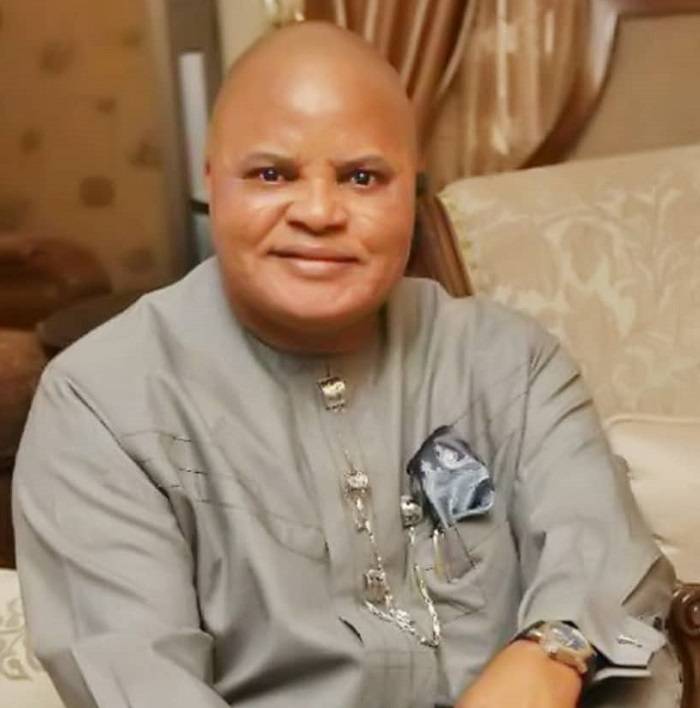
A group, the Imo First Group (IFG) has described the purported Magistrate court order to arrest Senator Ifeanyi Araraume and the former governor of Imo State, Rochas Okorocha, over alleged criminal conspiracy and forgery, as a ruse and fake news
The group stated this in a statement issued on Saturday in Abuja.
IFG challenged those peddling the fake news to make the court order public.
The statement reads ” The fabricated and concocted story was first posted on social media by Hon. Ambrose Nwaogwugwu, a media aide to Governor Hope Uzodimma, before it was picked up by other media outfits, including Arise TV.
According to the statement, those behind the report claimed that a Senior Magistrate Court sitting in Abuja issued a Bench Warrant dated September 9, 2026, following a petition written by the Resident Electoral Commissioner (REC) in Imo State, Barr. Chukwuemeka Ibejiako, to the Police and DSS on October 8, 2026, over alleged presentation of fake APC primary results.
The Group debunked the existence of any such order.
“We want to state categorically and unequivocally that no jSenior Magistrate ordered or issued any bench warrant for the arrest of Araraume”
IFG however challenged anyone in possession of the purported court order to publish it.
“If you claim to have a court order present same for the public to see,
“This fabricated bench warrant contain in the report is filled with inconsistencies, the bench warrant was dated September 9, 2026, while the REC’s petition that supposedly triggered it was dated October 8, 2026, with case number CR/M/084/2026.
The statement further stated that the purveyors and harbinger of the fake news tried to trick the magistrate via exparte order but was rebuked
“The magistrate bluntly refused to grant their exparte and threatened to arrest them, yet they carried their falsehood about. What’s the problem of occupants of office that never won free and fair elections and tried to destroy reputable Imo sons that have won elections. We challenge anyone in this macabre surugede dance to show the court order or warrant of arrest. It’s preposterous to blackmail decent Imo sons on the altar of dirty politics.”

News
Panic-stricken Enugu APC begins flag-off of already flagged of roads in Nsukka after PDP’s Chijioke Ugwu’s homecoming

-
Politics3 years ago
13 Ondo Assembly Members Disown Endorsement of Aiyedatiwa
-
Politics3 years ago
APC Group, Ondo Govt, Quarrel Over Money for Endorsement
-

 Trending News5 years ago
Stop unsavoury, inciting statements – DSS warns
-

 Others5 years ago
Adron Homes Celebrates 10 Years Of Housing Excellence
-

 Humanity5 years ago
President Buhari Commiserates With Ambassador Maureen Tamuno Over The Loss Of Her Father
-

 Others7 years ago
EX- CUSTOMS BOSS, IBRAHIM MERA’S DWINDLING FAME
-

 Business2 years ago
Bigi Carbonated Soft Drinks Treats 40 Consumers to an Epic Easter Movie Hangout
-

 Business2 years ago
Wema Bank Shines at Global SME Finance Forum Conference Awards 2024 …Awarded: • SME Financier of the Year (Africa) • Platinum Award for Best Financier for Women Entrepreneurs (Africa)