
Economy
Nigeria Food Inflation Rises Amid Skyrocketing Fuel Prices

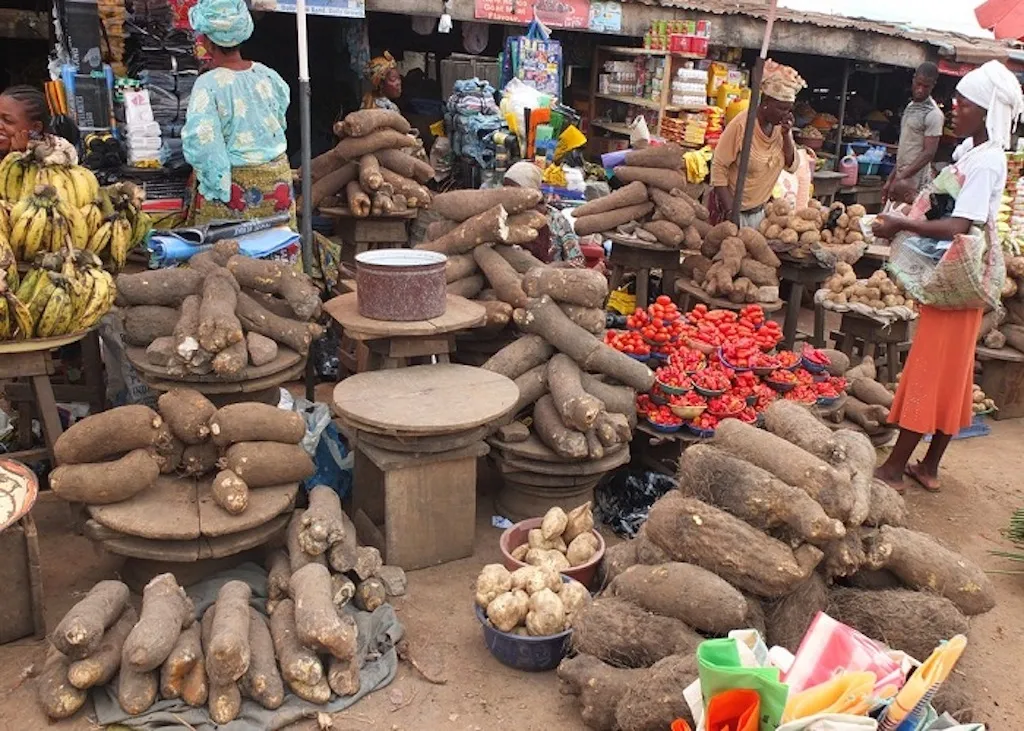
Nigeria food inflation rises to 12.12% in February 2026 as fuel and energy costs surge, worsening household cost of living

Nigerians are grappling with rising living costs as food inflation climbed to 12.12 percent in February 2026, up from 8.89 percent in January, according to data released by the National Bureau of Statistics (NBS).
Also read: Inflation: Real reason Indomie reduced Prices of Popular Staple Food item Revealed
The rise comes amid soaring petrol and energy prices, with fuel retail rates in Abuja reaching N1,330 per litre in some stations following multiple hikes by Dangote Refinery, which last week raised its gantry petrol price to N1,175 per litre.
This prompted a N100 per litre increase at MRS filling stations and N50 at Optima, while other stations including NNPC, Raniol, AA Rano, Empire Energy, and NIPCO charge between N1,261 and N1,330 per litre.
NBS attributed the food inflation spike to price increases in staples including beans, carrots, okazi leaf, cassava tuber, crayfish, millet flour, yam flour, snails, ogbono, and cowpeas.
While overall headline inflation fell slightly by 0.04 percentage points to 15.06 percent, experts warn that this offers little relief for households, as the cost of essential goods continues to rise.
Economic analyst Ayo Teriba described February’s food price surge as influenced by seasonal factors.
“After the holidays in January, economic activity picks up, and prices typically rise in February,” he said, adding that short-term volatility could either signal a new inflationary trend or normal seasonal fluctuations.
Professor of accounting and finance Godwin Oyedokun said the modest decline in headline inflation is largely statistical and provides minimal comfort.
“Food inflation is particularly concerning because it constitutes the largest share of household expenditure,” he explained, noting that rising prices directly erode purchasing power and deepen poverty.
Oyedokun highlighted structural challenges in agriculture, energy, and logistics as key drivers.
“High petrol and electricity costs increase production and transport expenses. Insecurity disrupts farming, while post-harvest losses and logistical issues constrain supply,” he said.
He described the situation as cost-push inflation, where rising production costs are passed on to consumers.
Oyedokun called for stronger policy actions, including improving agricultural security, investing in storage and transport infrastructure, and providing targeted energy and logistics support.
“The government must focus not only on inflation figures but also on household welfare, purchasing power, and food accessibility. Sustainable inflation control requires fiscal, monetary, and structural reforms,” he said.
Also read: Nigeria Inflation Eases to 15.06% in February 2026
With fuel and energy costs continuing to rise amid global geopolitical tensions, economists warn that ordinary Nigerians may face persistent hardship unless targeted interventions are implemented.


Economy
Governor Dauda Lawal woos investors, highlights Zamfara’s economic opportunities at CEO Forum


Zamfara State Governor, Dauda Lawal, has called for stronger collaboration between government, businesses and investors to unlock private capital and drive inclusive economic growth in the state.
Lawal made the call while delivering a Special Policy Address at the 2026 CEO Forum organised by the Global Compact Network Nigeria in Lagos.
The forum, held under the theme “Financing a Dignified Future: Aligning Business Action, Policy and Capital,” brought together chief executives, senior government officials, industry leaders, diplomats, trade commissioners and international development partners.
Participants were drawn from key sectors of the economy, including oil and gas, energy, manufacturing, construction and infrastructure.
The governor spoke on the growing competition among states for increasingly selective private capital and the factors that could transform an economic opportunity into an investable proposition.
He explained how his administration was working to bridge the gap between available economic opportunities and investment, with emphasis on building investor confidence while ensuring that investments deliver meaningful outcomes for the people of Zamfara.
According to him, attracting investment requires more than identifying economic opportunities, but also creating the conditions, policies and partnerships capable of giving investors confidence to commit capital.
The forum provided a platform for business leaders, government officials and investors to examine ways of aligning business strategies, public policies and capital deployment to unlock productive investment.
Discussions also focused on identifying businesses, sectors and projects with strong potential but facing difficulties in accessing financing, as well as measures to make such opportunities more attractive to investors.
The organisers also introduced the concept of the “Dignity Dividend,” examining how investment-led growth could translate into better jobs, stronger businesses, increased productivity, local value creation and broader economic participation.
Another key component of the forum was the identification of actionable commitments and partnerships that participating institutions could advance over the next six to 12 months.
Notable speakers at the event included chief executives of First Bank Group, Access Bank, Flour Mills of Nigeria Plc, Nigeria Economic Summit Group, Nigerian Exchange Group, Chellarams Plc, SecureID Group and Greenwich Merchant Bank Plc, among others.
The organisers said the session would culminate in a live showcase of the Business Value and Sustainability Platform (BVSP), described as a standing coalition of business, capital and policy actors designed to sustain the dialogue.
The platform is also expected to contribute to shaping Nigeria’s private-sector engagement during the United Nations General Assembly High-Level Week.
The governor’s participation in the forum comes as Zamfara seeks to strengthen its economic base, attract productive investment and create opportunities that can support sustainable livelihoods and wider participation in the state’s economy.
-
Politics3 years ago
13 Ondo Assembly Members Disown Endorsement of Aiyedatiwa
-
Politics3 years ago
APC Group, Ondo Govt, Quarrel Over Money for Endorsement
-

 Trending News5 years ago
Stop unsavoury, inciting statements – DSS warns
-

 Others5 years ago
Adron Homes Celebrates 10 Years Of Housing Excellence
-

 Humanity5 years ago
President Buhari Commiserates With Ambassador Maureen Tamuno Over The Loss Of Her Father
-

 Others7 years ago
EX- CUSTOMS BOSS, IBRAHIM MERA’S DWINDLING FAME
-

 Business2 years ago
Bigi Carbonated Soft Drinks Treats 40 Consumers to an Epic Easter Movie Hangout
-

 Business2 years ago
Wema Bank Shines at Global SME Finance Forum Conference Awards 2024 …Awarded: • SME Financier of the Year (Africa) • Platinum Award for Best Financier for Women Entrepreneurs (Africa)