
Aviation
FLYGABON Launches Lagos Flights to Boost African Travel


FLYGABON Lagos flight operations launch as Gabon’s airline expands to Nigeria, boosting African connectivity with faster routes and new travel options

Gabon’s national airline FLYGABON has officially launched flight operations from Lagos, Nigeria, on Tuesday, May 12, 2026, marking a significant expansion of its regional network aimed at improving air connectivity across West, Central and Southern Africa.
Also read: Gusau Airport Sees First Aircraft Landing in Zamfara State
FLYGABON Lagos flight operations launch follows the airline’s earlier entry into Nigeria via Port Harcourt in January 2025, as part of its broader strategy to deepen access to one of Africa’s most active aviation markets.
The carrier now operates 10 weekly flights into Nigeria, with six services from Port Harcourt and four from Lagos, reinforcing its growing footprint in the country’s aviation sector.
A key highlight of the expansion is the Lagos to Johannesburg route, which the airline says significantly reduces travel time for passengers, offering a journey duration of approximately 7 hours 40 minutes door-to-door compared to longer alternative routes that can exceed 12 hours.
FLYGABON stated that its flight schedule has been structured with daytime departures and arrivals to enhance passenger convenience and improve operational safety across both Lagos and Johannesburg.
The airline also connects Lagos travellers to more than 19 African destinations via its Libreville hub, including Douala, Brazzaville, Malabo, Kinshasa and São Tomé, among others, strengthening intra-African mobility.
Chairman of FLYGABON, Marc Gaffajoli, said Nigeria remains central to the airline’s long-term expansion strategy, describing Lagos as a critical gateway for business and regional movement across the continent.
He emphasised that the airline’s focus is not solely on low fares but on operational efficiency, sustainability and a structured network designed to improve connectivity across Africa.
Country Director for Cameroon and Nigeria, Fadimatou Noutchemo, said the FLYGABON Lagos flight operations launch is designed to ease travel challenges faced by Nigerian passengers, including long journey times and limited route flexibility.
She noted that the new services are particularly beneficial for business travellers, traders and leisure passengers seeking improved access to African destinations.
FLYGABON also confirmed that fares for the Lagos to Johannesburg route start from ₦704,900, with added benefits such as two 23kg baggage allowances in economy class, flexible ticket options and onboard meal services.
The airline operates Airbus A320 and Bombardier CRJ aircraft and is certified under International Air Transport Association (IATA) standards, maintaining IOSA certification for safety and operational compliance.
Also read: IATA Warns Airline Industry Struggles with Green Fuel
With over two decades of operational experience, FLYGABON said its Lagos entry reflects a long-term commitment to improving regional air travel, reducing journey times and expanding affordable connectivity across Africa.



By Karen Ibrahim
Governor Dauda Lawal of Zamfara State is pursuing an unusual fiscal strategy: financing major development projects while avoiding new commercial bank loans, despite spending years in the banking industry facilitating credit for governments and public institutions.
Lawal, who previously served as Executive Director, Public Sector North, at First Bank of Nigeria, assumed office in May 2023 and has since prioritised revenue generation, spending discipline and strategic partnerships to fund his administration’s projects.
One of the most notable projects is the Gusau International Airport, reportedly constructed at a cost of approximately ₦75 billion. His administration has also embarked on road construction, school rehabilitation, healthcare improvements and market development without relying on new commercial bank borrowing to finance its projects.
The approach raises an important question: how has a former banker who understands government borrowing and credit facilities chosen to pursue development while limiting commercial debt?
Zamfara’s Debt Profile Records Significant Decline
According to data cited from BudgIT’s State of States report, Zamfara State’s public debt declined from ₦136.70 billion at the end of 2023 to ₦104.42 billion by December 2024, representing a reduction of approximately 23.6 per cent.
The administration has also clarified that the reported ₦14.26 billion in borrowing relates to the outstanding balance of a ₦20 billion bond issued by the previous administration for the cargo airport project, rather than a new borrowing initiative by the current government.
The figures have placed the state’s approach to public debt and infrastructure financing under scrutiny, particularly given the scale of its development needs.
IGR Surges as Lawal Pushes Revenue Generation
A central part of the administration’s fiscal strategy has been the expansion of Internally Generated Revenue (IGR).
BudgIT data cited in the report shows that Zamfara’s IGR increased from ₦6.51 billion in 2022 to ₦22.16 billion in 2023, representing growth of approximately 240 per cent. The state’s total revenue also rose from ₦87.68 billion to ₦144.95 billion over the same period.
IGR reportedly increased further to approximately ₦25.46 billion in 2024.
The growth has been attributed largely to improved personal income tax collections, which reportedly doubled to ₦12.18 billion in 2023.
The administration is seeking to build on this progress by reducing the state’s dependence on allocations from the Federation Account and attracting private investment into agriculture, manufacturing and solid minerals.
In July 2026, a proposed $200 million lithium mining and processing investment in Zurmi was announced, potentially opening new opportunities for employment, local processing and revenue generation. The project’s implementation and eventual economic impact remain important factors to monitor.
From Roads to Healthcare: Where the Money Is Going
Despite the constraints associated with limited borrowing, the Lawal administration has pursued projects across several sectors.
In infrastructure, the government has prioritised road construction, urban renewal and rural connectivity, including approximately 70 kilometres of feeder roads and the development of 40 markets comprising about 4,000 shops, according to the account.
In security, the administration has invested in strengthening security operations and established Community Protection Guards to support efforts against insecurity across the state.
The education sector has also received attention, including efforts to address inherited financial obligations. These include ₦1.4 billion in outstanding WAEC debts accumulated between 2018 and 2022, alongside other liabilities.
In healthcare, projects include the upgrading of Yariman Bakura Specialist Hospital, rehabilitation and equipping of primary healthcare centres across the state’s 147 wards, installation of solar power systems in health facilities and recruitment of healthcare personnel.
Budgetary commitments to healthcare reportedly increased from ₦31.92 billion in 2024 to ₦64.12 billion in 2025 and ₦87.46 billion in 2026.
The administration has also prioritised agricultural development, economic expansion and women’s empowerment as part of its broader development agenda.
How His Banking Experience Shapes His Fiscal Strategy
Lawal’s years in banking gave him experience dealing with public-sector finances, government deposits and credit facilities.
That background may help explain his administration’s emphasis on debt affordability, repayment obligations and the long-term consequences of borrowing.
Commercial loans can provide governments with capital for infrastructure and other essential projects, but they also create repayment obligations that can place pressure on future budgets.
For Zamfara, which faces significant infrastructure gaps, insecurity and inherited financial liabilities, balancing immediate development needs with long-term fiscal sustainability remains a major challenge.
Rather than relying heavily on commercial bank loans, the administration has also pursued concessional financing and development partnerships, including World Bank-supported programmes such as AGILE, ACReSAL and RAAMP, which target education, agricultural and climate resilience, and rural road development.
Such programmes can provide access to development funding under conditions that differ from conventional commercial borrowing, although their effectiveness ultimately depends on implementation and measurable outcomes.
The Bigger Picture: Can Zamfara Sustain the Momentum?
Governor Lawal’s approach centres on expanding revenue, controlling expenditure, reducing debt exposure and attracting private investment while continuing to finance essential public services.
The proposed lithium investment in Zurmi represents part of the administration’s broader ambition to diversify the state’s economic base. If successfully implemented, projects of this nature could support local employment, expand economic activity and improve future revenue generation.
However, the sustainability of the strategy will depend on whether increased revenues translate into lasting improvements in public services, infrastructure and living standards.
Avoiding commercial bank loans does not automatically guarantee sound fiscal management, just as borrowing does not necessarily indicate financial irresponsibility. The more important considerations are the cost of financing, the government’s ability to meet its obligations and the economic and social returns generated by public expenditure.
For Zamfara State, the key test will be whether the administration can sustain its development projects, improve security, strengthen public institutions and reduce inherited liabilities without creating an unsustainable financial burden for future administrations.
Lawal’s experience as a banker provides an important context for understanding his approach. The results of his fiscal strategy, however, will ultimately be measured by verified financial records, completed projects and tangible improvements in the lives of Zamfara residents

The Gusau International Airport (GIA) in Zamfara state has passed the International Civil Aviation Organisation’s (ICAO) quality assurance tests and inspections ahead of the commencement of commercial operations next month.
The development comes as the airport prepares to begin scheduled commercial flights between Gusau and the Nnamdi Azikiwe International Airport in Abuja.
According to a statement by the state government on Tuesday, XEJet Limited is expected to operate bi-weekly flights on Mondays and Fridays from the first week of October.
An official of a leading Nigerian aviation agency said the airport’s instrument flight procedures had undergone ICAO’s 17-step quality assurance and approval process, with GIA completing and passing all the stages.
The official, who spoke on condition of anonymity because he was not authorised to speak, said the process was part of Nigeria’s efforts to implement corrective measures recommended by ICAO.
ICAO is a specialised agency of the United Nations responsible for coordinating international air navigation standards and promoting the safe and orderly development of international air transport.
Nigeria’s civil aviation system recorded an effective implementation (EI) score of 75 percent after an ICAO audit in 2023.
The official said ICAO conducted a follow-up inspection, known as the ICAO coordinated validation mission (ICVM), in April 2026, during which Nigeria had a significant safety concern (SSC).
He said the concern was resolved within the prescribed 40-day period, although Nigeria was required to implement associated medium-term corrective action plans.
As part of the corrective measures, the instrument flight procedures at several Nigerian airports were subjected to ICAO’s 17-step quality assurance and approval process.
“Of all the airports assessed, only Gusau International Airport (GIA) completed and passed all the 17 steps,” the senior aviation official said.
“The evidence of GIA’s successful completion of this demanding process formed part of the documentation submitted to ICAO.
“Following the ICVM, Nigeria achieved an impressive EI score of 95.1%.”
On September 21, the Zamfara government signed an air route development partnership agreement with XEJet for scheduled commercial flights between Gusau and Abuja.
The agreement is expected to enhance access to Zamfara and open greater opportunities for investors, businesses and visitors.
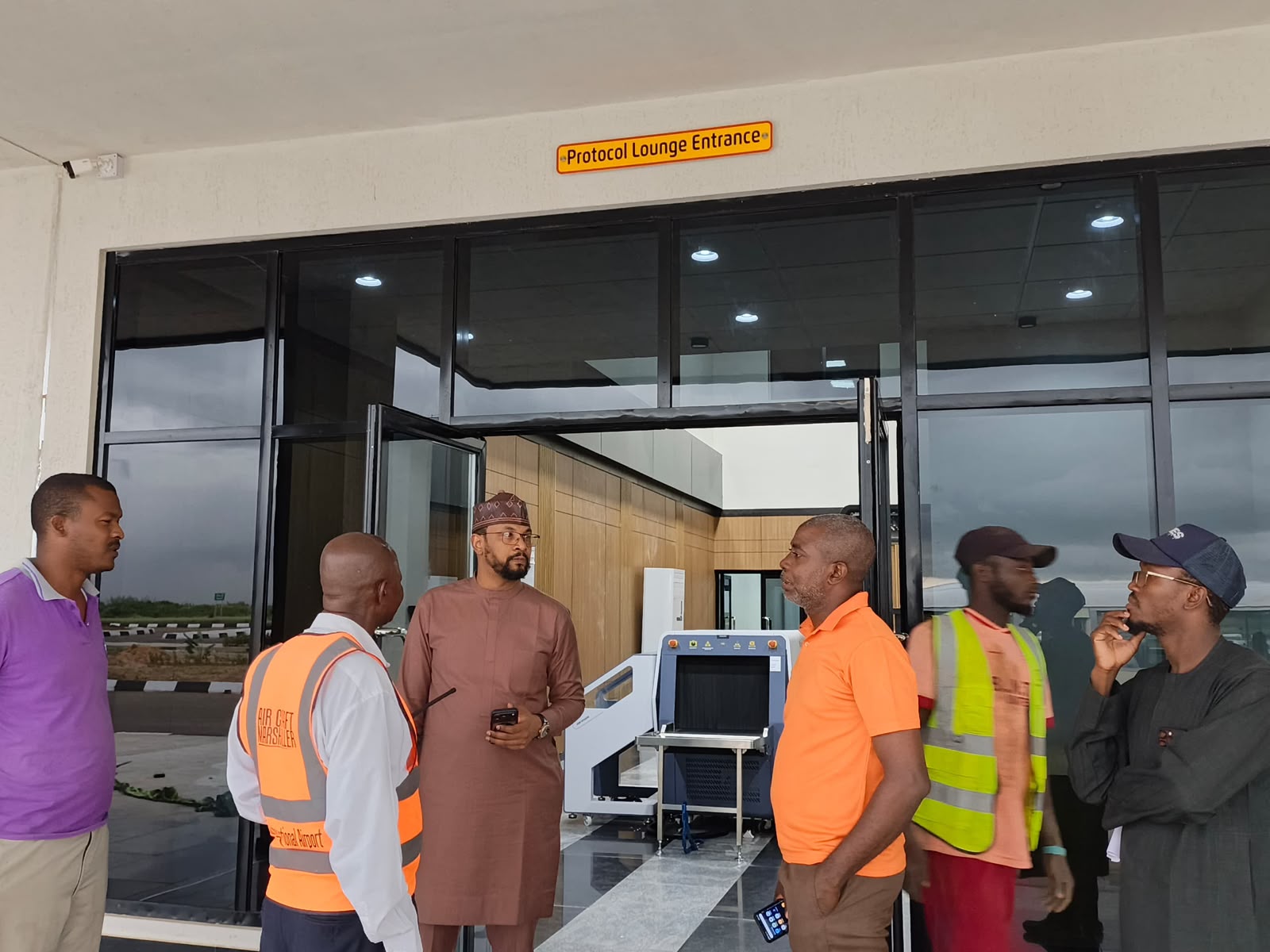
Gusau International Airport internet deployment begins ahead of October 1 commercial operations, with free connectivity planned for passengers and staff
-
Politics3 years ago
13 Ondo Assembly Members Disown Endorsement of Aiyedatiwa
-
Politics3 years ago
APC Group, Ondo Govt, Quarrel Over Money for Endorsement
-

 Trending News6 years ago
Stop unsavoury, inciting statements – DSS warns
-

 Others5 years ago
Adron Homes Celebrates 10 Years Of Housing Excellence
-

 Humanity5 years ago
President Buhari Commiserates With Ambassador Maureen Tamuno Over The Loss Of Her Father
-

 Others7 years ago
EX- CUSTOMS BOSS, IBRAHIM MERA’S DWINDLING FAME
-

 Business3 years ago
Bigi Carbonated Soft Drinks Treats 40 Consumers to an Epic Easter Movie Hangout
-

 Business2 years ago
Wema Bank Shines at Global SME Finance Forum Conference Awards 2024 …Awarded: • SME Financier of the Year (Africa) • Platinum Award for Best Financier for Women Entrepreneurs (Africa)