
Opinion
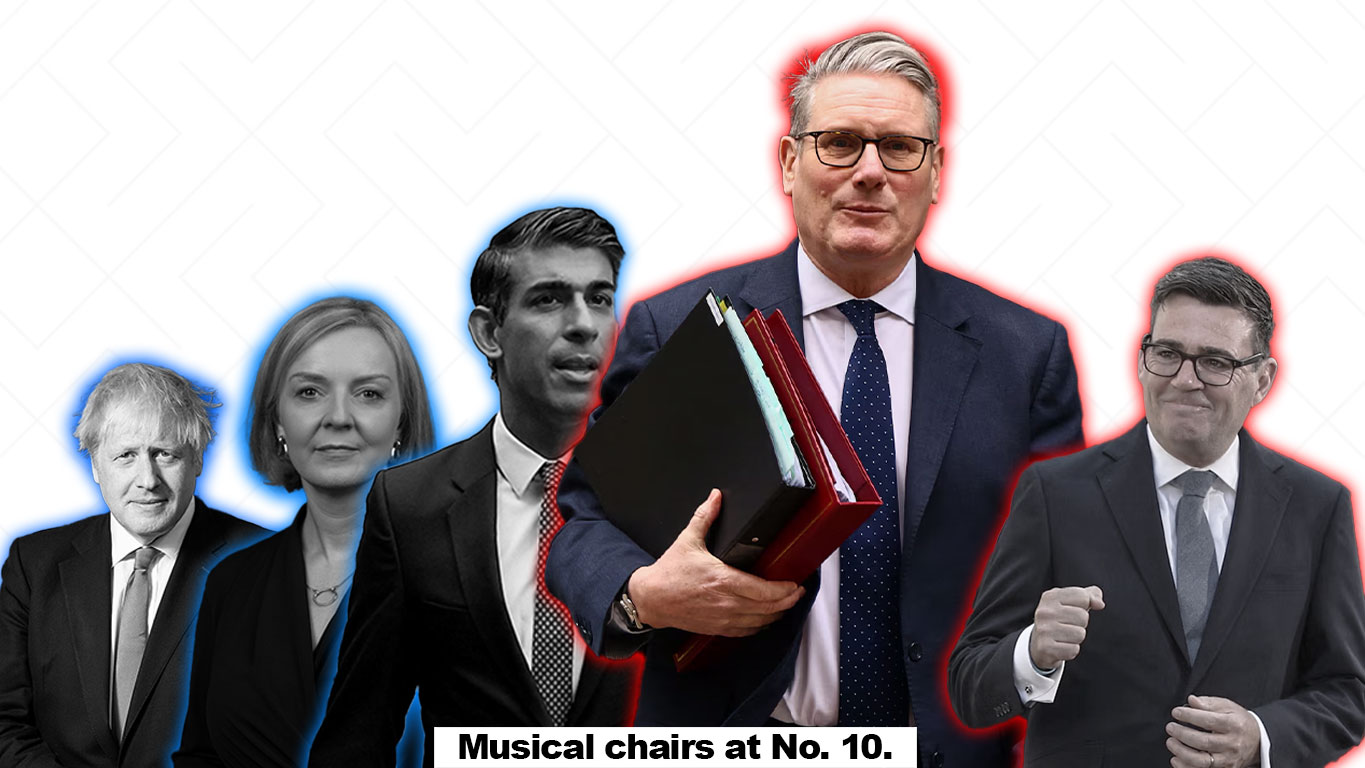
Collapse After a Landslide: Starmer’s Fall May Not be The Last

By Azu Ishiekwene

It was painful to watch him outside No.10 on Monday. Despite his immaculate suit and well-groomed hair, British Prime Minister Sir Keir Starmer looked like he was facing a public execution.
Also read: Governor Dauda Lawal Signs Landmark Education Reform Orders, Rolls Out National Curriculum in Schools
The bespoke podium, which had been in use since David Cameron’s tenure, looked more like a stake, and Starmer’s valedictory like a miserere before the bullets would be discharged.
The carnage that British politics has become has just claimed its sixth prime minister in a decade. Britain is not doing as badly as Italy – yet – which had 50 governments and 15 prime ministers between 1946 and 1994, but at the current rate, it’s not doing badly at becoming Europe’s next Britaly, as The Economist once described it.
Which is all difficult to understand, given that for the two-and-a-half years of his premiership, Starmer never failed to remind voters that he came to power in one of the largest electoral landslides in recent British history.
Not entirely untrue. Labour won 411 of the 650 seats in the House of Commons, a majority of 174 seats over all other parties combined. Starmer’s Labour was the largest party in England, Scotland and Wales, and the first government since 2010 to end 14 years of Conservative rule.
Landslide, backslide
So, what happened? Boris Johnson, who had a chaotic and scandal-ridden premiership, has suggested that Starmer won because the Conservatives collapsed rather than due to voter enthusiasm for Labour.
He told Sky News that Starmer lost because he was a stumbling block who stood in the way instead of providing vision and leadership, virtues that I’m not sure Johnson would recognise, even in plain sight.
He was being half-clear. He conveniently forgot that his wrong-headed decision to remove Britain from the European Union is part of the price his successors, including Starmer, have had to pay. Starmer’s successor, Andy Burnham, will also be paying for it.
A study by researchers affiliated with institutions including the National Bureau of Economic Research and the Bank of England estimated that by 2025, Brexit had reduced UK GDP by between six and eight per cent relative to a non-Brexit scenario.
Business investment was down nearly 18 per cent, while productivity and employment also went down.
Post-Brexit, the British economy has been fragile, and the cost-of-living crisis has taken a toll on the middle class and pensioners. Young British adults are poorer than their parents were.
Complications, complications
Yet, none of this should have come as a surprise to Starmer. He knew that the economy was fragile, that the cost of living was rising, and public services were stretched when he campaigned to provide economic stability, fiscal discipline and a competent government.
When he positioned himself as everything to everyone, that strategic ambivalence helped him to win; it couldn’t keep him in power.
He not only knew the mess that Brexit had left the country in, but he also knew that the country was yet to fully recover from the COVID-19 supply chain disruptions and massive payouts, which added billions of pounds to the national debt, apart from the losses to fraud, estimated by a Reuters report at £10.9 billion.
The US-Israel war on Iran has piled on the chaotic fallouts of the Russia-Ukraine war, raising food prices and energy costs around the world and forcing many UK households to deal with levels of inflation that they had not experienced for years.
Every UK prime minister after Johnson – from Liz Truss to Rishi Sunak and Starmer – has had to contend with the economic legacy of three successive shocks: Brexit, the pandemic, the war in Ukraine, and now, the Middle East crisis.
Politics, poetry and prose
Yet, when politicians campaign, their poetry distorts our common sense, and we’re seduced by the hope that perhaps, just perhaps, it might be different this time.
But Starmer knew there was not much he could do. When he said before the election that Labour would not increase taxes, for example, he knew he would not find the money to plug the hole. So, he was forced to make a U-turn.
When he promised welfare reforms and fiscal discipline, he knew he was speaking with both sides of his mouth. But that was what his voters, especially his base and the campaign groups, wanted to hear.
And when he promised a clean, competent government – a departure from the sleaze years – Peter Mandelson was smiling, waiting to snooker him. The outcome was a shambles for the government’s reputation.
And when Starmer was boasting about a landslide, he knew that the result of the election that brought him to power was more nuanced. It was a victory by default.
While Tony Blair, for example, won 43.2 per cent of the popular vote share in 1997, Starmer won only 33.7 per cent, reflecting a far narrower popular mandate than he cared to admit publicly.
According to a YouGov Poll, among the people who voted Labour in 2024 and then participated in the 2026 local elections, only 46 per cent remained with Labour.
About 22 per cent moved to the Greens, 16 per cent to the Liberal Democrats, while 6 per cent moved to Reform UK.
With a drastic decline in public trust of politicians and public institutions, it’s not surprising that Starmer’s landslide fizzled before he could fully milk it.
The palace coup that forced out the Prime Minister was not because Labour MPs loved him less, but because they love themselves more.
Wheeling in Burnham from the shadows to No.10 was a move by the Backbenchers to buy time and fend off the lunacy of Nigel Farage’s Reform UK Party.
Talking big
Burnham has started by announcing big, obviously more left-wing Labour policies, from removing VAT on domestic electricity bills for six months to restoring the £2 cap on single bus fares across England, and from expanded housebuilding to greater public investment outside London.
He has also talked about increasing defence spending, while whispers of “nationalisation” have even been heard.
But it won’t be long before he might stumble on the question that has snagged his six predecessors: where will the money come from? Once upon a United Kingdom, when the country was at the peak of its powers, it controlled nearly 20 per cent of the world’s manufacturing output, which, of course, was after it robbed India, among others, of its pre-industrial manufacturing dominance and converted it into a primary producing country.
At the height of Britain’s influence, one-quarter of the earth’s surface was its farmland. Those days are gone.
Copying Italy?
The world has changed since Britannia ruled the waves. While Britain remains one of the world’s leading economies, its current sunset phase has taken a heavy toll on its prosperity.
Strong alignment with NATO and the European Community, which later became the EU, helped Italy navigate its turbulent years. Unfortunately, Britain chose to leave the EU when it needed it most.
The last thing the country needs is a premier who sells hope at a high price. Burnham positioned himself as a beacon for his stranded Labour Party.
Also read: Governor Dauda Lawal Signs Landmark Education Reform Orders, Rolls Out National Curriculum in Schools
Yet his record in Manchester urges caution. Already, he is making expensive, even extravagant promises that may come back to bite him. At this rate, he may well not be the last prime minister before the general election in 2029.


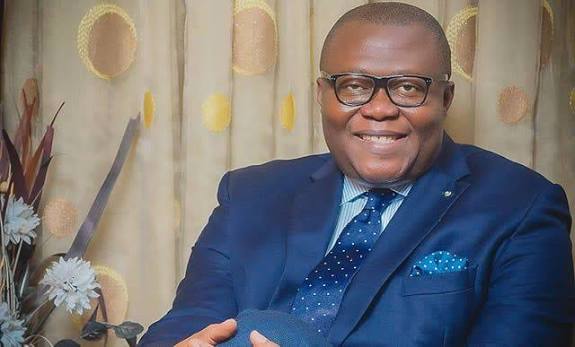
Writer Ehi Braimah has called on Rotary clubs across West Africa to prioritise lasting partnerships over short-term projects as the region prepares for the 2026 West Africa Project Fair.
The Fair, hosted by Rotary International Districts 9111 and 9112, is scheduled to hold from November 10 to 17 at the Balmoral Convention Centre, Sheraton Hotel, Ikeja, Lagos.
It will be flagged off by Rotary International President Olayinka Babalola and is expected to draw clubs, Rotarians, Rotaractors and international partners from nine districts across the region.
Braimah noted that the theme, “Partnerships for Lasting Impact,” reflects a shift from simply launching projects to ensuring that interventions continue to serve communities long after commissioning.
He argued that many development challenges in West Africa — including healthcare, education, water, sanitation, food security and environmental issues — transcend national borders and require collaborative solutions.
According to him, a common weakness in development work is the “project mentality,” where attention focuses on starting and completing initiatives rather than guaranteeing their long-term usefulness.
Braimah stressed that true partnerships go beyond sponsorship. They involve shared responsibility, technical expertise, institutional support, monitoring and local ownership.
He said the Project Fair offers a marketplace for clubs seeking funding or technical help to connect with partners who can provide resources, knowledge or institutional backing.
The column concluded that lasting impact is achieved when Rotary’s community presence is combined with the strengths of governments, businesses and development organisations, creating solutions that communities can sustain.
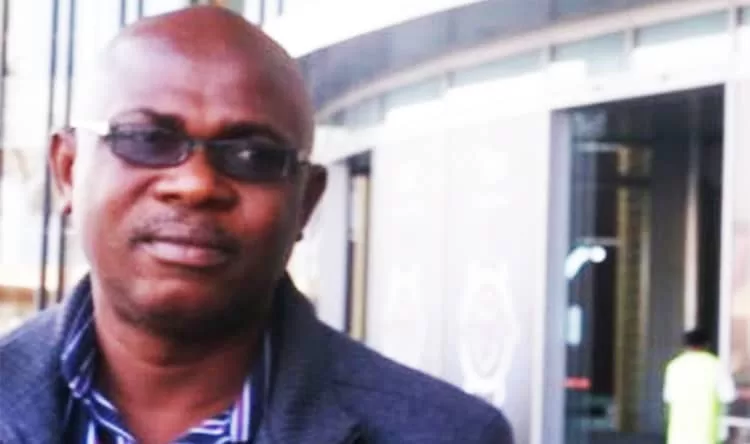
Columnist Ikeddy Isiguzo has raised fresh questions about the Lagos-Calabar Coastal Highway project and President Bola Tinubu’s second-term campaign strategy.
In his latest piece, Isiguzo criticised what he described as inconsistencies in explanations offered by Works Minister David Umahi regarding changes to the multi-billion-dollar highway.
He argued that the project, originally presented as a flagship infrastructure plan, has faced technical and financial challenges that were not adequately addressed at the outset.
Isiguzo recalled earlier concerns he raised in 2024 about the absence of detailed technical designs, environmental assessments and competitive bidding processes.
He also commented on the political dimensions of the project, noting recent statements by the minister linking adjustments to the route with presidential directives.
Turning to the 2027 elections, the columnist suggested that President Tinubu appears reluctant to campaign extensively across the country, preferring to rely on party structures and selected regional appearances.
Isiguzo listed proposed campaign locations and questioned the exclusion of certain states, interpreting the itinerary as a sign of limited political confidence.
He further criticised the ruling party’s internal dynamics, including competition among senior figures for future positions.
The column concluded with a brief reference to recent comments by the Edo State APC chairman on Peter Obi, describing them as extreme.
Isiguzo’s article continues his pattern of sharp commentary on governance and infrastructure under the current administration.
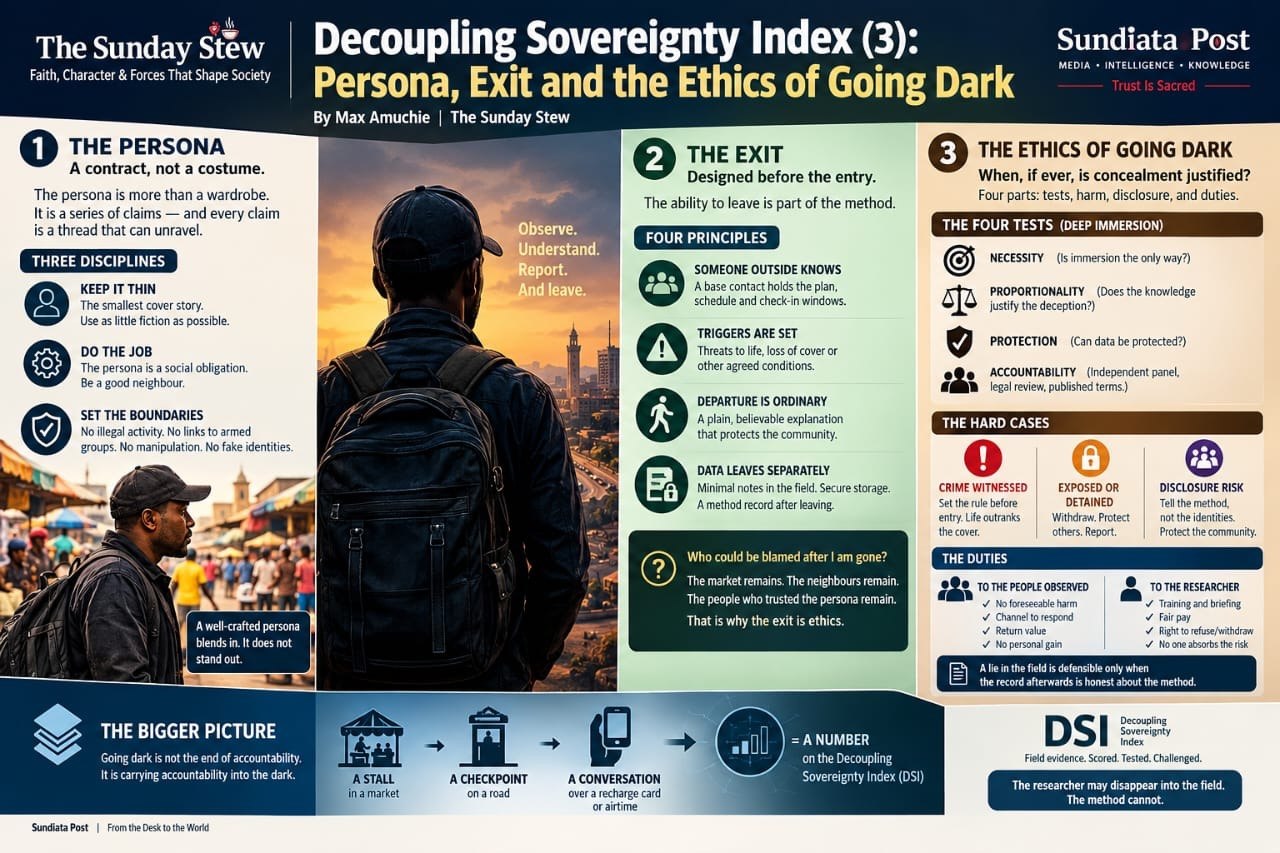
In the latest instalment of his Decoupling Sovereignty Index series, Max Amuchie examines the ethical obligations that arise when researchers adopt temporary identities to study decoupled zones.
Writing in The Sunday Stew, the Sundiata Post CEO and theorist argues that any methodology requiring a researcher to live under a borrowed role creates three unavoidable duties: the role must be disciplined, the researcher must be able to leave, and the deception must be ethically justified.
Amuchie treats the persona as a contract rather than a costume. He advises keeping the cover story thin, performing the assumed job properly, and setting clear boundaries before entering the field. These boundaries include never participating in illegal activity, never passing information to armed groups, never manipulating relationships solely to extract information, and never assuming the identity of a real person.
He stresses that the exit must be designed before entry. At the Sundiata Post Knowledge Lab, no researcher enters a zone until the exit plan is written down. This includes external check-ins, pre-agreed triggers for withdrawal, an ordinary departure story, and separating data from the person so that the community is not exposed after the researcher leaves.
On the ethics of “going dark,” Amuchie applies four tests: necessity, proportionality, protection and accountability. Immersion is justified only when remote or rapid methods cannot answer the research question.
The knowledge gained must outweigh the deception, and no observed person should face foreseeable harm. An independent panel must review and can veto any covert plan.
He addresses three hard cases: what to do if the researcher witnesses a crime, what happens if the persona is exposed, and how to disclose the method without endangering people. Life outranks the cover. Where imminent danger exists, the researcher must warn or withdraw even if it ends the assignment.
Amuchie insists that the duty runs both ways. The people observed must not pay a price for the findings, and the researcher must be trained, fairly paid and free to refuse or withdraw without penalty.
The column concludes that a lie in the field is defensible only when the later account is fully honest about the method. The people may be protected; the method may not.
Part 4 of the series will examine how field evidence is translated into scores on the Decoupling Sovereignty Index.
-
Politics3 years ago
13 Ondo Assembly Members Disown Endorsement of Aiyedatiwa
-
Politics3 years ago
APC Group, Ondo Govt, Quarrel Over Money for Endorsement
-

 Trending News5 years ago
Stop unsavoury, inciting statements – DSS warns
-

 Others5 years ago
Adron Homes Celebrates 10 Years Of Housing Excellence
-

 Humanity5 years ago
President Buhari Commiserates With Ambassador Maureen Tamuno Over The Loss Of Her Father
-

 Others7 years ago
EX- CUSTOMS BOSS, IBRAHIM MERA’S DWINDLING FAME
-

 Business2 years ago
Bigi Carbonated Soft Drinks Treats 40 Consumers to an Epic Easter Movie Hangout
-

 Business2 years ago
Wema Bank Shines at Global SME Finance Forum Conference Awards 2024 …Awarded: • SME Financier of the Year (Africa) • Platinum Award for Best Financier for Women Entrepreneurs (Africa)