
Opinion
Cross-Border Digital Services Emerge as New Driver of Nigeria’s Economy — Experts


Nigeria’s growing digital workforce is opening a new channel for cross-border trade as software developers, consultants, financial professionals, educators and other service providers increasingly work from the country for clients across Africa, Europe and North America.

The development is expanding the country’s non-oil economic activity beyond the traditional export of physical goods, with high-speed telecommunications enabling professionals to deliver services internationally without moving people or physical products across borders.
Industry experts said the trend is also increasing the economic importance of sustained investment in telecommunications infrastructure, as unreliable connectivity can directly affect the ability of digital businesses and remote professionals to meet international contracts and delivery schedules.
They spoke during an economic dialogue co-hosted by financial planner Kalu Aja and chartered accountant Oluwatosin Olaseinde, founder of digital investment platform Ladda, on Sunday, September 20, 2026.
Olaseinde said telecommunications investment was creating productive capacity for the wider economy by enabling Nigerians to participate in increasingly decentralised forms of work.
“On a retail level, it’s not just them investing in capital expenditure—it’s actually creating economic capacity, productive capacity for the Nigerian economy,” she said.
She pointed to the growing number of Nigerians working remotely for clients and organisations outside their immediate locations.
“Remote workers can actually work. People are sitting in Lagos with clients in Nairobi, New York, London. Online tutoring—somebody sitting in Lagos tutoring children in Kaduna, in Nairobi, just all over,” Olaseinde said.
According to her, greater access to connectivity also exposes Nigerian professionals to international markets and standards, potentially improving the quality of services delivered from the country.
“It also raises the level of competence and service delivery in Nigeria… The excellence level goes up,” she insisted.
The expansion of cross-border digital services, however, places greater emphasis on network reliability. For professionals whose work depends on international clients, interruptions to connectivity can affect online meetings, project delivery, cloud applications, payments and other business processes.
Aja said the scale of investment required to maintain that connectivity was often underestimated because much of the infrastructure supporting the digital economy remained largely invisible to consumers.
Citing MTN Nigeria’s financial disclosures, he pointed to cumulative capital expenditure of about ₦1.62 trillion, covering network infrastructure and related investments.
“In every local government area in Nigeria there is an MTN somewhere,” Aja said, adding “You’ll either find a tower or you’re going to find someone selling recharge cards. That’s the depth and level of their contribution to Nigeria so far… If that all goes away, it’s a massive hole nobody can fill.”
The discussion highlighted the wider relationship between telecommunications investment and economic activity as businesses increasingly depend on digital platforms to reach customers, process transactions and deliver services.
Nigeria’s telecommunications sector accounted for 9.19 percent of GDP in the first quarter of 2026, according to the official figure cited during the discussion, underscoring the sector’s growing contribution to economic output.
Beyond domestic commerce, the growth of remote work and digitally delivered services provides Nigerian professionals with access to markets where contracts and payments are denominated in foreign currencies. It also allows firms to expand their client base without establishing physical operations in every market they serve.
Olaseinde also drew a distinction between foreign direct investment and foreign portfolio investment, arguing that long-term capital commitments can have a broader effect on employment and productive capacity.
“FPI is like a one-night stand. FDI is like a marriage,” she said, arguing that direct investment tends to involve longer-term commitments and can create jobs and productive capacity.
The experts also discussed the contribution of large corporates through taxes, dividends and continued investment. MTN Nigeria, for instance, paid ₦419.9 billion in dividends and ₦429 billion in taxes in 2025, according to the figures cited during the discussion.
For the expanding digital-services economy, the implications extend beyond the telecommunications industry. Developers, consultants, online educators, financial professionals, creators and other service providers increasingly depend on connectivity to participate in markets beyond Nigeria.
The development suggests that as Nigeria seeks to diversify its economy and expand non-oil sources of income, the ability to deliver services digitally could become an increasingly important component of its international economic activity.
For businesses operating in that space, reliable connectivity is therefore becoming less a convenience than a basic requirement for maintaining access to customers and markets across borders.


By Bolanle Bolawole,
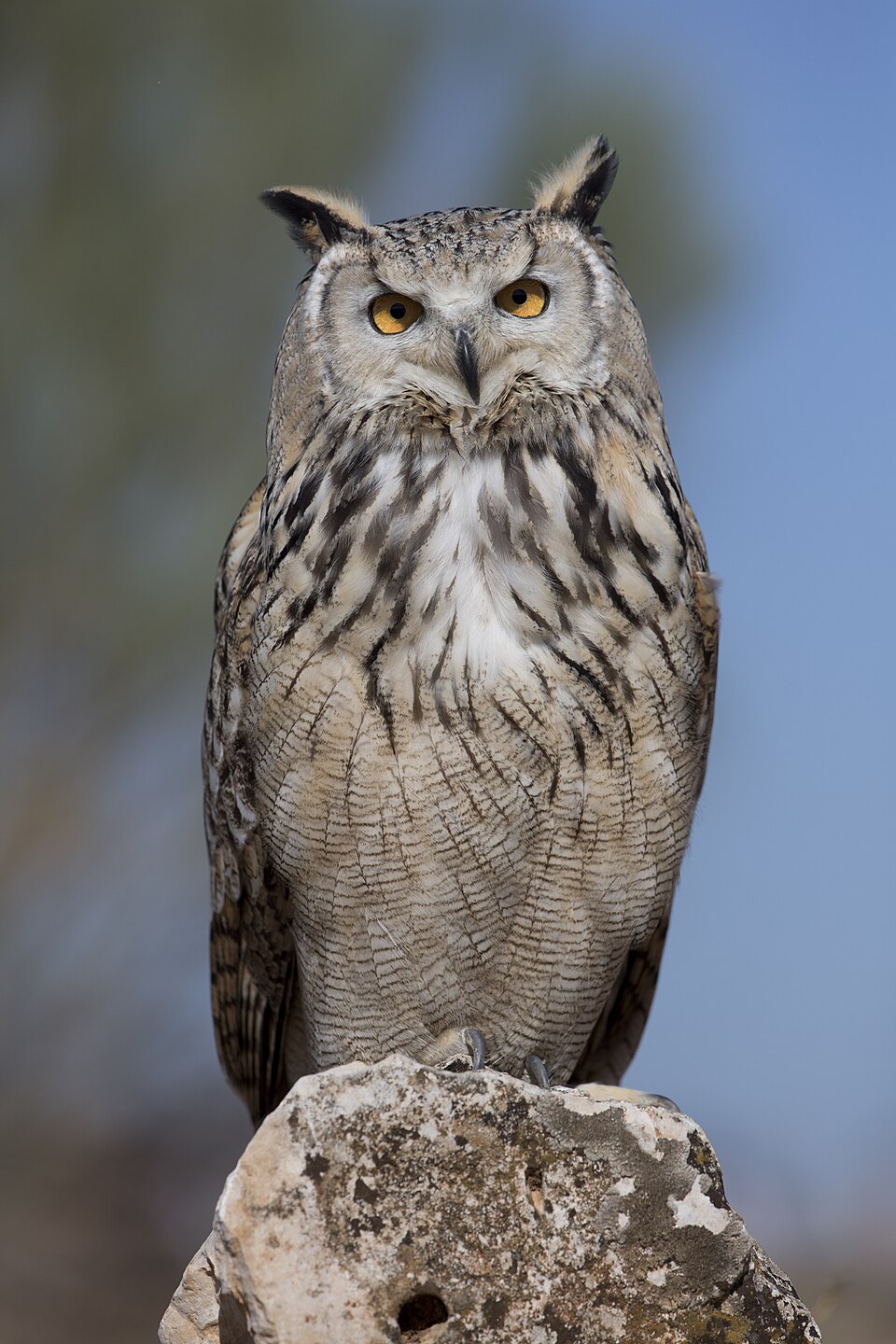
Sometime this year, I was alerted to the presence of an owl perching on the PHCN line overlooking my apartment. And so what, I asked! The response I got shocked me: Don’t you know that owls are evil birds? I quickly jumped out of bed! I really never knew anything about owls. I went to my window and saw it. I began to “bind and cast.” I followed this up by picking up a stone and going after it. It flew away before I could reach it. Days later, the owl appeared again. I went after it again with prayer and action. Again, it flew away before I could reach it. Every night afterwards I checked the PHCN line before going to bed and whenever I woke up in the night. There was no sight of it. Still, I prayed.
Also read: Coalition Defends NSCDC Commandant-General, Rejects Calls for His Removal Over Minna Detainee Deaths
Not long afterwards, a classmate and friend who had suffered a stroke earlier, died. He was 69. Closely afterwards, my in-law, a mentor, died at the age of 89.
Then real tragedy struck in the same month with the death of his daughter and my niece, at 54. In July alone a chorister in my church lost her father who was 65.
My panel beater lost a 14-year-old child; a pastor friend died at a relatively young age, and then another schoolmate and professional colleague also passed on at the age of 67. More deaths of colleagues and known faces have since followed.
Are owls evil birds? Are they the harbingers or messengers of death? This is what Google has to say about this mysterious bird: “No, owls are not evil birds; they are simply wild, nocturnal animals fulfilling a natural role in the environment.”
But owls, all the same, have a really bad reputation. Their nocturnal lifestyle is one. They hunt and move around in the dark and people historically associate darkness with fear and the unknown. Owls also fly silently: Their specialized feathers let them fly completely silently, causing them to appear suddenly out of nowhere.
They also have human-like facial features, with their forward-facing eyes giving them an intense, penetrating gaze that can feel uncanny or unsettling. Owl’s eerie sounds, strange screeches, clicks, and hoots in the dead of night have also fueled ghost stories for centuries.
There are also a lot of cultural myths and superstitions pertaining to owls. Many cultures around the world historically view owls as bad omens or messengers of death.
“In general, owls are viewed as harbingers of bad luck, ill health, or death. The belief is widespread even today.” According to Wikipedia, this belief cuts across the globe. Among the Kikuyu of Kenya, it was believed that owls were harbingers of death. If one saw an owl or heard its hoot, someone was going to die.
In the Americas, the culture of the Uto-Aztec tribe, the Hopi, has “taboos surrounding owls, which are associated with sorcery and other evils. The Aztecs and Maya, along with other natives of Mesoamerica, considered the owl a symbol of death and destruction. In fact, the Aztec god of death, Mictlantecuhtli, was often depicted with owls. There is an old saying in Mexico that is still in use: ‘When the owl cries/sings, the Indian dies’.
“The Popol Vuh, a Mayan religious text, describes owls as messengers of Xibalba (the Mayan “Place of Fright”). The belief that owls are messengers and harbingers of the dark powers is also found among the Hočągara (Winnebago) of Wisconsin. When in earlier days the Hočągara committed the sin of killing enemies while they were within the sanctuary of the chief’s lodge, an owl appeared and spoke to them in the voice of a human, saying, ‘From now on the Hočągara will have no luck.’ This marked the beginning of the decline of the tribe. An owl appeared to Glory of the Morning, the only female chief of the Hočąk nation, and uttered her name. Soon afterwards she died.
“People often allude to the reputation of owls as bearers of supernatural danger when they tell misbehaving children, ‘the owls will get you.’ Also, in the Cherokee culture, as well as many other Native American cultures, owls are a very bad omen. It is said that if you are outside in broad daylight and an owl flies over your head, a family member or loved one would die within the coming week. In the Middle East, Arab mythology sees owls as bad omens.”
Some other cultures, however, see owls in a different light i.e. as a wise creature (for example, Hinduism in India.) In Japan, souvenir shops display little owl figurines that are supposed to bring good luck.
The Japanese word for owl is ‘fukurou’, and the first part of the word (‘fuku’) can be written with the same character as ‘luck’ or the whole word can literally be written as ‘no suffering/troubles’.”
So, what is it really about owls? It would appear owls signify different strokes for different people – and for different reasons as well. Superstition exists everywhere. And every superstitious belief has a logic behind it.
Most of the time, this is weaved around the fear of the unknown and the recoil from what Cicero, a Roman philosopher, called the ultimate evil.
Cicero, also noted for his oratorical gift, defined the Latin term “summum malum” as “the highest evil” and “summum bonum” as “the highest good” in his foundational ethical treatise titled “On the Ends of Good and Evil”.
He reportedly used these concepts to compare how different ancient Greek schools such as the Stoics, Epicureans, and Peripatetics defined the ultimate goal of human life (summum bonum) vis-a-vis what they sought most to avoid (summum malum). Cicero, however, merely built on the thoughts of earlier ancient Greek philosophers like Plato and Aristotle.
Thomas Hobbes, another Western philosopher and famous author of the “Leviathan” (1651) rejected the idea of a universal “summum bonum” due to conflicting human desires, but agreed that a definitive “summum malum” did exist: the fear of violent death.
What is certain, and which is known to all civilizations, is that the traffic between heaven and earth is never ending; and that this is as sure as day follows night.
As Orlando Owoh crooned, just as babies are born on a daily basis, so also do people die – owl or not owl. Were the universe to be rid of owls, people would still die! All the same because I am not Japanese, owls are not the kind of birds I love to see!
Robbing Peter to pay Paul: A lose-lose situation
Can these figures be correct? Since I came across them on the internet, I have not seen a rebuttal from any quarters. So, since silence is said to mean consent, I want to assume that the figures are factual – until the contrary is proven.
The disturbing information goes thus: “Six geo-political zones’ contribution to the VAT pool and (what each of them) received (in return) in half-year January -June 2026): 1. South-west contributed N2.16trn but received N691.56bn (31.99%). 2. South-south contributed N880.58bn but received N429.99bn (48.83%). 3. North-central contributed N302.81bn but received N350.17bn (115.64%).
4. North-west contributed N205.52bn but received N384.56bn (187.11%). 5. North-east contributed N152.82bn but received N285.70bn (186.95%). 6. The South-east contributed N79.27bn but received N230.89bn (291.28%).”
Are you not surprised that the South-east zone contributed the least but received the highest, percentage-wise? This means that a region always screaming “marginalization” is the one actually marginalizing others!
All the three zones in the North received more than they contributed; meaning that, like the South-east, they benefit from the sweat of others – in other words, they reap on a monthly basis from where they did not sow! The two burden-bearer zones are the South-south and South-west, with the latter being the greater losers.
Those riding on the back of others will never disembark unless they are forced to.
Unfortunately, free lunch offers no incentives for anyone to work harder.
And those being held down as beasts of burden will never achieve their true potential for as long as they carry the can for others. What a lose-lose situation in real or absolute terms!
FEEDBACK
RE: If state police are not to suffer a stillbirth…
Thank you so much for this piece! Brig-Gen. Jibola Togun once drew my attention to the lack of support by our governors for Amotekun after the exit of Rotimi Akeredolu from earthly life.
I have written no fewer than five times on the imperatives of the establishment of state police, drawing attention to how formal policing began at Abeokuta in 1903, but took off in 1905, followed by Ibadan in 1906 and Oyo, 1907 and from there to other divisions of Yorubaland.
If our forebears could see the imperatives of divisional and regional policing, the attitude of our governors after Akeredolu has been shocking and disappointing. The first responsibility of any government is security.
It is, in fact, the origin of government. We can see now that the establishment of state police has received a national stamp. Well done! – Lade Bonuola
Has Tinubu lost his grip on the Nigerian media?
The shortcomings you highlighted and the solutions proffered are top-notch. I am one of those who believe until tomorrow that (Dele) Alake should have been Tinubu’s spokesman (but) rumours have it that Gbaja and Alake can not co-habit at the villa! Reno Omokri is doing far better than all the government paid spokesmen, including Onanuga. Ask yourself why Dele Momodu and Femi Ojudu distanced themselves from Tinubu. Self-interest, I presume! I have read the “Adventure of Guerrilla Journalist” by Ojudu and I have heard Momodu narrate how Tinubu gave him 500 pounds while they were in exile. I have equally heard how Remi asked: “Uncle Dee, so you are not going to work for my husband?” That question is loaded. Nobody runs Tinubu down as does the duo! I don’t think the Nigerian Press is as dangerous as the TV anchor personalities. Many no longer read newspapers but depend on TV stations. Arise News, for instance, sees all government actions from negative perspectives. They know who to invite: hardly will you see their guests not towing their preferred line of thought.
More often than not, they carefully select the APC men they can easily bully. Rufyy is a pessimist par excellence, only he is honest and capable! To him, all Nigerians are corrupt and unpatriotic – except himself! Abati was my hall mate at Awo Postgraduate Hall, UI… He always loves to play smart (but) I think an average Nigerian knows that he is biased.
He is a PDP card-carrying member. Seun Okinbaloye is worse, despite the fact that the Finance Minister has said it times without number that the right question to ask is ‘where would Nigeria have been if the (Tinubu) reforms were not introduced’ and NOT ‘is your life better now than it was in 2023?’ Okinbaloye is aware of the 33 trillion paper-money printed, the huge amount owed foreign airlines, and the less than four billion dollars in the foreign reserves account.
Yet, Seun will have none of that! He is in the habit of parading statistics just to discredit the government.
The ones that favour the government are downplayed! Hardly will you see Seun ask the right follow-up questions from the opposition. Tinubu needs to strengthen his information machinery in all its ramifications. – Rev. Canon Dr. Kayode Abegunde.
Can anyone or organization in this country have the media in their pocket? I ask this question as someone who has spent almost 50 years in the media and who has done only media job all his life.
But I look at media relations in this country and ask myself: how can these guys be so dumb? All the attacks on opponents and critics will be useless after the President leaves office.
Also read: Coalition Defends NSCDC Commandant-General, Rejects Calls for His Removal Over Minna Detainee Deaths
Where is Buhari’s press value today? It is all gone! Where is Femi Adesina? And where is Garba Sheu? Government media minders are lazy; they are not deep enough; they focus on fighting political opponents and critics and once the government they serve disappears, they, too, will disappear with it! They do not bother to convince anyone; they just shout at us and think that is press relations! They should understudy Ogbuefi Nwokedi and Tunji Oseni! – Olowo Adebola.
(Published in the ON THE LORD’S DAY column in the SUNDAY TRIBUNE newspaper edition of Sunday, 20 September, 2026).

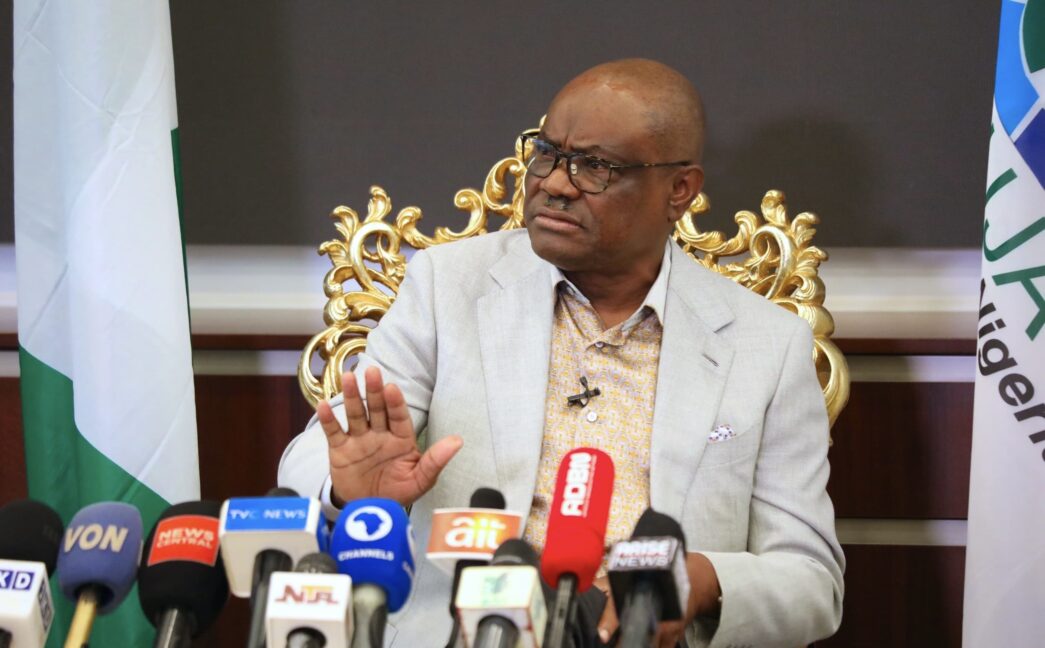
As Nigeria moves closer to the 2027 general election, one political figure continues to redefine the boundaries of party loyalty and political influence: Nyesom Wike. From leading the G5 governors’ revolt within the Peoples Democratic Party (PDP) to championing a proposed Rainbow Coalition in support of President Bola Tinubu, Wike’s politics has consistently revolved around one objective—remaining influential regardless of party lines.
His latest disagreement with governors elected on the platform of the All Progressives Congress (APC) is therefore more than an ordinary political quarrel. It reflects a deeper contest over who controls the political machinery surrounding the president and how loyalty should be organised ahead of a presidential election.
The APC Governors’ Forum recently rejected any political arrangement capable of creating parallel campaign structures outside the party. The governors insisted that support for President Tinubu should flow through the APC and its candidates at every level.
Wike responded by dismissing claims that he sought an alliance with the governors. According to him, the proposed Rainbow Coalition is not an alternative political party but a broader network of politicians from different platforms united behind Tinubu’s re-election.
That distinction lies at the heart of the controversy. Wike argues that a politician can remain a member of one party while supporting another party’s presidential candidate without abandoning participation in governorship, National Assembly or state assembly elections through his own platform.
For the APC governors, however, presidential and legislative elections are inseparable. Their concern is that mobilising support for Tinubu outside the formal APC structure could weaken the party’s candidates in other contests.
To understand the Rainbow Coalition, it is necessary to revisit the events of 2022.
Wike emerged as one of five PDP governors who formed the G5, also known as the Integrity Group, after former Vice President Atiku Abubakar secured the PDP presidential ticket. The governors demanded internal reforms, including the resignation of then National Chairman Iyorchia Ayu, and eventually withheld support from Atiku’s campaign.
The G5 demonstrated that party membership did not automatically determine presidential loyalty. Its members remained PDP governors while adopting different positions during the presidential election.
The Rainbow Coalition appears to extend that philosophy beyond the PDP. Rather than resisting a party from within, Wike is attempting to build a cross-party political network around an incumbent president while allowing participants to retain their separate political identities.
The disagreement is less about Tinubu and more about political structure.
State governors possess institutional authority through their control of party organisations and government machinery within their states. Wike, by contrast, relies on personal political networks developed over decades in Rivers State and reinforced by his current position as Minister of the Federal Capital Territory.
His argument is provocative: political influence does not necessarily belong to whoever controls party structures, but to whoever can mobilise voters.
That proposition challenges the traditional hierarchy of party politics. If a minister can independently organise electoral support for a president outside the APC, the governors inevitably lose part of their leverage.
No state illustrates Wike’s influence better than Rivers.
His prolonged political conflict with Governor Siminalayi Fubara eventually escalated into a constitutional crisis that prompted President Tinubu’s declaration of a state of emergency in Rivers in March 2025.
Whether viewed as political intervention or constitutional necessity, the episode demonstrated the extraordinary significance of Wike’s political structure within Rivers.
Now, by publicly declaring his intention to deliver both Rivers State and the FCT for Tinubu in 2027, Wike has reopened questions about who truly commands the electoral machinery in those territories—the APC or his own political network.
President Tinubu occupies a delicate position.
On one hand, Wike offers access to political constituencies beyond the APC. On the other, the APC governors remain indispensable because they control the governing party’s formal structures across the states.
The president therefore has every incentive to prevent the disagreement from becoming a permanent rupture. Rather than choosing between Wike and the governors, his challenge may be finding a way to make both politically useful without allowing competing structures to undermine one another.
The Rainbow Coalition also raises broader questions about the nature of Nigerian democracy.
Can a politician remain in the PDP while openly campaigning for an APC president? Constitutionally, the answer is largely political rather than legal. Elections for president, governor and legislature are separate contests, and voters are free to split their ballots among different parties.
The difficulty lies in party discipline. To APC leaders, supporting Tinubu should naturally include supporting APC candidates across the ballot. To Wike, presidential loyalty is a personal political choice that does not require abandoning his party’s legislative ambitions.
The journey from G5 to Rainbow Coalition reflects an evolution rather than a contradiction.
The G5 was an internal resistance movement designed to reshape the PDP’s presidential direction. The Rainbow Coalition seeks to mobilise support beyond party boundaries while preserving the independence of participating politicians.
Whether the coalition becomes a durable political force will depend on organisation, personalities, candidate selection and the willingness of the APC leadership to accommodate an influential ally operating outside its formal campaign structure.
For now, the disagreement has revealed a fundamental question that could define the 2027 election: Does political loyalty belong primarily to the party, the presidential candidate, or the individual politician?
The answer may ultimately determine not only Wike’s political future, but also the evolving architecture of power around President Tinubu as Nigeria heads into another defining electoral cycle.
By Victor Ojelabi
The Rotary Club of Ikoyi Metro, led by President Rotarian Emeka Nwosu, will begin a four-day vision and hearing screening for Primary One pupils across 10 public primary schools in Lagos Island, Lagos State, on Tuesday, September 22, 2026, under a Rotary International Global Grant project chaired by Rotarian Oladimeji Olatunji-Audu for the club.
Also read: From Lagos to Germany: How Rotary Youth Exchange Transformed Arnold Faranpojo
The Rotary Ikoyi Metro screening, which runs until Friday, September 25, will commence at 9 a.m. daily, with Holy Cross Cathedral Primary School, Campus, serving as the venue.
The Lagos State Universal Basic Education Board has formally approved the exercise for pupils in the 10 selected schools within the Lagos Island Local Government Education Authority.
In its September 9 approval, LASUBEB described the intervention as a “noble gesture” complementing the Lagos State Government’s efforts to improve basic education.
The participating schools are Holy Cross Cathedral Primary School, Ade Oshodi Primary School, Anglican Girls Primary School, Christ Cathedral Primary School, and Ebute Elefun Primary School.
Others include Edward Blyden Memorial School, St. David Primary School, St. Mary Convent School, St. Peter Primary School and Tinubu Methodist Primary School.
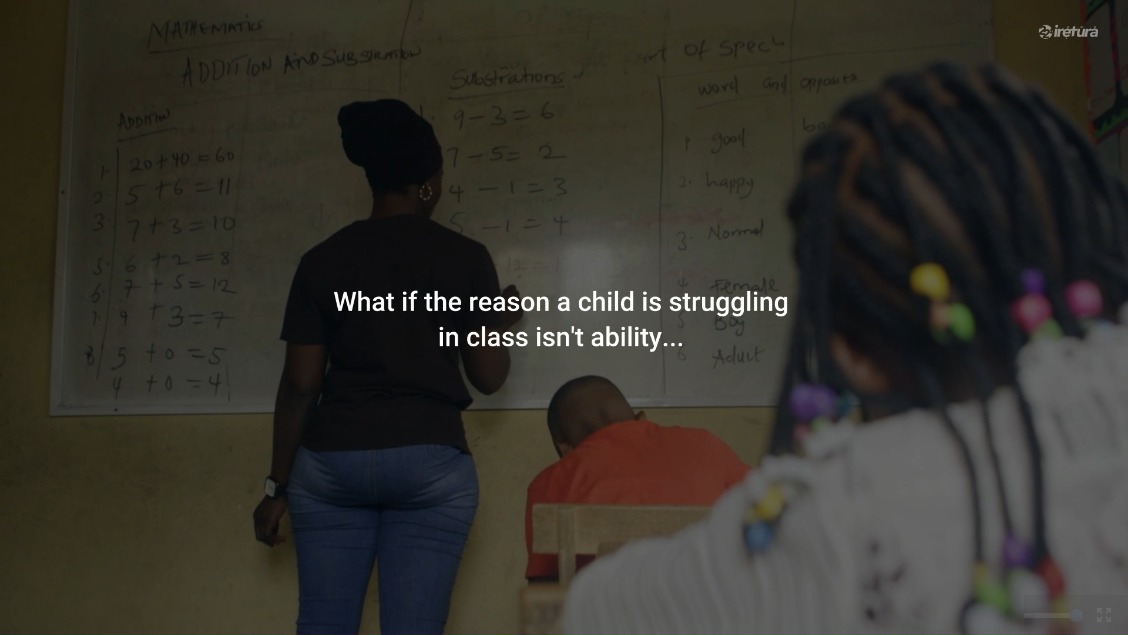
Nwosu said the intervention was built around a simple concern: children experiencing difficulties in the classroom should not be written off before possible health-related causes are investigated.
“Sometimes, what looks like a learning problem may simply be a child struggling to see the board clearly or hear what the teacher is saying. Through this project, we want to identify those challenges early and give affected children the opportunity to learn and thrive alongside their peers,” Nwosu said.
The project is being implemented in partnership with other Rotary clubs through the Rotary International Global Grant mechanism, combining resources and expertise to address preventable vision and hearing difficulties among schoolchildren.
The cub’s project chairman said the initiative was designed to go beyond simply identifying pupils with difficulties.
“Screening is only meaningful when it leads to action. Our objective is to identify children who require attention early enough and ensure that those who need further intervention are appropriately supported. A child’s ability to see and hear properly can make a remarkable difference to the child’s confidence and performance in school,” Olatunji-Audu said.
The Lagos Island exercise follows an earlier phase of the wider Global Grant project launched in July 2026, when hundreds of pupils from public primary schools in the Ikoyi-Obalende area underwent vision and hearing screening.
The broader intervention has brought together Rotary clubs and partners in Nigeria and overseas.
The World Health Organization has also identified vision and hearing as important to children’s development and education, noting that unaddressed sensory impairments can have significant consequences for school-age children.
Also read: From Lagos to Germany: How Rotary Youth Exchange Transformed Arnold Faranpojo
For Ikoyi Metro, the four-day intervention therefore carries a powerful message beyond the medical screenings: before concluding that a young pupil is struggling to learn, it may be necessary to establish whether that child can clearly see the lesson and hear the teacher.
-
Politics3 years ago
13 Ondo Assembly Members Disown Endorsement of Aiyedatiwa
-
Politics3 years ago
APC Group, Ondo Govt, Quarrel Over Money for Endorsement
-

 Trending News5 years ago
Stop unsavoury, inciting statements – DSS warns
-

 Others5 years ago
Adron Homes Celebrates 10 Years Of Housing Excellence
-

 Humanity5 years ago
President Buhari Commiserates With Ambassador Maureen Tamuno Over The Loss Of Her Father
-

 Others7 years ago
EX- CUSTOMS BOSS, IBRAHIM MERA’S DWINDLING FAME
-

 Business2 years ago
Bigi Carbonated Soft Drinks Treats 40 Consumers to an Epic Easter Movie Hangout
-

 Business2 years ago
Wema Bank Shines at Global SME Finance Forum Conference Awards 2024 …Awarded: • SME Financier of the Year (Africa) • Platinum Award for Best Financier for Women Entrepreneurs (Africa)