
Business
Boost Africa Fuels Daya’s Bold Cross-Border Ambitions

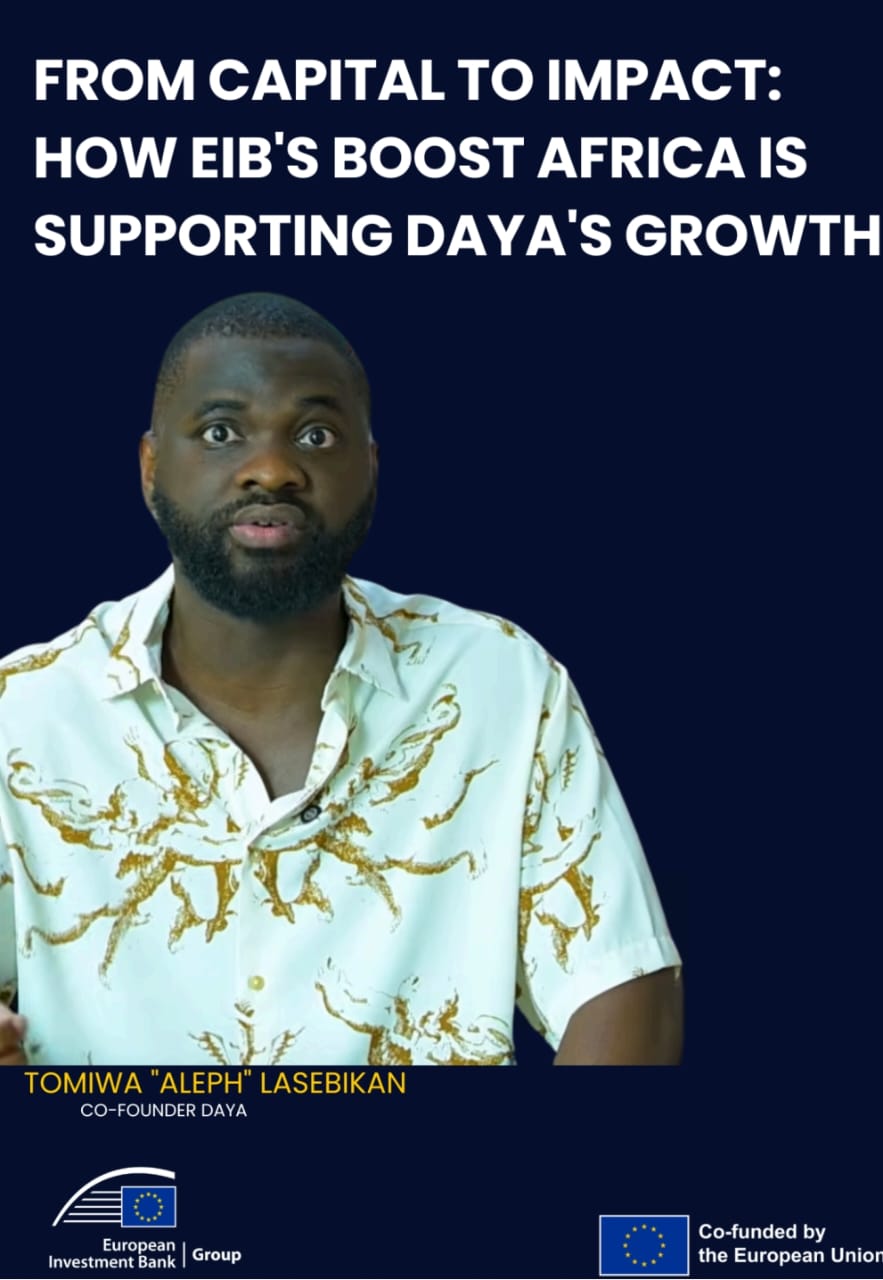
Boost Africa Daya highlights how investment is supporting Nigerian fintech innovation and easier cross-border payments for African businesses

LAGOS, November 5, 2026 – Tomiwa “Aleph” Lasebikan, Co-founder and Chief Executive Officer of Nigerian fintech company Daya, is highlighting how investment through the Boost Africa initiative, a joint programme of the European Investment Bank (EIB) and the African Development Bank (AfDB), with support from the European Union (EU), is helping African financial technology businesses develop solutions to cross-border payment challenges and pursue international growth.
Also read: Ronaldo Stuns Football With Portugal Retirement
In a video feature released on Daya’s growth journey, Lasebikan shares how the company is working to simplify international financial transactions for African businesses, particularly those struggling with expensive foreign exchange services, slow settlements and fragmented payment infrastructure.
The initiative illustrates how development finance can extend beyond providing capital to support innovation, strengthen emerging businesses and create opportunities for African entrepreneurs to compete in international markets.
For many businesses across the continent, receiving payments from international customers or settling invoices with overseas suppliers remains a complicated process.
Traditional banking arrangements often involve multiple intermediaries, lengthy processing periods and additional transaction costs, creating difficulties for businesses that depend on international trade.
Daya is seeking to address these challenges through financial technology that combines modern banking services with stablecoin-powered payment infrastructure.
Founded in October 2025 by Lasebikan and Paul Joe, the Lagos-based company provides businesses with access to dollar-denominated accounts and payment services designed to make receiving, holding and transferring funds across borders more convenient.
The company’s approach uses dollar-backed stablecoins as a settlement mechanism while working with financial partners to connect traditional banking services with blockchain-based infrastructure.
Speaking about the difficulties associated with international transactions, Lasebikan previously described the contrast between modern communication and outdated payment processes.
“The world we’re born into is one where communication across borders is incredibly fast. But sending money across borders is horrendous,” he said in an interview with TechCabal in June 2026.
The company’s model seeks to reduce that friction by allowing businesses to receive international payments, access dollar liquidity and settle transactions without navigating several disconnected financial service providers.
Investment beyond capital
The Boost Africa initiative provides an important financing framework for businesses such as Daya through its support for venture capital funds investing in innovative African startups.
Jointly established by the European Investment Bank and the African Development Bank in 2016, Boost Africa was designed to strengthen entrepreneurship, create employment opportunities and encourage sustainable economic growth across sub-Saharan Africa.
The European Commission and the Organisation of African, Caribbean and Pacific States Secretariat provided additional financial support in 2020.
One of the programme’s investment partners is Janngo Capital, whose Startup Fund received EIB backing to finance early-stage technology businesses addressing challenges in essential services, market access and financial inclusion.
In February 2022, the EIB announced an additional €10 million investment in the fund, bringing its total announced commitment to €25 million, following an earlier €15 million commitment in December 2020.
The fund’s broader investment strategy focuses on businesses capable of improving access to financial services, strengthening African small and medium-sized enterprises and creating sustainable employment, particularly for women and young people.
Through this investment structure, Boost Africa provides financial support to venture capital funds, which in turn identify and finance promising businesses across the continent.
The programme also incorporates technical assistance, helping fund managers and entrepreneurs strengthen their business operations, improve investment readiness and navigate challenges associated with scaling their companies.
Beyond its association with the broader investment ecosystem, Daya has continued to attract interest from investors seeking opportunities in Africa’s evolving financial technology sector.
In June 2026, the company announced a $2.4 million pre-seed funding round led by New York-based Hivemind Capital, with participation from Lattice Fund, Alliance DAO, Aptos Foundation and Globelink Investment.
The funding was intended to support the expansion of its cross-border payment network, strengthen its financial infrastructure and deepen partnerships with local and international financial institutions.
According to TechCabal’s June report, Daya also said it was recording monthly growth of more than 40 per cent in 2026, although the company did not disclose the number of businesses using its services.
The funding milestone reflects growing investor interest in financial infrastructure that addresses practical business challenges rather than focusing solely on consumer-facing financial products.
For African businesses seeking to expand beyond domestic markets, access to reliable international payment systems remains an important part of achieving sustainable growth.
Through its work, Daya is positioning itself within this emerging market, while initiatives such as Boost Africa demonstrate how investment partnerships can help strengthen the continent’s entrepreneurial ecosystem.
Also read: Ronaldo Stuns Football With Portugal Retirement
The story of Daya, as presented by Lasebikan, offers an example of how financial backing, technological innovation and entrepreneurial ambition can come together to address longstanding challenges in African commerce.
Watch the video to learn more about Tomiwa Lasebikan’s account of Daya’s growth journey and the role of Boost Africa in supporting African innovation.
Watch here: https://youtu.be/2U-EIoN-VgA


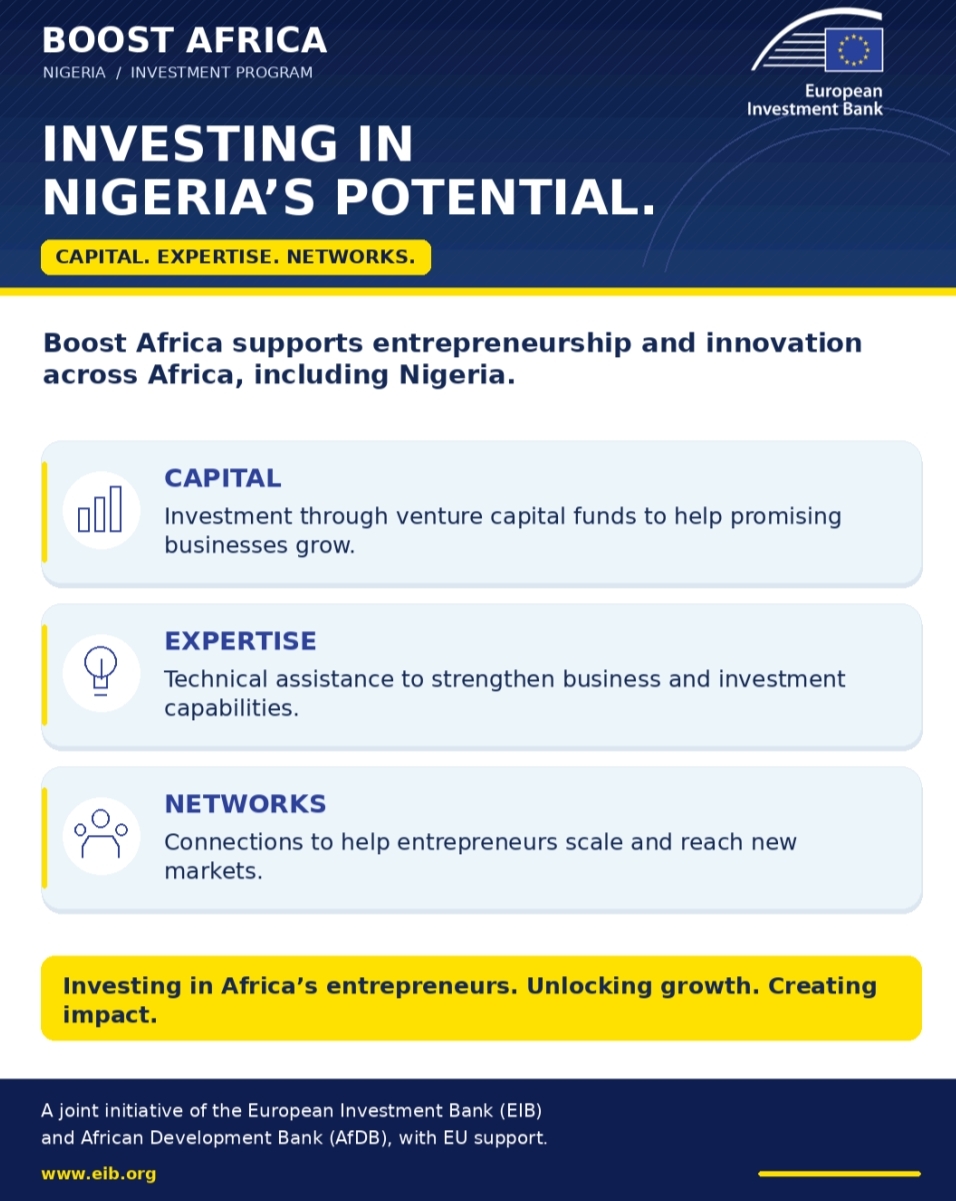
Nigeria’s entrepreneurial potential deserves investment—and the support to turn ideas into growing businesses.
Through Boost Africa, the European Investment Bank (EIB), together with the African Development Bank (AfDB) and with EU support, is strengthening entrepreneurship and innovation.
By supporting venture capital investment and providing technical assistance, Boost Africa helps African businesses, including those in Nigeria, access capital, expertise
and networks to grow and reach new
markets.
Meet one of the businesses behind the Boost Africa story. Hear Daya’s
co-founders, Tomiwa “Aleph” Lasebikan, and Paul Joe share the company’s journey and ambition to connect African businesses to global markets.
▶️ Watch Daya’s Boost Africa story:

NISO power generation has fallen as gas shortages and low reservoir levels constrain thermal and hydroelectric plants, worsening supply nationwide
NNPC reveals $20bn investment deals in major oil and gas projects as it works to raise Nigeria’s production to two million barrels daily
-
Politics3 years ago
13 Ondo Assembly Members Disown Endorsement of Aiyedatiwa
-
Politics3 years ago
APC Group, Ondo Govt, Quarrel Over Money for Endorsement
-

 Trending News6 years ago
Stop unsavoury, inciting statements – DSS warns
-

 Others5 years ago
Adron Homes Celebrates 10 Years Of Housing Excellence
-

 Humanity5 years ago
President Buhari Commiserates With Ambassador Maureen Tamuno Over The Loss Of Her Father
-

 Others7 years ago
EX- CUSTOMS BOSS, IBRAHIM MERA’S DWINDLING FAME
-

 Business3 years ago
Bigi Carbonated Soft Drinks Treats 40 Consumers to an Epic Easter Movie Hangout
-

 Business2 years ago
Wema Bank Shines at Global SME Finance Forum Conference Awards 2024 …Awarded: • SME Financier of the Year (Africa) • Platinum Award for Best Financier for Women Entrepreneurs (Africa)