
health
Climate Change Drives Rising Cancer Burden in Nigeria, Experts Warn


A growing link between climate change and rising cancer cases is putting Nigeria’s health system under pressure, experts warn, as new data highlights the country’s increasing vulnerability.
Cancer has become one of the world’s leading causes of death, overtaking HIV/AIDS, tuberculosis and malaria combined, according to the World Health Organisation.
Also read: Japan, South Korea Endure Hottest Summers on Record Amid Climate Crisis

In Nigeria, the burden continues to rise, with 127,763 new cases and 79,542 deaths recorded in 2022, figures from the Global Cancer Observatory show.
Breast, prostate, colorectal, cervical and non-Hodgkin lymphoma remain the most common cancers nationwide.
Many of these are shaped by environmental and lifestyle risks — factors that experts say are being intensified by climate change.
Across the country, the signs of environmental stress are evident: soot-laden air in Port Harcourt, extreme heat in northern classrooms, recurrent floods in Lagos and Makurdi, and widespread deforestation.
Health specialists warn that rising cases of cancers with no clear cause may be linked to worsening environmental conditions.
Despite these emerging threats, Nigeria’s climate and health policies often operate in isolation.
Analysts argue the country lacks the integrated policy framework needed to connect environmental protection with disease prevention.
Nigeria has made progress in climate governance, establishing the Climate Change Act (2021), the National Council on Climate Change and the National Climate Change Policy (2021–2030).
The new Climate Change and Health National Adaptation Plan (HNAP 2025–2030), developed by the Ministry of Health, also signals increasing recognition of the climate–health relationship.
However, substantial gaps remain. Nigeria ranks 154th out of 181 countries on the Notre Dame Global Adaptation Initiative Index, reflecting high vulnerability to climate shocks and limited readiness.
The HNAP’s Vulnerability and Assessment projects a 21 per cent increase in disease burden due to climate change — a strain the country’s already fragile health system may struggle to withstand.
Climate change acts as a “risk multiplier,” intensifying both infectious and noncommunicable diseases.
The WHO lists nine key health outcomes threatened by climate change, ranging from respiratory conditions to cancers. Yet Nigeria’s policies continue to prioritise infectious disease response, leaving the climate–cancer connection underexplored.
Experts say stronger coordination between the Ministry of Health, the Ministry of Environment and the National Council on Climate Change is essential to building resilience.
Without such collaboration, well-designed policies risk failing to produce real-world impact.
They also recommend integrating health indicators into climate interventions, including clean energy supply for hospitals, safe medical waste disposal, sustainable equipment procurement and mandatory Health Impact Assessments in environmental approvals.
Such measures, they argue, would ensure climate investments safeguard both the environment and human health.
Public awareness of the climate–health link remains low, but advocates stress that prevention begins with individual and community action from proper waste management to demanding cleaner air and greener cities.
Also read: Climate Change NNPC Foundation trains 6,000 farmers nationwide, launches climate-smart agriculture programme in Enugu
As Nigeria braces for escalating climate pressures, experts warn that cancer prevention must become a core component of the country’s resilience strategy rather than an overlooked consequence.


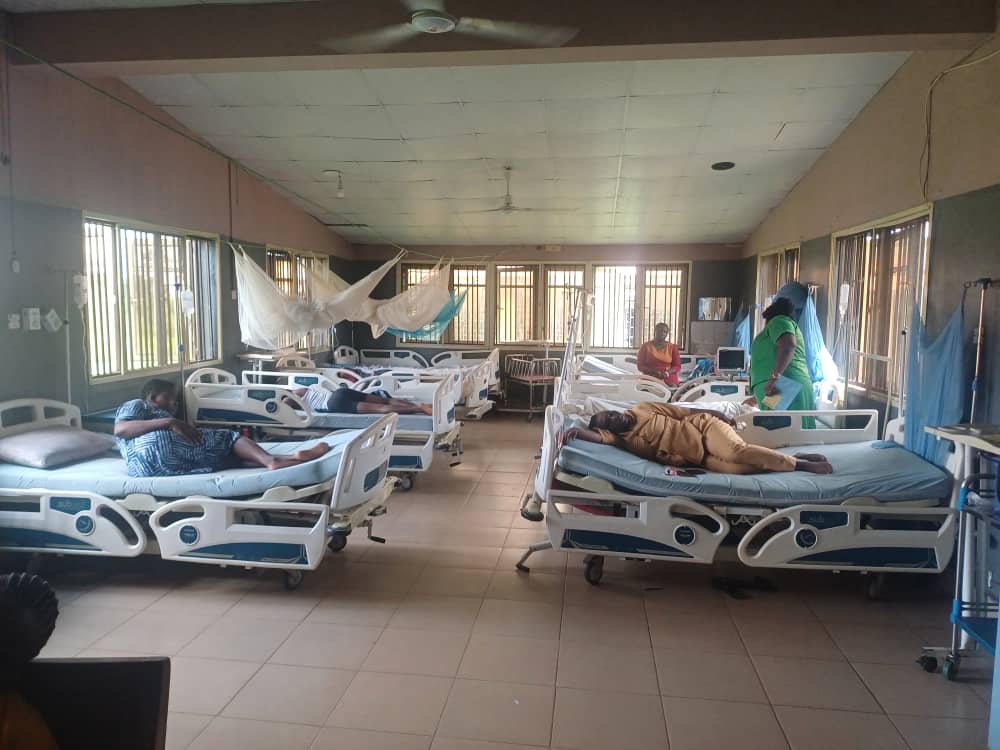
Ogun gas emissions have reportedly led to over 300 hospitalisations since April, raising concerns over school safety and the unresolved source
More than 300 students and teachers have reportedly received hospital treatment following recurring incidents involving an unusual gaseous odour in Ogun State between April and October 2026.
Also read: Regina Daniels’ Friend Ann Izuegbu Remanded in Prison
The incidents, concentrated around Ijebu-Ode and neighbouring communities, have repeatedly disrupted school activities, with students reportedly experiencing breathing difficulties, weakness, vomiting and fainting.
Although the Ogun State Government previously linked the incidents to underground geological activity and reported detecting methane in affected locations, the precise source of the recurring emissions remains unresolved.
The latest episode, reported on October 21, affected schools across Ijebu-Ode, Ijebu-Igbo and Ago-Iwoye, renewing concerns about the safety of pupils, teachers and residents.
Here is a timeline of the reported incidents and the response from authorities.
April 1: First Reported Incident
The first major incident occurred on April 1 at Our Lady of Apostles Secondary School in Epe Garage, Ijebu-Ode.
According to The PUNCH, at least 30 students and one teacher were taken to hospital after an unusual gaseous substance reportedly spread across the school shortly after morning assembly.
Some students reportedly collapsed, vomited or experienced difficulty breathing.
They were taken to the General Hospital in Ijebu-Ode for treatment.
At the time, the Commissioner for Environment, Ola Oresanya, said the substance responsible had not been conclusively identified.
Initial concerns included the possibility of fumes from a school laboratory or another nearby source.
On April 2, the state government ordered the school to close temporarily and directed security agencies to investigate.
Governor Dapo Abiodun also ordered the establishment of a situation room at the General Hospital, Ijebu-Ode, to coordinate the provision of free treatment for affected students and residents.
Reports indicated that those hospitalised were responding to treatment, with no deaths recorded during the incident.
May 15: Second Incident Affects More Than 100 People
A second major episode was reported on May 15, when more than 100 students and teachers across several schools in Ijebu-Ode were reportedly affected.
The schools included Anglican Girls Grammar School in Obalende and Our Lady of Apostles Secondary School in Epe Garage.
Witnesses described students complaining of stomach pain, weakness and breathing difficulties, with some collapsing and requiring assistance to reach medical facilities.
The growing number of affected people prompted renewed questions about the source of the emissions and whether the initial response had adequately addressed the danger.
The state government subsequently announced that air-quality monitoring equipment had detected elevated methane concentrations in parts of Ijebu-Ode.
Officials reported peak readings of approximately 13,500 parts per million in surrounding locations.
The government said the readings were below the lower explosive limit but still required environmental investigation.
However, a reading below that limit does not automatically establish that an atmosphere is safe to breathe, particularly where oxygen displacement or other hazards may be present.
Authorities also announced a multi-agency assessment involving environmental regulators, emergency responders and technical experts.
On May 17, the Commissioner for Health, Tomi Coker, said all patients admitted to the State Hospital in Ijebu-Ode following the incident had been discharged.
Coker explained that methane could displace oxygen and contribute to symptoms such as fatigue, a rapid heartbeat and breathing difficulties, depending on exposure conditions.
The government also outlined plans to strengthen emergency medical support in the area, including deploying ambulance teams and training teachers and interested parents to act as community first responders.
June 3: Third Incident Sends 69 Students to Hospital
Another episode occurred on June 3 at Our Lady of Apostles Secondary School, where students reportedly became unwell after noticing an unusual odour.
The PUNCH reported that 69 students were hospitalised following the incident.
Coker later confirmed that all 69 students had been discharged after receiving medical attention.
Most reportedly left hospital on June 3, while the remaining seven, who stayed overnight, were discharged the following day after their conditions improved.
The incident was reported as the third major occurrence in the area within approximately two months, intensifying anxiety among parents, teachers and residents.
Oresanya said government-installed gas analysers had detected methane in affected locations.
Reports identified several schools affected by or linked to the wider series of incidents, including Our Lady of the Apostles Secondary School, Anglican Girls Grammar School, Titilayo Agbaje Comprehensive High School in Imosan, Ifesowapo Comprehensive High School in Imosan and St Anthony Grammar School in the Ijebu-Imushin area.
The state government also announced plans for the temporary relocation of students from an affected school while investigations continued.
By June, officials had put forward a possible geological explanation, suggesting that underground gases could be escaping through fractures associated with geological and tectonic fault lines.
The government ruled out sabotage and gas pipeline leaks as explanations for the earlier incidents.
However, those assurances did not resolve concerns about why the emissions continued to recur.
October 21: Fresh Emissions Affect Three Communities
The latest reported episode occurred on October 21, with incidents recorded across parts of Ijebu-Ode, Ijebu-Igbo and Ago-Iwoye.
More than 100 students across several secondary schools were reportedly hospitalised after exposure to an offensive gaseous substance.
The affected schools included Anglican Girls Grammar School in Ijebu-Ode, Ijebu-Igbo Girls Grammar School and Itamerin Comprehensive High School in Ago-Iwoye, among others.
Students reportedly experienced shortness of breath, stomach discomfort and drowsiness.
Some fainted and were taken to hospitals, while others reportedly required oxygen to stabilise their condition.
Medical facilities receiving affected students included the State Hospital in Ijebu-Ode and the General Hospital in Ijebu-Igbo.
The incident also disrupted lessons, with some schools in Ago-Iwoye reportedly sending students home.
Concerns extended beyond school compounds when the chairman of Ijebu North Local Government Area reportedly detected the unusual odour at the council secretariat.
The development raised further questions about the geographical spread of the emissions and the potential risks to people outside the affected schools.
In response, the Ogun State Government said the situation was under control and that investigations were underway to determine the source and extent of the latest emissions.
Oresanya linked the episode to previous underground gas emissions reported in the Ijebu axis since April.
A team from the Nigerian Upstream Petroleum Regulatory Commission also joined the assessment.
However, reports published on October 21 did not establish a definitive cause for the latest incident.
The repeated episodes have raised questions about whether the incidents share a common source, why they continue to occur and what measures are needed to prevent further exposure.
In June, the state government attributed previous incidents to a possible natural geological process through which underground gases escape along fractures in the earth.
It also ruled out sabotage and pipeline leaks as explanations for those earlier episodes.
However, the underlying investigation had not produced a publicly confirmed, lasting explanation by the time of the latest reported incident.
TheCable reported on October 21 that the investigation initiated in June had remained incomplete as of September, citing information obtained after contacting the Commissioner for Environment.
The recurrence has therefore renewed calls for a conclusive scientific assessment, transparent communication of findings and effective protection for schools and nearby communities.
Key questions remain about whether the emissions originate from a shared underground source, what conditions trigger their appearance and how authorities can reliably detect and contain them before people are exposed.
Also read: Regina Daniels’ Friend Ann Izuegbu Remanded in Prison
Until the source and risks are established, the safety of students, teachers and residents remains a central concern.

-
Politics3 years ago
13 Ondo Assembly Members Disown Endorsement of Aiyedatiwa
-
Politics3 years ago
APC Group, Ondo Govt, Quarrel Over Money for Endorsement
-

 Trending News5 years ago
Stop unsavoury, inciting statements – DSS warns
-

 Others5 years ago
Adron Homes Celebrates 10 Years Of Housing Excellence
-

 Humanity5 years ago
President Buhari Commiserates With Ambassador Maureen Tamuno Over The Loss Of Her Father
-

 Others7 years ago
EX- CUSTOMS BOSS, IBRAHIM MERA’S DWINDLING FAME
-

 Business2 years ago
Bigi Carbonated Soft Drinks Treats 40 Consumers to an Epic Easter Movie Hangout
-

 Business2 years ago
Wema Bank Shines at Global SME Finance Forum Conference Awards 2024 …Awarded: • SME Financier of the Year (Africa) • Platinum Award for Best Financier for Women Entrepreneurs (Africa)