
Uncategorized
Customs Hands Over 189,000 Rounds of Live Ammunition to NCCSALW in Niger State

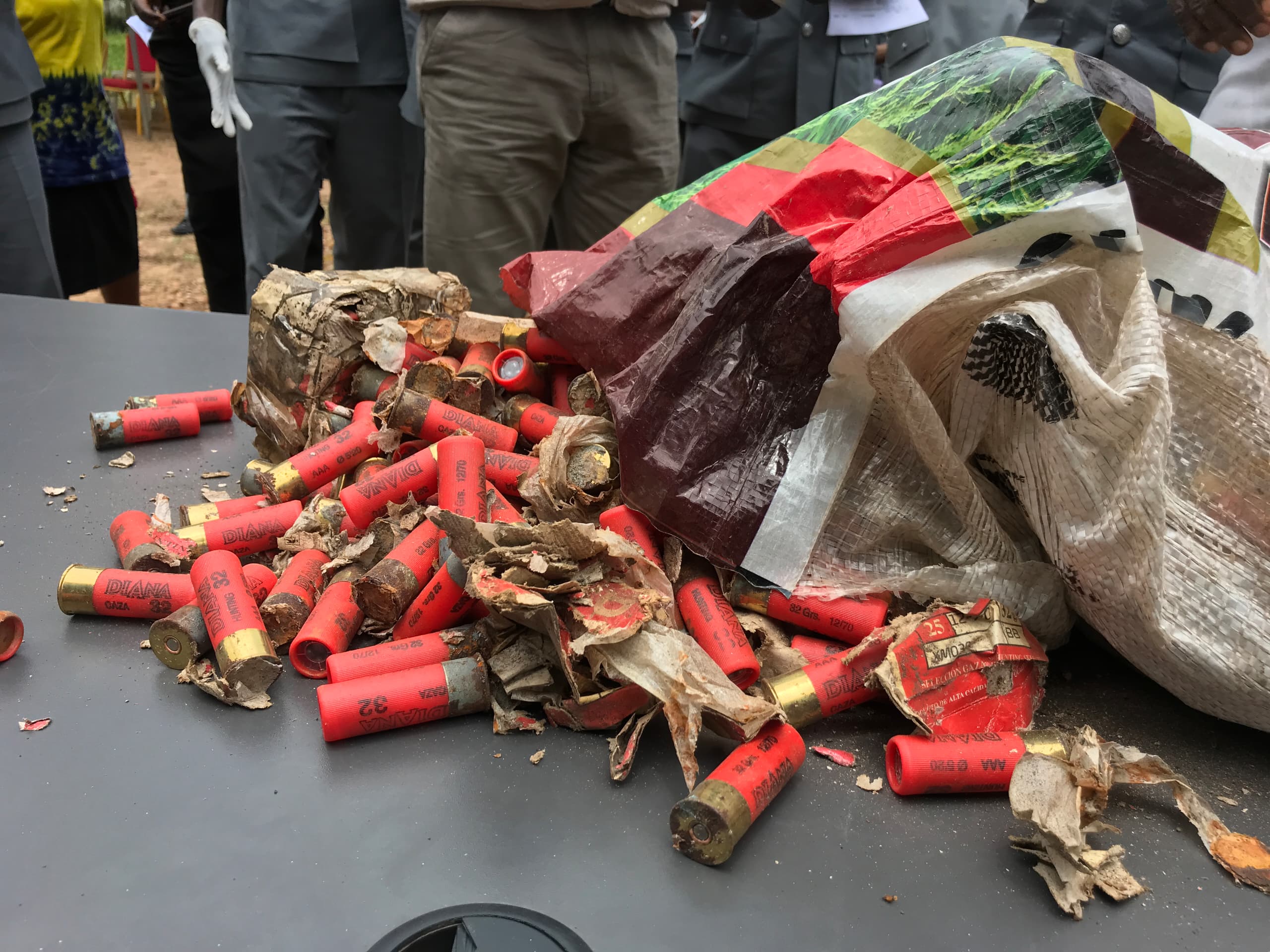
Customs hands over 189000 ammunition has been completed by the Nigeria Customs Service (NCS), Niger/Kogi Area Command.

The Command has formally handed over 189,000 rounds of live ammunition seized from suspected illicit arms dealers to the National Centre for the Control of Small Arms and Light Weapons (NCCSALW).
The ammunition was intercepted by Customs personnel during a routine patrol at Wawa village in Borgu Local Government Area of Niger State.
Speaking at the handover ceremony, the Comptroller of the Niger/Kogi Area Command, Sani Mohammed Umar, explained that the seized ammunition had remained in the custody of the service since 2018 due to litigation arising from the seizure.
He warned that the circulation of such a large quantity of illegal ammunition could have devastating consequences, especially at a time when the country is facing serious security challenges.
Umar disclosed that the consignment comprised 7,560 packages, with each package containing 25 rounds, making a total of 189,000 rounds of live ammunition.
Receiving the items, the North-Central Zonal Director of the NCCSALW, Abdul Adamu Eneche, who represented the Director-General of the Centre, DIG Johnson Babatunde Kokumo (rtd), commended the Customs Service for the handover.
He described the action as a clear demonstration of effective synergy among security agencies.
Eneche stated that the illegal ammunition would undergo the required procedures before being destroyed. He emphasised that destruction was necessary to prevent the seized ammunition from finding its way back into the hands of criminals.
“I am optimistic that stronger cooperation, information sharing, effective border control and public awareness would reduce the availability of illegal arms in the hands of criminal groups,” he said.
The handover ceremony took place in Minna, Niger State.
Officials noted that the transfer forms part of ongoing efforts to ensure proper management and control of recovered arms and ammunition, while strengthening measures against the proliferation of illicit weapons in the country.
The development further highlights the continued collaboration between the Nigeria Customs Service and the National Centre for the Control of Small Arms and Light Weapons in the fight against the illegal circulation of arms and ammunition.
Both agencies reaffirmed their commitment to working closely to curb the movement of illegal weapons across Nigeria’s borders and within the country.


Uncategorized
I Made Nothing Less Than ₦10m Every Month From Selling Akara And Bread — Akwa Ibom Governor Umo Eno
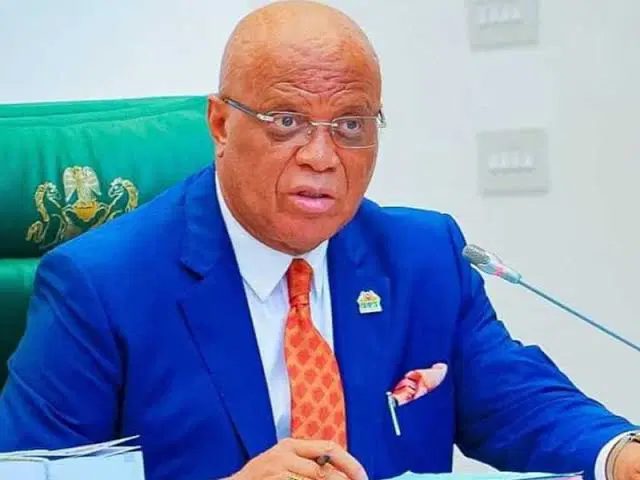
Umo Eno akara business story has gone viral after the Akwa Ibom State Governor revealed that he once earned nothing less than ₦10 million every month from selling akara and bread.
Pastor Umo Eno made the disclosure on Wednesday, September 2, 2026, while speaking at the state’s monthly covenant prayer service.
According to the governor, he started the business by selling akara and bread, later innovating what he called “Akara Burger” by placing the akara inside the bread for customers.
“We still have that shop there. I started selling Akara and bread. Back then, I was doing Akara Burger. We open the bread and put it inside for you. People going to Exxon Mobil will buy it in the morning, take coffee. We started coffee shop. Every month, that Akara business used to give me nothing less than ₦10 million in a month,” Eno said.
He explained that the business attracted morning customers, particularly workers heading to ExxonMobil, and later expanded to include a coffee shop to complement the food sales.
The governor’s remarks come weeks after First Lady Oluremi Tinubu advised Nigerians to explore low-capital businesses such as akara and kuli-kuli making.
The revelation has generated mixed reactions online, with some Nigerians questioning the feasibility of generating ₦10 million monthly from the business at the time, while others praised him for sharing his entrepreneurial experience.
Uncategorized
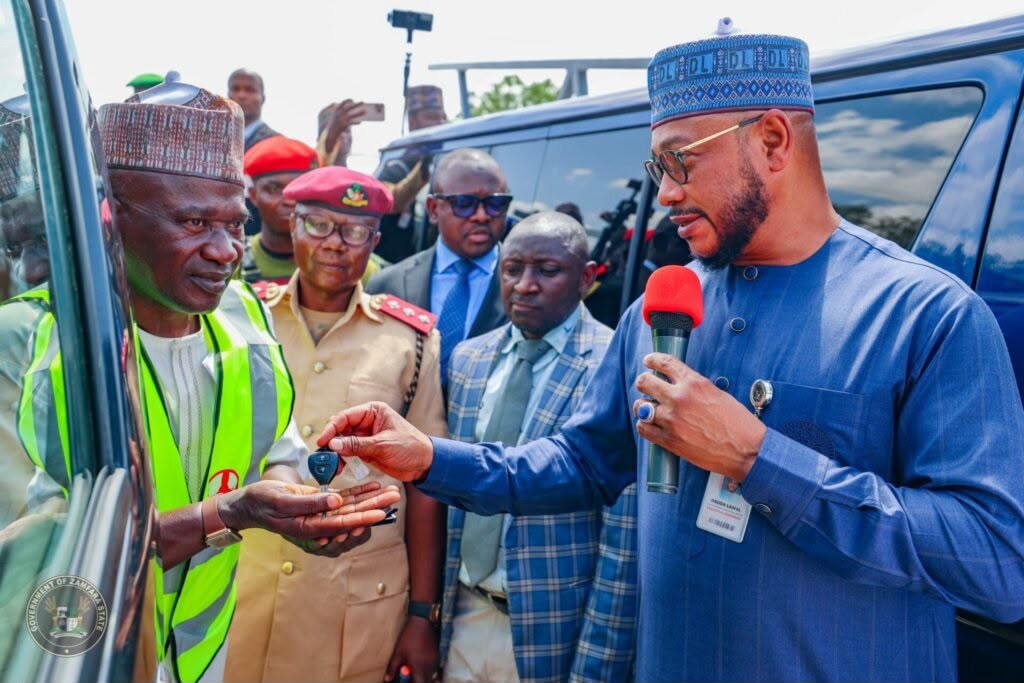
Governor Dauda Lawal Distributes 50 Subsidised Buses, Commissions Fire Trucks for Swift Emergency Response


By Adebayo Adeoye
All is clearly not well within the ranks of the All Progressives Congress in Bauchi State. What should have been a defining moment for party unity and strategic positioning ahead of the 2027 elections has instead deepened mistrust, widened internal divisions and exposed dangerous cracks within the party. For an opposition party still struggling to regain political momentum in one of Nigeria’s most competitive states, the timing could hardly be worse. Rather than serving as a launchpad for renewed ambition, the governorship primary has become a stark reflection of the APC’s internal dysfunction — one that could shape its political fortunes long before voters head to the polls.
The so called Last Friday’s governorship primary, which produced former Governor Mohammed Abubakar as candidate, was expected to rally party faithful around a credible challenger for 2027. Instead, it has triggered widespread controversy and bitter reactions across the party. What ought to have strengthened internal cohesion has, in many quarters, been condemned as deeply flawed, opaque and lacking the transparency required to inspire confidence among party members. Allegations of backroom deals, imposed outcomes and the sidelining of longstanding stakeholders have rapidly evolved from whispers into open accusations the party leadership can no longer ignore. The resulting credibility crisis is not merely reputational; it strikes at the institutional foundations necessary for any serious electoral campaign.
For many observers and loyal party members, the exercise represented more than a routine internal contest. It was a test of the APC’s democratic credentials and its readiness to reposition itself after years of electoral setbacks in Bauchi. The party had a rare opportunity to demonstrate discipline, inclusiveness and a genuine commitment to internal democracy. It had the chance to show voters that it had learned from past mistakes and was prepared to offer a coherent alternative to the ruling Peoples Democratic Party. Instead, the primary has left many supporters frustrated, alienated and uncertain about the party’s direction. What should have united the APC has instead pushed it closer to fragmentation.
Concerns continue to grow over what critics describe as the complete absence of participatory democracy in favour of a forced consensus process. These concerns were reinforced by comments attributed to the endorsed candidate, Mohammed Abubakar, and by the controversial declaration of results announced by retired AIG John Abang, which many party stakeholders insist reflected a predetermined outcome rather than a credible electoral exercise.
The grievances extend far beyond the immediate contestants and their campaign teams. Ward officials, delegates and grassroots mobilisers — the very backbone of electoral politics in Nigeria — feel sidelined and betrayed after investing time, loyalty and resources into a process they believe disregarded their voices. These are the individuals who organise communities, mobilise voters and translate party messaging into electoral support. When such actors lose faith in the process, the consequences are rarely passive. In closely contested political environments like Bauchi, disillusionment at the grassroots can prove decisive.
The broader political context makes the crisis even more consequential. Bauchi has long been a battleground state where power has alternated between the APC and the PDP. Governor Bala Mohammed has significantly consolidated the PDP’s political networks and influence across the state. Against that backdrop, the APC’s most realistic path to electoral competitiveness in 2027 depended on presenting a united front, a credible candidate and a compelling alternative vision. The governorship primary was therefore not just an internal exercise; it was a strategic moment capable of defining the party’s electoral future. Instead, it has handed the ruling party an early political advantage.
More troubling still is the growing fear that unresolved grievances could trigger defections, weaken party cohesion and embolden rival political forces ahead of 2027. Nigerian political history repeatedly shows that opposition parties rarely succeed when consumed by internal divisions and leadership disputes. In many cases, electoral defeats stem less from the popularity of opponents than from unresolved internal crises allowed to fester unchecked. Bauchi itself has witnessed this pattern before, and the APC now risks repeating it.
Indeed, the party faces one of its most consequential internal tests in recent years. Influential figures across the state are reportedly disenchanted with both the outcome of the primary and the manner in which it was conducted. Quiet consultations outside official party structures have already begun — often an early sign of possible realignments. In several local governments, ward executives are said to be demoralised and uncertain about committing themselves to a process they no longer trust. If left unresolved, the fallout could cripple grassroots mobilisation, weaken fundraising efforts and push influential stakeholders toward strategic defections, political abstention or alternative alliances.
For a party serious about reclaiming political relevance in Bauchi, unity cannot remain a slogan recited at press conferences while the conditions necessary for unity are undermined in practice. Reconciliation, dialogue and genuine inclusion must now become urgent priorities. That requires more than symbolic appeals for calm. It demands credible engagement with aggrieved aspirants, delegates and grassroots structures. It requires transparent mechanisms for addressing grievances and accountability for actions that have left the party more divided than before the primary.
The 2027 election is approaching quickly, and time is not on the APC’s side. The window for reconciliation and political recovery remains open, but not indefinitely. The party must now make a clear choice: unity with all its difficult compromises, or division with all its predictable consequences.
-
Politics2 years ago
13 Ondo Assembly Members Disown Endorsement of Aiyedatiwa
-
Politics2 years ago
APC Group, Ondo Govt, Quarrel Over Money for Endorsement
-

 Trending News5 years ago
Stop unsavoury, inciting statements – DSS warns
-

 Others5 years ago
Adron Homes Celebrates 10 Years Of Housing Excellence
-

 Humanity5 years ago
President Buhari Commiserates With Ambassador Maureen Tamuno Over The Loss Of Her Father
-

 Others7 years ago
EX- CUSTOMS BOSS, IBRAHIM MERA’S DWINDLING FAME
-

 Business2 years ago
Bigi Carbonated Soft Drinks Treats 40 Consumers to an Epic Easter Movie Hangout
-

 Business2 years ago
Wema Bank Shines at Global SME Finance Forum Conference Awards 2024 …Awarded: • SME Financier of the Year (Africa) • Platinum Award for Best Financier for Women Entrepreneurs (Africa)