
News
Dr. Leon Usigbe’s Death Saddens Tinubu, Hails His Legacy

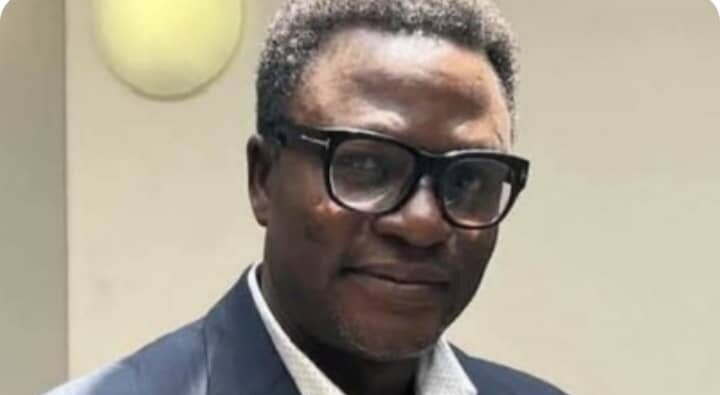
Dr. Leon Usigbe is mourned by President Tinubu, who praises the veteran journalist’s integrity, ethical reporting, and invaluable service to democratic governance

Dr. Leon Usigbe, a respected journalist and longtime member of the State House Press Corps, has passed away, drawing heartfelt tributes from President Bola Ahmed Tinubu.
Also read: President Tinubu mourns business icon Pascal Dozie, hails his enduring legacy
President Tinubu expressed deep sadness over the loss, describing Dr. Usigbe as a veteran State House Correspondent whose dedication to truth, balance, and ethical journalism made him a towering figure in Nigerian media.
“His calm demeanour and insightful reporting strengthened democratic governance and kept the public informed,” the President noted, highlighting Usigbe’s role in shaping responsible press coverage around the presidency.
The President added, “I extend my heartfelt condolences to his family, friends, colleagues at The Tribune, and the entire State House Press Corps. May Almighty God grant his soul eternal rest and comfort all who mourn this great loss.”
Also read: Buhari gave his all to the nation he loved, Wale Tinubu mourns
Dr. Leon Usigbe’s legacy as a journalist who upheld professional integrity remains a powerful testament to the crucial role of media in democracy.


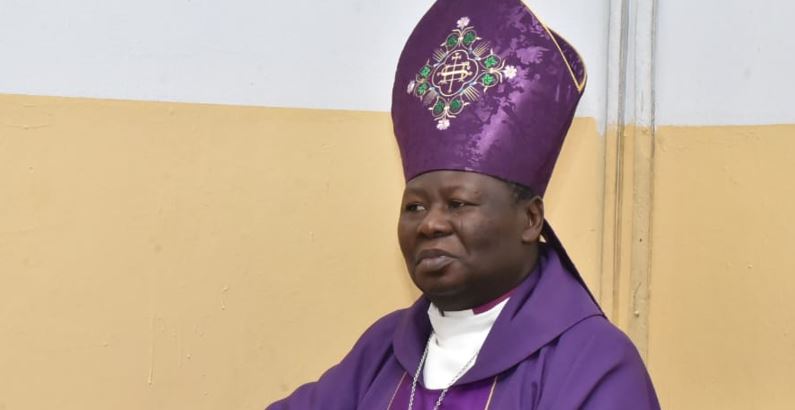
There was a heavy outburst of emotions on Sunday at the Synod of the Diocese of Nsukka Anglican Communion when the deputy governorship candidate of the Peoples Democratic Party (PDP) in Enugu State, Chijioke Ugwu, asked the gathering to pray for the souls of people who died after the Enugu State Government demolished Ogige Market in Nsukka.
Ugwu, who represented the party’s governorship candidate, Uche Nnaji, appealed for prayers for the peaceful repose of those who died and for strength for the survivors.
The market demolition, carried out without compensation to the former occupants, remains a sore point in the relationship between Governor Peter Mbah and the Nsukka cultural zone. Anger has persisted, especially after a motor park and a petrol station were built in its place.
It is claimed that more than 72 former shop owners in the demolished market have died as a result of the hardship and frustrations they faced after losing their sources of livelihood. The claim reflects the deep sense of loss still felt in the community years after the demolition.
Ugwu also appealed to the government to improve the quality of its projects for the future safety of children.
“The Smart schools they are building are collapsing every day because of poor-quality work. The roads are terrible. Nsukka during the rainy season is a terrible sight, and we cannot continue like this,” he said.
He further called on the church to pray for a re-examination of the cost of governance in the state, noting that ₦50 billion was budgeted to rehabilitate the Presidential Hotel while work was still ongoing.
The Synod was also attended by the Enugu State Deputy Governor, Ifeanyi Ossai, who called for a debate among political aspirants on the quality of the Mbah administration and sought the people’s support.
Other political leaders present included Chidi Mark Obeta, a member of the House of Representatives, and the deputy governorship candidate of the NDC, Frank Okenwa Omeje.
Uche Nnaji later donated ₦2 million to the Synod and pledged that his government, if elected, would invest in improving the platform and create a liaison office for smooth engagement, with plans to make the Synod a more robust forum for discussions on the welfare of the poor and vulnerable.


Police arrest seven suspected kidnappers in Abuja and Kaduna, recover Oluwadamilola Adedayo’s body and seize AK-47 rifles and ammunition
The Nigeria Police Force has arrested seven suspected members of a kidnapping syndicate operating in the Federal Capital Territory and Kaduna State, recovering the remains of a woman allegedly abducted and killed by the gang.
Also read:FG Vows Action Against Lagos Firms Over Power Theft
The police said the decomposing body of Oluwadamilola Adedayo was recovered from the suspects’ camp in Tukuba Forest, Kuje, Abuja, on October 19, 2026, following an intelligence-led investigation.
The victim was abducted alongside her mother, Nancy Adedayo, her 12-year-old brother, David Adedayo, and their housemaid, Jennifer David, during a gunpoint raid on their residence on Adedayo Adeosun Street, Kuchiyako, Kuje, on August 23.
According to the police, the kidnappers released the victim’s mother about an hour after the abduction to arrange ransom payment, while the housemaid and the boy were assaulted and abandoned unconscious in a forest.
They later regained consciousness and found their way home.
Addressing journalists in Abuja on Friday, the Commander of the Force Intelligence Department’s Special Tactical Squad, ACP Godfrey Victor, said the operation followed a petition referred by the Inspector-General of Police’s Secretariat on October 15.
He said intelligence gathering led to the arrest of two suspects in Rijana community, Kaduna State, while five others were subsequently apprehended in Sagbon Lugbe, Abuja, through a joint operation involving police officers, vigilante operatives and other security agencies.
“On 19th October 2026, operatives led by ACP Victor Ogbiede Godfrey proceeded to the gang’s camp at Tukuba Forest, Kuje, FCT, where the decomposing body of Miss Oluwadamilola Adedayo was recovered,” he said.
Victor said the family paid N16.2m for the release of the abducted children, but the suspects allegedly demanded an additional N50m before releasing Oluwadamilola.
The police identified the seven suspects as Ishaka Abdullahi, 27, also known as Langalanga; Abdullahi Dabo, 42; Abubakar Jibrin, 20, also known as Mai-Laya; Barahu Ibrahim, 24, also known as Black; Sani Mohammed, 24; Alidu Lawal, 18, also known as De Jaguar; and Yakubu Abubakar, 28, also known as Soldier.
The suspects remain allegations under investigation and have not been convicted by a court.
The operation also resulted in the recovery of weapons and other items allegedly linked to the syndicate.
According to Victor, the exhibits included four AK-47 rifles, a locally made revolver pistol, 63 rounds of live ammunition, a mobile phone allegedly used for ransom negotiations, N400,000 and a motorcycle.
He added that investigators had linked the group to the abduction of a businessman, John Ali, in Kuje on September 24.
The police said investigations were continuing as they worked to establish the full extent of the syndicate’s activities and gather evidence for prosecution.
Oluwadamilola’s father expressed gratitude to the Inspector-General of Police and the officers involved in the investigation, but said the family remained devastated by her death.
“The kidnapping and murder of our beloved daughter, Oluwadamilola, at this time has left our family in deep pain. However, the support and assurance from the leadership of the police force has given us strength and hope that justice will prevail,” he said.
He urged the police to pursue the investigation to its conclusion and ensure that everyone found responsible was brought to justice.
“We continue to appeal to the police, with the help of Almighty God, to get to the root of this matter and ensure that all those responsible for this wicked act are brought to book,” he added.
Also read:FG Vows Action Against Lagos Firms Over Power Theft
The arrests mark a significant development in the investigation into the family’s abduction, although the police have yet to announce the outcome of the prosecution process.


The FG vows action against Lagos companies over alleged illegal power connections, as it moves to recover unpaid charges and reduce grid losses
-
Politics3 years ago
13 Ondo Assembly Members Disown Endorsement of Aiyedatiwa
-
Politics3 years ago
APC Group, Ondo Govt, Quarrel Over Money for Endorsement
-

 Trending News5 years ago
Stop unsavoury, inciting statements – DSS warns
-

 Others5 years ago
Adron Homes Celebrates 10 Years Of Housing Excellence
-

 Humanity5 years ago
President Buhari Commiserates With Ambassador Maureen Tamuno Over The Loss Of Her Father
-

 Others7 years ago
EX- CUSTOMS BOSS, IBRAHIM MERA’S DWINDLING FAME
-

 Business3 years ago
Bigi Carbonated Soft Drinks Treats 40 Consumers to an Epic Easter Movie Hangout
-

 Business2 years ago
Wema Bank Shines at Global SME Finance Forum Conference Awards 2024 …Awarded: • SME Financier of the Year (Africa) • Platinum Award for Best Financier for Women Entrepreneurs (Africa)