
Business
NSDC’s Kamar Bakrin Drives Nigeria’s Sugar Self-Sufficiency


NSDC’s Kamar Bakrin says greenfield projects and outgrower programmes are key to Nigeria’s sugar self-sufficiency and economic growth

Kamar Bakrin, Executive Secretary and Chief Executive Officer of the National Sugar Development Council (NSDC), has said that Nigeria’s greenfield sugar projects and structured outgrower programmes are critical to achieving domestic sugar self-sufficiency.
Also read: Nigeria Reveals Annual Basic Salaries of Political and Judicial Office Holders
Speaking to Okechukwu Nnodim and select journalists in Abuja, Bakrin highlighted the role of recent Memoranda of Understanding signed with four project promoters.
Each project, he explained, combines large-scale sugarcane cultivation with modern processing facilities and is expected to add roughly 400,000 metric tonnes of sugar annually once fully operational.
The initiatives span the South-West, North-Central, and North-East regions, ensuring broad-based economic benefits, including job creation, infrastructure development, and enterprise growth.
Bakrin noted that GNAL Sugar, promoted by the Lee Group in Taraba State, is progressing steadily.
Taraba’s extensive land availability, reliable water resources, favourable agro-climatic conditions, and government support made it a prime choice for the project.
“We are taking a deliberate, structured approach to ensure long-term viability,” he said.
To support the greenfield projects, NSDC has established dedicated seedcane farms and deployed pre-sprouted bud chip technology via the Nigeria Sugar Institute.
This strategy shortens development cycles, reduces costs, and ensures a consistent supply of quality planting materials.
Bakrin emphasised that the Institute has been repositioned as a national centre of excellence, providing research, training, and technical support to all industry players.
The Sugarcane Outgrower Development Programme (SODP) has also attracted strong interest, Bakrin said.
The programme links farmers directly to licensed processors, offering guaranteed offtake, quality inputs, and technical support.
“This integrated approach reduces risk, boosts productivity, and builds confidence across the sugar value chain,” he added.
Bakrin further highlighted NSDC’s $1bn partnership with SINOMACH as a transformative investment for Nigeria’s sugar industry.
The deal is projected to bring 75,000 hectares under cultivation, produce up to 500,000 metric tonnes of sugar annually, and add 50,000 tonnes-per-day in factory processing capacity.
The initiative is designed to reduce imports, conserve foreign exchange, and create large-scale employment.
“Ambitions of this scale require discipline, sequencing, and rigorous execution,” Bakrin said.
Also read: Gbenga Daniel Praises Nigeria’s Economic Recovery Under Tinubu
“We have laid the groundwork, aligned stakeholders, and established institutional coordination to ensure these projects transition decisively from planning to execution.”



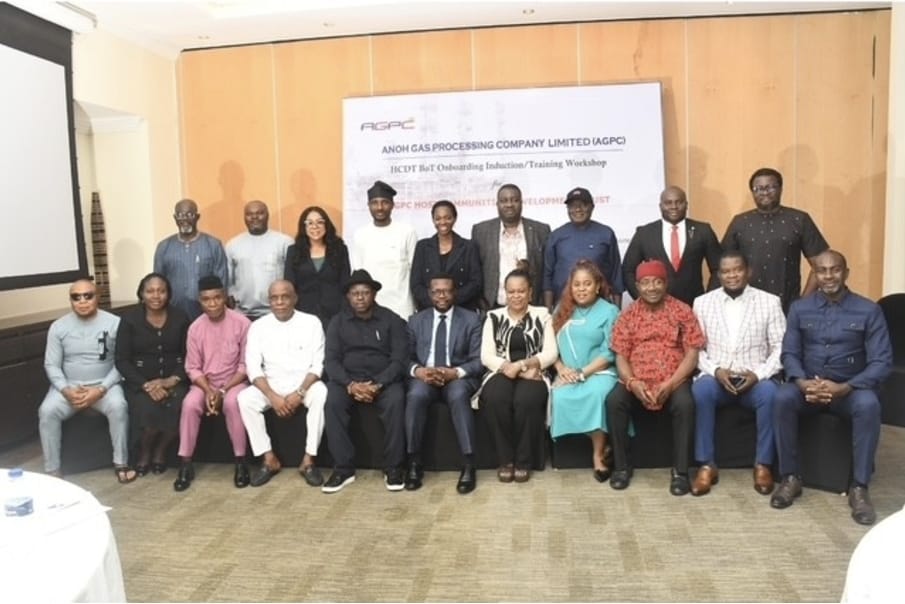
ANOH Gas inaugurates its HCDT Board, setting a new course for sustainable community development, transparency and accountability under the PIA
Banking
Theparkpay Technologies Limited Strengthens Global Payments Infrastructure with UK FCA Licence

-
Politics3 years ago
13 Ondo Assembly Members Disown Endorsement of Aiyedatiwa
-
Politics3 years ago
APC Group, Ondo Govt, Quarrel Over Money for Endorsement
-

 Trending News5 years ago
Stop unsavoury, inciting statements – DSS warns
-

 Others5 years ago
Adron Homes Celebrates 10 Years Of Housing Excellence
-

 Humanity5 years ago
President Buhari Commiserates With Ambassador Maureen Tamuno Over The Loss Of Her Father
-

 Others7 years ago
EX- CUSTOMS BOSS, IBRAHIM MERA’S DWINDLING FAME
-

 Business2 years ago
Bigi Carbonated Soft Drinks Treats 40 Consumers to an Epic Easter Movie Hangout
-

 Business2 years ago
Wema Bank Shines at Global SME Finance Forum Conference Awards 2024 …Awarded: • SME Financier of the Year (Africa) • Platinum Award for Best Financier for Women Entrepreneurs (Africa)