News
How Sanwo-Olu is selling Lagos as Africa’s gateway for investment

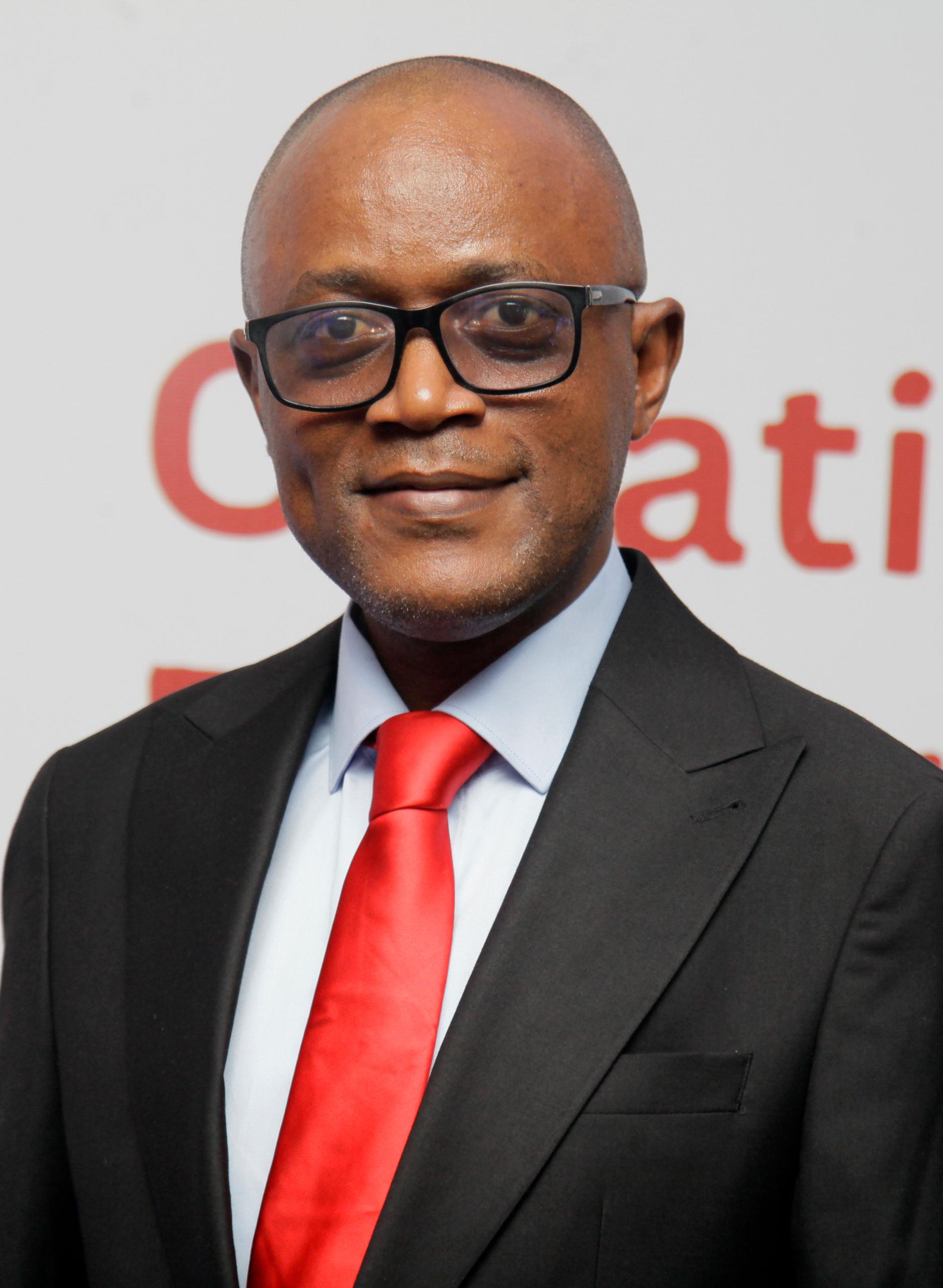
Lagos Investment Summit aims to attract ₦4 trillion in fresh investments as Governor Babajide Sanwo-Olu promotes Lagos as Africa’s business gateway

Ahead of the Invest Lagos 3.0 summit holding at Eko Hotel & Suites from June 8 to 10, Governor Babajide Sanwo-Olu is pitching Lagos as Africa’s leading destination for investment.
Also read: Re: Hamzat and the Future of Lagos: A Response to Bolaji Sanusi’s Tirade Against Sanwo-Olu, Justice Forum and Faleke
The target is to attract about ₦4 trillion, or roughly $2.5 billion, in fresh investments into sectors ranging from infrastructure and technology to housing, agriculture and transport.
For decades, Lagos has occupied a unique position in Nigeria and Africa. It is the country’s commercial nerve centre, home to major banks, manufacturing firms, technology companies, ports and financial institutions.
It is also a city whose scale and pace continue to shape conversations about urbanisation, infrastructure and economic growth on the continent.
The argument being advanced by Lagos officials is straightforward. With its population, market size, transport links and expanding infrastructure, Lagos is positioning itself not simply as Nigeria’s economic capital, but as a gateway to African business opportunities.
According to investment documents prepared ahead of the summit, Lagos contributes more than 30 per cent of Nigeria’s Gross Domestic Product and accounts for about 90 per cent of the country’s foreign trade flow.
The state government also says Lagos generates about 70 per cent of its revenue internally, reducing dependence on federal allocations.
That revenue growth has become a major part of the Lagos economic story. Lagos generated more than ₦1 trillion in Internally Generated Revenue in 2025, making it the first Nigerian state to cross that threshold. The state’s formal economy has also been estimated at more than $130 billion.
Mr Sanwo-Olu recently pushed the case for Lagos during Africa Week 2026 at King’s College London in the United Kingdom.
described Lagos as a powerful symbol of Africa’s potential and an example of how sub-national governments can drive economic growth and global influence.
According to the governor, Lagos has evolved into Africa’s second-largest city economy, with an estimated Gross Domestic Product of about $259 billion on a purchasing power parity basis.
He said the city has become Nigeria’s principal commercial gateway and a major destination for investment, enterprise and talent.
Sanwo-Olu noted that despite occupying a relatively small landmass within Nigeria, Lagos has grown into one of the continent’s most economically consequential urban centres.
He said policy, innovation and enterprise had combined to shape not only local development but also regional and global economic conversations.
The numbers partly explain the attraction. Lagos has an estimated population of about 22 million people and remains Africa’s most populous city.
Officials estimate the population could exceed 30 million within a few years, with annual growth estimated at 3.2 per cent. More than 45 per cent of Nigeria’s skilled manpower is said to reside in Lagos, while the literacy rate stands at 92 per cent.
Infrastructure remains central to the state’s investment push. Projects such as the Lekki Deep Sea Port, the Lekki Free Zone and the Dangote refinery corridor are being promoted as evidence of Lagos’ ambition to become a regional logistics and industrial hub.
The Lekki Free Zone has emerged as one of the focal points of the state’s industrial strategy. Located along the Lekki Peninsula, the zone is designed to attract manufacturing, logistics, energy and technology investments through tax incentives and infrastructure support.
Officials say the area is expected to support industries ranging from automobile assembly and agro processing to tourism and real estate.
Sanwo Olu said his administration’s development philosophy since 2019 has been to treat Lagos not as a challenge to be managed but as a platform to be unlocked.
He said this vision is reflected in the state’s THEMES+ agenda, which focuses on transport, health, education, technology, urban development, security and social inclusion.
Transport reform has remained a major part of that strategy. The governor pointed to the commencement of passenger operations on the Blue Line Rail and the inauguration of the Red Line Rail, alongside investments in roads, bridges, bus reforms and water transportation.
“These are not isolated projects but part of a deliberate attempt to transform how a city of Lagos’ scale functions,” he said.
The governor also listed achievements, including the delivery of more than 3,000 affordable housing units, deployment of 250 patrol vehicles for security operations and the acquisition of 62 fire trucks to strengthen emergency response services.
He added that the state had invested in food security initiatives such as the Imota Rice Mill and expanded logistics systems.
Housing remains one of Lagos’ biggest economic and social challenges. State documents estimate a housing deficit of about 1.8 million units, while housing demand is projected to grow by 20 per cent annually.
About 80 per cent of households are estimated to live in rented accommodation.
Technology and financial services continue to define much of modern Lagos. The city has emerged as Nigeria’s leading technology ecosystem, attracting startups, venture capital firms and multinational companies.
Sanwo Olu said Lagos now hosts more than 2,000 startups and has produced five unicorns in fintech and digital commerce.
The city has also been ranked among the world’s fastest-growing technology ecosystems.
The governor said Lagos’ ₦4.44 trillion budget for 2026 reflects the administration’s determination to continue investing in infrastructure, social services and economic competitiveness.
He added that Lagos accounts for a significant share of Nigeria’s capital importation and internally generated revenue, arguing that a strong Lagos ultimately strengthens the national economy.
He also highlighted the growing importance of the creative economy. According to him, sectors such as music, film, fashion, design and digital content have turned Lagos into a major creative hub, with Nollywood and Nigerian musicians projecting African creativity globally.
Still, challenges remain. Traffic congestion, flooding, pressure on public infrastructure and concerns about the cost of doing business continue to affect residents and investors alike.
Economic inequality also remains visible across the city, where luxury developments exist alongside overcrowded communities with limited services.
For the Lagos State Government, Invest in Lagos 3.0 is therefore more than a promotional event.
It is an attempt to strengthen confidence in the city’s long-term economic direction at a time when African economies are competing aggressively for global capital.
Whether through ports, finance, technology, manufacturing or consumer markets, Lagos continues to present itself as a city too important for investors to ignore.
Also read: Sanwo-Olu Earns Prestigious ACS Induction Honour
The challenge, as always, will be balancing rapid growth with the infrastructure and governance needed to sustain it.



News
NSCDC CG Visits Minna for 7-Day Fidau Prayer of Deceased Miners, Reaffirms Commitment to Justice

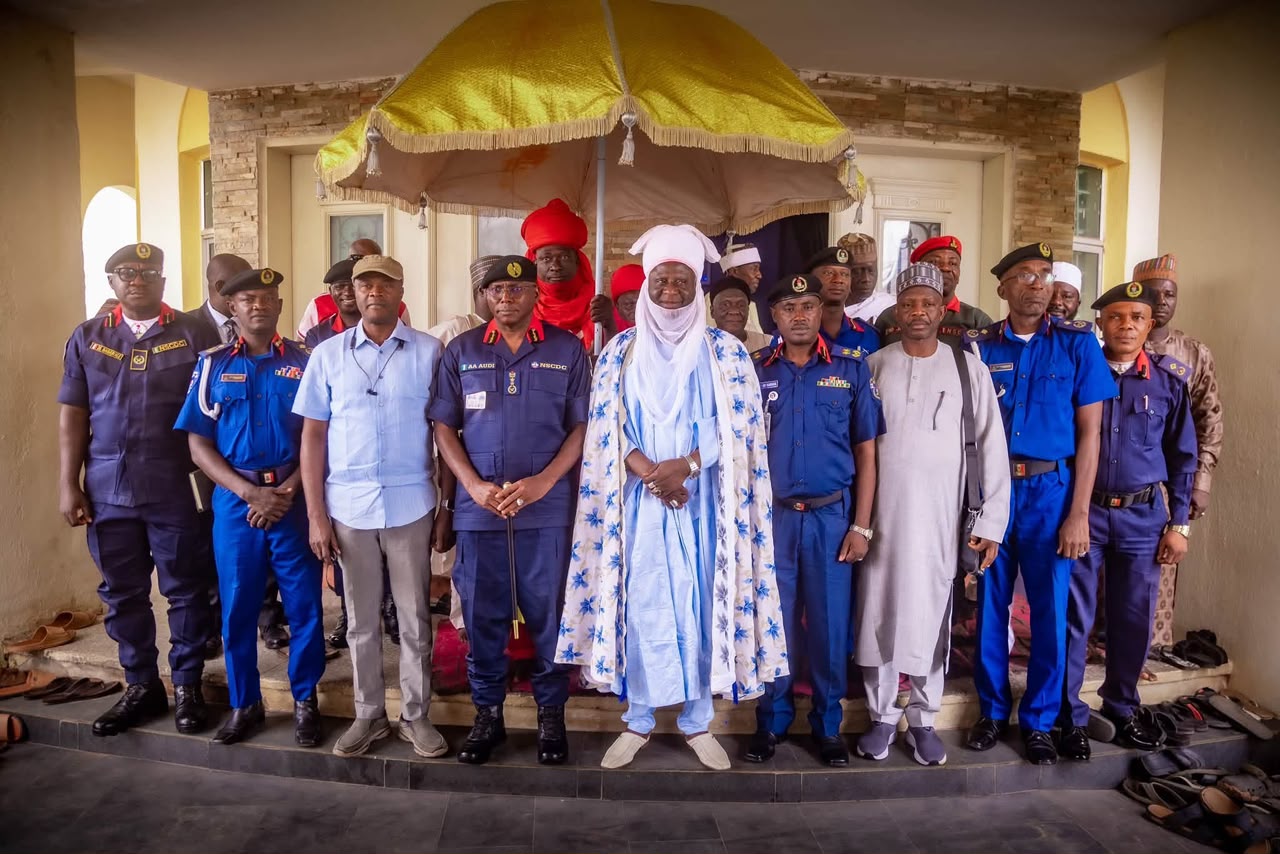
The Commandant General of the Nigeria Security and Civil Defence Corps, Professor Ahmed Abubakar Audi, mni, OFR, alongside his management team and other selected officers, on Thursday, the 24th of September, visited Minna, Niger State, to observe the 7-day Fidau prayer for the deceased miners who died in the Corps’ custody.
During the visit, the CG also met with His Royal Highness, Alhaji (Dr.) Umar Farouk Bahago, at his Minna Palace, the parents of the deceased and the family of the survivors. The visit was aimed at commiserating directly with the affected families during this period of grief. During the interaction, the CG strongly condoled with the families and gave a firm assurance that the Corps will not shield anyone found culpable, emphasising that justice and transparency will take precedence.
Speaking during the visit at the Emir’s palace, the CG reiterated his unwavering stance on ensuring that justice is served in the tragic incident that claimed the lives of 37 suspected illegal miners. He stated that the Corps would not shield any personnel found culpable, emphasising that transparency and accountability would guide the entire process. “I want to assure you of my unwavering support for the investigative panel in unravelling the truth. I am here commiserating with you on behalf of the NSCDC, President Bola Ahmed Tinubu GCFR and the Minister for Interior, Dr Olubunmi Tunji-Ojo. The incident is quite unfortunate but I assure you that justice must prevail. Anybody found wanting in the course of the findings will be prosecuted in line with the laws of the land. We won’t protect anybody and everyone found culpable will face the music.”
The CG, who joined the bereaved families and community members in prayers for the repose of the souls of the deceased, described the incident as a painful loss and assured the families that the Corps would stand by them throughout the period of mourning. He also condoled with the Emir of Minna, acknowledging the traditional ruler’s fatherly role in the community and seeking his continued support and prayers.
Addressing the broader steps being taken to uncover the truth, the CG noted that the Federal Government, under the directive of the Presidency, has constituted a high-powered investigative committee to probe the incident. He assured the public that the NSCDC is fully cooperating with the panel, noting that relevant personnel have already been placed in protective custody to make them fully available for a transparent investigation process.
Highlighting the cultural and spiritual significance of the third and seventh-day prayers for the departed, the CG explained that his visit was also to join the Muslim faithful in offering prayers for the repose of the soul of the deceased and strength for the bereaved families.
Responding on behalf of the traditional institution and the families, His Royal Highness expressed appreciation to the Commandant General for the swift administrative actions taken, for cooperating with the Presidential committee, and for deeming it fit to personally visit and identify with the community in their moment of grief.
As a mark of mourning and accountability, the NSCDC flag has been ordered to fly at half-mast across all formations for three days. The Corps awaits autopsy results to determine the exact cause of death.
-
Politics3 years ago
13 Ondo Assembly Members Disown Endorsement of Aiyedatiwa
-
Politics3 years ago
APC Group, Ondo Govt, Quarrel Over Money for Endorsement
-

 Trending News5 years ago
Stop unsavoury, inciting statements – DSS warns
-

 Others5 years ago
Adron Homes Celebrates 10 Years Of Housing Excellence
-

 Humanity5 years ago
President Buhari Commiserates With Ambassador Maureen Tamuno Over The Loss Of Her Father
-

 Others7 years ago
EX- CUSTOMS BOSS, IBRAHIM MERA’S DWINDLING FAME
-

 Business2 years ago
Bigi Carbonated Soft Drinks Treats 40 Consumers to an Epic Easter Movie Hangout
-

 Business2 years ago
Wema Bank Shines at Global SME Finance Forum Conference Awards 2024 …Awarded: • SME Financier of the Year (Africa) • Platinum Award for Best Financier for Women Entrepreneurs (Africa)