
News
Lagos State House of Assembly Approves ₦4.44 Trillion Budget for Year 2026


The Lagos State House of Assembly has approved a total budget of ₦4,444,509,776,438
(Four Trillion, Four hundred and Forty Four Billion, Five Hundred and Nine Million, Seven Hundred and Seventy-Six Thousand, Four Hundred and Thirty Eight naira) for the 2026 fiscal year.
The approval was granted during a plenary session held on Thursday, January 8, following the presentation of a comprehensive report by the Chairman of the House Committee on Economic Planning and Budget, Hon. Sa’ad Olumoh.

The session, presided over by the Speaker, Rt. Hon. Mudashiru Obasa, saw lawmakers adopt the report through a voice vote, signaling unanimous support for the financial plan aimed at driving sustainable development across the state.
The 2026 budget prioritises infrastructure development, education, healthcare, economic growth, and social welfare, with over 52% allocated to capital projects. This strategic allocation underscores the government’s commitment to inclusive growth and improved quality of life for residents of Lagos State.
Following the passage, Speaker Obasa directed the Clerk of the House, Barr. Olalekan Onafeko, to transmit a clean copy of the approved bill to Governor Babajide Sanwo-Olu for assent. The Speaker commended members of the Assembly for their diligence and collaborative efforts in ensuring the timely passage of the budget.
It will be recalled that Governor Sanwo-Olu had presented a budget proposal of ₦4.23 trillion to the House on November 25, 2025, which he termed ‘Budget of Shared Prosperity.”
The governor declared then that the budget reflects Lagos State’s vision to strengthen its position as a leading economic hub in Africa through robust investments in critical sectors that foster growth, innovation, and social progress.


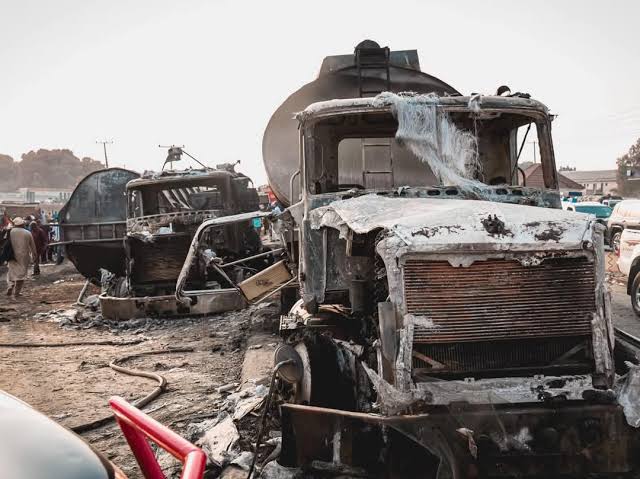
Reps seek federal relief for Edo tanker explosion victims, urging NEMA aid, market rehabilitation and urgent repairs to the Benin-Lagos Expressway.
The House of Representatives has called on the Federal Government to provide relief materials, financial assistance and rehabilitation support to victims of the deadly petrol tanker explosion at Oluku in Ovia North-East Local Government Area of Edo State.
Also read: Wike to Dumo Lulu-Briggs: Quit Rivers Governorship Race, Back Someone Else
The lawmakers also urged the government to repair dangerous sections of the Benin-Lagos Expressway around Oluku to reduce the risk of similar disasters.
The resolutions followed the adoption of a motion of urgent public importance moved by Omosede Igbinedion, a lawmaker representing a constituency in Edo State, during plenary on Wednesday, October 21.
The Edo tanker explosion occurred on Thursday, October 15, when a petrol tanker reportedly lost control and overturned near Oluku Market, spilling fuel that later ignited and spread to nearby businesses.
According to the motion, the fire caused fatalities and serious injuries while destroying shops, stalls, vehicles, goods and other property.
The damage also left traders and their families facing substantial financial losses and the loss of their livelihoods.
Presenting the motion, Igbinedion said the incident had caused widespread hardship, with some victims losing their savings and facing mounting financial difficulties.
She also raised concerns about reports of severe burns among survivors, some of whom reportedly required emergency treatment at the University of Benin Teaching Hospital and other medical facilities.
The lawmaker said the scale of the destruction required federal intervention to complement the Edo State Government’s response.
She commended Governor Monday Okpebholo for visiting the scene and affected victims, as well as pledging to rebuild the damaged market and support traders.
However, she argued that additional assistance was necessary to provide immediate relief, restore livelihoods and help affected families recover from the disaster.
Following the motion’s adoption, the House urged the National Emergency Management Agency to assess the damage and provide relief materials, financial support and rehabilitation assistance to victims.
It also called on the Federal Government to work with the Edo State Government to rebuild the affected market and support the recovery of businesses disrupted by the fire.
The lawmakers further urged the Federal Ministry of Works and the Federal Roads Maintenance Agency to inspect and urgently rehabilitate dangerous sections of the Benin-Lagos Expressway around Oluku.
In another resolution, the House directed the Federal Road Safety Corps, the Nigerian Midstream and Downstream Petroleum Regulatory Authority and other relevant agencies to investigate the circumstances surrounding the crash, fuel spillage, evacuation efforts and subsequent fire.
The agencies were also asked to recommend preventive measures, particularly along major highways where fuel tankers operate close to markets, shops and residential communities.
The incident has renewed concerns about the dangers of attempting to collect fuel from overturned tankers. Spilled petrol can ignite rapidly, exposing people nearby to potentially fatal fires and explosions.
Also read: Wike to Dumo Lulu-Briggs: Quit Rivers Governorship Race, Back Someone Else
The House’s resolutions seek to address both the immediate needs of affected residents and the wider safety concerns raised by the disaster. Federal assistance, road repairs and a thorough investigation are expected to support recovery efforts and help reduce the likelihood of similar incidents.

EFCC arrests Abuja businessman Innocent Ezuma over alleged $120m fraud involving a Ukrainian investor and suspected financial crimes
-
Politics3 years ago
13 Ondo Assembly Members Disown Endorsement of Aiyedatiwa
-
Politics3 years ago
APC Group, Ondo Govt, Quarrel Over Money for Endorsement
-

 Trending News5 years ago
Stop unsavoury, inciting statements – DSS warns
-

 Others5 years ago
Adron Homes Celebrates 10 Years Of Housing Excellence
-

 Humanity5 years ago
President Buhari Commiserates With Ambassador Maureen Tamuno Over The Loss Of Her Father
-

 Others7 years ago
EX- CUSTOMS BOSS, IBRAHIM MERA’S DWINDLING FAME
-

 Business2 years ago
Bigi Carbonated Soft Drinks Treats 40 Consumers to an Epic Easter Movie Hangout
-

 Business2 years ago
Wema Bank Shines at Global SME Finance Forum Conference Awards 2024 …Awarded: • SME Financier of the Year (Africa) • Platinum Award for Best Financier for Women Entrepreneurs (Africa)