
Politics
Obasa’s Journey of Grace and Grind from Agege to Alausa


Mudashiru Obasa celebrates another year of impactful leadership as Lagos Assembly Speaker, marking resilience and enduring service to the state

QUOTE… “As friends and associates, colleagues and party faithful fall over themselves in celebration of this legislator par excellence, there is an undercurrent of posers whether the ‘Agege Boy’ will hearken to the call to transfer his legislative and political ingenuity to the Governor’s Office, Alausa, in 2027.
Also read: Mudashiru Obasa Assures APC Members of Continued Support
Time, as always, will tell. For now, let the bourbon and bubbly froth over while the ‘birthday boy’ bobs and weaves in exultation for clocking another year on firma.”
The distance between Agege and Alausa is just about six kilometres. Barring the ubiquitous Lagos traffic snarls, it would take a mere 10 minutes or less to drive from one end to the other.
However, in outlook, opportunities for growth, quality of life, and other socio-economic indices, the gap between the two places is as wide as the Grand Canyon.
Until a few years ago, Agege was a boisterous, gritty neighbourhood where it was easier for a young man without direction to lose his way than to succeed.
Alausa, by contrast, is calm and orderly—a middle-class neighbourhood where life seems bright and beautiful.
It also houses the seat of the Lagos State Government, where decisions shaping Nigeria’s economic powerhouse are made.
Thus, transitioning from the tough streets of Agege, with its self-reinforcing poverty traps and systemic barriers, to becoming a power broker in Alausa is no small feat.
It takes exceptional grit, grind, and grace. That is why the story of Rt. Hon. Mudashiru Ajayi Obasa, Speaker of the Lagos State House of Assembly, remains a testament to uncommon perseverance and purpose that will continue to inspire and resonate through the ages.
Obasa’s rise and relevance in the politics of Lagos State reads like that of the intrepid mushroom that pierces the motionlessness of earth, pushing relentlessly, through faint form, till the hour of fertility strikes.
From an early age, he pounded against oblivion with defiant rhythm, immersing himself in grassroots politics in Agege, and he was entrusted with key leadership roles including, among others, serving as zonal chairman, executive committee member, and campaign committee chairman.
When the time came, the Lagos State University, LASU, law graduate contested and won election into the Agege Local Government Legislative Council as a Councillor in Ward E and went on to serve as Deputy Leader. That was between 1999 and 2003.
At the end of that stewardship, Obasa contested and convincingly won his election into the Lagos State House of Assembly on the platform of the Alliance for Democracy (AD) to represent Agege Constituency 1 in 2003.
His constituents have re-elected him in successive election cycles, and he is currently in his sixth term as a legislator.
At the inauguration of the Eighth Legislative Assembly in 2015, Obasa was unanimously elected as the speaker; a feat he repeated at the Ninth and 10th Assemblies.
By 2027, he would become arguably the longest-serving state legislator in the country and the longest-serving Speaker of the Lagos State Assembly.
And he has repaid that trust implicitly reposed in him by his constituents with the massive, mouth-watering infrastructures he has attracted to Agege that have rejuvenated the look and feel of the area, which many now fondly call Mini London.
There is hardly an untarred road in the entirety of Agege, thanks to Speaker Obasa. Significantly, there is a new flyover at the hitherto chaotic Pen Cinema junction that has improved traffic management and increased the value of real estate in Agege and neighbouring communities.
Indeed, that flyover has reduced the travel time between Agege and Alausa, just like Obasa’s story has made it clear that an Agege-bred can rise to the acme of their career if they dared to dream.
That is why he invests heavily in his people in the area of improved access to education, entrepreneurship, healthcare, security, and grassroots and youth empowerment, among others.
On Tuesday, November 11, Obasa turns a year older. Though not a landmark birthday worthy of any celebration, if you have walked in his shoes, survived many political landmines and outright treachery, you would understand that this particular birthday calls for the grandest celebration and thanksgiving. Indeed, he has so many reasons to be thankful.
Earlier in the year, precisely on January 19, Obasa was abruptly ‘removed’ from office by his colleagues in the House of Assembly, the same Assembly he had led over the past decade with unparalleled distinction and diplomacy.
Though he was out of the country when the purported removal was orchestrated on the floor of the House that he had orbited for the past 22years, he hurriedly returned home to reclaim his mandate.
Obasa was quoted in several media reports that he was not against being removed as Speaker, which he said was not a family title, but that things should be done legally and constitutionally.
After several interventions by well-meaning elders of the party and President Bola Ahmed Tinubu, Obasa was reinstated on March 3, bringing an end to the most turbulent 49days ever experienced in the assembly and, by extension, the state.
A federal high court would later declare that the action of January 19 was illegal, unconstitutional, and null and void.
The court also nullified the proceedings and resolutions of the Assembly held on that day. Instructively, this incident happened in the very year he celebrates his 10th anniversary as Speaker.
During a plenary sitting last June, members of the Assembly unanimously lauded Obasa’s ‘sterling leadership, legislative depth, strategic foresight, and firm protection of institutional integrity over the last decade’, concurring that it is no easy feat to serve as a speaker for this long, especially within the challenging political landscape of Lagos State.
They also variously described his tenure as progressive, prodigious, and impactful while proposing to establish a legislative institute and an annual legislative awards ceremony to commemorate the milestone.
The lawmakers reckoned that Speaker Obasa deserves all the plaudits that come his way for, especially, elevating the Lagos State House of Assembly “to be the leading light and pathfinder for Nigerian and African Legislatures.”
And for his riveting contributions, achievements, and steadfast devotion to the socio-economic prosperity and progress of the state, and the welfare and developmental needs of the people, which have become a considerable part of the success story of Lagos State, no day in his life should go without being celebrated.
As friends and associates, colleagues and party faithful fall over themselves in celebration of this legislator par excellence, there is an undercurrent of posers whether the ‘Agege Boy’ will hearken to the call to transfer his legislative and political ingenuity to the Governor’s Office, Alausa, in 2027.
Also read: Mudashiru Obasa Urges New Chairmen to Breathe Freely, Lead Without Interference
Time, as always, will tell. For now, let the bourbon and bubbly froth over while the ‘birthday boy’ bobs and weaves in exultation for clocking another year on firma.


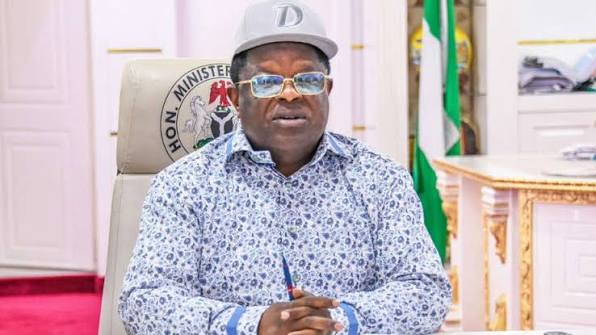
David Umahi predicts a South-East voting shift in 2027, citing Tinubu’s infrastructure projects and appointments across the region
Minister of Works David Umahi has predicted that voters in the South-East will support President Bola Tinubu differently in the 2027 presidential election, arguing that federal infrastructure projects and political appointments have changed the region’s relationship with the administration.
Also read: FG to immortalise Nigerian soldiers killed in Liberia, Sierra Leone
Umahi made the prediction in an interview with ARISE News published on Friday, describing the region’s overwhelming support for Labour Party candidate Peter Obi in the 2023 election as an “accident of history”.
He attributed the voting pattern to anger over what he described as the region’s marginalisation under the previous administration.
“In 2023, it was an accident of history. It was a demonstration of the anger of the people of South East on how they were treated,” he said.
The former Ebonyi State governor added that he believed the situation had changed under Tinubu.
“We’ve been marginalised in the past, but it’s no longer so,” Umahi said.
“If in 2023 they demonstrated their anger, in 2027 they are going to demonstrate their joy on how the President has treated them,” he added.
The minister said federal road projects and other investments in the South-East were reasons voters might reconsider their political choices in 2027.
He also claimed that serving and former governors, traditional rulers and other influential figures in the region were increasingly aligning with Tinubu.
Umahi argued that voters would be reluctant to abandon what he described as infrastructure gains for another political “gamble”.
However, his prediction reflects his own assessment of the region’s political mood.
The interview did not establish how voters currently intend to vote in 2027.
Umahi rejected suggestions that South-East political leaders supporting Tinubu were betraying the region or Obi, arguing that the region’s political interests should not be permanently tied to one candidate.
He also criticised social media supporters who insult regional leaders for backing the President, saying such attacks would not advance Obi’s political interests or those of the South-East.
The minister maintained that the region needed to negotiate and build alliances with other parts of Nigeria if it hoped to produce a president in the future.
Asked whether he believed Tinubu would defeat Obi in the South-East in 2027, Umahi responded confidently: “Why do you say I believe? That is what is going to happen!”
Also read: FG to immortalise Nigerian soldiers killed in Liberia, Sierra Leone
His comments come as political alignments and debates over regional representation begin to shape discussions ahead of the 2027 general election.

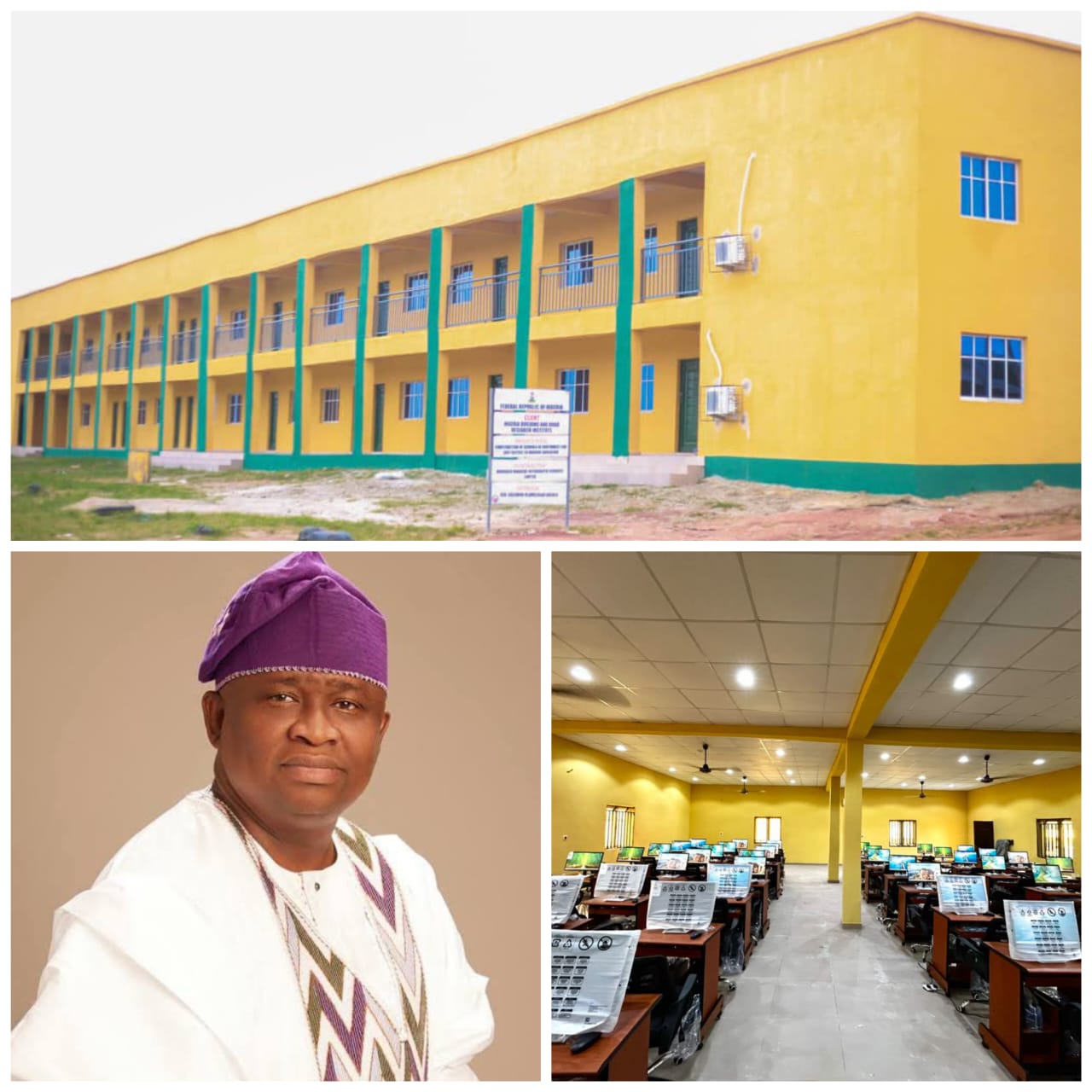
Senator Solomon Adeola delivers a 12-classroom block and an ICT centre to two Ogun schools to improve learning and access to digital education
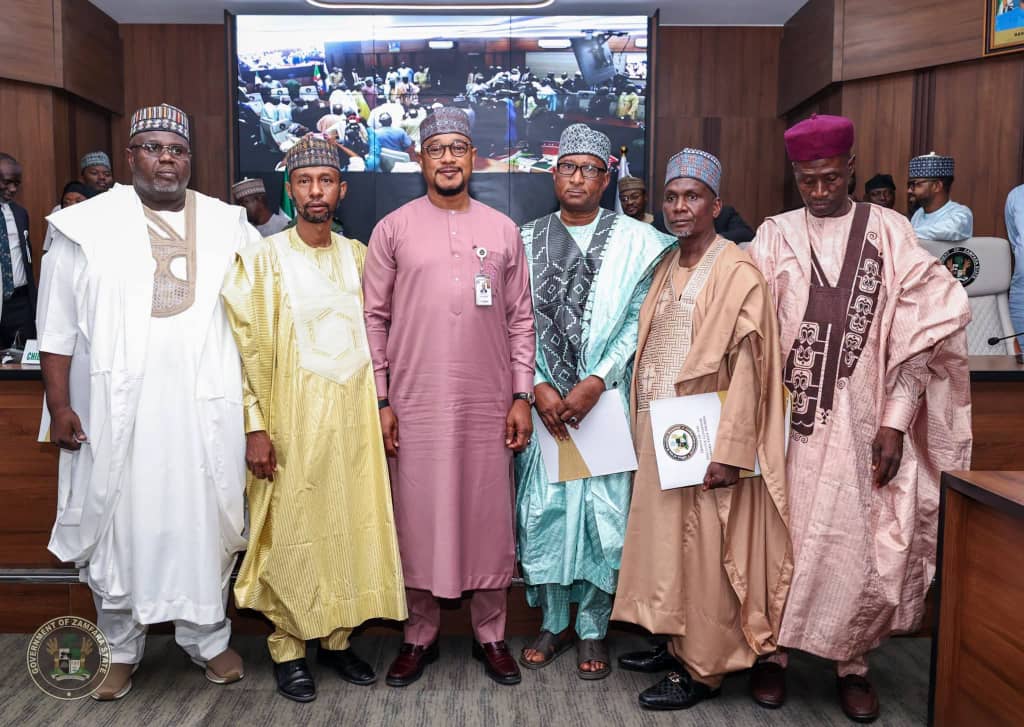
Dauda Lawal swears in five permanent secretaries in Zamfara, urging them to follow public service rules, financial regulations and relevant laws
Zamfara State Governor, Dauda Lawal, has sworn in five new permanent secretaries, urging them to comply with Public Service Rules, financial regulations and other relevant laws in the discharge of their duties.
Also read: 2027: 21 Adamawa LG Chairmen, 226 Councillors Dump PDP for APC
The swearing-in ceremony took place on Thursday at the Grand Chamber of the Government House in Gusau, the state capital.
The newly appointed permanent secretaries are Ahmad S. Zamfara, Nasiru Halilu Anka, Mu’azu Jibril Guraguri, Adamu Abdullahi Kanoma and Sani Muhammad Shinkafi.
The Chief Judge of Zamfara State, Justice Kulu Aliyu, administered the oath of office to the appointees, who pledged allegiance to the Federal Republic of Nigeria in accordance with the Constitution and the law.
Speaking at the ceremony, Lawal congratulated the new permanent secretaries, describing their appointments as recognition of their experience, abilities and readiness to take on greater responsibilities.
He said their roles extended beyond personal career advancement, noting that their decisions and conduct would influence government performance and the welfare of residents.
“The Permanent Secretary is central to Government, providing administrative leadership, institutional continuity, and policy advice while implementing approved programs,” the governor said.
He added that permanent secretaries were responsible for maintaining discipline, coordinating their establishments and ensuring that public resources were used for their intended purposes.
Lawal said his administration remained committed to strengthening government institutions and improving public administration to support Zamfara’s development priorities.
He noted that the civil service played a critical role in translating government decisions into practical results, particularly in the delivery of essential services.
The governor urged the new appointees to align their work with his administration’s priorities through proper planning, realistic implementation strategies, effective supervision and continuous assessment of results.
He also called on them to maintain constructive and professional relationships with commissioners and other political officeholders.
According to Lawal, political leaders are responsible for setting policy, while career civil servants provide the institutional knowledge, technical advice and administrative capacity needed to implement it.
He stressed that mutual respect and cooperation between political officeholders and career civil servants were essential to effective governance.
Also read: 2027: 21 Adamawa LG Chairmen, 226 Councillors Dump PDP for APC
The governor urged the permanent secretaries to uphold discipline and professionalism while ensuring that their departments supported the administration’s development agenda and served the needs of the people of Zamfara.
-
Politics3 years ago
13 Ondo Assembly Members Disown Endorsement of Aiyedatiwa
-
Politics3 years ago
APC Group, Ondo Govt, Quarrel Over Money for Endorsement
-

 Trending News5 years ago
Stop unsavoury, inciting statements – DSS warns
-

 Others5 years ago
Adron Homes Celebrates 10 Years Of Housing Excellence
-

 Humanity5 years ago
President Buhari Commiserates With Ambassador Maureen Tamuno Over The Loss Of Her Father
-

 Others7 years ago
EX- CUSTOMS BOSS, IBRAHIM MERA’S DWINDLING FAME
-

 Business2 years ago
Bigi Carbonated Soft Drinks Treats 40 Consumers to an Epic Easter Movie Hangout
-

 Business2 years ago
Wema Bank Shines at Global SME Finance Forum Conference Awards 2024 …Awarded: • SME Financier of the Year (Africa) • Platinum Award for Best Financier for Women Entrepreneurs (Africa)