
News
Nigeria Records N6 Trillion FAAC Disbursement in Q3 2025


Nigeria’s N6 trillion FAAC disbursement in Q3 2025 marks record high; states urged to use funds for development projects

Nigeria’s Federation Account recorded its highest quarterly disbursement in the third quarter of 2025, with N6 trillion shared among the three tiers of government, according to the Nigerian Extractive Industries Transparency Initiative (NEITI).
Also read: SERAP files suit against Wike, state governors over fuel subsidy mismanagement
The figures, published in NEITI’s Quarterly Review for Q3 2025, represent a 55.6 per cent year-on-year increase compared with the same period in 2024, and more than a twofold rise in allocations over the past two years.
NEITI disclosed that the Federation Account Allocation Committee (FAAC) distributed a total of N9.62 trillion between September and November 2025.
Governor Sheriff Oborevwori of Delta State urged all governors to prioritise the welfare of their people, noting that states now have increased resources to fund development projects.
He made the comments during the flag-off of the N39.3 billion Otovwodo flyover project in Ughelli North Local Government Area.
The N6 trillion disbursement included 13 per cent derivation payments to oil-producing states, underscoring the continued dominance of oil revenues in national allocations.
The federal government received N2.19 trillion, state governments N1.97 trillion, and local governments N1.45 trillion.
NEITI’s analysis indicated that statutory revenue contributed 62 per cent of the total shared receipts, while Value Added Tax (VAT) made up 34 per cent.
The Electronic Money Transfer Levy and non-oil excess revenue each accounted for two per cent.
State allocations varied widely.
Lagos State received the highest share at N179.3 billion, averaging N59.76 billion per month, followed by Kano with N79.2 billion and Rivers State with N78.8 billion.
At the lower end, Nasarawa, Ebonyi, and Ekiti received N42.5 billion, N42.9 billion, and N43 billion respectively, highlighting a N136.8 billion gap between the highest and lowest allocations.
Among oil-producing states, Delta recorded the highest gross allocation at N180.68 billion, with Akwa Ibom, Bayelsa, and Rivers also benefiting significantly from derivation inflows, which totalled approximately N424 billion for the period.
On debt obligations, NEITI reported that deductions from states’ allocations to service debts amounted to N225.89 billion, a 6.5 per cent decline from the previous quarter.
The average debt service ratio stood at 9.4 per cent, with over two-thirds of states recording ratios below 10 per cent, suggesting improving subnational debt sustainability.
Also read: Tinubu’s second anniversary: Obasa highlights economic growth, debt repayment as successes
Despite the record inflows, NEITI cautioned of potential fiscal risks in the fourth quarter of 2025, citing a decline in average oil prices and crude oil production from 1.64 million barrels per day in Q3 to 1.59 million barrels per day in the first month of Q4.


Ultimate Communications announces the HAMZAT biopic premiere at Ikeja City Mall, featuring Nollywood stars and Oba Elegushi as Royal Father of the Day
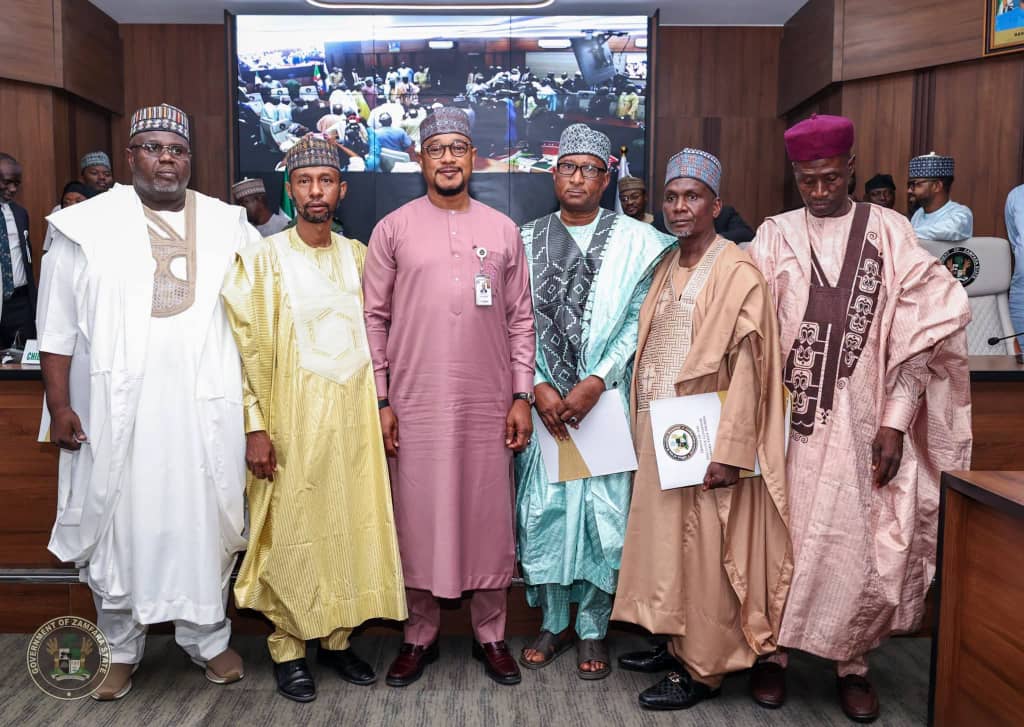
Dauda Lawal swears in five permanent secretaries in Zamfara, urging them to follow public service rules, financial regulations and relevant laws
Zamfara State Governor, Dauda Lawal, has sworn in five new permanent secretaries, urging them to comply with Public Service Rules, financial regulations and other relevant laws in the discharge of their duties.
Also read: 2027: 21 Adamawa LG Chairmen, 226 Councillors Dump PDP for APC
The swearing-in ceremony took place on Thursday at the Grand Chamber of the Government House in Gusau, the state capital.
The newly appointed permanent secretaries are Ahmad S. Zamfara, Nasiru Halilu Anka, Mu’azu Jibril Guraguri, Adamu Abdullahi Kanoma and Sani Muhammad Shinkafi.
The Chief Judge of Zamfara State, Justice Kulu Aliyu, administered the oath of office to the appointees, who pledged allegiance to the Federal Republic of Nigeria in accordance with the Constitution and the law.
Speaking at the ceremony, Lawal congratulated the new permanent secretaries, describing their appointments as recognition of their experience, abilities and readiness to take on greater responsibilities.
He said their roles extended beyond personal career advancement, noting that their decisions and conduct would influence government performance and the welfare of residents.
“The Permanent Secretary is central to Government, providing administrative leadership, institutional continuity, and policy advice while implementing approved programs,” the governor said.
He added that permanent secretaries were responsible for maintaining discipline, coordinating their establishments and ensuring that public resources were used for their intended purposes.
Lawal said his administration remained committed to strengthening government institutions and improving public administration to support Zamfara’s development priorities.
He noted that the civil service played a critical role in translating government decisions into practical results, particularly in the delivery of essential services.
The governor urged the new appointees to align their work with his administration’s priorities through proper planning, realistic implementation strategies, effective supervision and continuous assessment of results.
He also called on them to maintain constructive and professional relationships with commissioners and other political officeholders.
According to Lawal, political leaders are responsible for setting policy, while career civil servants provide the institutional knowledge, technical advice and administrative capacity needed to implement it.
He stressed that mutual respect and cooperation between political officeholders and career civil servants were essential to effective governance.
Also read: 2027: 21 Adamawa LG Chairmen, 226 Councillors Dump PDP for APC
The governor urged the permanent secretaries to uphold discipline and professionalism while ensuring that their departments supported the administration’s development agenda and served the needs of the people of Zamfara.

Troops rescue four kidnap victims in Zamfara and Kebbi during separate military operations targeting suspected terrorists and criminal groups
-
Politics3 years ago
13 Ondo Assembly Members Disown Endorsement of Aiyedatiwa
-
Politics3 years ago
APC Group, Ondo Govt, Quarrel Over Money for Endorsement
-

 Trending News5 years ago
Stop unsavoury, inciting statements – DSS warns
-

 Others5 years ago
Adron Homes Celebrates 10 Years Of Housing Excellence
-

 Humanity5 years ago
President Buhari Commiserates With Ambassador Maureen Tamuno Over The Loss Of Her Father
-

 Others7 years ago
EX- CUSTOMS BOSS, IBRAHIM MERA’S DWINDLING FAME
-

 Business2 years ago
Bigi Carbonated Soft Drinks Treats 40 Consumers to an Epic Easter Movie Hangout
-

 Business2 years ago
Wema Bank Shines at Global SME Finance Forum Conference Awards 2024 …Awarded: • SME Financier of the Year (Africa) • Platinum Award for Best Financier for Women Entrepreneurs (Africa)