
Politics
The Trinity of State Decay (II): Inside the Loop of Insecurity

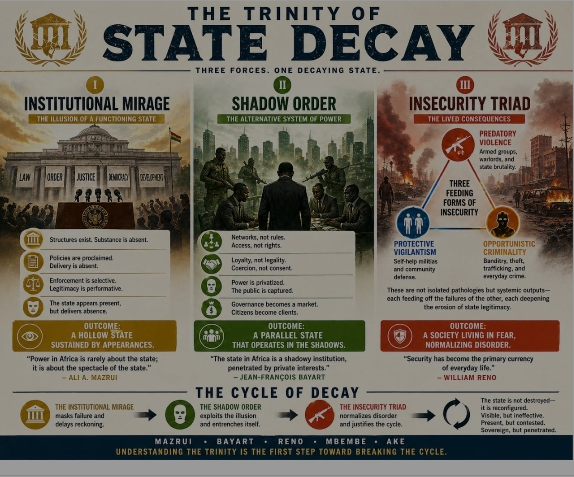
Nigeria state weakness analysis explores how insecurity, weak governance and shadow systems reshape authority and sovereignty

Nigeria’s decoupling is not random — it is engineered. The state wears the mask of authority while its rivals wield the substance of power.
Also read: The Insecurity Triad: Money, Land and Mind — The Capstone
In the vacuum, a rival order rises: taxing, renaming, and ruling with a clarity the state can no longer muster.
Part 1 named the condition. This second movement explains its mechanics.
If the Institutional Mirage performs authority and the Shadow Order exercises it, then the question is no longer whether the state is weakening, but how that weakening is organised, sustained, and reproduced.
The answer lies in the Insecurity Triad — not as a collection of crimes, but as an operational system of governance that emerges in the interstices of state withdrawal.
What appears as disorder is structure. What appears as fragmentation is system. What appears as crisis is reproduction.
At the centre of this reproduction is a loop the state does not merely fail to break — but increasingly inhabits as its own mode of survival.
The Structural Interaction: Mirage, Shadow, and the Production of Void
The Institutional Mirage and the Shadow Order are not parallel formations. They are locked in a causal circuit — a self-reinforcing loop sustained by the Insecurity Triad.
The sequence is precise, not accidental.
The Mirage creates the vacuum.
By performing governance without delivering it — convening committees instead of enforcing authority, issuing declarations instead of securing territory, maintaining symbolic centrality while withdrawing from operational peripheries — the Institutional Mirage produces spaces where sovereignty exists in form but not in force.
These are not empty spaces. They are functional voids: zones where authority is declared but not operational, where legality exists but enforceability does not, where the state is present as narrative but absent as structure.
In these voids, legitimacy becomes unanchored from enforcement.
The Shadow does not enter these spaces as disruption.
It enters as replacement infrastructure.
It fills the vacuum through the Insecurity Triad:
Money — ransom economies that convert insecurity into revenue;
Land — territorial governance through coercive taxation and control;
Mind — ideological capture that replaces civic legitimacy with alternative authority systems.
The Triad is not incidental. It is not criminal residue. It is administrative architecture without formal recognition.
Together, these three logics form a rival system of governance that requires no elections, no constitutional validation, no external recognition. It requires only the sustained absence of enforceable state presence.
Constitutional Erasure: The Shadow’s Sovereign Inscription
The functional void produced by the Mirage is not passive; it is actively inscribed by rival authority.
What Part 1 established empirically — the renaming of villages, the hoisting of rival flags, and the symbolic reordering of territory — now becomes analytically central as constitutional erasure within the Insecurity Triad loop.
Fanon’s insight is decisive here. To rename is to unmake — to dissolve one sovereign order and inscribe another in its place. The gun secures territory; the name governs it. Constitutional erasure is therefore not adjacent to governance. It is governance in its rival form — counter-constitutional inscription of authority.
Its significance lies in how it restructures perception and compliance. Once a community is renamed, the former constitutional designation becomes politically fragile.
To invoke the state’s authority is to invoke an order that cannot enforce itself; to invoke the Shadow’s authority is to invoke one that can. The choice is no longer between legality and illegality, but between enforceable and unenforceable reality.
Constitutional erasure thus converts the Mirage’s vacancy into the Shadow’s jurisdiction. It transforms spatial absence into administrative capture, making subsequent compliance transfer structurally inevitable.
The population is not simply governed differently; it is repositioned outside the state’s effective map of enforceability.
The Shadow does not request allegiance. It inscribes it through territorial naming itself.
Compliance Transfer: The Silent Relocation of Authority
As the Shadow consolidates control within functional voids, a second-order transformation occurs: compliance begins to migrate.
This is not ideological conversion. It is practical adaptation.
Populations shift allegiance along lines of enforceability rather than legality:
•taxes are paid to those who can enforce extraction;
•disputes are resolved by those who can enforce outcomes;
•rules are obeyed where consequences are immediate.
What emerges is not rebellion against the state, but rational substitution of authority under conditions of asymmetry.
Each act of compliance transferred is also an act of state erosion — not because the state disappears, but because its authority becomes non-competitive in lived reality.
At this stage, sovereignty is no longer monopolised. It is distributed according to functional capacity.
Dependency Turn: When the State Requires the Shadow
The loop reaches structural maturity when the state begins to adapt to its own displacement.
This is the most critical transition in the entire system.
The state does not confront the Shadow Order as an external adversary alone. It increasingly engages it as an informal stabiliser of governability.
This produces what can be described as Promotional Negotiation — the practice of purchasing temporary stability from a rival authority structure through ransom logic, informal settlements, or negotiated withdrawals.
This is not strategy. It is systemic dependency.
Every negotiation produces three systemic effects:
•It monetises insecurity by validating abduction economies;
•It territorialises Shadow authority by recognising de facto control;
•It legitimises the Shadow as a negotiating sovereign rather than a residual actor.
The paradox is complete: the state stabilises instability by financing its reproduction.
At this point, the Institutional Mirage is no longer merely performing sovereignty.
It is renting functional access to sovereignty from its own rival system.
Theoretical Architecture
The Trinity of State Decay is grounded in a layered theoretical architecture that explains the formation, operation, and persistence of the Institutional Mirage, the Shadow Order, and the Insecurity Triad.
At the level of structural formation, Claude Ake and Franz Fanon clarify the inherited constitution of the Institutional Mirage: a postcolonial state that operates primarily as a performative and extractive apparatus, whose authority is unevenly inscribed across territorial space and sustained through symbolic rather than fully enforceable sovereignty.
At the level of mechanism, William Reno and Achille Mbembe explain the operational logic through which the Shadow Order emerges within the functional voids produced by the Mirage.
Reno accounts for the relocation of authority to actors capable of enforcing compliance through control of resources and coercive capacity, while Mbembe extends this analysis by showing how coercion becomes a distributed regime of governance over life, survival, and exposure to insecurity.
At the level of persistence, Ali Mazrui and Jean-François Bayart explain why the interaction between Mirage and Shadow stabilises rather than resolves: Mazrui foregrounds the historical continuity of overlapping and non-synthesised authority systems, while Bayart highlights adaptive strategies through which elites and institutions reproduce governance through external linkage and internal accommodation.
Together, these perspectives converge within the Trinity as a single analytic stack in which the Institutional Mirage, the Shadow Order, and the Insecurity Triad form a self-reproducing system of fragmented but structured sovereignty.
The Loop as System: Self-Reproduction Logic
The Insecurity Triad stabilises the system through continuous feedback:
Mirage withdraws functional void emerges;
Shadow occupies—authority substitutes
Triad institutionalises—governance stabilises;
Compliance shifts —state capacity erodes further;
Negotiation increases —dependency deepens
Loop intensifies —system reproduces.
There is no external reset mechanism within this system.
It is self-referentially stabilising under fragmentation conditions.
The Trinity of State Decay does not describe collapse. It describes a stable configuration of fragmented sovereignty sustained by asymmetry in enforcement capacity.
Its resolution does not lie within the system it describes, but in the restoration of empirical sovereignty capable of reuniting legitimacy and force.
This is not the end of the argument, but the consolidation of its structure.
The next and final movement will define the conditions under which the Trinity can be reversed, and the architecture of sovereignty reassembled into a single coherent system.
Also read: Plateau Youths Protest Insecurity, Demand Urgent Action
Trust is sacred. Stay seasoned


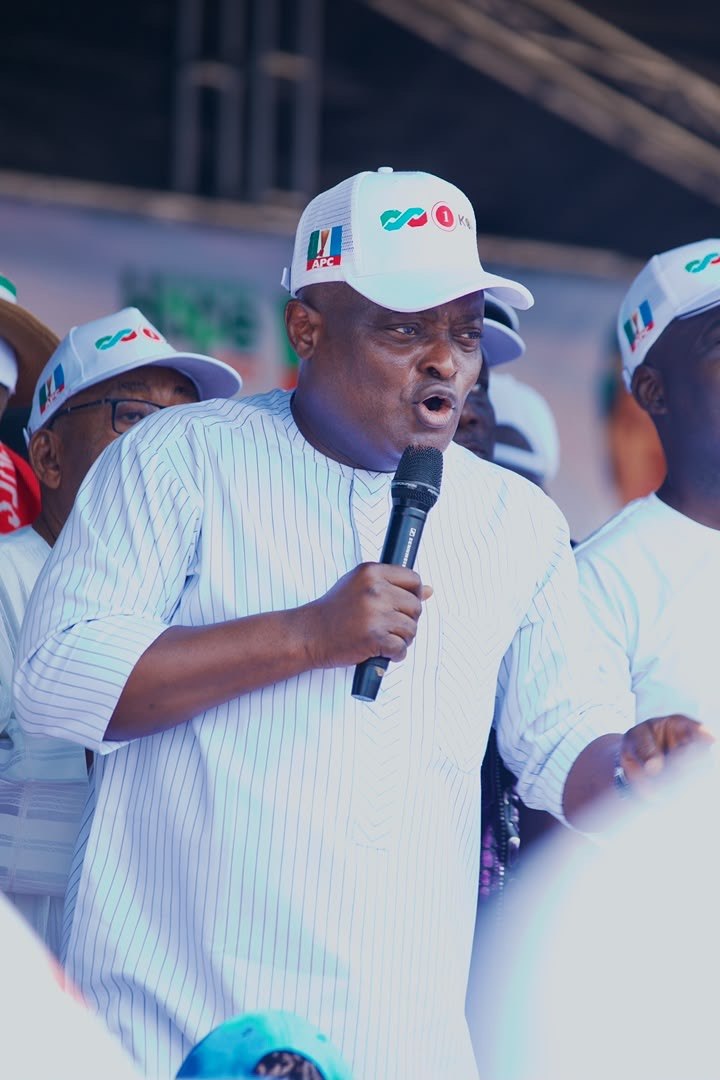
The Speaker of the Lagos State House of Assembly, Mudashiru Ajayi Obasa, has flagged off the All Progressives Congress campaign in Agege Federal Constituency with a mega rally at Amoo Field, Orile Agege.
The rally, held on Wednesday, September 30, brought together APC leaders, party members, traditional and religious leaders, trade associations, artisans and representatives of different communities in the area.
Obasa, who is the APC candidate for the Agege Federal Constituency seat in the House of Representatives, urged supporters to take the party’s campaign to homes, markets, artisan groups, places of worship and community associations ahead of the general election.
Addressing the gathering, he said the party should not be satisfied with a narrow victory but should seek to improve on its previous electoral performance.
“Let us join hands and make sure we deliver. It is not just about victory; we must surpass our previous votes. Sound it loud to everybody, all trade associations, artisans, tribes, religious and traditional leaders. We have the numbers, and we will pour it into the APC,” Obasa said.
He called on supporters to mobilise votes for President Bola Ahmed Tinubu, the APC governorship candidate in Lagos, Dr Kadri Obafemi Hamzat, the Lagos West senatorial candidate, Senator Idiat Oluranti Adebule, and himself in the Agege Federal Constituency.
Obasa said the campaign message should reach different sections of the constituency before election day, with supporters expected to engage residents and encourage them to participate in the electoral process.
He also described the turnout at the rally as an indication of support and cohesion within the party in Agege.
“Agege is always one. And we will continue to be one. There is nothing wrong with our party in Agege,” he said, while dismissing opposition voices and rumours about the party’s structure in the area.
The Speaker also urged party members and supporters to avoid conflict during the campaign, stressing that voters should be allowed to choose their preferred representatives.
“We must try to avoid conflict, because at the end of the day, the people will vote for their representatives, the people they truly want. Nobody can force anyone on the people,” he said.
Obasa’s remarks come as political parties intensify grassroots mobilisation ahead of the general election, with Agege remaining an important constituency in Lagos’s political landscape.
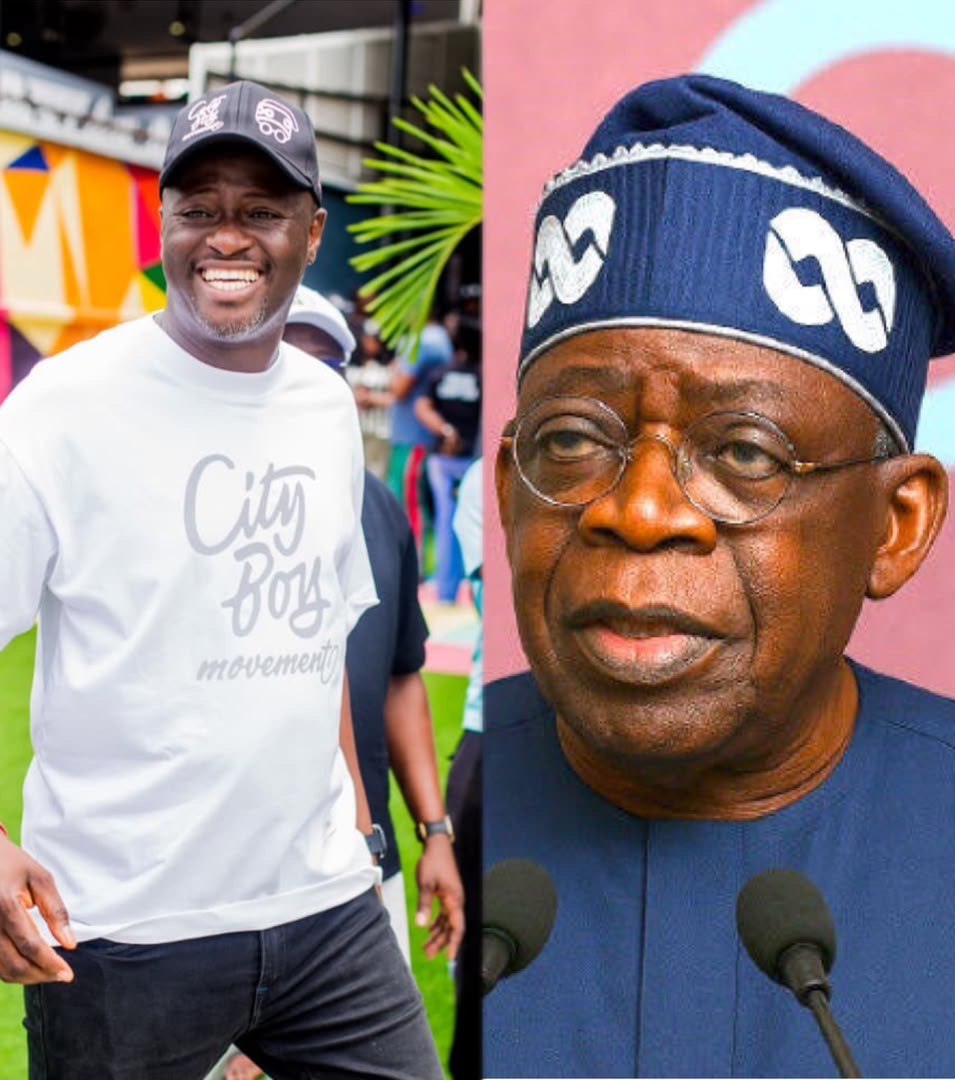
The Lagos State chapter of the City Boy Movement has felicitated President Bola Ahmed Tinubu, Nigerians and Lagos residents on the occasion of the country’s 66th Independence anniversary, praising the administration’s economic and youth-focused reforms.
In a goodwill message issued by the movement’s Lagos director, Barrister Moyosore Ogunlewe, the group said the Tinubu administration had recorded progress in infrastructure, economic diversification, youth empowerment and governance since assuming office.
Ogunlewe, who also serves as Zonal Director, Youth Mobilisation, South-West of the APC Presidential Campaign Council, acknowledged that the President was not perfect but argued that his administration had demonstrated the political will to tackle some of the country’s longstanding challenges.
“Like no one is perfect, President Tinubu is not perfect. Nevertheless, he has remained a kind-hearted leader with an exceptional eye for talents, putting round pegs in round holes,” he said.
He added that, in his view, the administration had demonstrated “vision and foresight” through the implementation of the Renewed Hope Agenda.
The movement highlighted several youth-focused initiatives, including the Nigerian Education Loan Fund, 3 Million Technical Talent programme, Technical and Vocational Education and Training initiatives, NiYA, YouthCred, CrediCorp, the Nigeria Youth Investment Fund, iDICE and programmes implemented through SMEDAN.
Some of these initiatives have been publicly identified by the Federal Government as part of its efforts to expand access to education, digital skills, technical training, entrepreneurship and financing for young Nigerians. The government said in September that it was also targeting five million young Nigerians through skills acquisition and empowerment programmes under its National Poverty Reduction with Growth Strategy.
Ogunlewe also cited the administration’s electricity-sector reforms, data protection legislation, economic reforms and investments in healthcare and education as areas where he said the government had made progress.
He described the removal of petrol subsidy as a bold decision, arguing that it had reduced opportunities for corruption and freed government resources for development.
The subsidy removal, along with foreign exchange and other fiscal reforms, has remained one of the most significant and controversial parts of the Tinubu administration’s economic programme. While the government has argued that the measures were necessary to stabilise the economy, the reforms have also contributed to significant cost-of-living pressures, with the International Monetary Fund acknowledging improved macroeconomic outcomes while noting that conditions remain difficult for many Nigerians.
On the economy, Ogunlewe said the reforms were attracting investment, supporting job creation and laying the foundation for diversification.
The Presidency has similarly pointed to economic growth, improved external reserves, increased investment and reforms in the foreign exchange, fiscal and financial sectors as signs of progress. In the second quarter of 2026, Nigeria’s economy recorded 4.43 per cent year-on-year growth, according to figures cited by the President.
On security, the City Boy Movement said the administration had strengthened intelligence gathering and inter-agency collaboration while implementing social intervention programmes aimed at reducing hardship.
Ogunlewe also linked his assessment of Tinubu’s administration to his experience at the grassroots, saying he had learnt from the President’s approach to governance while bringing government closer to residents in Kosofe Local Government.
“I have learned a great deal from our President by bringing governance to our people in Kosofe Local Government – transparency, timely service delivery and cost-effectiveness,” he said.
The Lagos chapter of the movement was inaugurated in July with a stated focus on youth and grassroots mobilisation. At the inauguration, Ogunlewe said the organisation intended to promote youth participation, national unity and civic engagement beyond electoral campaigns.
The group has also openly positioned itself as a supporter of Tinubu’s administration and its 2027 re-election bid. The movement’s national leadership previously told the Vice-President, Kashim Shettima, that it was committed to mobilising support for the administration’s programmes and initiatives.
As Nigeria marks 66 years of independence, Ogunlewe called for continuity of the administration’s policies, saying he believed Tinubu’s record warranted another term in office.
“President Bola Ahmed Tinubu is the best for a united Nigeria at this critical point in our 66-year history. He deserves our full support for a second term to secure a brighter future and the continuity of the Renewed Hope Agenda,” he said.
The statement was signed by Hon. Kanbi Owolabi, Assistant Director, Print Media, City Boy Movement, Lagos State Chapter.


-
Politics3 years ago
13 Ondo Assembly Members Disown Endorsement of Aiyedatiwa
-
Politics3 years ago
APC Group, Ondo Govt, Quarrel Over Money for Endorsement
-

 Trending News5 years ago
Stop unsavoury, inciting statements – DSS warns
-

 Others5 years ago
Adron Homes Celebrates 10 Years Of Housing Excellence
-

 Humanity5 years ago
President Buhari Commiserates With Ambassador Maureen Tamuno Over The Loss Of Her Father
-

 Others7 years ago
EX- CUSTOMS BOSS, IBRAHIM MERA’S DWINDLING FAME
-

 Business2 years ago
Bigi Carbonated Soft Drinks Treats 40 Consumers to an Epic Easter Movie Hangout
-

 Business2 years ago
Wema Bank Shines at Global SME Finance Forum Conference Awards 2024 …Awarded: • SME Financier of the Year (Africa) • Platinum Award for Best Financier for Women Entrepreneurs (Africa)