
Business
Nigeria tops Africa energy investment rankings under Tinubu reforms

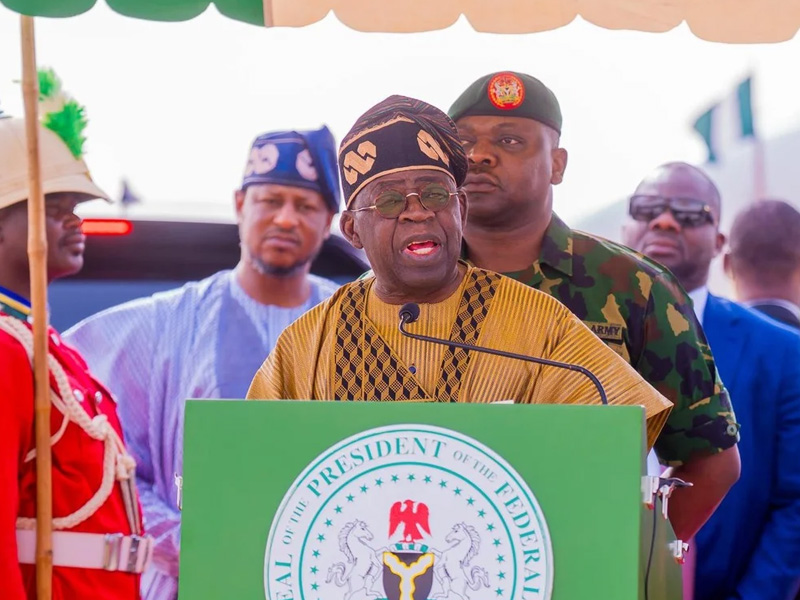
Nigeria emerges as Africa’s top energy investment destination, driven by Tinubu administration reforms and over $10bn in new capital inflows
Nigeria has emerged as the leading destination for energy investments in Africa over the past two years, driven by sweeping reforms introduced under the administration of President Bola Ahmed Tinubu, according to a new government report.
Also read: N494billion question mark over Dapo Abiodun’s fitness for Ogun East senate

The report, which covers a three-year review of the energy sector from 2023 to 2026, shows a significant rise in capital inflows into the country after years of declining investor confidence caused by policy uncertainty and underinvestment.
It revealed that Nigeria’s share of upstream Final Investment Decisions in Africa rose from about 4 per cent to 40 per cent between 2024 and 2025, positioning the country ahead of several traditional energy markets on the continent.
The document, endorsed by the Presidency and linked to the Office of the Special Adviser to the President on Energy, Olu Verheijen, credited the gains to coordinated fiscal and regulatory reforms aimed at improving investor confidence.
According to the report, more than $10 billion in upstream investment decisions were recorded during the period, particularly in deep offshore and integrated gas projects.
Key reforms included executive directives that clarified regulatory responsibilities, improved tax incentives for deepwater oil production, and introduced measures to streamline project approvals and reduce contracting timelines.
The report stated that these interventions helped restore credibility in the sector and reposition energy as a key driver of growth, employment, and national development.
A major development highlighted was the completion of about $4 billion in divestment transactions by international oil companies, transferring key assets to indigenous operators.
Companies involved in the asset transfers include Shell, ExxonMobil, Agip, and Equinor, with local firms such as Seplat, Oando, Renaissance, and Chappal now taking over operations.
Oil production also recorded notable growth, rising from about 1.2 million barrels per day in 2023 to approximately 1.6 million barrels per day in 2025, marking one of the strongest outputs in two decades.
The report further projected a long-term production target of three million barrels per day, supported by ongoing investments and improved operational conditions.
In the gas sector, utilisation increased by about 40 per cent, reinforcing its role in industrialisation, export growth, and domestic energy supply.
Downstream improvements were also recorded, with local refining capacity increasing significantly and contributing to improved fuel availability across the country.
Also read: Ondo Police arraign kidnapping suspects after victims identify them
The report concluded that Nigeria’s reforms have strengthened its competitiveness, making it the top destination for oil and gas investment in Africa and restoring investor confidence in the sector.




Shoreline Group today announced that African Export-Import Bank (Afreximbank) has approved a US$200 million facility in favour of Shoreline Power Company Limited and co-borrowers including Arkad S.p.A., Shoreline’s majority-owned engineering and construction platform.
Approved in June 2026, the facility was arranged and provided by Afreximbank as sole mandated lead arranger and lender. It provides bonding and working-capital capacity for Arkad’s delivery of the Hassi Bir Rekaiz project and supports Shoreline and its affiliates in developing further pipeline and infrastructure
projects in Nigeria and other permitted jurisdictions.
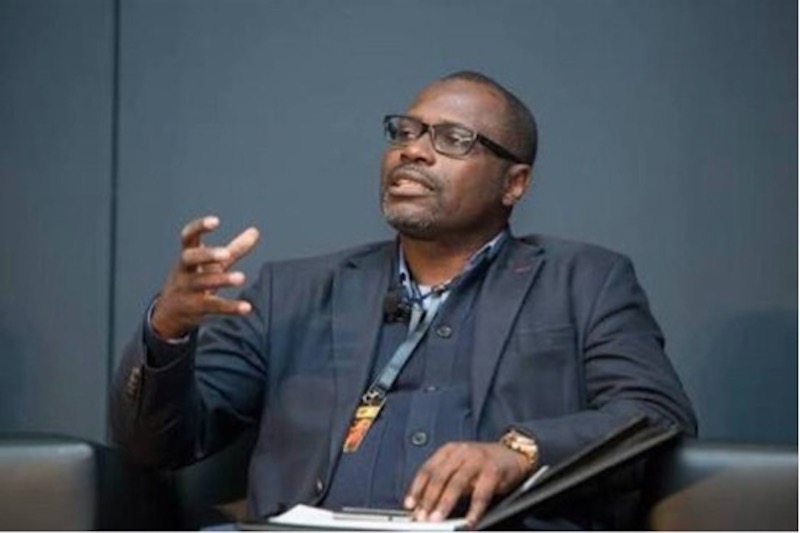
“This is a defining transaction for Shoreline and Arkad. We built Arkad as an African- sponsored engineering platform capable of competing at the highest level, and it is now delivering against a billion-dollar energy contract. Afreximbank’s US$200 million commitment gives the platform the financial strength to match its engineering capability and pursue further major infrastructure mandates. It demonstrates that African enterprises can assemble the capital, capability and partnerships required to compete for infrastructure at international scale.”
Hassi Bir Rekaiz Phase 2a Arkad holds 44 per cent of the approximately US$1 billion EPCCS-1 contract awarded by Groupement
Hassi Bir Rekaiz (GHBR) to an unincorporated consortium led by Egypt’s Petrojet, which holds 56 percent. EPCCS-1 covers engineering, procurement, construction, commissioning and start-up for the Phase 2a central processing facility and related infrastructure at the Hassi Bir Rekaiz field in Algeria’s Berkine
Basin.
GHBR is the joint operating entity for the licence, held by Sonatrach with 51 per cent and Thailand’s PTTEP with 49 per cent. The project includes a new crude oil processing facility with capacity of 31,500 barrels per day, facilities for associated gas and produced-water treatment, approximately 217 kilometres
of pipelines and the brownfield modifications required to integrate existing Phase 1 infrastructure.
The facilities are designed to support later expansion to 63,000 barrels per day under Phase 2b.
“This financing addresses the instruments that determine whether an EPC contractor can execute at scale: performance guarantees, advance payment guarantees and working capital through the project cycle. Hassi Bir Rekaiz is a demanding scope, combining a new central processing facility, associated treatment systems, pipelines and brownfield integration. With Petrojet, and with the support of Shoreline and Afreximbank, Arkad is focused on disciplined delivery against the project’s safety, quality and schedule requirements.”
The transaction was structured under Afreximbank’s Engineering, Procurement and Construction Initiative, which supports African engineering and construction firms with the financial instruments required to compete for and execute large infrastructure contracts. Afreximbank also supported the Arkad-Petrojet partnership through its EPC twinning work at the Intra-African Trade Fair held in Algiers
in 2025.
According to Afreximbank, the transaction is its first support for a Sub-Saharan African contractor undertaking a major infrastructure project in North Africa. For Shoreline, it demonstrates a practical model for combining African ownership and capital with established international engineering andindustrial capability.
-
Politics2 years ago
13 Ondo Assembly Members Disown Endorsement of Aiyedatiwa
-
Politics2 years ago
APC Group, Ondo Govt, Quarrel Over Money for Endorsement
-

 Trending News5 years ago
Stop unsavoury, inciting statements – DSS warns
-

 Others5 years ago
Adron Homes Celebrates 10 Years Of Housing Excellence
-

 Humanity5 years ago
President Buhari Commiserates With Ambassador Maureen Tamuno Over The Loss Of Her Father
-

 Others7 years ago
EX- CUSTOMS BOSS, IBRAHIM MERA’S DWINDLING FAME
-

 Business2 years ago
Bigi Carbonated Soft Drinks Treats 40 Consumers to an Epic Easter Movie Hangout
-

 Business2 years ago
Wema Bank Shines at Global SME Finance Forum Conference Awards 2024 …Awarded: • SME Financier of the Year (Africa) • Platinum Award for Best Financier for Women Entrepreneurs (Africa)