
health
Nigerian Health System Collapsing, Experts Uncover $1bn Medical Tourism Crisis


Nigerian health system collapsing as experts reveal over $1bn lost yearly to medical tourism due to poor funding, equipment gaps, and brain drain

Nigerian health system collapsing—that was the grim consensus at the 2025 Annual Lecture of the Nigerian Academy of Medicine (NAMed), held in Abuja this week.
Also read: Nigerian Health Fraud Charges Spark Shocking $14bn Crackdown in United States
The President of the Academy, Emeritus Professor Samuel Ohaegbulam, warned that chronic underfunding, decaying infrastructure, and a mass exodus of professionals are pushing Nigerians to spend over $1 billion annually on medical tourism.
“Our hospitals lack basic diagnostic tools like CT and MRI machines. The budgetary allocations are grossly inadequate, and our doctors are demoralised,” Ohaegbulam declared.
At a time when Lassa fever is re-emerging and other diseases threaten public health, the Academy says the nation’s healthcare system is hanging by a thread.
Nigerian doctors and nurses are leaving in alarming numbers. Some are offered $15,000 monthly salaries abroad, compared to their struggle for basic pay and supplies at home.
“Can we blame them?” Ohaegbulam asked. “Our health workers are trained with dedication, only to be lost to foreign systems.”
Even tertiary hospitals are reportedly operating without functional diagnostic tools, rendering patient care inadequate and unsafe.
Despite a national law mandating universal health insurance, fewer than 11 million Nigerians are covered—barely 2.2% of the population.
“The law exists, but enforcement is weak. Politicians abandon promises after elections,” Ohaegbulam lamented.
Medical schools and universities are also buckling under pressure. Overcrowding, poor facilities, and a lack of quality instructors threaten the next generation of healthcare professionals.
“More universities aren’t the solution. We need well-funded, better-managed institutions,” he warned.
Postgraduate training is suffering too, with graduates opting for overseas placements instead of training locally.
This further weakens Nigeria’s ability to build a self-sustaining healthcare workforce.
In a keynote lecture, Prof. John Idoko spoke about the resurgence of Lassa fever, noting that many patients are wrongly treated for malaria without testing, allowing the virus to spread undetected.
“NCDC needs more funding, rapid diagnostic tools, and incentives for state and local health workers,” he emphasized.
He also urged Nigerians to stop eating bushmeat, which may host the virus, and called for increased public health education and stronger surveillance systems.
Former Health Minister and NAMed trustee, Prof. Isaac Adewole, noted that President Tinubu has approved waivers for direct recruitment in the health sector. The goal: to plug critical workforce gaps swiftly.
While this gesture is a step forward, experts say it is not nearly enough.
“We must stop exporting our sick and importing our doctors’ talents elsewhere,” said Ohaegbulam. “It’s time to rebuild from within.”
The Academy estimates that over $1 billion is spent annually by Nigerians seeking treatment abroad, a staggering sum that could fund hundreds of modern hospitals and retain thousands of health professionals.
“If our leaders—many of whom are doctors—joined hands, we could end this tragedy,” Ohaegbulam insisted.
Also read: Lagos Mandatory Health Insurance Enforcement Begins Early 2026
As 22 new fellows were inducted into the Academy, the message was clear: the collapse of Nigeria’s healthcare system is no longer a warning—it’s reality.


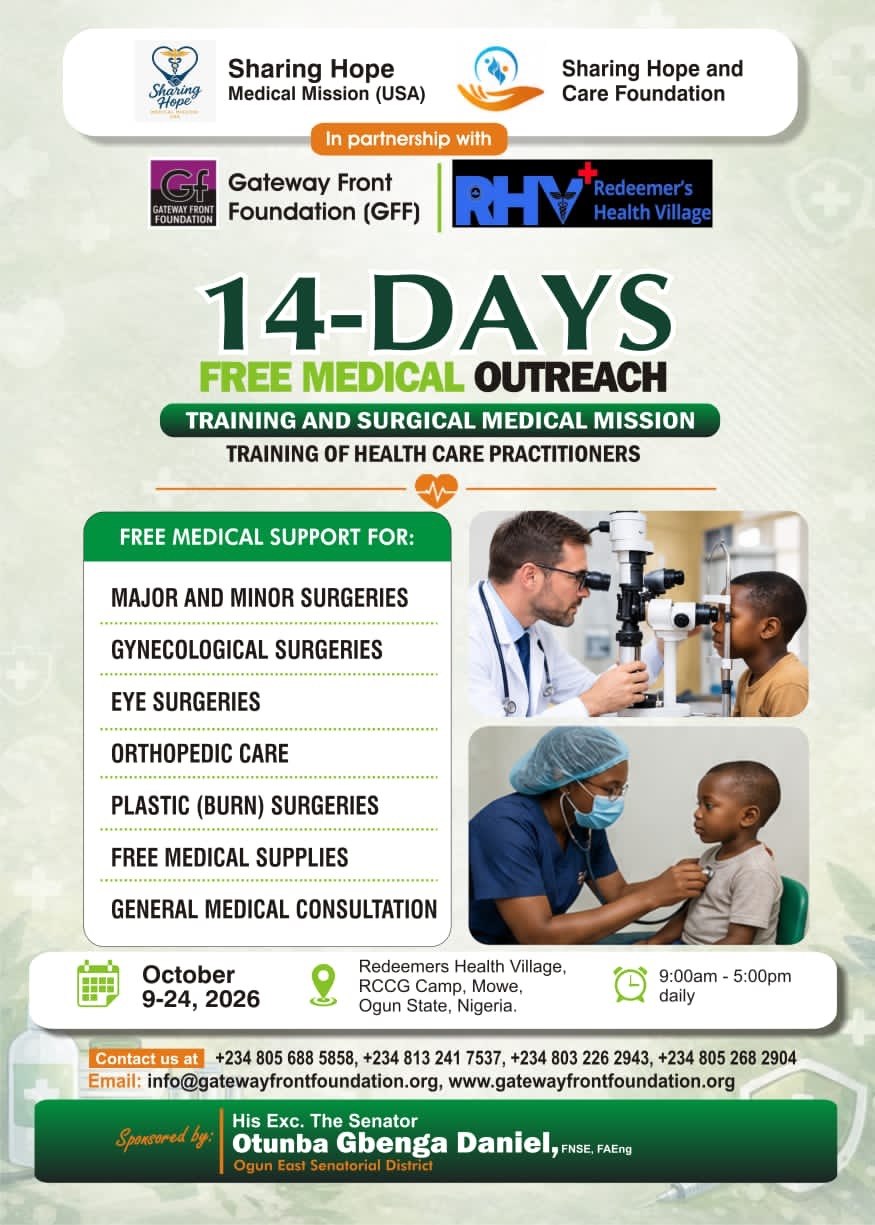
The Gateway Front Foundation’s GFF@25 Medical Mission will begin on October 9 and run through October 24, 2026, bringing free specialist medical services to residents across Ogun State as part of activities marking the foundation’s 25th anniversary.
The 14-day intervention is being organised by the Gateway Front Foundation in partnership with Sharing Hope Medical Mission from the United States, Sharing Hope and Care Foundation and Redeemer’s Health Village. The programme is sponsored by Senator Otunba Gbenga Daniel.
The mission is expected to provide free major and minor surgeries, eye care, gynaecological procedures, orthopaedic treatment, plastic and burn surgery, as well as other specialist medical services. Organisers say more than 15,000 patients are expected to benefit from the programme.
More than 50 doctors from the United States are expected to participate in the mission, while local healthcare practitioners are also expected to receive training as part of the broader programme.
Ahead of the main intervention, the foundation has already begun medical screening and clinical assessments in parts of Ogun. On September 21, residents in Sagamu were screened across four centres, while another exercise was held on September 30 at Redemption City and Simawa to identify cases requiring specialised and surgical treatment.
The screening exercises covered conditions including cataracts, pterygium, dental cases, tumours, lipomas, ganglions, hernias, fibroids, vesicovaginal fistula, prostate conditions, orthopaedic problems, fractures, dislocations, amputations, diabetes and gastroenterology-related ailments. Selected beneficiaries are expected to proceed to the surgical phase of the programme.
To widen access and reduce pressure on a single location, the foundation has scheduled screening and medical interventions across several Local Government Areas, according to the programme schedule released by the organisers.
The listed locations include Ijebu North, Ijebu North East, Sagamu, Ijebu Ode, Ogun Waterside, Ikenne, Odogbolu, Ijebu East, Remo North and the RCCG City area.
The schedule is as follows:
October 9: Ijebu North, Kabiesi Solaja Hall and Bojowa Street, Ago-Iwoye
October 10: Ijebu North East, GFF Care Centre, Erunwon
October 12: Sagamu, Asoludero Hall and Ogijo
October 13: Ijebu Ode, Obalofin Hall
October 14: Ogun Waterside, Abigi Community Town Hall
October 15: Ikenne
October 16: Odogbolu
October 17: Ijebu East, Hazelway Hotel, Ijebu Mushin
October 18: Remo North, Ode-Remo Main Market
October 9, 10 and 12–16: RCCG City/Health Village area
The Redeemers Health Village in Mowe, Redemption City, will serve as the main location for cases requiring surgery, according to the organisers. This arrangement is intended to provide sufficient space and facilities for surgical procedures.
Monitoring officers have also been assigned to the various locations to coordinate activities, manage the flow of beneficiaries and support the smooth delivery of the medical services.
The GFF@25 Medical Mission is one of the major programmes marking the foundation’s 25th anniversary. The Gateway Front Foundation, established by Daniel, has over the years undertaken healthcare and other community-focused interventions, including medical outreaches and eye-care initiatives.
Residents requiring medical attention have been encouraged by the organisers to visit the nearest designated venue on the appropriate date for screening and assessment.
The foundation said the anniversary programme is intended to extend its humanitarian activities to more communities, with healthcare forming a major part of the GFF@25 interventions.

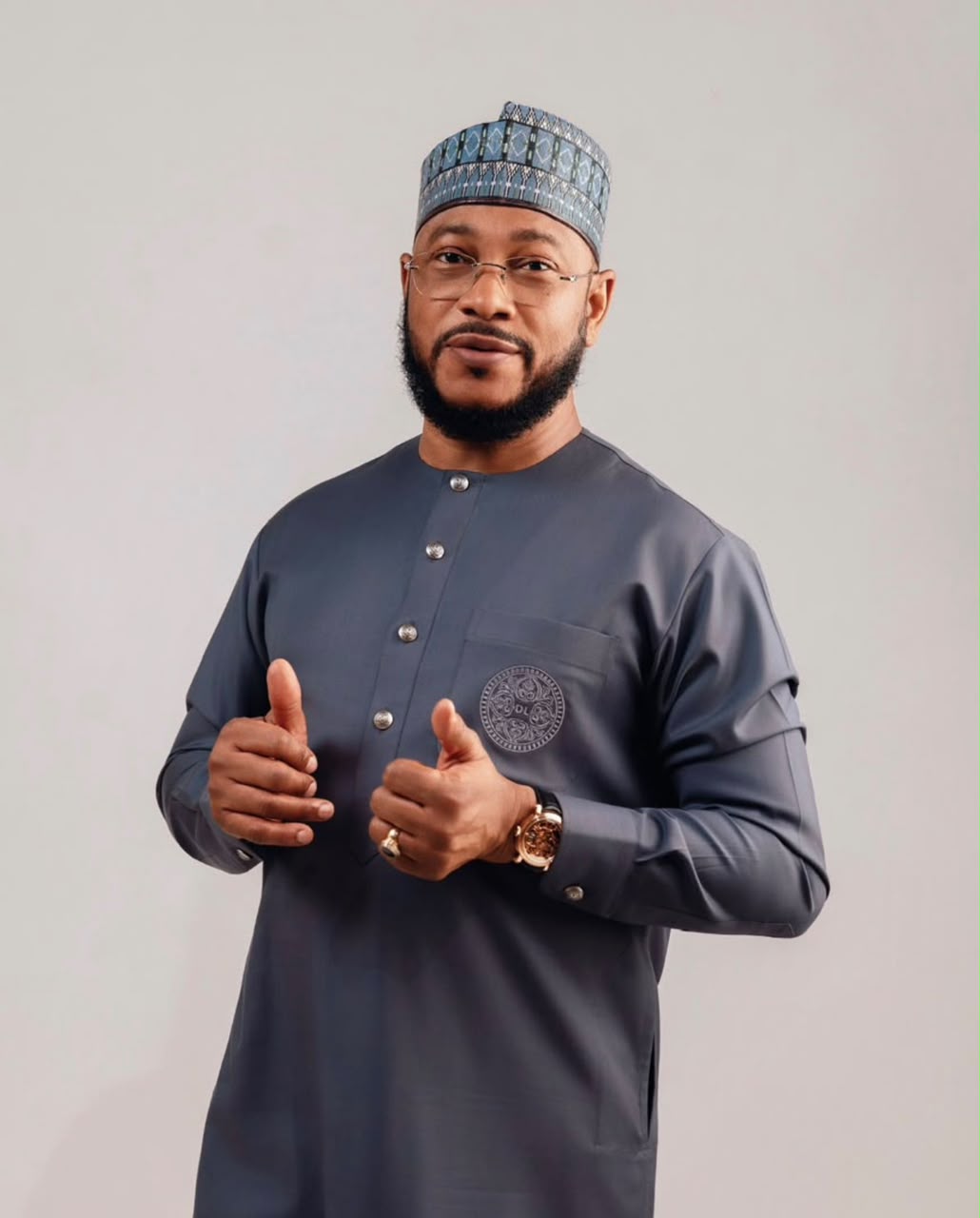
The Governor of Zamfara State, His Excellency Dauda Lawal, has approved a 95 percent salary increase for health workers across the state.
The approval, which adopts the Federal Government’s Consolidated Health Salary Structure (CONHESS), is aimed at improving the welfare of health workers and strengthening healthcare delivery in the state.
The development follows an earlier increase by the state government to bring the salaries of medical personnel in Zamfara in line with those of their counterparts in the Federal Government.
With the new approval, a health worker currently earning ₦100,000 will now take home ₦195,000, while someone on ₦200,000 will earn ₦390,000. A worker on ₦300,000 will now receive ₦585,000, and those on ₦500,000 and ₦1,000,000 will earn ₦975,000 and ₦1,950,000 respectively.
In effect, the 95 percent increase means the existing salary of every affected health worker is almost doubled.
The approval is expected to boost morale, attract and retain qualified health professionals, and ultimately improve healthcare delivery across the state.
It also comes shortly after the state government recruited new health workers last week, with the newly engaged staff set to benefit from the new salary structure.
Health workers in the state have since expressed appreciation to Governor Lawal for the gesture, describing it as a major boost to the sector.
The governor reaffirmed his administration’s commitment to the welfare of workers and the delivery of quality healthcare services to the people of Zamfara State.


Consumer advocates call for an independent quality assessment after a viral TikTok video alleged foreign material was found inside a baby diaper
-
Politics3 years ago
13 Ondo Assembly Members Disown Endorsement of Aiyedatiwa
-
Politics3 years ago
APC Group, Ondo Govt, Quarrel Over Money for Endorsement
-

 Trending News5 years ago
Stop unsavoury, inciting statements – DSS warns
-

 Others5 years ago
Adron Homes Celebrates 10 Years Of Housing Excellence
-

 Humanity5 years ago
President Buhari Commiserates With Ambassador Maureen Tamuno Over The Loss Of Her Father
-

 Others7 years ago
EX- CUSTOMS BOSS, IBRAHIM MERA’S DWINDLING FAME
-

 Business2 years ago
Bigi Carbonated Soft Drinks Treats 40 Consumers to an Epic Easter Movie Hangout
-

 Business2 years ago
Wema Bank Shines at Global SME Finance Forum Conference Awards 2024 …Awarded: • SME Financier of the Year (Africa) • Platinum Award for Best Financier for Women Entrepreneurs (Africa)