
Uncategorized
Olatunji-Bello Proposes ₦1m Fees for Public Universities


Former Vice-Chancellor of Lagos State University, Prof. Ibiyemi Olatunji-Bello, has proposed that students in Nigeria’s public universities could pay about ₦1 million in annual school fees as part of measures to improve the institutions’ financial independence.

Olatunji-Bello said the proposal was informed by the persistent funding challenges confronting public universities, including inadequate resources for infrastructure, facilities and other requirements needed to provide quality education.
She argued that relying heavily on government funding has continued to place pressure on universities and limit their ability to adequately meet their academic and infrastructural needs.
The former LASU vice-chancellor’s position comes amid longstanding concerns over the cost of running public universities and the ability of government subventions to meet the growing demands of the tertiary education system.
The issue of university funding has also featured prominently in discussions over rising institutional charges across the country, with university administrators arguing that the cost of providing quality education has increased significantly.
Olatunji-Bello has previously advocated alternative funding mechanisms for universities. In 2016, while serving as Director of the Directorate of Advancement at LASU, she said government funding and school fees alone could not provide all the resources required for the university, leading the institution to explore donations, endowment and other fundraising initiatives.
During her tenure as LASU vice-chancellor, she also maintained that the institution was among the less expensive universities in the country and, in January 2025, told student leaders that the university had no immediate plan to increase tuition fees while encouraging students to pay their fees promptly.
Her latest proposal therefore centres on a broader question of how public universities can secure sustainable funding without compromising academic standards or overburdening students and their families.
A ₦1 million annual fee would represent a significant increase for many students compared with the charges historically associated with public universities. It would also raise questions about affordability, access to tertiary education and the need for effective financial support for students from low-income households.


Fresh ASUU strikes have resurfaced at several state-owned universities across Nigeria, disrupting academic activities and raising renewed concerns over the stability of the country’s public university system.
The latest industrial disputes are largely linked to the failure of some state governments to fully implement provisions of the December 2025 Federal Government-ASUU agreement, particularly issues relating to lecturers’ salaries, allowances and welfare.
In Lagos, ASUU declared an indefinite strike across Lagos State University, Lagos State University of Education and Lagos State University of Science and Technology after the expiration of a 14-day ultimatum issued to the state government without a satisfactory resolution.
The union said its principal demand was the full domestication and implementation of the 2025 agreement across the three institutions, alongside the Consolidated Academic Tools Allowance and other welfare provisions.
The situation is not limited to Lagos. ASUU chapters at universities in Ondo, Plateau and other states have also raised similar concerns, while the union has warned that unresolved disputes could trigger further industrial action in the state university system.
The renewed strikes have revived concerns about the repeated disruption of academic calendars in public universities. Students are once again facing uncertainty over lectures, examinations and graduation schedules whenever negotiations between university unions and state authorities break down.
The December 2025 agreement was reached after years of negotiations between the Federal Government and ASUU. Among its provisions was a 40 per cent salary review for academic staff and the introduction of the Consolidated Academic Tools Allowance, intended to support academic and research-related activities.
While the Federal Government has begun implementing parts of the agreement for federal institutions, the pace of implementation has varied among state-owned universities.
Some state governments have taken steps to prevent disputes from escalating. In Gombe, for instance, the government approved an additional ₦148.76 million monthly subvention for Gombe State University to facilitate implementation of the new academic allowance and address staff welfare concerns.
Similarly, the Kebbi State Government released ₦172.15 million to settle outstanding academic and non-teaching staff allowances at Abdullahi Fodio University of Science and Technology, Aliero, after the institution faced an ASUU strike threat.
These developments have strengthened calls for state governments to address university funding and staff welfare issues before they develop into prolonged industrial disputes.
Beyond the immediate disagreements over salaries and allowances, the recurring strikes point to wider questions about how state-owned universities are financed, managed and sustained.
State governments are the proprietors of the affected institutions and therefore have a significant responsibility for ensuring that universities have the resources required to maintain academic standards, pay staff and provide adequate infrastructure.
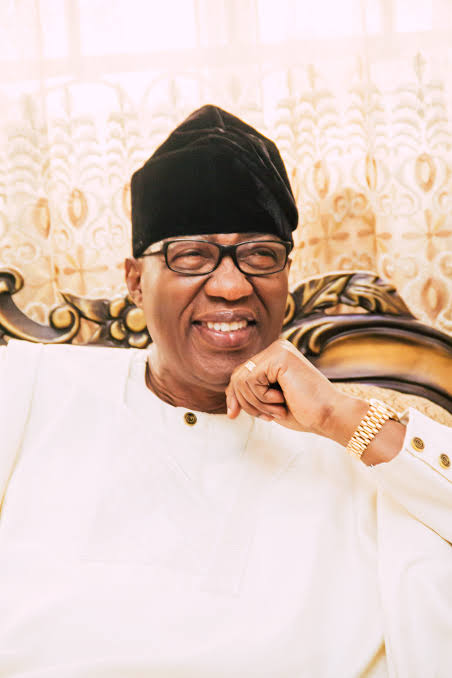
Senator Otunba Gbenga Daniel has donated a 30-seater Toyota bus to the Abraham Tabernacle Chorale of Abraham’s Tabernacle International Worship Centre in Sagamu, Ogun State.
The Gbenga Daniel bus donation was announced during a courtesy visit to the former Ogun State governor by the President of the Nigerian Baptist Convention, Rev. Dr David Olusola Idowu.
Idowu formally presented the bus to the chorale on behalf of Daniel during the visit, which was held as part of the NBC president’s engagements with Christian stakeholders in Remoland.
The donation is expected to strengthen the chorale’s mobility and provide transportation support for its members during ministrations, conventions, conferences, worship programmes and outreach activities within and outside Sagamu.
During the visit, Idowu commended Daniel for what he described as his longstanding support for the Christian community, particularly his contributions to activities and initiatives aimed at strengthening the Church across Remoland.
The NBC president described Daniel as a “rare bridge-builder”, while acknowledging his continued relationship with Christian leaders and institutions in the area.
Idowu was accompanied by his wife, Pastor Mrs Comfort Idowu; the NBC Vice President, Finance and Investment, Deacon Joseph Abiodun Oloyede; Director of the Global Missions Board, Rev. Royal Ify; President of the Ogun Baptist Conference, Rev. Dr Solomon Oyewale Oyeniyi; and the Resident Pastor of Abraham’s Tabernacle International Worship Centre, Sagamu, Rev. Dr Israel Olubii Olaniyan.
The Abraham Tabernacle Chorale is the music ministry of the Sagamu-based worship centre and participates in Baptist conventions, conferences and interdenominational programmes.
The new bus is expected to ease some of the logistical challenges associated with transporting chorale members to programmes and gospel outreaches outside their base.
The visit also highlighted Daniel’s continued involvement with Christian activities in Remoland, including the Asiwaju of Remo Christians Choir Festival hosted at Abraham’s Tabernacle in Sagamu.
Nigeria’s current account surplus rose sharply to $7.54 billion in the second quarter of 2026, representing a 67.9 per cent increase from the $4.49 billion recorded in the first quarter, as stronger export earnings and higher remittance inflows strengthened the country’s external position.
The latest figure was also 45.8 per cent higher than the $5.17 billion surplus recorded in the corresponding period of 2025, according to provisional Balance of Payments statistics released by the Central Bank of Nigeria.
The improvement was driven principally by a wider surplus in the goods account, which more than offset increased net outflows from the services and primary income accounts.
The goods account recorded a surplus of $10.12 billion in Q2, up from $5.96 billion in Q1 and $4.85 billion in the same quarter of 2025.
The stronger position reflected higher export receipts across several major categories. Total exports rose to $20.08 billion in Q2 from $15.56 billion in the preceding quarter.
Crude oil export receipts increased by 15.78 per cent to $9.39 billion, while natural gas exports climbed by 40.15 per cent to $3.63 billion.
Exports of refined petroleum products recorded an even stronger increase, rising by 66.24 per cent to $3.94 billion. Non-oil export receipts also increased by 25.30 per cent to $3.12 billion during the quarter.
The goods account also benefited from a significant reduction in crude oil imports. The value of crude oil imports fell to $580 million in Q2 from $1.39 billion in Q1, further improving the country’s trade position.
Remittances provided another source of support for the Nigeria current account surplus. The secondary income account increased to a surplus of $6.30 billion, compared with $5.47 billion in the first quarter.
Personal transfers, including remittances from Nigerians living abroad, rose by 9.81 per cent to $5.82 billion during the quarter.
However, the improvement in the current account came despite higher outflows from some other components of the external accounts.
Net services outflows increased to $4.67 billion from $3.71 billion in Q1, reflecting higher payments for transport, travel, insurance, business services and other government services.
The primary income account also recorded a larger deficit, with its debit balance rising to $4.20 billion from $3.23 billion. The increase was attributed largely to higher dividend and interest payments to non-resident investors.
The financial account also improved during the quarter, moving from a net borrowing position of $2.03 billion in Q1 to a net lending position of $1.74 billion in Q2.
Portfolio investment liabilities attracted inflows of $7.09 billion, compared with $6.03 billion in Q1, while foreign direct investment inflows increased to $1.15 billion from $1.03 billion.
Nigeria’s overall balance of payments also recorded a $3.51 billion surplus in Q2 2026, according to the CBN.
The country’s external reserves rose from $48.35 billion at the end of March to $51.39 billion at the end of June, providing a larger external buffer during the quarter.
The latest figures point to an improvement in Nigeria’s external position during the second quarter, with stronger export earnings, reduced crude oil imports and increased remittance inflows contributing to the expansion of the current account surplus.
-
Politics3 years ago
13 Ondo Assembly Members Disown Endorsement of Aiyedatiwa
-
Politics3 years ago
APC Group, Ondo Govt, Quarrel Over Money for Endorsement
-

 Trending News5 years ago
Stop unsavoury, inciting statements – DSS warns
-

 Others5 years ago
Adron Homes Celebrates 10 Years Of Housing Excellence
-

 Humanity5 years ago
President Buhari Commiserates With Ambassador Maureen Tamuno Over The Loss Of Her Father
-

 Others7 years ago
EX- CUSTOMS BOSS, IBRAHIM MERA’S DWINDLING FAME
-

 Business2 years ago
Bigi Carbonated Soft Drinks Treats 40 Consumers to an Epic Easter Movie Hangout
-

 Business2 years ago
Wema Bank Shines at Global SME Finance Forum Conference Awards 2024 …Awarded: • SME Financier of the Year (Africa) • Platinum Award for Best Financier for Women Entrepreneurs (Africa)