
Opinion
From Ejigbo to the National Stage: The Humble Rise of a Reluctant Politician


Miftau Adebowale
Senator Mudashiru Husain Osun 2026 bid reflects humility, loyalty, and progressive ideals shaped by decades of disciplined public service and integrity

Chronicle I reflecting on Distinguished Senator Mudashiru Husain’s lifetime of purpose, humility, and service as he turns 70.
Also read: Rotary District 9112 Donates Raincoats and Boots to Support Lagos Polio Vaccination Teams
There are men who chase power, and there are those whom power quietly finds. Senator Mudashiru Oyetunde Husain belongs to the second kind being a man whose life has been defined not by ambition, but by purpose.
From the quiet streets of Ejigbo in Osun State to the hallowed chambers of Nigeria’s National Assembly, his life trajectory exemplifies an account of discipline, faith, and service.
Born on October 25, 1955, in the ancient town of Ejigbo, Husain’s formative years were shaped by modesty, education, and a deeply moral upbringing. His early teachers would later recall him as “the boy who always listened before he spoke,” a habit that would follow him into adulthood, and into politics.
Husain, a polyglot who speaks English, French, Arabic, and Yoruba with equal fluency, depicts a rare blend of intellect and humility.
His academic sojourn through the University of Lagos, where he obtained both a Bachelor’s Degree and Diploma in French, and later the Institute of Legislative Studies, Abuja, where he bagged a Master’s degree in Legislative Studies, was that of a quiet brilliance rather than flamboyance.
The Calling of Public Service: An Inspiration from US Clinton to M.K.O Abiola
Husain’s entry into politics was never the product of personal craving. It was a natural extension of his desire to serve.
While in the United States, during the Clinton administration, he got indoctrinated with the ideals of democracy through his active involvement in the Democratic Party.
Those years abroad instilled in him a belief that governance must reflect the people’s pulse implying that democracy is hollow if it lacks empathy.
Inspired by the democratic movement of Chief MKO Abiola in 1993, he returned to Nigeria with a conviction to serve.
He joined the progressive fold, starting with the Alliance for Democracy (AD), then Action Congress (AC), Action Congress of Nigeria (ACN), and ultimately the All Progressives Congress (APC), remaining steadfast as the ideological spine of the progressive movement. “I have been in the progressive party because they have the people’s mandate at heart,” he once said, summarizing his lifelong political loyalty in a single sentence.
Lagos: The Training Ground Under Asiwaju Bola Tinubu’s Tutelage
The first major political test of his career came in 1999, when he contested and won a seat in the House of Representatives, representing Oshodi/Isolo Federal Constituency I of Lagos State through the mentorship of Asiwaju Bola Ahmed Tinubu.
In a state known for its tough politics, Husain’s calm, measured approach to leadership stood out. For eight years, he was not merely a lawmaker; he was a reformer.
His legislative interventions on education, foreign affairs, and national development reflected deep service, scholarship and foresight.
He was a bridge-builder between communities, known for never missing a plenary debate and for mentoring younger lawmakers.
His time in Lagos politics gave him the grounding, network, and national visibility that would later shape his journey back home to Osun.
The Homecoming to Osun: Mandate to Install Progressive Leadership
Still under the guidance of Asiwaju Bola Tinubu, Husain alongside Ogbeni Rauf Aregbesola had the course to return to Osun State towards the prelude of 2007 gubernatorial election with a view to returning Osun to the progressive leadership.
As a torchbearer of the progressive tendency, Husain never for once looked back in the struggle which later metamorphosed into victory in November 2010 leading to the emergency of Ogbeni Aregbesola as the governor of Osun State.
In 2011, when the people of Osun West Senatorial District sought a new voice as one rooted in credibility and compassion, they turned to Husain.
His senatorial tenure (2011–2015) became a benchmark for people-driven representation. He approached governance not as an entitlement but as stewardship.
Across ten local governments, he facilitated over 30 transformers, 200 solar streetlights, classroom projects, and community boreholes.
He empowered youths, supported education through WAEC and JAMB sponsorships, and connected many to employment in federal agencies.
For Husain, representation was not about speeches in Abuja but about visible change in the villages of Iwo, Ejigbo, Ede, Ikire and beyond. Constituents fondly remember him as “the senator who came home with results, not promises.”
A Man the People Trust
Even after his tenure in the Senate, his service continued at the National Population Commission (NPC), where he served as Federal Commissioner for Osun State (2018–2023). There, his leadership once again found expression in youth empowerment.
Nearly 3,000 Osun youths participated in the Enumeration Area Demarcation and census planning exercises he led. Many of them still attribute their first exposure to public service to Senator Husain’s open-door policy.
His leadership philosophy has remained consistent over the years: politics without bitterness, loyalty without bondage, and service without self-praise.
With this, he continues to earn the respect of both the old and young for his soft-spoken courage and the quiet dignity with which he carries political influence.
Osun 2026: A Humble Path Toward a Higher Purpose
Today, as a governorship aspirant under the APC, Senator Mudashiru Husain is once again at the intersection of history, seeking not just to win an election but to once again, return the state to progressive leadership like it was done back then in 2007, align Osun to the Renewed Hope of the centre ably administered by his mentor, President Bola Tinubu and to restore the essence of progressive governance in Osun through his Irorun Dé Agenda.
His political journey from Ejigbo to Lagos, and from the House of Representatives to the Senate, is not one of conquest but of calling – a lifelong conviction exemplifying that politics can still be noble, leadership can still be humane, and progress can still have a soul.
Also read: Rotary District 9112 Donates Raincoats and Boots to Support Lagos Polio Vaccination Teams
At 70, he stands not as a tired statesman but as a torchbearer of a new dawn; the calm force and respected unifier Osun needs for true stability, growth, and ease.


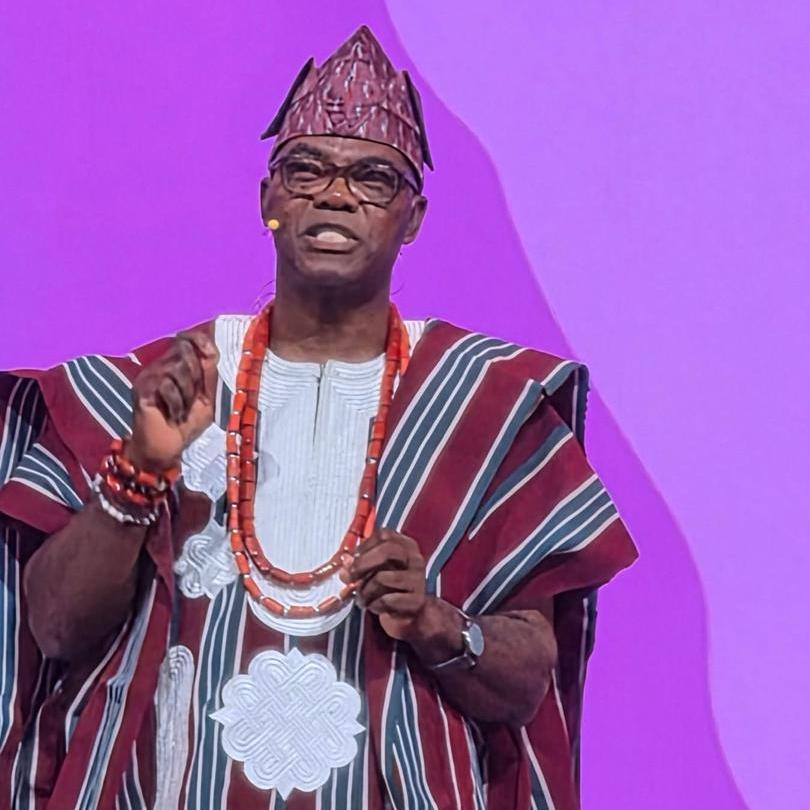
The All-Nigeria Rotary Peace Summit will examine how good governance, justice and equity can help Nigeria build lasting peace

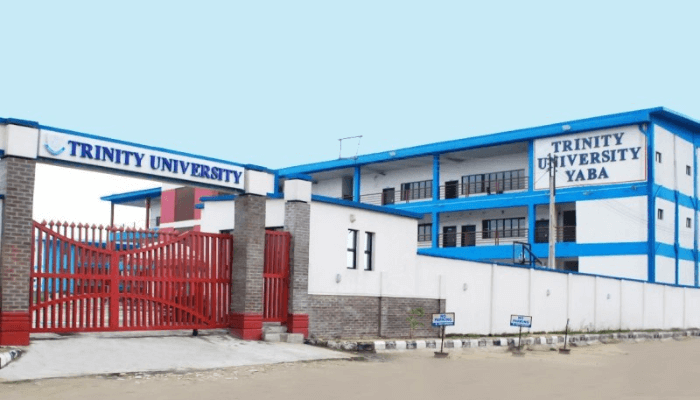
The above title is a combination of the theme of the 5th convocation ceremony of Trinity University, Yaba, Lagos, and the title of its convocation lecture delivered by Professor Bode Ayorinde. The Vice-Chancellor, Professor Clement Olusegun O. Kolawole, had kicked off the convocation activities on Monday, 12 October 2026, with a press conference, followed by other week-long activities which included the presentation of its Nursing Science and Medical Laboratory Science graduates for induction into the Nursing and Midwifery Council of Nigeria and the Medical Laboratory Science Council of Nigeria respectively.
From a private university that started with just nine pioneering students in 2019, Trinity University graduated a total of 323 students across various disciplines penultimate week, with 79 of them achieving First Class honours, two of whom got a perfect 5.0 Cumulative Grade Point Average (CGPA).
I wish every graduating student from Nigerian universities — private as well as public — had the opportunity to listen to Ayorinde’s convocation lecture titled “Navigating the Troubled World: Understanding the World, Confronting Its Troubles, and Equipping the Next Generation for Survival and Significance”, which was delivered on Thursday, 15 October 2026. A one-time member of the House of Representatives, Ayorinde is the Pro-Chancellor and Chairman of Council of Achievers University, Owo, Ondo State.
He started by saying he chose the word “navigating” deliberately because “a navigator does not simply react to events but studies the terrain, knows the direction of travel, spots the dangers, chooses a route, adjusts as conditions change, and keeps the destination in view.” According to him, the navigator must learn to “navigate a world of extraordinary opportunities and formidable challenges. It is a world of great scientific achievements and of persistent human suffering. Information is abundant, yet truth and wisdom are scarce. Communication has become instant but human beings have not necessarily become more understanding.”
To successfully make this journey, Ayorinde counselled that we must learn not to lose faith, integrity and sense of purpose. “The world is not merely a troubled place to be endured. It is a complex human environment to be understood, navigated and, where possible, transformed. Its troubles come from human choices, failing institutions, economic pressure, technological disruption, damage to the environment and spiritual disorientation.
They differ from country to country, from one person to another, and from one state to the next. Here in Nigeria, we face serious problems of security and welfare, and the opportunities for survival, let alone prosperity, are limited.” Hearing these, I sighed!
Our World Is Complex
Ayorinde then admonished that as graduates of a Christian university, their task is threefold. “First, to understand the world as it is. Second, to develop the competence and character to survive in it. Third, to use your education and faith to make it better.” He therefore built his lecture around three questions: What is the world we live in made of? What has made it troubled? How can we navigate this world and still shine?
Ayorinde divided the world into the physical and natural world (made up of land, water, air, forests, minerals, oceans, plants, animals, and the ecosystems which sustain life and which we depend on for food, shelter, energy, medicine, transport and industry); the human world or “the world of people”, as he called it; the political and institutional world (made up of governments, constitutions, courts, legislatures, regulatory authorities, international and business organisations — all of which are the bodies through which society exercises authority); and the economic and financial world (responsible for the production of goods and services, trade, employment and investment, together with banking, insurance, taxation, public finance and the distribution of resources — which all of us take part in, whether as workers, entrepreneurs or consumers).
He then charged the graduates that “understanding the economic world is essential. A degree gives you academic knowledge but financial literacy teaches you how to earn, save and invest.”
The other “worlds” that he listed include the scientific and technological world, and the question for the fresh graduates, he said, “is not whether technology will affect your life. It will. The question is whether you will understand it well enough to benefit from it and to manage its risks”; the cultural and moral world or the “world of values” where the role of education is not only to sharpen the intellect but also to “free the mind and equip the learner to weigh the values of the world around them before making choices”; and the international and interconnected world where, whereas nations are “separated by oceans and man-made barriers… yet nations are bound together by trade, finance, migration, technology, diplomacy, security arrangements and environmental systems. No nation lives in complete isolation.”
In clear reference to the Strait of Hormuz debacle, Ayorinde said “a conflict thousands of kilometres away can change the price of fuel in Nigeria.” While an interconnected world “creates room for cooperation and prosperity, it also lets shocks cross borders quickly”; as a result of which he counselled that we need to “understand the world beyond our immediate surroundings.”
Finally, he spoke of the spiritual world and described human beings as “moral and spiritual beings searching for identity, belonging and purpose in the world we live in… Rightly understood, spirituality does not pull us away from the problems of society. It strengthens our resolve to face them.”
Ayorinde then described the world in which we live as troubled, but added that this is nothing new. “Every generation has faced wars, whether local, national, regional or global, as well as disease, economic hardship, social tension and uncertainty. What sets our time apart is the speed, scale and interconnectivity of many of these challenges.”
Wars, geo-political rivalries and insecurity; poverty, unemployment and economic insecurity; inflation, indebtedness and rising cost of living; climate change and environmental degradation; misinformation, social division and the crisis of truth; loneliness, mental pressure and the crisis of meaning; the crisis of values and loss of purpose; and the crisis of drug abuse were some of the other “troubles” of our world that Ayorinde painted in a picture that troubles the soul.
Describing the rate of drug abuse, particularly among our youth, as “sobering”, he said the country’s first national drug use survey carried out in 2018 with the support of the United Nations Office on Drugs and Crime “found that 14.4 per cent of Nigerians aged 15 to 64 had used a psychoactive substance other than alcohol and tobacco in the previous year.” That, I dare to say, must be stale news! The figures must be far higher by now. He then advised that the National Drug Law Enforcement Agency be invited to talk to students on the adverse effects of drug abuse.
Adding Value to Degrees and Certificates
Ayorinde admonished that whereas university degrees remain valuable, they may no longer be enough.
“You must understand the community, the state, the country and the world in which you intend to live and prosper.” So the question for a university graduate is not just “Where can I find a job?” but “What problem can I solve? What value can I create? What can I contribute to national development?” You must also accept this basic fact that despite all the challenges the world faces, honest people still survive, and they go beyond survival to achieve significance.
So today’s graduating students should endeavour to anchor their lives in enduring values, be financially literate, use technology with judgement, look after themselves (health is wealth), expect disappointments and setbacks (tough times never last but tough people do), stay honest under pressure, live for others, and work hard. While Ayorinde stressed survival instincts, he insisted that this should not be seen as the ultimate. “We should aspire to be significant,” he added.
“The future is not shaped only by presidents, governors, chief executives or global institutions. It is also shaped by the decisions of ordinary people who choose to act responsibly. You may not all become famous. You may not all hold public office, build large businesses or become wealthy. But every one of you can become a person of integrity, competence and positive influence, and that is a worthy ambition.”
Yes, it is! You can guess that I thoroughly enjoyed the lecture, the opportunity cost of which was foregoing some other equally important engagements.
Appeal to the FG
The convocation ceremony took place the next day, Friday, 16 October 2026. In attendance were the university’s Chancellor, Dr Samuel Adedoyin, OFR, and his wife; Pro-Chancellor and Chairman of Council, Pastor Samuel O. Olatunji; the Executive Secretary of the National Universities Commission (NUC) was represented; members of the Board of Trustees and of the Governing Council; the Vice-Chancellor and principal officers of the university, Senate members, representatives of sister institutions, staff, students and invited guests.
In his address, the Vice-Chancellor explained why the university was holding two convocation ceremonies within one year. “The Governing Council of the university approved management’s recommendation to bring the convocation ceremony… near the calendar year that the students conclude their programmes of study and, thus, release them for the mandatory national youth service, their admission into foreign universities, which take them far and near, and prevent a situation where only a few of the students concerned show up, particularly after they have participated enthusiastically in their professional induction ceremonies, which usually take place before the convocation ceremony itself.”
Congratulating the graduating students, Kolawole said they had been found worthy of both learning and character, warning that no one who falls short in any of the two would be awarded the university’s honours.
The university has come a long way, he said, reeling out achievements which include increased staffing, additional classrooms, laboratories, offices and hostel facilities. “The Governing Council approved the promotion of Dr Christiana Modupe-Ade Adetunji to the rank of Professor, the first in the history of the university. In addition, five other academic members of staff are currently being processed for elevation to the professorial rank, and we trust that the process will be completed soon.”
Kolawole also disclosed that three academic programmes have been added to the programmes on offer in the university; all courses are accredited by the relevant professional bodies; the Senate of the university also recently approved the establishment of another Faculty to increase the number to four. The university has also taken interest in ensuring that its students have skills that can help them to be gainfully employed when they graduate, thereby making skills acquisition a compulsory part of its curriculum.
Kolawole did not end his speech before appealing to the Federal Government to allow “students in private universities and institutions… to benefit from the innovative financial support that those in public institutions enjoy under NELFUND. Similarly, private institutions and their workforce should also benefit from the support of TETFund because they are Nigerians who should not be discriminated against simply because they are studying or working in private institutions.”
Well said!
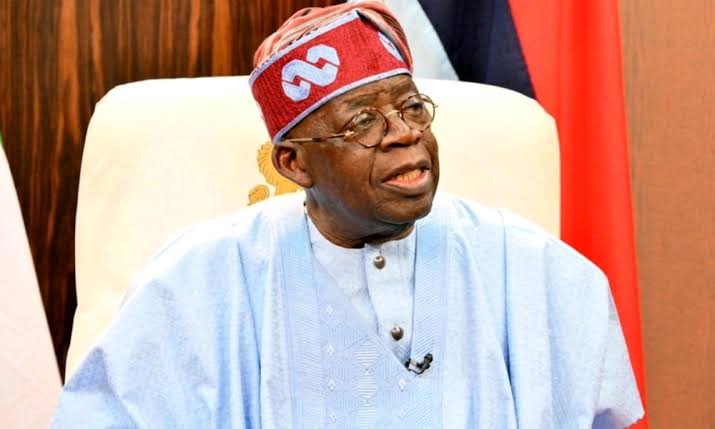
Bola Ahmed Tinubu, with his claims to knowledge of many things, knows nothing about the Egypt he has been deriding in his rudderless journey to the unattainable promised land he waves before Nigerians.
Egypt in Exodus, and subsequent books in the Bible, is alluded to as a land of slavery, incomparable, excruciating suffering that the Almighty was leading the Israelites out of, to a land he promised them was flowing with milk and honey.
Tinubu’s poor understanding of the context of Egypt, his threat that Nigerians will not go back to Egypt, was a full display of his ill-digested ideas on many spheres that question how he runs Nigeria.
He deserves pity. Where will the pity come from? Will it be from the very people he has dedicated his presidency to pushing into penury? Or those who keep deceiving him that the North is with him?
Which North? The North where Tinubu’s campaign billboards will not last a day without being destroyed? The North’s rejection of Tinubu is so outright that they need to provide security for Tinubu’s billboards.
Did you hear that the Emir of Katsina, Alhaji Abdulmumini Kabir Usman, accorded Team Tinubu a warm reception with the truth when Senator Abdulaziz Yari, Director-General of the campaign, went to the palace to solicit royal blessings?
Alhaji Usman challenged his guests on:
• Insecurity, which has adversely affected farming and schooling. He asked the government to arrest bandit leader Turji if it wanted to campaign in Katsina.
• Economic hardship was another point the Emir raised. He remarked that the administration’s “Renewed Hope” slogan was “renewed hunger”.
• Rejection of campaign handouts of rice, cash and temporary gifts was expected from the people. Acceptance of the gifts will not guarantee votes.
• Accountability before God. The Emir reminded the delegation that judgement awaited leaders who deceive the public for political power.
The Emir spoke for Katsina and all who Tinubu’s policies have afflicted.
A return to Egypt in Tinubu’s analogy is a frightening picture of a chaotic Nigeria Tinubu paints that would result from a loosening of his economic strangulation of Nigeria while he makes no efforts to halt the slide of the country into more poverty and possible bankruptcy.
Tinubu, with the guile he guided his party to snatch leadership of the country, will need to address his “return to Egypt” to the epochal junctures of the country’s political and economic journey since 2015.
When he speaks of the Egypt of President Goodluck Jonathan, does he know how Nigerians long for those days?
Tinubu and company accused the administration of corruption and mismanagement of security and the economy, citing fuel subsidy as an example.
How did Muhammadu Buhari’s fare? Multiple times worse than Jonathan’s, in facts and figures. Costs of living, insecurity and corruption soared.
One of the few truths that Tinubu repeatedly regurgitates with unmissable pride is how he made Buhari president for eight years. He is proud of imposing that affliction on Nigerians.
The embarrassing levels of corruption among Buhari’s ministers that Tinubu is making feeble attempts to prosecute show an administration, a political party and its leadership steeped in corruption.
Renewed corruption appears to be the new order under Tinubu.
Some Tinubu men and women find it disgusting enough to speak.
Spokesman for Tinubu’s Presidential Campaign Council, Alwan Hassan, stated Thursday night on Arise TV what had been speculation — that ministerial appointees in Bola Ahmed Tinubu’s administration bought their positions with billions of naira.
“A lot of ministers paid billions to be appointed. The first thing they think of is how to recoup that money after being appointed.
“The most criminal elements in government are ministers,” Hassan said.
Who collected the billions of naira? Were appropriate taxes paid?
And talking of taxes, a fuel tax will be added next year to Nigerians’ burdens if Tinubu wins.
Minister of Finance and Coordinating Minister of the Economy, Taiwo Oyedele, has denied saying a fuel tax was coming, though he was recorded saying so.
In an interview with Rotus Odiri, Arise News Business Correspondent, at the 2026 International Monetary Fund and World Bank annual meetings in Bangkok, Thailand, Oyedele said the tax would come when income levels improve enough for Nigerians to accommodate it.
“At the appropriate time, when the economy has stabilised and income levels will be able to accommodate it, those taxes will come. Not because we want to impose taxes,” the famed tax man said.
Oyedele alluded to taxes of between 20 and 80 per cent of pump prices in some countries.
It is a major policy leak that adds to Tinubu’s duplicity. While he claims he has a 90-day economic policy to lower prices — essentially to deceive voters that the economy has improved — he has another tax planned on fuel, whose price is a major cause of turbulence in the economy.
Even Buhari’s Egypt remains better in terms of how his non-economic policies affected our people than what our Chicago-trained economist is offering.
Corruption is so permissive that it sinks whatever pretence Tinubu makes about fixing Nigeria.
Obviously, his eyes are on the election and further deceits and blames on Egypt for the closet Tinubu and his party have led Nigerians into in just 11 years.
Tinubu is continuing his experiments with the lives of Nigerians. For him, Nigerians are nothing — almost less than nothing.
Finally…
The passing of Dr Emmanuel Eweta Uduaghan, former Governor of Delta State, on 19 October, three days to his 72nd birthday, left many who knew him in shock. He was a great administrator who left indelible marks across infrastructure, sports and education. My condolences to his families, friends and associates. May the Almighty rest him.
Isiguzo is a major commentator on minor issues.
-
Politics3 years ago
13 Ondo Assembly Members Disown Endorsement of Aiyedatiwa
-
Politics3 years ago
APC Group, Ondo Govt, Quarrel Over Money for Endorsement
-

 Trending News6 years ago
Stop unsavoury, inciting statements – DSS warns
-

 Others5 years ago
Adron Homes Celebrates 10 Years Of Housing Excellence
-

 Humanity5 years ago
President Buhari Commiserates With Ambassador Maureen Tamuno Over The Loss Of Her Father
-

 Others7 years ago
EX- CUSTOMS BOSS, IBRAHIM MERA’S DWINDLING FAME
-

 Business3 years ago
Bigi Carbonated Soft Drinks Treats 40 Consumers to an Epic Easter Movie Hangout
-

 Business2 years ago
Wema Bank Shines at Global SME Finance Forum Conference Awards 2024 …Awarded: • SME Financier of the Year (Africa) • Platinum Award for Best Financier for Women Entrepreneurs (Africa)