
Politics
“Subsidy Is Gone”: Tinubu’s Bold Reforms Two Years After Inauguration

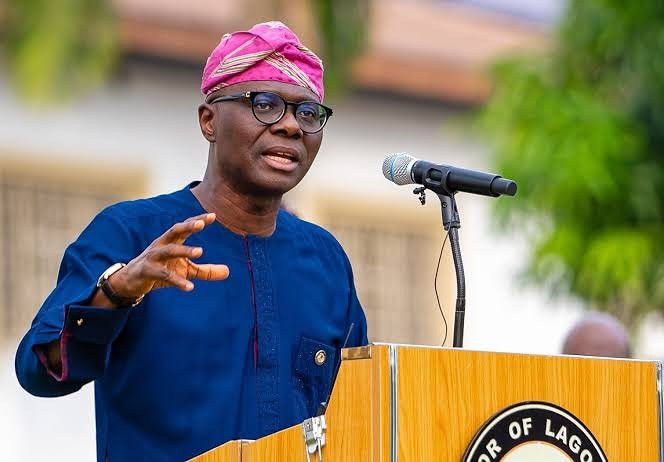
By Babajide Sanwo-Olu

It was just a harmless one-liner, but it became the most memorable part of that historic speech. “Subsidy is gone and gone for good.” That was President Bola Ahmed Tinubu, GCFR, on his inauguration at the iconic Eagle Square, Abuja on May 29, 2023.
Besides being the most memorable part of the speech, the phrase became a vivid metaphor for all the bold reforms that followed. President Tinubu was merely sending a signal about his strong conviction and resolve to make hard choices.
From the get-go, President Tinubu left no one in doubt that he meant business as far as tending to the seemingly intractable problems of Nigeria was concerned. He came on board with all the gravitas needed to change the Nigerian story and fix her concerns for our collective good.
With requisite but rare confidence and the willpower to make crucial but difficult choices, he gave a clear inkling of what serious leadership means right from his inauguration at the Eagle Square.
That one-liner – subsidy is gone and gone for good – was to later set the stage for several other revolutionary game-changing decisions that are fast altering the narrative of our dear nation, dipped in a truly genuine Renewed Hope Agenda.
Critics are quick to remind the nation, nay the world, that the President once opposed fuel subsidy removal. Truth is, such individuals are too short-sighted to understand the place of time in decision-making. Only a leader in the cast of Asiwaju does.
Subsidy removal was an idea whose time had not come, when it was first mooted. That was why to even muster the political will at the time was in itself herculean. Besides, it was all obscured by other environmental elements.
When the time eventually came, Tinubu who, as a realist, would not miss such an opportunity, embraced the idea, not just as a Nigerian, but now as the President. Of course, the consequences of this tough choice have hit the masses so hard. It was so because subsidy removal was sudden – and shocking. Understandably so!
But with compassion and magnanimity of leadership, the President has so far managed the fallout very well, with the otherwise scathing effects now gradually thawing, giving meaning and clarity to the decision.
He has not only invested in Compressed Natural Gas buses to cushion the effect of subsidy removal, Asiwaju Tinubu has also provided palliatives for us, the subnationals, as development partners, just so we could collectively attack the consequences from all sides and give reprieve to our people.
The CNG initiative, launched to power the transportation sector and reduce costs, has saved the nation over N1 trillion a month, hitherto used to import PMS and AGO. Added to this is the fact that while oil production has increased, agreements for Foreign Direct Investments (FDIs) of well over $500 million have been signed. These indicators are positive.
From subsidy removal, our President hopped on the next assignment. He floated the naira against other currencies. This was done to enable the naira find its level against stronger currencies, especially the dollar.
By terminating multiple foreign exchange systems, which, like the President once noted, had “constituted a noose around the economic jugular of our nation and impeded our economic development and progress”, there was a projected relief, albeit not in the region of what the President ultimately wanted. He kept the pace still.
For a nation surviving largely on consumption, the naira had seen the worst of days but had marched on regardless, with the hope that something would give, and indeed, it did. Thanks to our foresighted President.
While the naira is evidently not there yet, the spiral slide has been halted, and it is definitely going to come around with a rebound, more so that the dollar has also maintained reasonable stability. The indicators are positive. No doubt.
The overall economic overview is an encouraging one. The massive and bold infrastructure renewal is too evident for even the President’s worst enemy to ignore or downplay. From the South to the East, West and North, the balance is not omitted, and work has continued, in spite of deliberate sabotage by some enemies of progress.
For instance, some of the ongoing major projects, such as bridges, railways, power, oil and gas developments, as well as crucial road construction, notably the Lagos-Calabar Coastal Highway and Sokoto-Badagry Highway, are the real positive indicators for investment purposes.
Launched exactly a year ago, the first phase of the coastal highway, for example, has totally shocked the naysayers, who saw nothing good in the project other than their insinuation that it was going to end up as a white elephant. How wrong they have been proven!
In addition to this are the Tax Reform Bills, which a section of the media initially tagged “controversial”, just because some people were opposed to change. The good behind the idea is too much for any progressive mind to reduce it to mere politics or ethnic fisticuffs. Interestingly, the bills have survived their deadliest traps.
Also noteworthy is the fact that the external reserve has continued to swell amid the multi-faceted challenges that the administration of our President and his party, All Progressives Congress (APC) had faced from inception.
Trade surplus has been reported time and time again, while some of the hitherto moribund refineries have started working, with the Dangote Refinery championing the idea that change is indeed possible.
What’s more? There has been a steady increase in government revenues, whose aggregate has more than doubled, increasing by over N9.1 trillion in the first half of 2024, compared to the first half of 2023. These indicators are really very positive.
Seeking financial autonomy for the local government administration is not a decision by the President to further orchestrate personal interests or needs, but grow the nation and her choice of democratic system.
While the Constitution places the soul of the local governments in the hands of the state governments through their state legislatures, it is not at the detriment of development closest to the people. We have successfully experimented this in Lagos and can boldly say that nothing compares to a truly autonomous council system.
This is why the financial autonomy of the closest tier of government to the people has become a matter of necessity, if development must cut across and trickle down. After all, much of the decisions that directly impact the lives of the people are not taken at the state or federal level, but the local government.
From the look of things, I can say boastfully that the glorious years of council administration are back in full swing – thanks to the moves made by our dear President. The indicators are positive and, with this, Mr. President deserves eternal gratitude.
The idea of the Student Loan Scheme, under which over N95.6bn has been made available to students, cannot be underplayed. The Consumer Credit Corporation was also established with over N200 billion “to help Nigerians acquire essential products without the need for immediate cash payments, making life easier for millions of households”. Still, these are humongous positive indicators.
Shall we forget, also, the Digital and Creative Enterprises designed for the empowerment of young people and creating millions of IT and technical jobs? The Skill-Up Artisans Programme, which introduced the Nigerian Youth Academy and the National Youth Talent Export Programme, is another positive indicator.
In livelihood support, the government has released over N570 billion to the 36 states to support their citizens while 600,000 nano-businesses have benefitted from the administration’s nano-grants. These are novel ideas with positive projections.
The initial reduction in revenue to debt service ratio, which came down from 97% to 68% in just 13 months, speaks to a progressive mindset and purposeful leadership. The creation of 240,000 jobs through 10 Micro, Small, and Medium Enterprises is equally a point to note.
The signing into law of the new National Minimum Wage of N70,000 (Lagos, the President’s home state, pays way more than that), and payment of N1 billion each to large manufacturers is all the more too positive to sidestep.
Yanking off tariffs and import duties on certain food items, such as rice, wheat, maize, sorghum, drugs, and other pharmaceutical and medical supplies for six months was borne out of compassion, stimulated by emotional intelligence, as much as the incentives to farmers, geared towards increasing food production and reducing prices.
The President Tinubu-led government has procured mechanised farming equipment, such as tractors and planters, worth billions of naira from the United States, Belarus, and Brazil, to further aid food production and get the nation out of the woods. This, too, is a huge positive indicator.
Taken together, while it is arguable that the nation is still some distance away from the promised land, what cannot be denied is the fact that the train has since May 29, 2023 left the station, and is moving at a reasonable and promising pace to a better destination.
To those who may say why celebrate two years of the President Bola Tinubu administration, I say take a look around and get your facts right before diving into this conversation. After all, “comment is free; facts are sacred”.
Needless to say, it is not yet uhuru as there are still some challenges – there will always be; that is the nature of life. For example, in security, the remnants of the heavily decimated anti-social elements have been battling to create anarchy and divide us, but the capacity of the President and Commander-in-Chief of the Armed Forces and the resolve of his security team to get a hang of this, are quite evident. It is a matter of time. The last of these criminals will be cleared off the surface of the earth.
It is on the strength of these and more that true patriots and progressive elements alike cannot but congratulate our dear President Bola Ahmed Akanbi Tinubu GCFR, and also urge him not to drop the ball on account of fleeting distractions.
What is more – we have begun to see results in the gale of defections of key personalities from pivotal states into the APC. These are not defections coerced by anyone but out of the freewill of the individuals who have chosen to identify with a team that is determined and means well for the ultimate good of the country.
Overall, the truth of the matter is that with these positive indicators capped with the “Nigerian First” policy, the ship of state is definitely berthing safe, with a decorated captain and political war general – Asiwaju Bola Ahmed Tinubu – who has been tested and trusted in times of crises and challenges.
•Mr. Sanwo-Olu is the governor of Lagos State


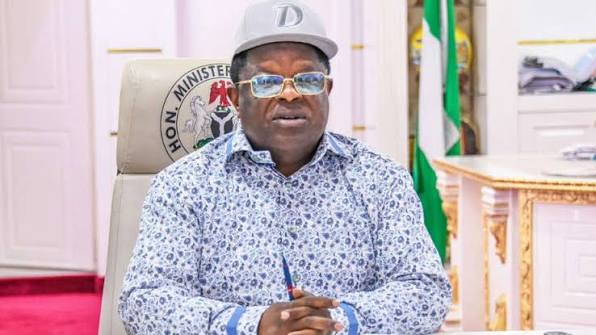
David Umahi predicts a South-East voting shift in 2027, citing Tinubu’s infrastructure projects and appointments across the region
Minister of Works David Umahi has predicted that voters in the South-East will support President Bola Tinubu differently in the 2027 presidential election, arguing that federal infrastructure projects and political appointments have changed the region’s relationship with the administration.
Also read: FG to immortalise Nigerian soldiers killed in Liberia, Sierra Leone
Umahi made the prediction in an interview with ARISE News published on Friday, describing the region’s overwhelming support for Labour Party candidate Peter Obi in the 2023 election as an “accident of history”.
He attributed the voting pattern to anger over what he described as the region’s marginalisation under the previous administration.
“In 2023, it was an accident of history. It was a demonstration of the anger of the people of South East on how they were treated,” he said.
The former Ebonyi State governor added that he believed the situation had changed under Tinubu.
“We’ve been marginalised in the past, but it’s no longer so,” Umahi said.
“If in 2023 they demonstrated their anger, in 2027 they are going to demonstrate their joy on how the President has treated them,” he added.
The minister said federal road projects and other investments in the South-East were reasons voters might reconsider their political choices in 2027.
He also claimed that serving and former governors, traditional rulers and other influential figures in the region were increasingly aligning with Tinubu.
Umahi argued that voters would be reluctant to abandon what he described as infrastructure gains for another political “gamble”.
However, his prediction reflects his own assessment of the region’s political mood.
The interview did not establish how voters currently intend to vote in 2027.
Umahi rejected suggestions that South-East political leaders supporting Tinubu were betraying the region or Obi, arguing that the region’s political interests should not be permanently tied to one candidate.
He also criticised social media supporters who insult regional leaders for backing the President, saying such attacks would not advance Obi’s political interests or those of the South-East.
The minister maintained that the region needed to negotiate and build alliances with other parts of Nigeria if it hoped to produce a president in the future.
Asked whether he believed Tinubu would defeat Obi in the South-East in 2027, Umahi responded confidently: “Why do you say I believe? That is what is going to happen!”
Also read: FG to immortalise Nigerian soldiers killed in Liberia, Sierra Leone
His comments come as political alignments and debates over regional representation begin to shape discussions ahead of the 2027 general election.

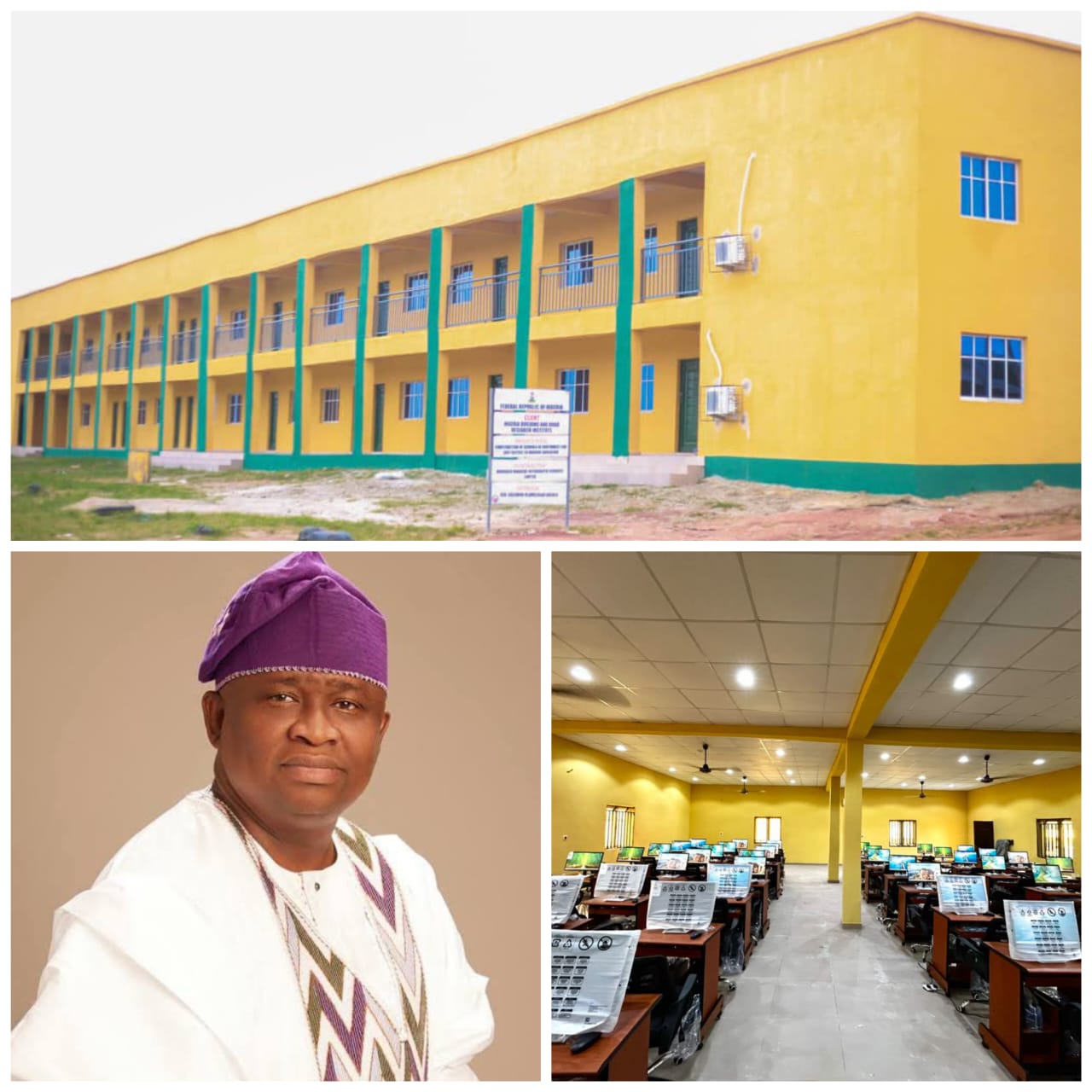
Senator Solomon Adeola delivers a 12-classroom block and an ICT centre to two Ogun schools to improve learning and access to digital education
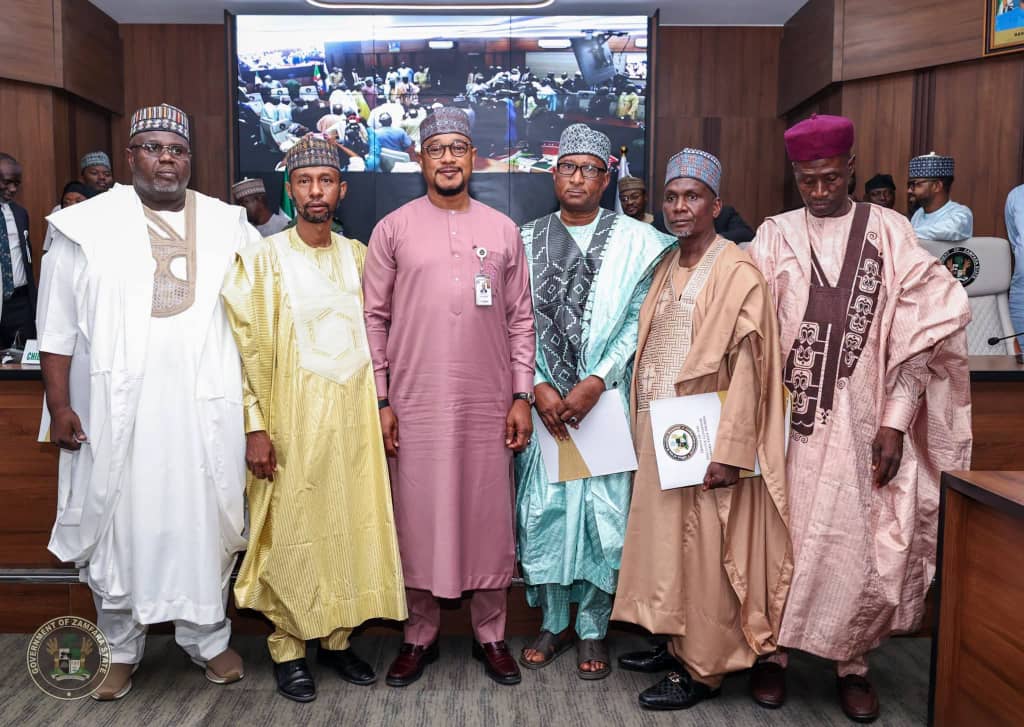
Dauda Lawal swears in five permanent secretaries in Zamfara, urging them to follow public service rules, financial regulations and relevant laws
Zamfara State Governor, Dauda Lawal, has sworn in five new permanent secretaries, urging them to comply with Public Service Rules, financial regulations and other relevant laws in the discharge of their duties.
Also read: 2027: 21 Adamawa LG Chairmen, 226 Councillors Dump PDP for APC
The swearing-in ceremony took place on Thursday at the Grand Chamber of the Government House in Gusau, the state capital.
The newly appointed permanent secretaries are Ahmad S. Zamfara, Nasiru Halilu Anka, Mu’azu Jibril Guraguri, Adamu Abdullahi Kanoma and Sani Muhammad Shinkafi.
The Chief Judge of Zamfara State, Justice Kulu Aliyu, administered the oath of office to the appointees, who pledged allegiance to the Federal Republic of Nigeria in accordance with the Constitution and the law.
Speaking at the ceremony, Lawal congratulated the new permanent secretaries, describing their appointments as recognition of their experience, abilities and readiness to take on greater responsibilities.
He said their roles extended beyond personal career advancement, noting that their decisions and conduct would influence government performance and the welfare of residents.
“The Permanent Secretary is central to Government, providing administrative leadership, institutional continuity, and policy advice while implementing approved programs,” the governor said.
He added that permanent secretaries were responsible for maintaining discipline, coordinating their establishments and ensuring that public resources were used for their intended purposes.
Lawal said his administration remained committed to strengthening government institutions and improving public administration to support Zamfara’s development priorities.
He noted that the civil service played a critical role in translating government decisions into practical results, particularly in the delivery of essential services.
The governor urged the new appointees to align their work with his administration’s priorities through proper planning, realistic implementation strategies, effective supervision and continuous assessment of results.
He also called on them to maintain constructive and professional relationships with commissioners and other political officeholders.
According to Lawal, political leaders are responsible for setting policy, while career civil servants provide the institutional knowledge, technical advice and administrative capacity needed to implement it.
He stressed that mutual respect and cooperation between political officeholders and career civil servants were essential to effective governance.
Also read: 2027: 21 Adamawa LG Chairmen, 226 Councillors Dump PDP for APC
The governor urged the permanent secretaries to uphold discipline and professionalism while ensuring that their departments supported the administration’s development agenda and served the needs of the people of Zamfara.
-
Politics3 years ago
13 Ondo Assembly Members Disown Endorsement of Aiyedatiwa
-
Politics3 years ago
APC Group, Ondo Govt, Quarrel Over Money for Endorsement
-

 Trending News5 years ago
Stop unsavoury, inciting statements – DSS warns
-

 Others5 years ago
Adron Homes Celebrates 10 Years Of Housing Excellence
-

 Humanity5 years ago
President Buhari Commiserates With Ambassador Maureen Tamuno Over The Loss Of Her Father
-

 Others7 years ago
EX- CUSTOMS BOSS, IBRAHIM MERA’S DWINDLING FAME
-

 Business2 years ago
Bigi Carbonated Soft Drinks Treats 40 Consumers to an Epic Easter Movie Hangout
-

 Business2 years ago
Wema Bank Shines at Global SME Finance Forum Conference Awards 2024 …Awarded: • SME Financier of the Year (Africa) • Platinum Award for Best Financier for Women Entrepreneurs (Africa)