
Economy
If you’re enjoying Tinubu’s policies raise your hand

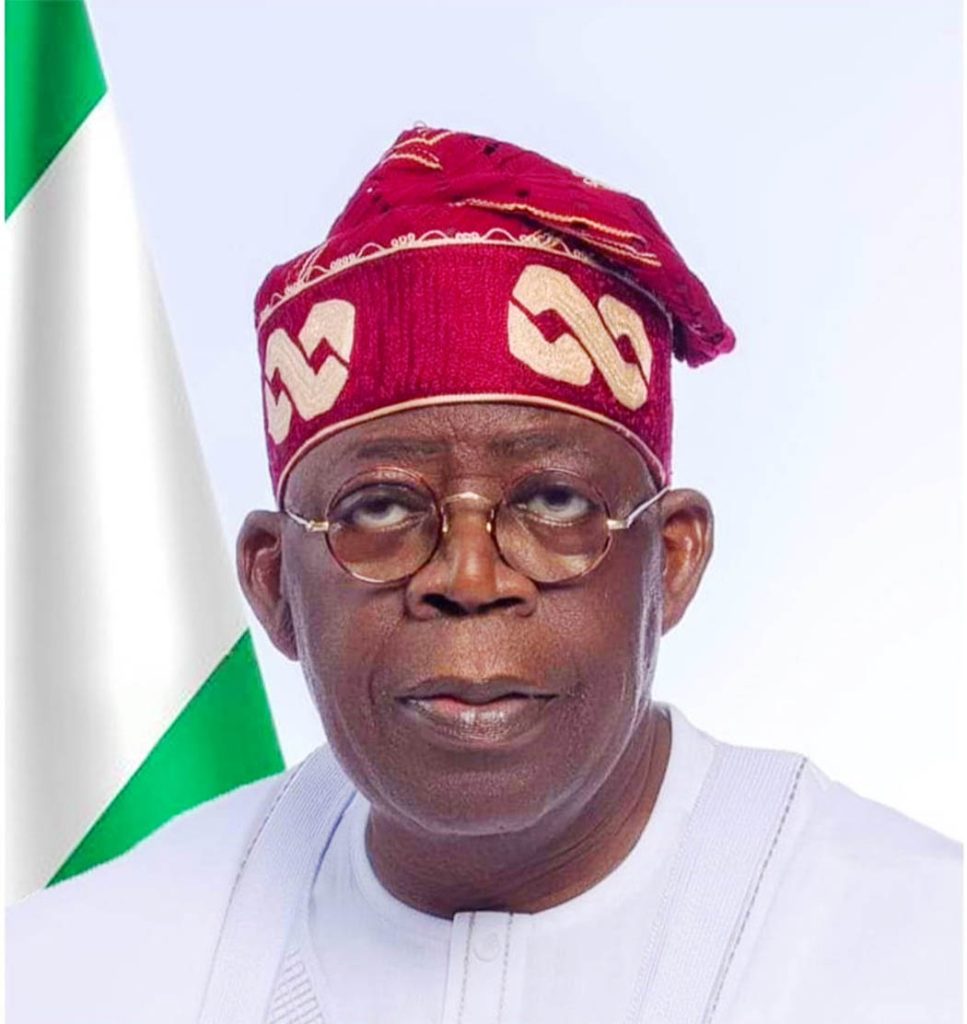
Tinubu criticism intensifies as concerns grow over insecurity, economic hardship and governance challenges in Nigeria

ARE there regular Nigerians who are enjoying the All Progressives Congress, APC, government since 2015, in particular, the version that President Bola Ahmed Tinubu invented when he became president in 2023?
Also read: Wike Inspects Gomani–Yangoji Road Project, Praises Tinubu’s Infrastructure Drive
Some would raise their hands because they believe it is their duty to ensure that Tinubu does not look bad under any circumstance.
They have sworn to it, they are dedicated to defending Tinubu.
From the way some sound, they may be willing to put their lives on the line if that will ensure a Tinubu victory. They mean it.
What has Tinubu done that impressed them so much that they cannot see the ruination that Tinubu’s presidency has imposed on Nigerians?
They would go into drivels about how Tinubu’s policies saved Nigeria’s nationhood from annihilation. His great economic policies, his prudence, anti-corruption stance which has given us a better country than Tinubu met.
Where are the evidence? High prices of foods and medication for everyone, add children. Unbearable cost of electricity while it is barely available.
Fuel costs seven times what it cost when Muhammadu Buhari handed over to Tinubu weeks less than three years ago.
Tinubu floated the Naira to a collapse that almost stripped it of its value. Businesses are collapsing, unemployment is on the rise.
Tinubu and his supporters dismiss these as the words of critics. They want all Nigerians to become liars, minimising how much Tinubu has damaged Nigeria, and accepting it was not the fault of Tinubu.
The country he inherited was badly damaged.
Few are buying that excuse, not former President Olusegun Obasanjo who blamed Tinubu for many things, among them inability to do anything well in an administration known for its appetite for borrowing.
Without any reasonable answers to these assertions, the likes of Minister of Works, the very powerful David Umahi retorted that those who did not like the opaque Lagos-Calabar Coastal Road, which Obasanjo last year called a scam, should not use it when completed. Rather if it ever gets completed.
Tinubu has always lived in the future. It serves him well. Thousands of Nigerians have died due to insecurity, his harsh economic policies. He has no words for the situations.
He gives impressions that he is building a great future for Nigerians.
Which Nigerians? The living or the dead? Without answers for the present, without a discernible past, Tinubu cligns heavily to the future when he believes we would have forgotten or would not be available to ask him to account.
Tinubu has taken this drivel abroad. No longer able to spin stories about his achievements, principally leaving Nigeria debt-riddled, he now talks of the future.
He told Africa CEO Forum in Rwanda, that he would do more work when re-elected. Isn’t that an admission of his failure.
“I have to continue to reset and rethink and then challenge the intellectual curiosity.
The philosophy I came with in governance is believing that the hallmark of a transformative leader is the ability to make decisions, do what you do at the time it ought to be done on behalf of the people.
“If you miss that curve, you are not on the path to success, and that’s what I believe. First time, I took hard decisions, regardless of pain.
Stop reading newspapers and commentary because I was going to get a big pushback, and I did,” according to Tinubu.
The only thing he seemed to have said with clarity is that he stopped reading newspapers and commentary so that he would not see the criticisms.
No need to wonder. Tinubu confessed to an international that he was insular. No need for a confession. They knew long ago.
Let us note that Buhari, who many believed would be Nigeria’s worst leader, was enamoured of newspaper cartoons. One of his media minders said he could spend good time reading or looking at cartoons.
“I was sitting on a hot burner, but we made the curve today,” Tinubu continued the rambling. “There is a very bright light at the end of the tunnel.
The economy is stable. The Naira is stable and predictable. Planners can now do a reasonable budget. They can plan their lives well.”
With Tinubu, we are in an endless tunnel of darkness. What was Tinubu saying? Those were his lines in Rwanda to attract investors.
Words prove inadequate to address Tinubu’s destruction of Nigeria. The layers of lies his media spins are some of the best proofs about the emptiness of his dreams for Nigeria.
Barely two months after the great news, by Team Tinubu: That Nigeria secured a £746m ($997m) financing agreement backed by UK Export Finance (UKEF) to completely modernise and repair the Apapa and Tin Can Island ports in Lagos, another great news from the global jamboree came from Rwanda.
World-class port operator APM Terminals pledged a $600 million investment in Nigeria’s maritime sector.
The Regional President, APM Terminals Africa-Europe, Igor van den Essen said the proposed investments will be deployed in Apapa port modernisation, logistics infrastructure, and long-term private-sector investment in Nigeria’s maritime sector.
It is the same Apapa port(s). Many Nigerians, except Team Tinubu spinning these tales, are wondering why Tinubu is not interested in other ports in Nigeria.
There are more worries about Apapa ports no matter how the stories are curated.
On 18 May 2025, there were celebratory reports in the media that APM Terminals Apapa, in collaboration with the Nigerian Ports Authority, NPA, had completed the rehabilitation of 970 metres of quay apron surface at the Apapa port, a critical infrastructure initiative aimed at improving operational safety, sustainability, and efficiency at Nigeria’s busiest container terminal.
The reports continued that the Federal Government had approved the rehabilitation of Apapa and Tin Can ports as well as the upgrading of the eastern ports including Calabar, Warri, Onne, and Rivers Ports.
It could be these “eastern ports” that the proposed $600m investment included as “Nigeria’s maritime sector”.
More questions: Which parts of the Apapa and Tin Can Island ports will be modernised with the UK loan? What part would be left for APM’s $600m?
Tinubu can be forgiven if he cannot remember that he had UK loan for the same ports just two months.
A President who cannot remember that insecurity is claiming lives in his country, the Tinubu who cannot deliver on 5,000 he promised would secure Plateau can forget things.
However, Tinubu knows when to appoint an Adviser on Homeland Security. Whatever the brief, the bandits are not impressed.
They attacked a school in Oyo State on Friday, abducted some pupils, and shot a teacher who later died in hospital. Attacks are now frequent in Ekiti, Kwara States once “safe”.
Regular attacks areas are no longer discussed – Benue, Borno, Plateau, Zamfara. The Commander-in-Chief is busy travelling, promising he will work hard, not even harder, in 2027.
Amid the hunger, anger, people are passionately emitting promises of war, mayhem if Tinubu is not allowed a second term, after three years in which he keeps regurgitating inventors’ confidence in the same project.
Whatever that has reduced the highly promoted Tinubu to foreign travels and specious speeches at home and abroad is unsustainable in another tenure.
The mistake of 2023 should not be repeated. If Tinubu had achieved anything he should be using them in his campaigns instead of weakening the opposition in an entitled manner that suggests he will the only presidential candidate in 2027.
Finally…
UNSAFE anywhere. Over 100 children are in hospital in Ogun State from inhaling suspected poisonous gas. Will someone for once be held responsible for something?
FORMER Nigerian Minister of Power, Saleh Mamman, was sentenced to 75 years in prison by the Federal High Court in Abuja on 13 May 2026 for stealing N33.8 billion meant for projects like the Mambilla Power facility.
Have you wondered the type of system that permits an individual access to that load of money and the power to steal it?
IT is beyond shame that priests of the Catholic Church would hire thugs, security agents to fight each other in the long drawn tussle over ownership of Tansian University in Anambra State.
Also read: Atiku Abubakar Camp Warns Southern Candidate Cannot Beat Tinubu in 2027
Each new episode of the fight worsens matters and drags the name of the Church in the mud. The Church’s attitude leans more towards indifference.


FCCPC fuel price monitoring intensifies as Tunji Bello urges Nigerian refiners and marketers to reflect falling crude prices in petrol costs

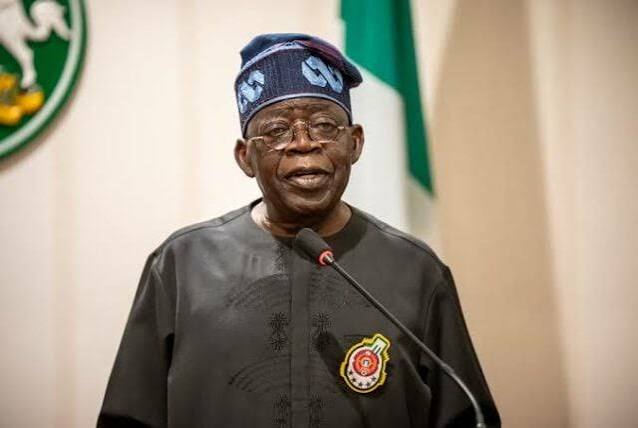
Nigeria investment in youth and local industries is vital to job creation, says FG, urging public-private partnerships and regional industrialisation
The Federal Government has called for increased investment in youth development, small and medium-sized enterprises, technology and local industries to create jobs and strengthen Nigeria’s economic competitiveness.
Also read: Osun amotekun dismisses officer over gross misconduct
The Minister of State for Foreign Affairs, Ambassador Sola Enikanolaiye, made the call during a panel discussion titled “From Trade to Value Chains: Building Regional Industries to Compete Globally” at the 32nd Nigerian Economic Summit, held under the sub-theme, “Invest Nigeria”.
In a statement issued on Tuesday and signed by his Special Assistant on Digital Media and Public Diplomacy, Raphael Oni, Enikanolaiye said Nigeria needed stronger partnerships between the public and private sectors to mobilise the capital required for sustainable economic growth.
He argued that the country must move beyond trading raw materials towards building industries that process local resources into finished products for domestic consumption and export.
According to the minister, investment from both domestic businesses and foreign sources would be necessary to expand industrial capacity, create employment opportunities and improve living standards.
“In advancing our country, we don’t talk enough to one another in terms of constructive conversation and dialogue. We believe that partnership which allows government to engage deeper and stronger with the private sector is critical. Government alone cannot alone raise the resources needed for shared prosperity,” he said.
Enikanolaiye added that domestic capital mobilisation was as important as attracting foreign investment.
He identified Nigeria’s youthful population as a major asset that could accelerate industrialisation if supported by investments in education, skills development, innovation and entrepreneurship.
“Our youth population is very critical – a vibrant population. We need to invest more in human capital, focusing on Small and Medium Scale Enterprises, technology, innovation and creativity. By so doing, we will be able to generate more employment for the youth and also raise more wealth and income,” he said.
On foreign policy, the minister said the administration had reordered its four-point 4D doctrine to place the welfare and prosperity of Nigerians at the centre of the country’s international engagements.
The framework focuses on Demography, Development, Democracy and Diaspora.
Enikanolaiye said democratic governance should produce tangible economic benefits for citizens rather than remain an end in itself.
“Democracy is good, but it is a means to an end, not an end in itself. Democracy must deliver on core priorities of economic development and economic prosperity to our people,” he said.
The minister also emphasised the importance of macroeconomic stability and reliable economic data in helping businesses assess investment opportunities and make long-term plans.
He said Nigeria had recorded improvements in macroeconomic stability and that inflation was coming down, although he did not provide supporting figures in the statement.
Enikanolaiye further called for reforms to make the Ministry of Foreign Affairs more responsive to Nigerians and strengthen its engagement with businesses.
He said cooperation between the government and private sector, alongside partnerships with neighbouring countries and other international markets, could help Nigeria expand its industrial base and improve its access to regional and global markets.
Also speaking at the summit, the President of the Economic Community of West African States Commission, General Birame Diop, called for greater emphasis on industrialisation to create jobs and strengthen regional trade.
His remarks were delivered by the ECOWAS Commissioner for Economic Affairs and Agriculture, Dehpue Yenpea Zuo.
Diop argued that trade agreements alone could not deliver widespread employment and economic growth without industries capable of processing raw materials and producing goods.
“Trade agreements do not create jobs; industries do,” he said.
He noted that intra-African trade accounted for about 15 per cent of the continent’s total trade, compared with more than 60 per cent in Europe and Asia.
He attributed the gap partly to the limited scale of regional industries.
According to Diop, the regional market, with more than 300 million consumers, provides an opportunity for West African manufacturers to expand production before competing across the continent under the African Continental Free Trade Area.
He outlined four priorities for advancing regional industrialisation: implementing existing trade agreements, including commitments on border management; developing value chains in sectors where West Africa has a competitive advantage; improving access to finance for businesses and producers; and measuring progress through jobs created and goods processed within the region.
Also read: Osun amotekun dismisses officer over gross misconduct
Diop said converting trade commitments into productive industries would be essential to expanding employment, increasing regional economic activity and strengthening West Africa’s competitiveness in global markets.

Cash outside Nigerian banks rose to N4.92tn in September 2026 as Nigeria’s broad money supply increased to N146.6tn, CBN data show
Cash outside Nigerian banks rose to N4.92tn in September 2026, an increase of N48.73bn from the N4.87tn recorded in August, according to monetary data published by the Central Bank of Nigeria.
Also read: UCL: Nico Paz Scores Twice as Como Crush Man United
The latest figures also showed an expansion in Nigeria’s broad money supply, which increased to N146.6tn in September from N139.09tn in the previous month.
The growth represents an increase of N7.51tn within one month, reflecting a broader expansion in the amount of money circulating across the economy.
The CBN data further showed that narrow money, which consists of currency in circulation and highly liquid deposits, rose to N44.05tn in September from N43.11tn in August.
Cash held outside banks refers to physical currency kept by individuals and businesses rather than within the banking system.
Broad money, by contrast, covers a wider range of monetary assets, including cash, demand deposits, savings and time deposits, as well as foreign currency deposits.
Nigeria’s broad money supply increased by 18.3 per cent between January and September, rising from N123.95tn to N146.6tn, the data indicated.
The latest increase followed the CBN’s decision in September to reduce its benchmark interest rate by 350 basis points, bringing it down from 26.5 per cent to 23 per cent.
The reduction was reported as the largest cut in the benchmark rate since December 2006.
Despite the rate cut, the Monetary Policy Committee retained the Cash Reserve Requirement for commercial banks at 45 per cent and merchant banks at 16 per cent.
The committee also maintained the 75 per cent reserve requirement on non-Treasury Single Account public-sector deposits.
The Cash Reserve Requirement determines the proportion of eligible deposits that banks must hold as reserves with the central bank.
It is one of the monetary policy tools used to influence banking-sector liquidity and credit conditions.
The rise in cash outside Nigerian banks formed part of the broader increase in money supply.
Also read: UCL: Nico Paz Scores Twice as Como Crush Man United
However, the figures alone do not establish why households and businesses held more physical cash or how much of the increase was driven by spending, savings behaviour or other economic factors.
-
Politics3 years ago
13 Ondo Assembly Members Disown Endorsement of Aiyedatiwa
-
Politics3 years ago
APC Group, Ondo Govt, Quarrel Over Money for Endorsement
-

 Trending News6 years ago
Stop unsavoury, inciting statements – DSS warns
-

 Others5 years ago
Adron Homes Celebrates 10 Years Of Housing Excellence
-

 Humanity5 years ago
President Buhari Commiserates With Ambassador Maureen Tamuno Over The Loss Of Her Father
-

 Others7 years ago
EX- CUSTOMS BOSS, IBRAHIM MERA’S DWINDLING FAME
-

 Business3 years ago
Bigi Carbonated Soft Drinks Treats 40 Consumers to an Epic Easter Movie Hangout
-

 Business2 years ago
Wema Bank Shines at Global SME Finance Forum Conference Awards 2024 …Awarded: • SME Financier of the Year (Africa) • Platinum Award for Best Financier for Women Entrepreneurs (Africa)