
Security
Opposition Parties Fault Tinubu’s Approach to Insecurity


The Tinubu Grazing Directive faces fierce criticism as opposition parties accuse the government of misreading Nigeria’s security crisis

In a development described by opposition figures as deeply controversial, President Bola Tinubu’s Tinubu Grazing Directive has triggered strong backlash across key political blocs, our correspondents report.
Also read: Tinubu Sends 32 Ambassadorial Nominees to Senate for Confirmation
The President’s appeal to herders to end open grazing, surrender illegal arms, and adopt full ranching as part of his new national livestock plan has been dismissed by major opposition parties as hollow rhetoric lacking a concrete roadmap.
The policy, unveiled on Wednesday as part of broader security reforms under the Ministry of Livestock, comes amid escalating abductions in Niger and Kebbi as well as continued farmer–herder clashes in the North Central belt.
Yet opposition leaders insist the President has fundamentally misunderstood the nature of Nigeria’s insecurity.
Labour Party spokesperson Obiora Ifoh argued that the crisis is driven not by herders but by organised terrorist groups.
He maintained that attackers who raid schools and churches rarely have any link to cattle rearing, insisting that the government must strengthen intelligence and undertake serious counter-terrorism actions rather than issue what he termed superficial directives.
The African Democratic Congress was equally scathing. ADC National Publicity Secretary Bolaji Abdullahi questioned how the administration intends to enforce the Tinubu Grazing Directive when many armed groups operate far outside traditional herding communities.
He dismissed the policy as declarative theatre, claiming the government lacks the logistical and infrastructural capacity to implement its own security announcements.
Abdullahi also criticised the plan to recruit 30,000 new police officers, noting that inadequate barracks, insufficient ammunition and poor training facilities already undermine the existing force.
In his view, the administration appears unaware of the depth of institutional decay within the security architecture.
The Peoples Democratic Party adopted an even tougher tone. PDP Deputy National Youth Leader Tim Osadolor accused the President of being disconnected from realities on the ground.
He argued that while open grazing remains a long-term problem, the immediate threat stems from armed criminal gangs with no ties to pastoral activities.
Osadolor questioned the feasibility of identifying armed herders one by one, describing the idea as impractical and uninformed.
He also referenced the viral video of a Customs officer claiming to distribute seized rice to bandits, saying such revelations show that authorities may know more about the locations of criminal groups than they publicly admit.
He warned Nigerians to prepare for more political posturing as the 2027 elections approach.
The debate intensified after Senator Francis Fadahunsi renewed his call for civilian gun ownership laws. The senator argued that Nigeria was “at war” and should consider controlled firearm rights, as practised in over one hundred countries, to enable citizens to defend themselves.
He also demanded capital punishment for kidnappers and negotiators while urging the President to overhaul defence leadership.
Despite the fierce political storm, the government maintains that ranching, better border control and disarmament remain the most sustainable solutions to resolving the farmer–herder conflict and strengthening rural security.
Also read: Tinubu – No outrage, no shock as terrorists kill General, kidnap over 200 students
While critics dismiss the Tinubu Grazing Directive as insufficient, the administration insists that the reforms mark the beginning of a wider national strategy.


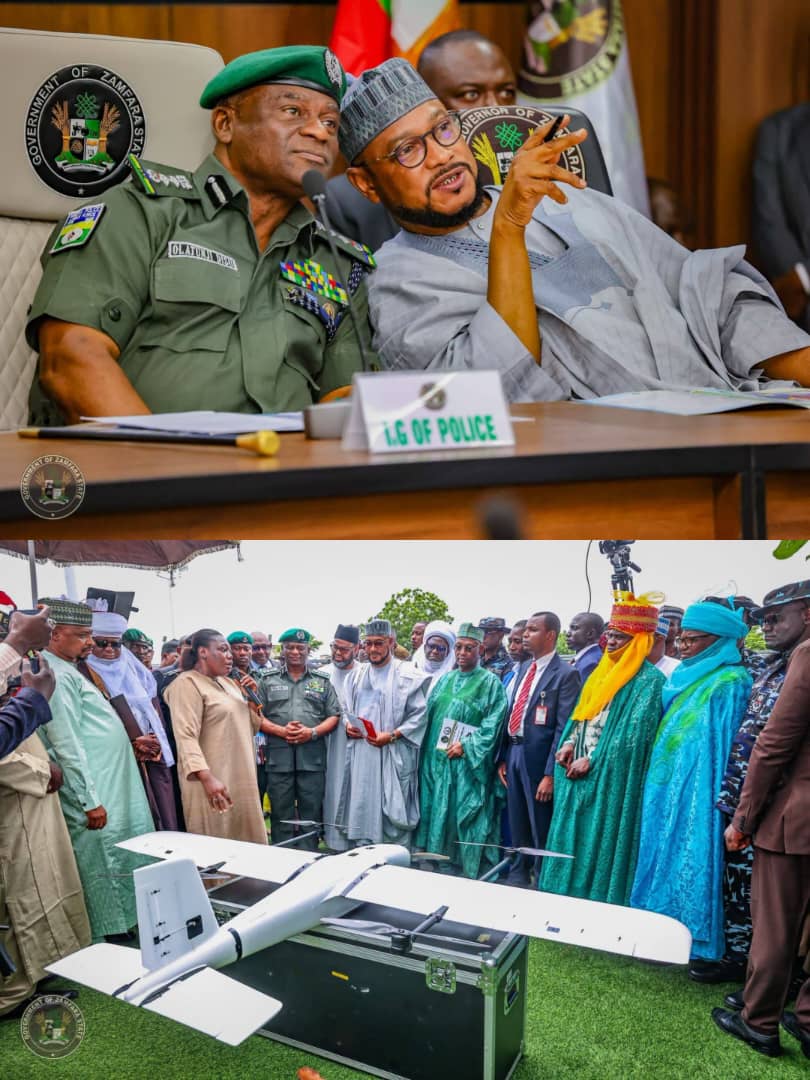
Governor Dauda Lawal has emphasised that bandits who refuse peace and threaten innocent people must face the full consequences of the law.
The Zamfara State Government hosted a three-day Northwest Security Summit organised by the Nigeria Police on Wednesday at the Government House, Gusau.
The Security Summit, themed ‘Appraising the Security Challenges in the Northwest Region’, was honoured by the presence of the Inspector-General of Police (IGP), Olatunji Rilwan Disu.
The summit brought together the leadership of the Nigeria Police, representatives of the Northwest States, heads of security and intelligence agencies, traditional rulers, community leaders, and civil society organisations.
While declaring the summit open, Governor Lawal commended the Inspector-General of Police and the leadership of the Nigeria Police Force for convening the summit and for choosing Zamfara State as the host.
He said, “This is significant because Zamfara remains at the frontline of the security challenges confronting the Northwest. It provides an appropriate setting for an honest assessment of our challenges and, more importantly, the development of practical solutions.
“The Northwest’s security crisis exceeds isolated crimes. Organised networks conduct banditry, kidnapping, and cattle rustling across borders, threatening livelihoods, food security, education, investment, and the social fabric. The summit also highlights urban threats such as thuggery, substance abuse, and radical infiltration.
“This reality demands moving beyond fragmented responses because criminal networks ignore state boundaries. Our security must operate cohesively. Intelligence in Zamfara can prevent attacks elsewhere, and operations nearby can disrupt threats in Zamfara.
“Accordingly, the Northwest needs stronger mechanisms for real-time intelligence sharing, coordinated operations, inter-state surveillance, community policing, and sustained disruption of the financial, logistical and supply networks that sustain organised crime.”
The governor added that the summit represents some of the finest operational, intelligence and strategic experience within the Nigeria Police Force and the security ecosystem.
“We must, therefore, challenge ourselves to leave Gusau not merely with another diagnosis of insecurity, but with actionable options.
“I urge this summit to consider practical measures to cut off criminal networks’ supply chains and limit their movement. Criminal enterprises rely on logistics including routes, markets, intermediaries, financiers, and networks.
“We must confront operational questions: How do we disrupt supply chains? How do we limit criminals’ mobility across forests, communities, and borders? How do we strengthen control over vulnerable corridors without harming legitimate commerce? And how do we identify and dismantle networks of informants and facilitators enabling crime?”
Earlier, the Inspector-General of Police (IGP), Olatunji Rilwan Disu, said that the security of the Northwest is a collective responsibility because the region is of enormous importance to Nigeria.
“We are combining states to tackle the issue of insecurity. We have come together, we police together, we share intelligence together. We have made up our minds to take the fight to these criminals. We have made up our minds to do this; that is why we summoned this summit.”
“As Inspector-General of Police, I assure you that the Nigeria Police Force will continue to deploy its capabilities, personnel and partnerships towards securing the region and supporting the efforts of State Governments and other security agencies. But we also recognise that policing is most effective when it is supported by the people.”


Lagos Assembly Speaker commends Tinubu, Makinde and security agencies after the successful rescue of abducted teachers and schoolchildren
-
Politics2 years ago
13 Ondo Assembly Members Disown Endorsement of Aiyedatiwa
-
Politics2 years ago
APC Group, Ondo Govt, Quarrel Over Money for Endorsement
-

 Trending News5 years ago
Stop unsavoury, inciting statements – DSS warns
-

 Others5 years ago
Adron Homes Celebrates 10 Years Of Housing Excellence
-

 Humanity5 years ago
President Buhari Commiserates With Ambassador Maureen Tamuno Over The Loss Of Her Father
-

 Others7 years ago
EX- CUSTOMS BOSS, IBRAHIM MERA’S DWINDLING FAME
-

 Business2 years ago
Bigi Carbonated Soft Drinks Treats 40 Consumers to an Epic Easter Movie Hangout
-

 Business2 years ago
Wema Bank Shines at Global SME Finance Forum Conference Awards 2024 …Awarded: • SME Financier of the Year (Africa) • Platinum Award for Best Financier for Women Entrepreneurs (Africa)