
News
Tinubu Approves 78,000 New Military, Police Recruits

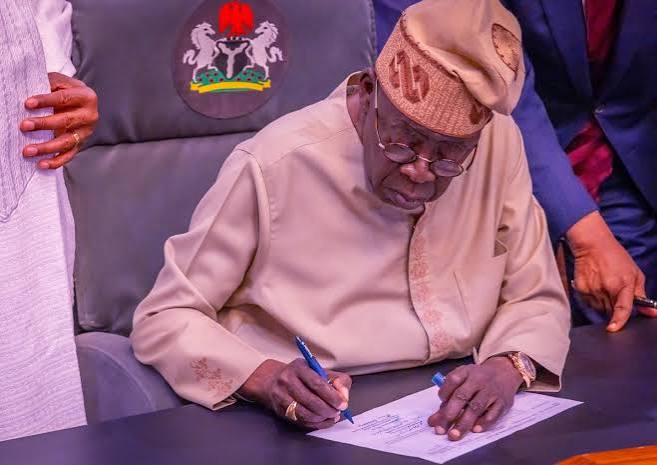
Tinubu security recruitment gets a major boost with approval for 78,000 soldiers and police officers to strengthen Nigeria’s security operations
President Bola Tinubu has approved the recruitment of 28,000 additional soldiers and 50,000 police officers, bringing the proposed security recruitment expansion to 78,000 personnel, as the Federal Government moves to strengthen Nigeria’s response to terrorism, banditry, kidnapping and other criminal activities.
Also read:Fuel Price Hikes Trigger Protests in Central African Republic

The approval, announced by the All Progressives Congress (APC) Presidential Campaign Council on Sunday, November 15, 2026, forms part of the administration’s proposed Five-Year Strategic Defence Operations Plan, which seeks to expand military manpower, improve policing capacity and strengthen the country’s security infrastructure.
The council’s spokesperson, Dele Alake, disclosed the development in a statement outlining the administration’s security initiatives and military restructuring plans.
According to the statement, the recruitment of additional soldiers is intended to increase the military’s operational presence across the country and improve its ability to respond to emerging security threats.
“To further the manpower expansion drive, President Tinubu also approved recruiting an additional 28,000 soldiers to strengthen the military’s presence on the ground and enhance its operational effectiveness,” the statement said.
The President also approved the recruitment of 50,000 additional police officers to reinforce internal security, improve policing capacity and strengthen responses to criminal activities.
The proposed expansion represents a substantial manpower commitment at a time when several parts of Nigeria continue to experience persistent security challenges, including insurgency in the North-East, banditry and kidnapping in the North-West and violent attacks in other regions.
Beyond the recruitment figures, the administration has also highlighted plans to expand the Nigerian Army’s command structure and training infrastructure.
According to Alake, Tinubu has established four new Army divisions and restructured existing military formations to improve operational coverage, decentralise military activities and enable faster responses to security threats.
The four divisions are part of a broader expansion of the Army from eight to 12 divisions, with proposed headquarters in Makurdi, Benue State; Ilorin, Kwara State; Jalingo, Taraba State; and Benin City, Edo State.
The President has also approved two additional Army training depots in Osogbo, Osun State, and Amasiri-Edda, Ebonyi State.
Each facility is designed to accommodate 6,000 recruits at a time, giving the two depots a combined training capacity of 12,000 soldiers.
Alake disclosed that 5,210 recruits were already undergoing training at the Osogbo facility, adding that the expansion would reduce recruitment delays and increase the number of trained personnel available for deployment.
The administration is also investing in military accommodation, including a 700-unit barracks project in Ikere-Ekiti, Ekiti State, intended to improve the living and working conditions of military personnel.
The proposed expansion follows an earlier directive issued by Tinubu in August 2026 for the preparation of a National Threat Assessment and a rolling five-year Strategic Defence Operations Plan.
The President had constituted an 11-member committee, coordinated by his Special Adviser on Homeland Security, Major General Adeyinka Famadewa, to identify major security threats, assess operational gaps and develop a framework for coordinating defence priorities and expenditure.
The August directive also envisaged a multi-year defence expenditure and procurement plan to ensure that security spending was guided by identified operational requirements.
The campaign council also presented figures on the administration’s security operations, claiming that military offensives over the past three years had resulted in the elimination of more than 15,000 Boko Haram terrorists and bandits.
It further claimed that more than 130,000 Boko Haram fighters and their dependants had surrendered through Operation Safe Corridor, the Federal Government’s rehabilitation programme for repentant insurgents.
The programme is designed to encourage eligible former combatants to abandon insurgency through rehabilitation, deradicalisation and reintegration initiatives.
However, the figures were presented by the APC Presidential Campaign Council and have not been independently verified in the announcement.
There is also an important distinction in the recruitment figures.
A Premium Times report published on November 11 explained that the 50,000 police recruitment target includes an earlier approval for 20,000 additional officers granted in November 2025.
Similarly, the approval for 28,000 additional military personnel had been announced in July 2026.
This means the latest announcement should not automatically be interpreted as a completely new recruitment exercise involving 78,000 additional personnel beyond previous commitments.
Despite the ambitious expansion plans, important implementation details remain outstanding.
The latest announcement did not specify the recruitment timetable, application procedures, eligibility requirements or full funding arrangements.
The effectiveness of the strategy will ultimately depend not only on the number of personnel recruited but also on their training, equipment, welfare, deployment and coordination with intelligence agencies.
Nigeria continues to face multiple security challenges, ranging from insurgency and banditry to kidnapping, communal violence and attacks on rural communities.
Also read:Fuel Price Hikes Trigger Protests in Central African Republic
The proposed expansion therefore represents a significant manpower commitment, but its long-term impact will be measured by whether it translates into improved public safety and more effective protection of communities across the country.


ICPC pledges to publish recovered assets, ownership and status as African representatives meet in Abuja to strengthen cooperation against corruption
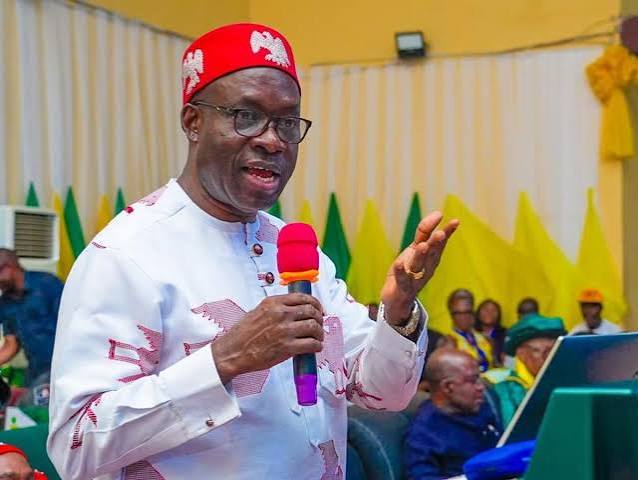
Soludo warns politicians against bringing partisan activities into places of worship during the 30th anniversary of Odumeje’s ministry in Onitsha

The US introduces a green card registration route for eligible children born to certain foreign government employees, subject to legal restrictions
-
Politics3 years ago
13 Ondo Assembly Members Disown Endorsement of Aiyedatiwa
-
Politics3 years ago
APC Group, Ondo Govt, Quarrel Over Money for Endorsement
-

 Trending News6 years ago
Stop unsavoury, inciting statements – DSS warns
-

 Others5 years ago
Adron Homes Celebrates 10 Years Of Housing Excellence
-

 Humanity5 years ago
President Buhari Commiserates With Ambassador Maureen Tamuno Over The Loss Of Her Father
-

 Others7 years ago
EX- CUSTOMS BOSS, IBRAHIM MERA’S DWINDLING FAME
-

 Business3 years ago
Bigi Carbonated Soft Drinks Treats 40 Consumers to an Epic Easter Movie Hangout
-

 Business2 years ago
Wema Bank Shines at Global SME Finance Forum Conference Awards 2024 …Awarded: • SME Financier of the Year (Africa) • Platinum Award for Best Financier for Women Entrepreneurs (Africa)