Opinion
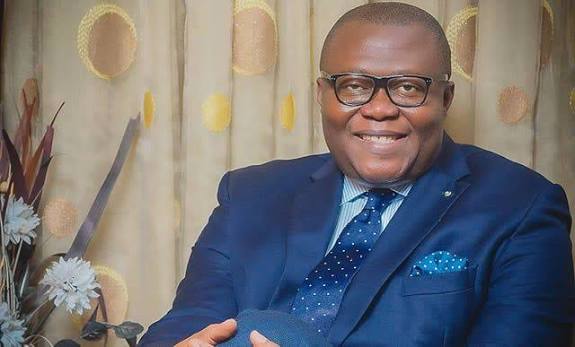
Two-year anniversary: President Tinubu’s managerial prowess undeniable, ready to domesticate renewed hope in Osun – Sen. Husain
Published
1 year agoon
It’s with utmost delight and pleasure that I join other party leaders, stakeholders and in fact, the entire Nigerians to congratulate President Bola Ahmed Tinubu on his second anniversary in office.
This milestone portends an epochal period of bold leadership, impressive vision and awe-inspiring transformation as rooted in the Renewed Hope reformist agenda of Mr. president, which continues to yield a quantum leap of gains in our socioeconomic landscape as a nation.
His commitment to recalibrating the nation’s socioeconomic dynamics with his exceptional managerial prowess for the benefits of all, can’t be overemphasized – from the fuel subsidy removal to the unification of foreign exchange and other sundry policies.
This radical intervention alone has rekindled hope and inspired confidence among Nigerians, believing the country is heading to a brighter and more prosperous future.
As part of the reflection of the gains made so far, the World Bank’s report has declared that Nigeria witnessed its fastest growth in 2024 and the International Monetary Fund (IMF) has cleared Nigeria from its debtors’ list following the full payment of $3.4 billion credit facility obtained by the country during the COVID-19 pandemic.
These are statements of stewardship which are pointing to the exceptional managerial prowess of Mr. President that is undeniable.
As a leading governorship aspirant in Osun State as well as a progeny of the President’s political tendency, I am committed to domesticating the Renewed Hope reformist agenda in Osun by working tirelessly in aligning the state to the center in a bid to ensure that the massive gains of current administration are felt by our people through implementation of transformational policies and programmes that can drive economic growth and plenary developments like that of Mr. President.
As we celebrate this unique milestone, I beseech all the people of Osun State to join me in supporting Mr. President’s administration.
With his leadership and our collective efforts, we can make Osun and by extension, Nigeria a better and brighter place for all. Together, we can build the country of our dream.
~ M.O.H
#IrorunDe #TheEmancipator #SenatorHusain #Osun2026
You may like
-
Aondowase Raises Explosive Claims Over ADC Judiciary Plot
-
Osun Masterminds Urge Civility Ahead of 2026 Governorship Race
-
Artificial Intelligence and the Nigerian Mind: Are We Asking the Right Questions?
-
June 12 : Salute to Democracy and its heroes
-
Atiku, Obi condemn Tinubu over decline of June 12 democratic values
-
PDP urges Tinubu to prioritise welfare to restore reputation in remaining two years
Opinion
Death Be Not Proud: Publisher Dotun Oladipo and the Tolling Bell
Published
14 minutes agoon
September 7, 2026
By Max Amuchie | The Sunday Stew
At just 56, Dotun Oladipo has left us far too soon.
John Donne, the 17th-century English poet and cleric, wrote words more than four centuries ago that seem almost written for a moment such as this:
Also read: Gbenga Daniel Mourns Late Publisher Dotun Oladipo
“No man is an island, entire of itself; every man is a piece of the continent, a part of the main; and if a clod be washed away by the sea, Europe is the less, as well as if a promontory were, as well as if a manor of thy friends or of thine own were; any man’s death diminishes me, because I am involved in mankind; and therefore never send to know for whom the bell tolls; it tolls for thee.”
Those words have stayed with me since I first encountered them. I have returned to them at moments of profound loss, including the tragedy of the Bellview Airlines crash in October 2005. But I never imagined that I would one day find myself returning to them to make sense of the death of Dotun Oladipo.
For whom, indeed, does the bell toll?
It tolls for Dotun. But it also tolls for all of us.
It tolls for the journalists who worked with him, for the publishers he mentored, for the members of the Guild of Corporate Online Publishers (GOCOP) whom he served and strengthened, for the readers who encountered his journalism, and for the many people whose lives he touched in ways that perhaps became fully apparent only after his death.
It tolls for me too.
The first time I invoked the title of Donne’s famous meditation, ‘Death Be Not Proud’, was in October 2005, in a reflective article on the October 22, 2005, Bellview Airlines Boeing 737-200 crash.
On Sunday, October 23, my family was about driving out to go to church when a call came from Eniola Bello, then Editor of ThisDay. Bellview Airlines had crashed the previous day, Saturday, and I was needed immediately in the office to lead the reportorial team to the crash site in a remote village in Ogun State.
I was Features Editor at the time and, as is typical of journalism, like military service, one must obey the editor’s order.
I got to the ThisDay office in Apapa, Lagos that morning and the Chairman, Nduka Obaigbena, had made his personal car available for the trip. We drove to the forest in Lisa village in Ifo Local Government Area of Ogun State, where the crashed aircraft had been buried deep in the earth.
There was hardly any visible trace of the aircraft. No recognisable piece of it could be seen, except for the little smoke rising from the earth and the tree branches that had been cut or shattered by the impact.
All 111 passengers and six crew members perished.
There were many responders — the Red Cross and the Ogun State Government team led by the then Commissioner for Health, Dr Iyabo Obasanjo-Bello, among them. The atmosphere was sombre. Everyone could feel the enormity of the calamity, the scale of the human tragedy.
Journalists are trained to be emotionally detached from the stories they cover.
I managed to apply that principle, but I also had to write a reflective piece on a tragedy whose scale was almost unimaginable.
In writing that article, I reached for John Donne’s ‘Meditation XVII’, from his 1624 Devotions upon Emergent Occasions, the meditation that inspired the title of Ernest Hemingway’s 1940 novel, For Whom the Bell Tolls.
I had first written about Donne’s famous meditation some five years earlier, following the Kenya Airways Flight 431 crash of January 30, 2000, which I was assigned to cover at the Murtala Muhammed Airport, Lagos, where relations of the crash victims had besieged the airline, desperately seeking information about their loved ones.
The plane, carrying almost exclusively Nigerian passengers, had crashed into the Atlantic Ocean shortly after take-off from the Félix Houphouët-Boigny International Airport, Abidjan, Côte d’Ivoire.
Dr Francis Enemuo, a highly respected political scientist and senior lecturer at the University of Lagos, and Rev. Fr. (Prof.) Edmund Ikenga-Metuh, an eminent Catholic priest and renowned professor of African Traditional Religion, were among the casualties of the Kenya Airways crash.
And now, more than two decades later, I am confronting that same bell again.
Penultimate Tuesday, I found myself in a reverie, ruminating about the immortal words of that 17th-century writer.
It was evening, and I had casually picked up my phone, which was being charged, to check if there were fresh messages. Suddenly, I saw a pop-up on the GOCOP WhatsApp platform. It was from Danlami Nmodu, mni, our president.
I saw the name Dotun Oladipo on the pop-up and decided to open the message.
What I saw did not make sense to me.
I had actually just woken up from sleep, so I cleared my eyes to be sure that I had read the message correctly.
Our own Dotun Oladipo had died?
I checked my WhatsApp messages.
Dotun had sent his news bulletin to me at 2:50 p.m. that same day.
Is this a joke?
It was incomprehensible.
I called Danlami. When I could not reach him immediately, I called Olumide Iyanda, our vice president. He confirmed it.
Then Danlami returned my call and confirmed it.
By then, Gabriel Akinadewo was already at Dotun’s house that night. I called him. He said he was spending the night there.
Very understandable.
Tragedy had just befallen GOCOP.
The Weight of His Example
I began to play in my mind my personal journey with Dotun.
But everyone who had the privilege of encountering Dotun had a personal journey with him. He left something of himself in the lives of the people he met.
As I read the testimonies of our members on the GOCOP platform, I started crying.
Journalists are trained to manage emotion. For an editor, the more tragic, bizarre or extraordinary a story is, the more compelling it becomes as news. We learn to stand at a certain distance from the events we cover, however devastating they may be.
But this was different.
Reading the comments, tributes and testimonies on our platform melted that professional distance. I became misty-eyed and could not help myself.
How can anyone who knew Dotun closely not testify to the rarity of his candour, the strength of his character and the depth of his selflessness?
There was something unusual about him. His frankness was not the convenient sort that says only what is safe to say.
His selflessness was not performed for applause. It was simply the way he lived.
And perhaps that is why the grief has been so profound.
We mourn people when they die. But sometimes, the death of a person forces us to confront the value of a life we had perhaps taken for granted while that person was still with us.
Dotun was one of those people.
I recall that around 2019, when Dotun was President of GOCOP, I had decided to help raise funds for one of our members, the late Ben Bright-Mkpuma, who was suffering from kidney failure.
Dotun saw how intentional I was about the effort. He could have simply commended it, as many people would. Instead, he decided that whatever I raised, GOCOP would match it, so that we could make it ₦1 million donation to the Bright-Mkpuma family.
At the time, there was no constitutional provision that obliged GOCOP to do this. Dotun was under no obligation to deploy the weight of the organisation behind my personal initiative. Yet he did.
From my own effort, I raised about ₦600,000. True to his word, GOCOP matched it. ₦1 million was eventually sent to the Bright-Mkpuma family.
And when Bright-Mkpuma eventually passed on, Dotun ensured that GOCOP was officially represented at his burial.
That was Dotun.
He did not merely speak about solidarity; he practised it. He understood that an organisation is not just a structure of offices, titles and meetings. It is, above all, a community of people who must stand by one another when life becomes difficult.
I experienced that same generosity personally in 2025, when my parents died and were to be buried.
Dotun rose to the occasion.
He did not wait for me to ask. He galvanised our friends to contribute and kick-started the process himself by making a personal donation.
That gesture has remained with me.
There are people who offer sympathy when tragedy comes. There are others who show up.
Dotun showed up.
And sometimes, that is the most profound definition of friendship.
The Eagle Online
Dotun was among the professional journalists who saw the potential of online publishing after a glorious career in the traditional media.
The Eagle Online, which he set up, became one of the most successful online news platforms in Nigeria, making Dotun a role model and mentor to not a few online publishers.
But what distinguished him was that he did not see his success as something to be guarded jealously. He was always willing to share what he knew.
As President of GOCOP, he mobilised members and worked to ensure that they benefited from programmes and opportunities that could make their businesses more sustainable.
At GOCOP conferences, he regularly shared ideas about what The Eagle Online had done to make a difference in Nigeria’s online media space.
More importantly, he encouraged other publishers to come forward and share their own ideas for the collective benefit of members.
I remember that as we were preparing for the annual conference in Lokoja, Kogi State, in 2024, I had casually spoken about exploring opportunities for the low-hanging fruits in sustaining online news businesses.
Dotun immediately suggested that I prepare a paper on the subject for presentation and discussion at the conference.
That was another side of Dotun: he recognised possibilities in other people and gave them room to develop those possibilities.
When ‘The Sunday Stew’ column was launched and I announced that it would be syndicated, Dotun was among the first to indicate his interest in joining the syndication loop.
Up until the time of his death, The Eagle Online never missed an edition of the column.
I think about that now.
Every Sunday, my words travelled to the readers of The Eagle Online. And behind that simple act of syndication was a man who had, once again, opened a door for another journalist.
That was Dotun.
He built his own platform, but he also helped others build theirs. He understood that the success of one publisher did not diminish the prospects of another. If anything, he believed that the online media ecosystem became stronger when publishers shared knowledge, opportunities and audiences.
In an industry where competition can sometimes make people protective of information and opportunities, Dotun chose generosity.
And that, too, was his legacy.
A Different Kind of The Sunday Stew
This is the most difficult edition of ‘The Sunday Stew’ I have had to write since the column debuted in March.
I have struggled with the inconceivability of writing about Dotun Oladipo in the past tense. Even now, the words do not sit comfortably with me. My mind keeps returning to the Dotun who was still here — sending his bulletin, sharing ideas, encouraging colleagues and going about the business of journalism.
Even the story of his passing and the reactions from individuals and organisations was difficult for the Sundiata Post to publish. There are stories journalists report because they must, even when every instinct in them wishes the story were not true.
This has been one of those stories.
So this is a different kind of ‘The Sunday Stew’.
There is no cleverness here, no attempt to manufacture a profound ending. There is only the painful duty of remembering a man who mattered.
I began this piece with John Donne because his words have accompanied me through other moments of loss:
“Any man’s death diminishes me, because I am involved in mankind; and therefore never send to know for whom the bell tolls; it tolls for thee.”
The bell has tolled for Dotun.
And yet, as I write this, I still cannot quite bring myself to say goodbye.
Perhaps because Dotun’s final bulletin arrived on my phone at 2:50 p.m. that day, Tuesday, 25 August 2026 before the news came that he was gone.
Perhaps because, in journalism, we are accustomed to deadlines, editions and bulletins — but there is no edition that prepares you for the final bulletin.
And perhaps because some people do not leave us entirely when they die. They remain in the things they built, the people they helped, the doors they opened, the ideas they shared and the memories they left behind.
Dotun left much behind.
His burial begins with a service of songs on Thursday, 10 September 2026 at Daystar Christian Centre Headquarters, Oregun, Ikeja, Lagos. And he will be laid to rest on Friday, 11 September 2026, from 10:00 am to 11:00 am at the same venue.
But I will not say goodbye.
I will simply say: thank you, Dotun for giving us the shelter of your example to dwell in.
You thought of no other name for your news platform but The Eagle Online. Perhaps that was because you appreciated the strength of the eagle and the power of its wings. With those wings, you have left us an imperishable legacy and flown to a higher, more glorious realm.
Also read: Gbenga Daniel Mourns Late Publisher Dotun Oladipo
May the angels of heaven grant you Godspeed in that realm, as you rest in His bosom.
Fare thee well, Dotun Samson Oladipo.
Trust is sacred. Stay seasoned.
By Nosa Osaikhuiwu,
Nigeria’s teeming population should be viewed not as a burden but as an enormous economic asset that can and must be harnessed for national economic transformation and sustainable development.
Also read: South African Businesses Struggle as Foreign Workers and Traders Leave
With a population already exceeding 200 million and projected to approach 300 million by the end of the century, Nigeria cannot afford to continue responding only to the challenges of today. We must begin implementing policies that anticipate the economic, social and employment challenges of tomorrow.
One of Nigeria’s most urgent challenges is unemployment, particularly among young people. This problem affects both graduates and the much larger segment of our population without formal education or marketable technical skills. The fundamental question, therefore, is not simply how government can create jobs, but how government can create the economic conditions under which millions of sustainable jobs can be created by the private sector.
Recognizing the Necessary Economic Reforms
Before addressing job creation, it is important to acknowledge some of the major economic reforms undertaken by the current administration.
While these policies have been unpopular in some quarters and have imposed significant hardship on households and businesses, the removal of fuel subsidies and the move toward greater alignment of foreign-exchange rates were, in my view, necessary steps toward restoring some degree of economic stability.
The manner and timing of implementation can certainly be debated. However, it is difficult to dispute that maintaining a system in which government could no longer sustainably finance fuel subsidies, while simultaneously maintaining significant distortions in the foreign-exchange market, was becoming increasingly untenable.
The immediate consequences have been severe for millions of Nigerians. Nevertheless, if these reforms are properly managed and followed by policies that stimulate production, investment and employment, Nigeria can ultimately emerge stronger.
However, some of the noise in some political quarters about reversing the fuel subsidy removal is not only disingenuous, it is playing to the gallery of public sentiments which betrays a lack of seriousness on their part.
The next phase, therefore, must be about growth, production and job creation. Manufacturing Is Essential: But Manufacturing Alone Is Not Enough
I strongly agree with the position repeatedly expressed by Nigerian industrialist Aliko Dangote that manufacturing is critical to job creation in Nigeria.
Manufacturing creates direct employment in factories, but its impact extends far beyond the factory floor. It creates demand for raw materials, transportation, logistics, warehousing, engineering, maintenance, packaging, distribution, financial services and countless other activities.
However, I would take this argument one step further, because a sustainable manufacturing industry requires demand.
A factory can produce thousands of beds, furniture sets, refrigerators, or other locally manufactured products, but production cannot continue indefinitely if consumers lack the purchasing power to buy those products. This is where government policy must become more sophisticated.
Rather than government attempting to employ everyone directly, it should create an economic environment in which production generates employment and employment generates purchasing power, which in turn creates demand for more production. That is the economic cycle Nigeria must deliberately build.
Creating a National Credit Economy
One of the most powerful instruments available to us is a properly regulated consumer and business credit system. In advanced economies, access to responsible credit has played an important role in improving living standards and expanding economic activity.
Consumers do not necessarily have to possess the full amount of money required to purchase a house, vehicle, furniture or other durable goods before making the purchase.
Properly structured credit allows them to acquire those goods today and pay over time. That creates immediate demand for manufactured products.
The manufacturer receives payment. The factory continues producing. Workers retain their jobs. Suppliers receive orders. Transporters move products.
Financial institutions earn interest. Government receives taxes. Employees spend their income elsewhere in the economy. One transaction can therefore generate an economic chain far larger than the original purchase.
The Following Steps Are Essential
- Establish a Unified National Database
Nigeria needs a comprehensive national database integrating biometric information and a unique National Identification Number for every citizen and legally resident person. A reliable identity infrastructure is fundamental to modern financial services, taxation, credit assessment, social programs and economic planning.
- Reform the Credit Bureau System
Credit bureau legislation should be strengthened and modernized, allowing banks and regulated financial institutions to play a greater role in developing a robust credit-information ecosystem, subject to strong government regulatory oversight. Every Nigerian who participates in the formal financial system should gradually develop a verifiable credit history. Good financial behavior should have benefits. Persistent default should have consequences.
- Accelerate the Transition to a Cashless Economy
Nigeria should establish a realistic but ambitious transition toward a predominantly cashless economy within 36 months. This should not be about punishing Nigerians who use cash. It should be about creating a transparent, traceable and efficient financial system that reduces the size of the informal cash economy and makes it easier to assess income, spending, creditworthiness and tax obligations.
- Gradually Restrict Excessive Cash Transactions
Government should consider progressively restricting large cash withdrawals and transactions, with appropriate exemptions for legitimate businesses and special circumstances. Such a policy must, however, be carefully designed so that it does not inadvertently harm small businesses or citizens who remain outside the formal banking system. The objective should be financial inclusion and transparency, not financial exclusion.
- Expand Consumer and Manufacturer Financing
Legislation and regulation should facilitate financing arrangements through which manufacturers can sell locally produced goods to consumers on credit while financial institutions assume and manage the repayment risk. Imagine a Nigerian family being able to purchase locally manufactured furniture, beds, household appliances or other durable goods and pay over 12, 24 or 36 months.
The manufacturer gets paid.
The consumer gets the product.
The bank earns legitimate interest.
The factory continues producing.
Workers remain employed.
And the economy expands.
This is the kind of demand-induced economic growth Nigeria should pursue.
But Credit Requires Culture Change
There is, however, a major obstacle to implementing such a system in Nigeria. Credit cannot function effectively without trust, integrity and a culture of repayment.
This brings us directly to what I have identified in my previous writings as the QUAD – four interconnected cultural problems that continue to undermine Nigeria’s development:
- Unethical behavior
- Greed
- Lack of integrity
- Permissiveness—the “Oga Abeg” culture
Too many Nigerians have historically viewed loans and government-supported credit schemes as free money that should not necessarily be repaid. That mindset must change.
If a person obtains a bank loan to purchase locally manufactured furniture, a vehicle, equipment or other goods, repayment is not optional. It is a contractual obligation. Failure to repay should affect the individual’s ability to access future financial services.
A properly integrated financial architecture should ensure that a poor credit record follows a borrower across regulated financial institutions and digital financial platforms, subject to due process and appropriate consumer protections.
Banks, fintech companies and regulated payment platforms should be able to participate in a credible national credit-information ecosystem.
But this cannot be achieved through regulation alone. Nigeria needs a massive national public-awareness campaign on the meaning of credit, contractual obligations and financial responsibility. This is another example of why economic transformation without culture change will remain incomplete.
Rethinking Youth Employment
We cannot continue producing millions of graduates who are jobless while simultaneously importing technicians and skilled workers and leaving young Nigerians without practical skills or employment opportunities.
The recent initiative by the Federal Government of Nigeria under the Tinubu/Shettima Administration to reform the National Youth Service Corps (NYSC) is commendable.
However, the reform of the NYSC will be incomplete if it does not transition NYSC into a National Skills and Apprenticeship Program that will help train and equip our young men and women with skills that will help them earn a living as entrepreneurs or be gainfully employed.
Nigeria must also rethink the purpose of education. I would advocate an optional SECOND year of National Service dedicated specifically to skills acquisition and apprenticeship.
Young Nigerians could receive structured training in areas such as:
- Automobile technology and diagnostics
- Electrical installation and maintenance
- Construction management
- Fashion and design
- Collision repair and auto bodywork
- Agriculture and poultry operations
- Welding and fabrication
- Firefighting and emergency services
- Computer hardware and maintenance
- Software development
- App development
- Coding and programming
- Artificial intelligence
- Renewable energy technology
- Plumbing
- Refrigeration and air-conditioning
- Industrial maintenance
The program should be developed in partnership with private-sector employers, manufacturers, technical institutions and professional bodies.
At the end of the program, participants should receive a nationally recognized industry certification demonstrating basic professional competence.
This would transform NYSC from merely a national service program into a major national workforce-development and apprenticeship system.
The Automobile Sector Alone Offers Enormous Opportunities
Consider the automobile sector. Nigeria has millions of vehicles on the road, yet many mechanics operate without formal training. At the same time, modern vehicles are increasingly computerized and technologically sophisticated.
The mechanic of tomorrow will need to understand electronics, diagnostics, computer systems, sensors and software, not merely engines and mechanical components.
A national automotive apprenticeship program could therefore create hundreds of thousands of skilled technicians over time while reducing dependence on foreign expertise.
The same principle applies to virtually every technical occupation. Nigeria does not have a shortage of work. Nigeria has a shortage of properly organized opportunities to convert work into productive employment and enterprise.
Ethanol: Turning Agriculture into Energy and Employment
Another opportunity lies in the development of an ethanol-blended fuel program. Nigeria should seriously consider adopting a national ethanol-blending policy, potentially beginning with a 10 percent blend and progressively evaluating higher blends based on technical and economic feasibility. Such a policy could stimulate demand for cassava, maize and other suitable feedstocks.
That demand would create opportunities for farmers, agricultural aggregators, and brokers, processing companies, logistics operators, transporters, equipment suppliers and storage facilities.
The economic impact would therefore extend far beyond the ethanol plant itself. Rather than importing every unit of energy we consume, Nigeria could create a domestic agricultural-energy value chain.
With the right policies, this could generate substantial employment over time. The precise number of jobs should, of course, be determined through detailed feasibility studies, but the principle is compelling: energy policy can simultaneously become agricultural policy, industrial policy and employment policy.
Security and Employment
Nigeria’s security crisis also requires a fundamentally different approach. We need to build a much stronger human-intelligence capability at the community level.
A large national network of trained intelligence personnel could provide communities, security agencies and government with timely information about criminal activity, kidnapping networks, banditry and terrorism.
Such a program would need to be carefully structured, professionally trained, legally regulated and integrated with existing security agencies. It must not become an uncontrolled vigilante system.
The objective should be to create a professional intelligence architecture in which ordinary citizens can become an additional source of reliable information for national security.
Security itself can therefore become an area of structured employment while simultaneously strengthening the country’s ability to prevent crime.
Government Should Stop Trying to Be the Entrepreneur
Another important component of Nigeria’s economic transformation should be a gradual reduction in government’s ownership and management of commercial enterprises.
Government’s principal responsibility should be to provide:
- Clear regulations
- Infrastructure
- Security
- Efficient taxation
- Reliable identity systems
- Access to finance
- Fair competition
- Effective institutions
The private sector should increasingly be allowed to serve as the primary engine of production, innovation and employment. Government does not have to own every factory in order to create jobs. It needs to create the enabling environment in which thousands of factories can be profitably established and operated by Nigerians and investors.
Thus, I recommend that the Tinubu/Shettima Administration completely privatize the NNPCL refineries and if there no takers decommission them as they have become a source waste, fraud and abuse.
Affordable Housing as an Economic Engine
Housing provides another powerful example of demand-induced growth. Nigeria should develop long-term mortgage financing, initially targeting public servants such as police officers and members of the armed forces, with mortgage payments deducted directly from salaries.
A properly structured 10 to 15-year mortgage scheme could allow workers to acquire homes while creating demand across an enormous range of industries.
A single housing project requires:
- Cement
- Steel
- Doors and windows
- Electrical equipment
- Plumbing materials
- Tiles
- Furniture
- Roofing materials
- Engineering services
- Architects
- Surveyors
- Lawyers
- Transporters
- Laborers
- Security services
Housing finance therefore does much more than provide shelter. It creates an economic ecosystem. Once properly established and proven, such schemes could be expanded to the wider population, with government providing the regulatory framework while private financial institutions and developers provide the capital and expertise.
The Bigger Picture
Nigeria’s unemployment problem cannot be solved by government simply announcing another recruitment exercise. Nor can it be solved by distributing temporary cash transfers indefinitely.
We need to create an economic system in which people have the skills to work, businesses have the capacity to produce, consumers have the purchasing power to buy, financial institutions can responsibly provide credit, and borrowers understand that credit must be repaid.
That requires simultaneous reforms in education, finance, manufacturing, agriculture, energy, housing, security and culture.
Most importantly, it requires a change in mindset. We must move away from the belief that government is responsible for providing everything and toward a system in which government creates the conditions for citizens and businesses to become productive economic participants.
Nigeria’s population should not frighten us, but should inspire us. Two hundred million Nigerians represent two hundred million potential consumers, workers, entrepreneurs, farmers, engineers, technicians, inventors and business owners.
If properly educated, properly organized and connected to functioning markets and financial systems, this population can become one of Nigeria’s greatest economic advantages.
But population alone is not an asset. A productive population is an asset. And productivity requires skills, integrity, and access to capital, infrastructure, security and demand.
That is why Nigeria’s next economic strategy should not focus exclusively on increasing production. We must also deliberately create the purchasing power that sustains production.
The objective should be simple:
Produce more.
Buy more.
Employ more.
Earn more.
Invest more.
Produce even more.
That is the cycle of demand-induced economic growth that Nigeria must build. And ultimately, none of these reforms will be sustainable without the cultural transformation that underpins them.
Economic transformation requires culture change. Without ethics, integrity, responsibility and a rejection of the “Oga Abeg” mentality, even the best economic policies will continue to produce disappointing results.
Also read: South African Businesses Struggle as Foreign Workers and Traders Leave
Nigeria therefore needs not merely a new economic policy.
Nigeria needs a new economic culture.
Opinion
Yahaya Bello: Funding the Structure, Not the Pocket Is the Winning Formula in Kogi
Published
4 days agoon
September 3, 2026
By Seun Oloketuyi,
Former Kogi State Governor Alhaji Yahaya Bello believes one of the biggest lessons from his political experience is that money alone does not win elections. For him, where that money is directed can make all the difference.
Also read: Gbenga Daniel Urges Stronger Security at Freedom Online 7th Annual Lecture
Bello shares this perspective in Seun Oloketuyi’s forthcoming book, How to Win an Election in Nigeria, where he reflects on the political strategy behind his electoral successes in Kogi State.
According to him, campaigns should focus less on handing money directly to voters and more on building a strong political structure capable of mobilising support at the grassroots. “Fund your structure, not the voter’s pocket,” Bello said.
He argued that last-minute cash distribution should not be mistaken for a winning strategy, stressing that genuine political strength is built long before election day.
For Bello, the people and networks supporting a candidate are more important than simply having money to spend when voting is around the corner.
His experience in Kogi, he said, showed the importance of having a well-organised structure that could translate political support into actual votes.
Bello’s reflections offer a different perspective on the role of money in Nigerian elections, particularly the difference between spending to build political strength and spending simply to influence voters at the last minute.
Also read: Gbenga Daniel Urges Stronger Security at Freedom Online 7th Annual Lecture
More of his thoughts on electoral strategy, grassroots politics and the lessons from his years in Kogi politics are featured in Seun Oloketuyi’s How to Win an Election in Nigeria, scheduled for release on September 6.
Trending News
-
Politics2 years ago
13 Ondo Assembly Members Disown Endorsement of Aiyedatiwa
-
Politics2 years ago
APC Group, Ondo Govt, Quarrel Over Money for Endorsement
-
Trending News5 years agoStop unsavoury, inciting statements – DSS warns
-
Others5 years agoAdron Homes Celebrates 10 Years Of Housing Excellence
-
Humanity5 years agoPresident Buhari Commiserates With Ambassador Maureen Tamuno Over The Loss Of Her Father
-
Others7 years agoEX- CUSTOMS BOSS, IBRAHIM MERA’S DWINDLING FAME
-
Business2 years agoBigi Carbonated Soft Drinks Treats 40 Consumers to an Epic Easter Movie Hangout
-
Business2 years agoWema Bank Shines at Global SME Finance Forum Conference Awards 2024 …Awarded: • SME Financier of the Year (Africa) • Platinum Award for Best Financier for Women Entrepreneurs (Africa)